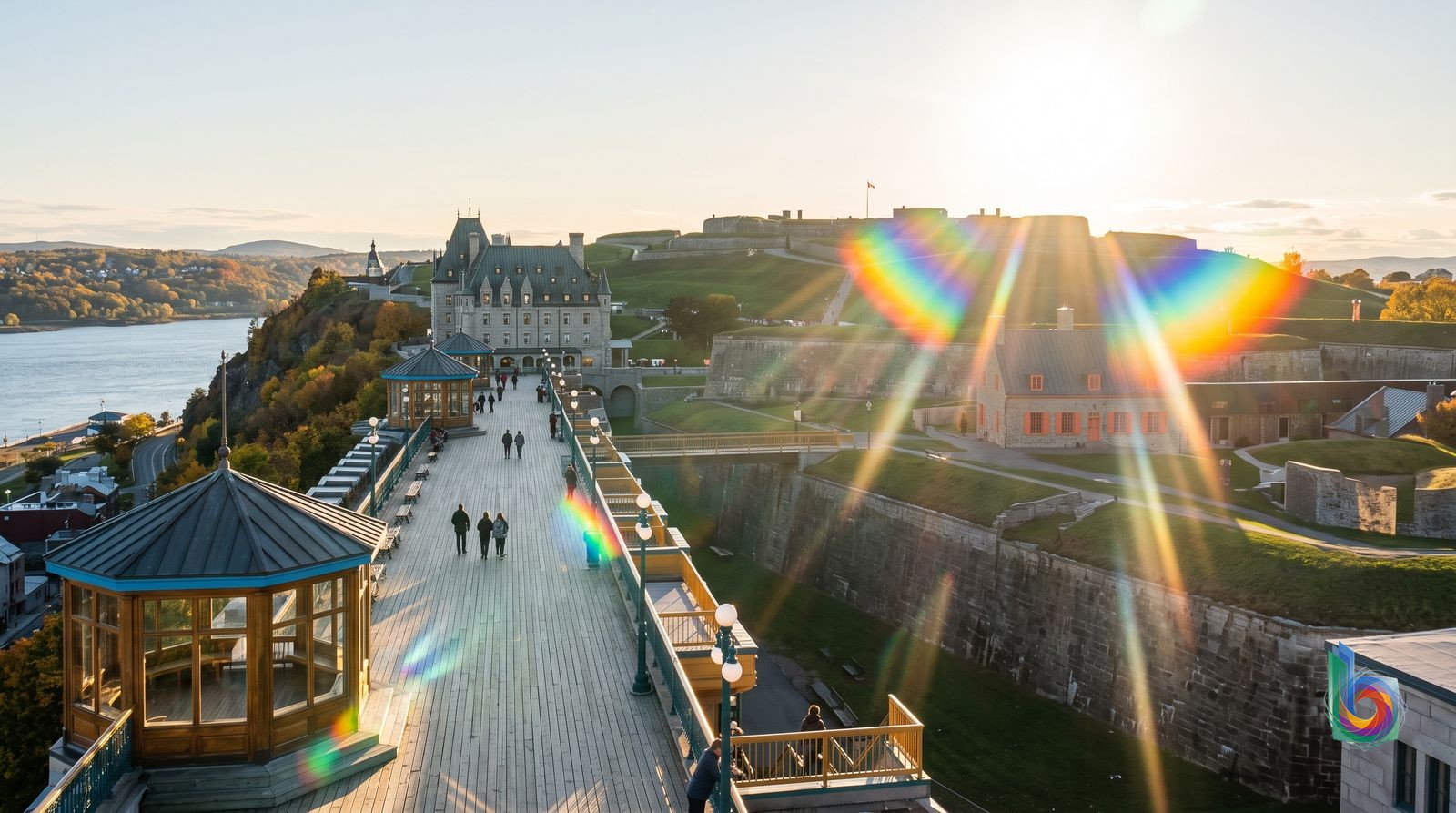
First visit? Stay in Old Québec Upper Town (Vieux-Québec / Haute-Ville).
Choose it for the city's larger full-service hotels, straightforward taxi access, proximity to the Plains of Abraham and an easy walk to the old walls. It is more convenient and polished than intimate; avoid rooms facing the liveliest stretch of Grande Allée if nightlife noise matters.
The best central compromise for travelers watching costs: more everyday restaurants, bars and services than inside the walls, strong bus connections and relative proximity to Gare du Palais. The trade-off is an uphill walk to Old Québec and a few blocks that feel less polished late at night.
Its leafier streets, cafés, cultural institutions and ready access to the Plains of Abraham make it calmer than the Old City's crowded cobbles. It works especially well for a longer stay, though it is less convenient for early rail or bus departures and not as instant for headline sights.
Stay here for independent food and drink, LGBTQ+-friendly energy and a close walk to Porte Saint-Jean and the walled city. Pick it over Saint-Roch if being near Old Québec matters; accept steep streets, modest hotel stock and possible late noise around Rue Saint-Jean.
This is the choice for residential calm, Avenue Maguire, parks and bluff- or river-side walks rather than a sightseeing conveyor belt. It is best for travelers happy to use buses, taxis or a car; it is too far from Old Québec to suit a tightly scheduled first weekend.
Its proximity to Gare du Palais and strong downtown bus links make early departures and returns simpler than from the western residential districts. Québec intercity rail is infrequent, so confirm schedules, but Saint-Roch is the most practical base when the station genuinely shapes the itinerary.
Choose Limoilou for a low-rise, neighborly pace and independent food rather than another stay inside the visitor core. It rewards time and curiosity, but requires buses, taxis or a car for the Old City and is not the easiest option in winter.
Avoid sleeping near Sainte-Foy: Unless you need Université Laval, highway access or a practical car-oriented hotel, tourists often regret trading the historic center's walkable evenings for a generic commercial setting. Old Québec is a substantial cross-city bus or drive away, not a casual stroll.
Avoid sleeping near Saint-Sauveur: It can be rewarding to visit for local food and a less curated urban feel, but it is an awkward first-time sleep base: limited lodging, an uphill and lengthy trip to Old Québec, and an uneven streetscape that can feel less comfortable late at night.
Avoid sleeping near The immediate Grande Allée bar strip: The wider Parliament Hill area is a very good hotel base, but rooms directly over or beside its active bars can bring event and late-night noise. Book a quieter side street or choose Montcalm if sleep is the priority.
Avoid sleeping near Petit-Champlain's tight Lower Town core: It is magical for a wander but a demanding place to sleep with luggage, strollers or mobility needs: cobbles, stairs, limited hotel choice, peak-period crowds and a steep daily climb—or funicular trip—back to Upper Town.
The neighborhoods
Pick the areas you want to be around — the hotels and tables below narrow to them.
Walled history, central and relentlessly visited
The postcard core: ramparts, cobbled lanes, château views, churches, museums and the densest concentration of visitor services. It is genuinely atmospheric, not a theme park, but much of the daily life here is geared to guests rather than residents.
Vs. others: Pick Old Québec Upper Town over Saint-Roch if seeing the classic sights on foot matters most; pick Saint-Roch if you would rather eat and drink among more locals and spend less time in the tourist crush.
Best for: first-timers, families, luxury, short stays, walkers
Summer and holiday crowds can make its narrow streets feel congested. · Restaurants nearest the main sights are the most likely to be overpriced or aimed squarely at tourists. · Historic buildings mean small rooms, stairs and variable accessibility. · Nightlife is limited once day-trippers leave.
See hotels in Old Québec Upper Town (Vieux-Québec / Haute-Ville)Prettiest lanes, steepest tourist concentration
At the foot of Cap Diamant, this small Lower Town pocket delivers the stone façades, boutiques and river-adjacent old-city scenes people come to photograph. It is wonderful to wander early or late; it is too compact to function as a whole trip's neighborhood.
Vs. others: Pick Petit-Champlain over Old Québec Upper Town if intimate Lower Town scenery and river proximity matter more; pick Upper Town if you want more hotel choice, easier bus access and less daily hill climbing.
Best for: first-timers, couples, families, photographers, luxury
It is one of the city's most crowded and shop-heavy streets in peak periods. · Accommodation choices are limited and often costly. · Cobblestones, stairs and the escarpment complicate luggage, strollers and mobility needs. · Dining and retail skew tourist-oriented.
See hotels in Petit-Champlain & Place RoyaleRiver walks beyond the souvenir lanes
The waterfront below Old Québec is where to trade enclosed old-town lanes for the St. Lawrence, marina views, promenades and more breathing room. It is best as an extension of the Lower Town rather than a replacement for it, with a quieter evening mood once waterfront activity winds down.
Vs. others: Pick Old Port over Petit-Champlain if you want waterfront space and a calmer sleep; pick Petit-Champlain if you want to step outside directly into Québec City's most concentrated historic streets.
Best for: families, walkers, quiet, return-visitors, road-trippers
The waterfront can feel quiet or exposed after dark, especially away from active venues. · It is farther from the Upper Town's restaurants and major bus stops than it looks on a map. · Winter wind off the river is unforgiving. · Lodging inventory is thinner than in Upper Town or downtown.
See hotels in Old Port & Bassin LouiseDowntown's local-food, bar-and-design counterweight
Immediately west of the old city, Saint-Roch is the practical, denser downtown alternative: independent restaurants, cafés, bars, shops and a more lived-in street scene around Rue Saint-Joseph. It is where visitors often go when Old Québec's souvenir economy becomes tiring.
Vs. others: Pick Saint-Roch over Old Québec Upper Town if restaurants, bars and a less visitor-only atmosphere matter more; pick Upper Town if you want the historic core outside your door and fewer uphill walks to sights.
Best for: foodies, nightlife, value, return-visitors, urban travelers
Some blocks feel rougher and less polished than the Old City, particularly late at night; use ordinary city awareness. · Noise can be substantial around bars and busy streets. · The climb to Upper Town becomes tedious after a long day. · Its appeal is urban rather than picturesque.
See hotels in Saint-RochBohemian hillside just outside the walls
Along and above Rue Saint-Jean west of the gates, Saint-Jean-Baptiste mixes compact houses, independent food and drink, LGBTQ+-friendly energy and neighborhood commerce. It keeps you near Old Québec without putting you entirely inside its visitor bubble.
Vs. others: Pick Saint-Jean-Baptiste over Saint-Roch if you want to walk to the fortifications and Old Québec more easily; pick Saint-Roch if you prefer a flatter, more downtown-feeling base and stronger rail-station access.
Best for: foodies, nightlife, return-visitors, walkers, value
Hills and winter conditions make wheeled luggage and mobility challenging. · Restaurants and bars can bring late noise along Rue Saint-Jean. · Hotel supply is modest compared with Old Québec. · Parking is inconvenient.
See hotels in Saint-Jean-BaptisteCivic grandeur, big hotels, polished convenience
Between the old walls and the Plains, this is the formal capital-city strip: the National Assembly, major hotels, broad avenues and Grande Allée restaurants and bars. It is a useful, less cobbled base rather than the most intimate part of town.
Vs. others: Pick Parliament Hill over Old Québec Upper Town if you want larger hotels, simpler taxi access and the Plains nearby; pick Upper Town if sleeping inside the walls matters more than hotel convenience.
Best for: luxury, families, first-timers, business travelers, festival-goers
Grande Allée can be noisy when its bars and event crowds are active. · It can feel institutional or hotel-heavy rather than residential. · Food directly on the main strip is not always the city's best value. · The area's wide roads are less charming for wandering than the old lanes.
See hotels in Parliament Hill & Grande AlléeCultured, leafy, less tourist-saturated
West of Parliament Hill, Montcalm is an established residential-and-cultural district with museums, Avenue Cartier cafés and access to the Plains of Abraham. It is a sensible compromise for travelers who want restaurants and walks without sleeping amid Old Québec's crowds.
Vs. others: Pick Montcalm over Saint-Jean-Baptiste if you want quieter, leafier streets and the Plains nearby; pick Saint-Jean-Baptiste if you want more immediate old-city access and livelier evenings.
Best for: quiet, families, foodies, return-visitors, culture lovers
It is less convenient for Gare du Palais and intercity departures. · The Old City is not around the corner after a full day of sightseeing. · Nightlife is restrained. · Lodging choices are fewer than downtown.
See hotels in Montcalm & Avenue CartierVillage feel, good food, farther out
Across the rail corridor northeast of the core, Limoilou has a neighborly, low-rise character, independent businesses and a more everyday Québec City pace. It rewards travelers who have time to explore beyond the old walls, but it is not the most frictionless first visit.
Vs. others: Pick Limoilou over Saint-Roch if you want a calmer residential feel and neighborhood eating; pick Saint-Roch if quick access to the Old City, station and evening action is more important.
Best for: foodies, value, quiet, return-visitors, longer stays
You will rely on buses, taxis or a car more than in the central districts. · It lacks the landmark density visitors expect on a first trip. · Evenings are quieter and services can be more spread out. · Winter travel adds friction to every cross-town trip.
See hotels in LimoilouUnvarnished local streets and serious eating
West of Saint-Roch, Saint-Sauveur is a working, increasingly food-focused neighborhood rather than a polished visitor quarter. Come for a more local urban walk and restaurants; choose it as a base only if you value price and neighborhood texture over instant access to sights.
Vs. others: Pick Saint-Sauveur over Saint-Roch for a more local, less curated dining-and-neighborhood experience; pick Saint-Roch for better transit, more lodging and a more comfortable first-time base.
Best for: foodies, budget travelers, return-visitors, urban travelers
The streetscape is uneven, and some visitors will find it less comfortable at night than the tourist core; use normal urban caution. · It is a poor base for repeatedly walking to Old Québec. · Accommodation is limited. · Its appeal depends on seeking local life, not checking off landmarks.
See hotels in Saint-SauveurLeafy river bluffs and a slower rhythm
Sillery is a well-to-do, residential stretch west of the center, valued for Avenue Maguire, parks and river-side or bluff-side walks rather than a dense sightseeing circuit. It makes a pleasant break from downtown but is best with time, a car or a willingness to use buses.
Vs. others: Pick Sillery over Montcalm if parks, river views and real residential quiet matter most; pick Montcalm if you want museums, cafés and Old Québec within an easier walk.
Best for: quiet, families, return-visitors, walkers, road-trippers
It is too removed to be an efficient sightseeing base without planning. · Accommodation and late-night dining are limited. · Hilly terrain reduces easy walkability. · A car can be useful, but parking and driving downtown are then added hassles.
See hotels in SilleryPractical suburban hub, not old-city romance
Sainte-Foy is the modern west-side commercial and institutional area: useful for Université Laval, shopping, highway access and travelers passing through, but it does not deliver the Québec City visitors imagine when they book a historic getaway.
Vs. others: Pick Sainte-Foy over Sillery if highway access, practical hotels and errands matter more; pick Sillery if you want a prettier, more distinctly Québec City neighborhood experience.
Best for: families with a car, road-trippers, budget travelers, business travelers, longer stays
It can feel like a generic commercial district rather than a destination. · The old city is too far away for spontaneous returns during the day. · Large roads and dispersed sites reduce walkability. · Sleeping here often trades away the evening atmosphere that makes Québec City special.
See hotels in Sainte-Foy


