
Budapest's principal Catholic church is a useful architectural stop in the central Pest walking circuit, with a dome panorama that earns the extra effort. Go inside, then decide whether the tower view is worth adding rather than treating it as a long standalone visit.
Pairs with: Hungarian Parliament Building · Széchenyi Chain Bridge · Shoes on the Danube Bank

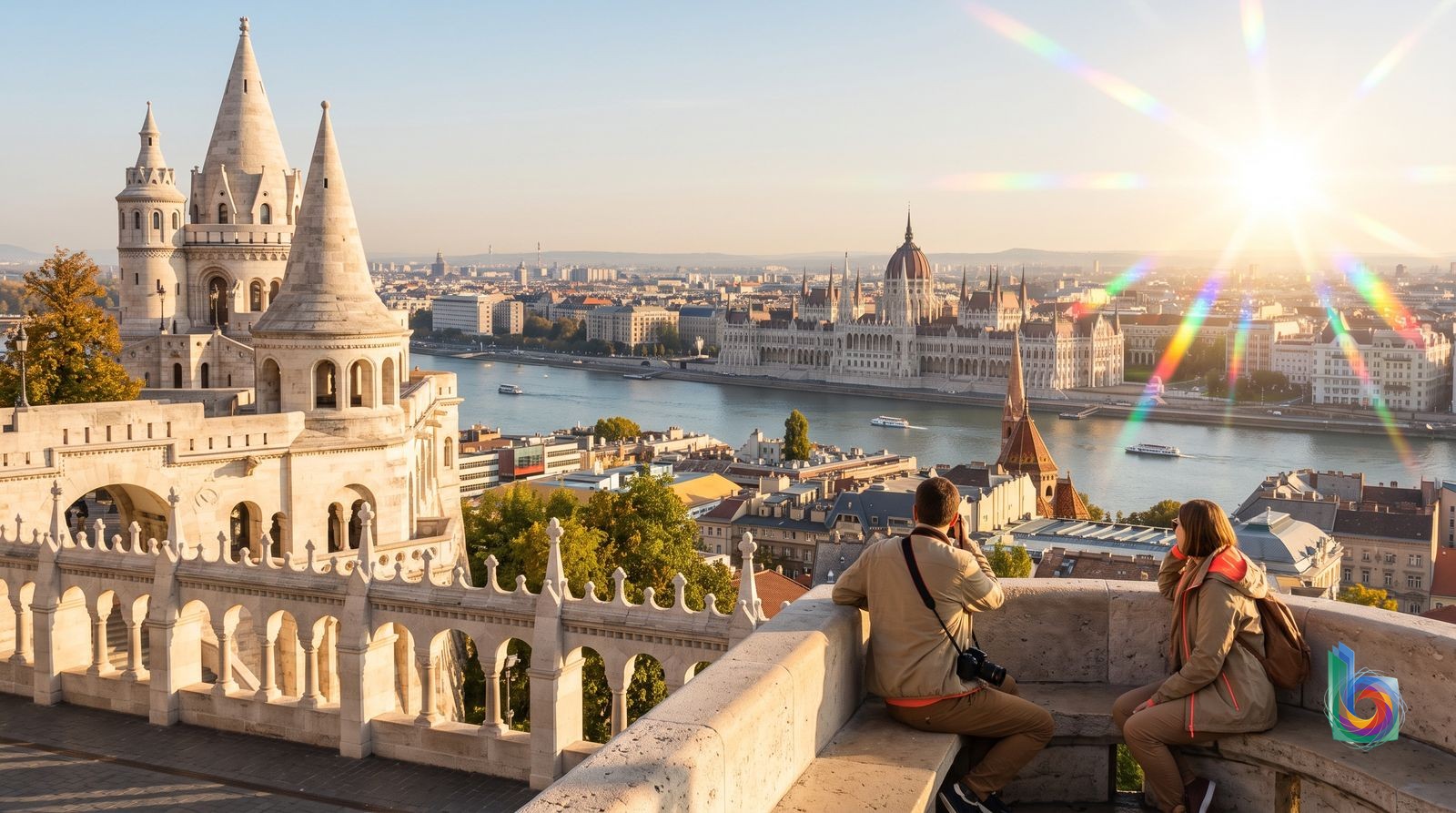
This is the classic elevated view across the Danube to Parliament, and its fanciful terraces are more rewarding as a lookout than as a monument to study. Use it with Matthias Church and a Castle Hill walk, ideally when the light is changing.
Pairs with: The Church of Our Lady of Buda Castle · Buda Castle · Hospital in the Rock

The riverside exterior is Budapest's defining image, while the guided interior visit adds the Hungarian crown jewels and the spectacular ceremonial rooms. See it from both banks, but book an interior slot if that matters to you.
Reserve an official guided-tour time in advance, especially for summer and weekend visits; popular English slots go first.
Pairs with: Shoes on the Danube Bank · St. Stephen's Basilica · Széchenyi Chain Bridge

The rebuilt royal palace is most valuable as the anchor of Castle Hill, with Danube-facing terraces and the Hungarian National Gallery inside. Do not expect intact royal interiors; combine the exterior walk with one museum and the old-town lanes to make the climb worthwhile.
Pairs with: Hungarian National Gallery · Fisherman's Bastion · The Church of Our Lady of Buda Castle

The Chain Bridge is the essential pedestrian crossing between Pest's center and Castle Hill, not a destination that needs much scheduled time. Cross it at dusk or after dark, when the riverfront and Parliament views explain why Budapest is a river city.
Pairs with: Buda Castle · St. Stephen's Basilica · Shoes on the Danube Bank

These iron shoes are a concise, affecting Holocaust memorial to Jews murdered at the riverbank by Arrow Cross militia. Give it quiet time rather than treating it as a photo stop, then continue along the embankment toward Parliament.
Pairs with: Hungarian Parliament Building · St. Stephen's Basilica · Széchenyi Chain Bridge

Better known as Matthias Church, this richly patterned Gothic Revival landmark is Castle Hill's essential interior and a strong counterpoint to the nearby views. Pair it directly with Fisherman's Bastion rather than treating the two as separate trips.
Pairs with: Fisherman's Bastion · Buda Castle · Hospital in the Rock

Europe's largest synagogue is both an extraordinary Moorish Revival building and an essential introduction to Budapest's Jewish history, including its moving memorial garden and cemetery. Allow time for the included museum and use it to orient a respectful walk through the Jewish Quarter.
Buy online ahead for a preferred entry time in high season; security screening and dress rules apply.
Pairs with: Hungarian National Museum · Central Market Hall · House of Terror Museum

The huge yellow neo-Baroque complex is Budapest's most iconic communal-bathing experience, particularly for its steaming outdoor pools. It is a relaxation stop rather than a polished spa treatment, so reserve a few unhurried hours and bring swimwear.
Prebook for weekends, holidays, and summer to avoid entry lines; weekday walk-ins are usually feasible.
Pairs with: City Park · Vajdahunyad Castle · Heroes' Square

The grand Millennium Monument makes a quick but meaningful gateway to City Park and frames Hungary's national story in one sweeping ensemble. It is best used as a stop between Andrássy Avenue and the Museum of Fine Arts rather than as a long visit.
Pairs with: Museum of Fine Arts · City Park · Vajdahunyad Castle

The lavish Andrássy Avenue opera house is worth seeing either through a daytime tour or, better, an actual performance if the program suits you. It also gives a cultural reason to walk this UNESCO-listed boulevard toward City Park.
Book performances and popular guided tours ahead; cheaper performance seats can disappear well before a weekend date.
Pairs with: House of Terror Museum · St. Stephen's Basilica · Heroes' Square

The fortress itself is secondary, but the Gellért Hill summit delivers one of the broadest views of the Danube bends, bridges, Castle Hill and Pest. Treat it as a scenic uphill walk, not a museum visit, and check current access conditions around ongoing restoration works.
Pairs with: Széchenyi Chain Bridge · Central Market Hall · Buda Castle

This is the best compact primer on Hungarian history, from the medieval kingdom through the modern nation, in an important neoclassical building. Choose it if you want historical context before the more emotionally focused House of Terror or Jewish-history sites.
Pairs with: Dohány Street Synagogue · Central Market Hall · House of Terror Museum

The grand iron-and-glass hall is best for seeing Budapest's food culture, picking up paprika or other edible souvenirs, and having a quick market lunch. It is touristy upstairs, so focus on the building, produce stalls, and practical browsing rather than expecting a hidden-local experience.
Pairs with: Hungarian National Museum · Citadel · Dohány Street Synagogue

This large, relaxed green space ties together the baths, lake, castle pastiche, zoo, and Heroes' Square, making it a useful change of pace from the dense center. Use it as connective walking space or a picnic stop, not as an attraction requiring a rigid itinerary.
Pairs with: Vajdahunyad Castle · Széchenyi Thermal Bath · Heroes' Square

Housed in Buda Castle, the gallery gives the palace a substantive interior visit through Hungary's art from medieval altarpieces to modern work. It is the best Castle Hill museum choice for art-minded visitors, while others can enjoy the palace terraces without committing to it.
Pairs with: Buda Castle · Fisherman's Bastion · The Church of Our Lady of Buda Castle

In the former headquarters of fascist and communist secret police, this forceful museum confronts Hungary's 20th-century dictatorships and the human cost of both. Its presentation is selective and emotionally intense, so allow time to absorb it rather than squeezing it between light sightseeing stops.
Pairs with: Hungarian State Opera · Hungarian National Museum · Dohány Street Synagogue

Budapest's strongest old-master collection, especially for Spanish Baroque painting, makes this a worthwhile museum even for travelers who normally limit indoor time. It pairs naturally with Heroes' Square and is a better art stop than trying to see several smaller museums.
Pairs with: Heroes' Square · City Park · Vajdahunyad Castle

This theatrical, late-19th-century pastiche of Hungarian architectural styles is a photogenic park stop, not a major castle museum. Walk around the lake and its courtyards, then continue to the baths or the Museum of Fine Arts.
Pairs with: City Park · Széchenyi Thermal Bath · Heroes' Square

This former emergency hospital and nuclear bunker beneath Castle Hill offers a distinctly Cold War-era counterpoint to the district's royal and medieval surface. Guided visits are compact but memorable; it is best for travelers interested in 20th-century history rather than for everyone.
Tours run at set times and capacity is limited, so reserve online for a specific time in busy periods.
Pairs with: Fisherman's Bastion · The Church of Our Lady of Buda Castle · Buda Castle

This traffic-free Danube island is Budapest's best easy escape for a long walk, bike ride, or relaxed afternoon among gardens and riverside paths. It is not a headline monument, but it provides the breathing room that a first itinerary full of churches and museums needs.
Pairs with: Hungarian Parliament Building · Széchenyi Chain Bridge · Shoes on the Danube Bank

One of Europe's older zoos, it is a pleasant family-oriented half-day in a historic park setting, but it is not a priority over Budapest's architecture, river views, and baths on a short first trip. Choose it when traveling with children or if you have a spare park day.
Pairs with: City Park · Vajdahunyad Castle · Széchenyi Thermal Bath