
Tokyo’s most immediately legible historic sight: arrive through the Kaminarimon gate, then keep going beyond the shopping lane to the main hall. Use it early, before the Asakusa crowds build, and combine it with a walk along the Sumida River.
Pairs with: Tokyo Skytree · Ueno Park

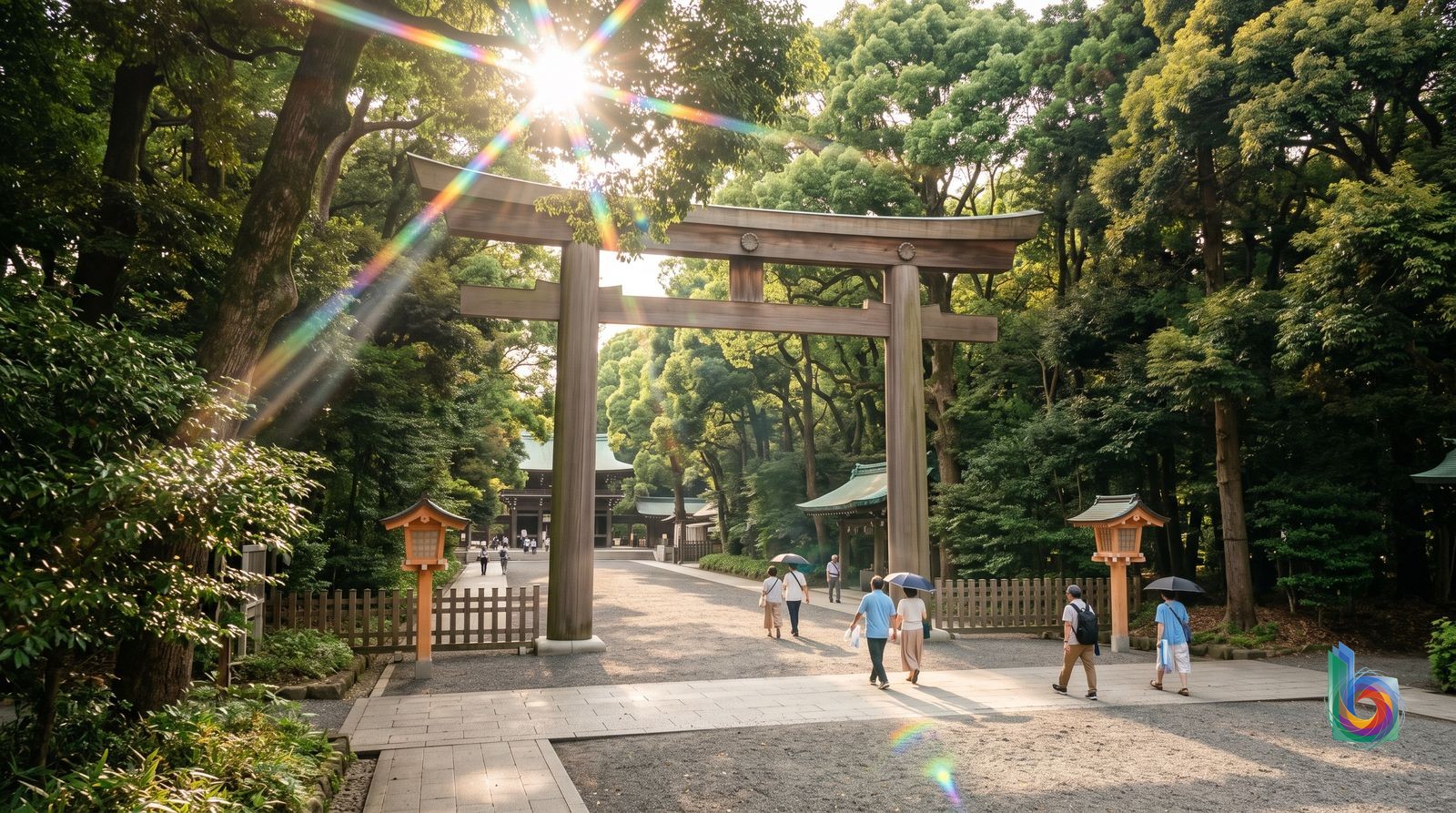
The long wooded approach gives this major Shinto shrine a rare sense of calm beside Harajuku and Shibuya. It is best used as a quiet morning counterpoint to the commercial energy outside its gates.
Pairs with: Yoyogi Park · Shibuya Scramble Crossing · Shinjuku Gyoen National Garden

Japan’s best single introduction to the country’s art, archaeology, armor, ceramics, and religious objects, housed in Ueno Park. Do not attempt every gallery; choose a few highlights, then use the park and nearby Asakusa to put the collections in context.
Pairs with: Ueno Park · Sensō-ji · Tokyo Skytree

This is the most satisfying central-city skyline deck: open-air, close to the Scramble, and well positioned for looking across Tokyo’s dense urban fabric. Reserve it for sunset if the weather is clear, while accepting that it is an experience rather than a cheap viewpoint.
Book online as soon as dates open—sunset and weekend slots commonly disappear first.
Pairs with: Shibuya Scramble Crossing · Hachiko Statue · Meiji Jingu

It is a brief sight, but crossing it puts you directly into one of Tokyo’s defining scenes of synchronized urban motion. Cross once at street level, then watch another cycle from an upper-floor café or Shibuya Sky.
Pairs with: Hachiko Statue · Shibuya Sky · Meiji Jingu

It is the classic red-and-white Tokyo skyline symbol, even if newer decks offer higher, clearer views. Choose it for the icon itself and pair it with nearby Zojo-ji or Roppongi rather than treating it as the city’s essential observation deck.
Pairs with: teamLab Borderless: MORI Building DIGITAL ART MUSEUM · Nezu Museum

The sheer height and broad panorama make this the most expansive aerial view of Tokyo, though it is removed from the central-city bustle. It works particularly well after Sensō-ji, when the contrast between old Asakusa and futuristic Tokyo is the point.
Reserve a timed slot for sunset, weekends, and holiday periods; daytime slots are usually easier.
Pairs with: Sensō-ji · Tokyo National Museum

The value is in the moats, stone walls, bridges, and East Gardens rather than a palace interior, which is generally not open for casual visits. Treat it as a central Tokyo walk and a useful way to understand the city’s political and historical core.
Pairs with: Tokyo National Museum · Akihabara

This is Tokyo’s most rewarding central garden for a proper reset from dense streets, with Japanese, English, and French-style landscapes. It earns extra time in cherry-blossom and autumn-color seasons, but is worthwhile year-round.
Pairs with: Meiji Jingu · Shinjuku Golden-Gai · Tokyo Metropolitan Government Building

The wholesale market moved to Toyosu, but Tsukiji remains a lively lane of seafood stalls, knives, snacks, and sushi counters. Go for breakfast or a grazing lunch, not for an authentic tuna-auction experience.
Pairs with: Hamarikyu Gardens · teamLab Planets TOKYO DMM

The more immersive and exploratory of Tokyo’s teamLab experiences, with digital works that spill between rooms rather than following a fixed route. It is a strong contemporary counterweight to temples and traditional museums, but only worth prioritizing if digital art appeals to you.
Buy a timed ticket online in advance, especially for weekends and school holidays.
Pairs with: Tokyo Tower · Nezu Museum

More than a green space, Ueno is Tokyo’s major museum-and-temple precinct and a useful cultural half-day anchor. Visit for the park atmosphere and museum cluster, especially during sakura, rather than expecting a manicured garden experience.
Pairs with: Tokyo National Museum · Yanaka

A tight grid of tiny postwar bars that preserves a human-scale, slightly scruffy side of neon-heavy Shinjuku. Go after dinner for one or two drinks, respecting cover charges and the fact that some bars are very small or regular-oriented.
Pairs with: Shinjuku Gyoen National Garden · Tokyo Metropolitan Government Building

Its large-scale models and reconstructions explain how Edo became modern Tokyo, giving useful context that temples and skyline decks cannot. It is especially worthwhile for visitors who want urban history rather than another art museum.
Pairs with: Tokyo Skytree · Sensō-ji

Yanaka offers low-rise lanes, temples, small shops, and a surviving old-Tokyo atmosphere that contrasts sharply with the city’s major commercial centers. Wander without a rigid checklist, ideally linking it to Ueno rather than making a rushed cross-town detour.
Pairs with: Ueno Park · Tokyo National Museum

This is Tokyo’s concentrated pop-culture and electronics district, best experienced by walking the main streets and dipping into a few interest-specific shops. It need not take all day: even non-enthusiasts can use it as a vivid, distinctly Tokyo hour or two.
Pairs with: Imperial Palace · Tokyo National Museum

This is the shorter, more sensory teamLab installation: expect barefoot, body-scale rooms and a defined one-way flow. Pick it over Borderless if your itinerary centers on Toyosu and the bay, rather than trying to do both unless you are a devoted fan.
Timed tickets are best booked ahead for weekends, evenings, and holiday periods.
Pairs with: Fish Market Tsukiji Outer Market · Hamarikyu Gardens

A tidal-era daimyo garden framed by skyscrapers, Hamarikyu is especially good for seeing old landscape design against modern Tokyo. Allow time for tea at the pond-side teahouse, or use the water-bus connection as part of an Asakusa-bound day.
Pairs with: Fish Market Tsukiji Outer Market · teamLab Planets TOKYO DMM

A broad, informal park best used as breathing space after Meiji Jingu and Harajuku rather than as a destination garden. It comes alive with picnics, performers, and seasonal gatherings, particularly on weekends.
Pairs with: Meiji Jingu · Shibuya Scramble Crossing

A refined private collection of premodern Asian and Japanese art with one of central Tokyo’s loveliest small gardens. It is an excellent choice for art-minded visitors who prefer a quiet, focused museum over Ueno’s larger institutions.
Pairs with: teamLab Borderless: MORI Building DIGITAL ART MUSEUM · Tokyo Tower

A playful, carefully designed museum for Studio Ghibli fans, with original animation material and an experience that feels intentionally unlike a conventional exhibition. It is outside central Tokyo in Mitaka, so make the journey only if the films matter to you.
Tickets are released on a monthly schedule and commonly sell out within minutes; book the moment sales open.

This small meeting-point statue matters more as a cultural symbol of loyalty and an orientation point at Shibuya Station than as a standalone stop. See it in passing before crossing the Scramble; do not allocate a separate visit.
Pairs with: Shibuya Scramble Crossing · Shibuya Sky

The free observatory is a practical alternative to paid skyline decks, with broad views over western Tokyo and occasional Mount Fuji visibility. It is not as polished as Shibuya Sky, but it is an easy add-on when exploring Shinjuku.
Pairs with: Shinjuku Gyoen National Garden · Shinjuku Golden-Gai