How many days should I spend in Sakon Nakhon?
Allow one unhurried day for Wat Phra That Choeng Chum, the market streets and a Nong Han lakeside stop. Make it two nights/two days if you want Tha Rae or a proper Phu Phan, forest-temple or Khmer-site excursion; trying to do town and mountains in one day means mostly road time.
Where should I stay for a first visit?
Stay near Wat Phra That Choeng Chum/That Choeng Chum Old Town if you want to walk to the main temple, market meals and the compact centre. Choose an airport- or highway-side property only if you have a car or driver and prioritize onward travel, since it is not a convenient sightseeing base.
What should I book ahead?
There are no standard attraction tickets that need advance booking. Reserve accommodation early for October’s Wax Castle Festival, and book flights or buses ahead for Songkran (13–15 April); arrange a car and driver in advance for a Phu Phan or multi-stop rural day if you do not ride a motorbike.
How do I get from Sakon Nakhon Airport to town?
Sakon Nakhon Airport is about 8 km northwest of the centre: arrange a hotel pickup or take a taxi or motorized tricycle at the terminal, typically 20–30 minutes and roughly ฿150–250. A costly pre-booked transfer is unnecessary, though a hotel pickup is convenient for a late arrival.
Can I visit without renting a car or motorbike?
Yes for the compact town core, where you can walk and use samlors or motorized tricycles for short hops. No for an independent Phu Phan day: hire a car with driver or arrange a round trip through your hotel, because rural public transport and return rides are unreliable.
What is the best time of year to go?
November to February is the best all-round window: drier, less oppressive and cool enough in the Phu Phan area for comfortable outdoor excursions. October is excellent for the Wax Castle Festival but can still be wet, while April is for travelers who specifically want Sakon Nakhon’s intense Songkran rather than easy sightseeing.
Is Songkran a good time for a first visit?
Go on 13–15 April if exuberant water fighting around Wat Phra That Choeng Chum is a priority; it is one of the town’s standout experiences. Otherwise choose another season: heat is severe, central movement is disrupted, and riding a motorbike through the water-throwing area is a bad idea.
What are the rainy-season trade-offs?
June through September brings green countryside, fewer visitors and a quieter town, but wet roads, mud and uncertain trail or waterfall conditions complicate Phu Phan outings. It works best if temples, food and rural scenery matter more than hiking or tightly timed outdoor plans.
Is Nong Han Lake suitable for swimming or a boat trip?
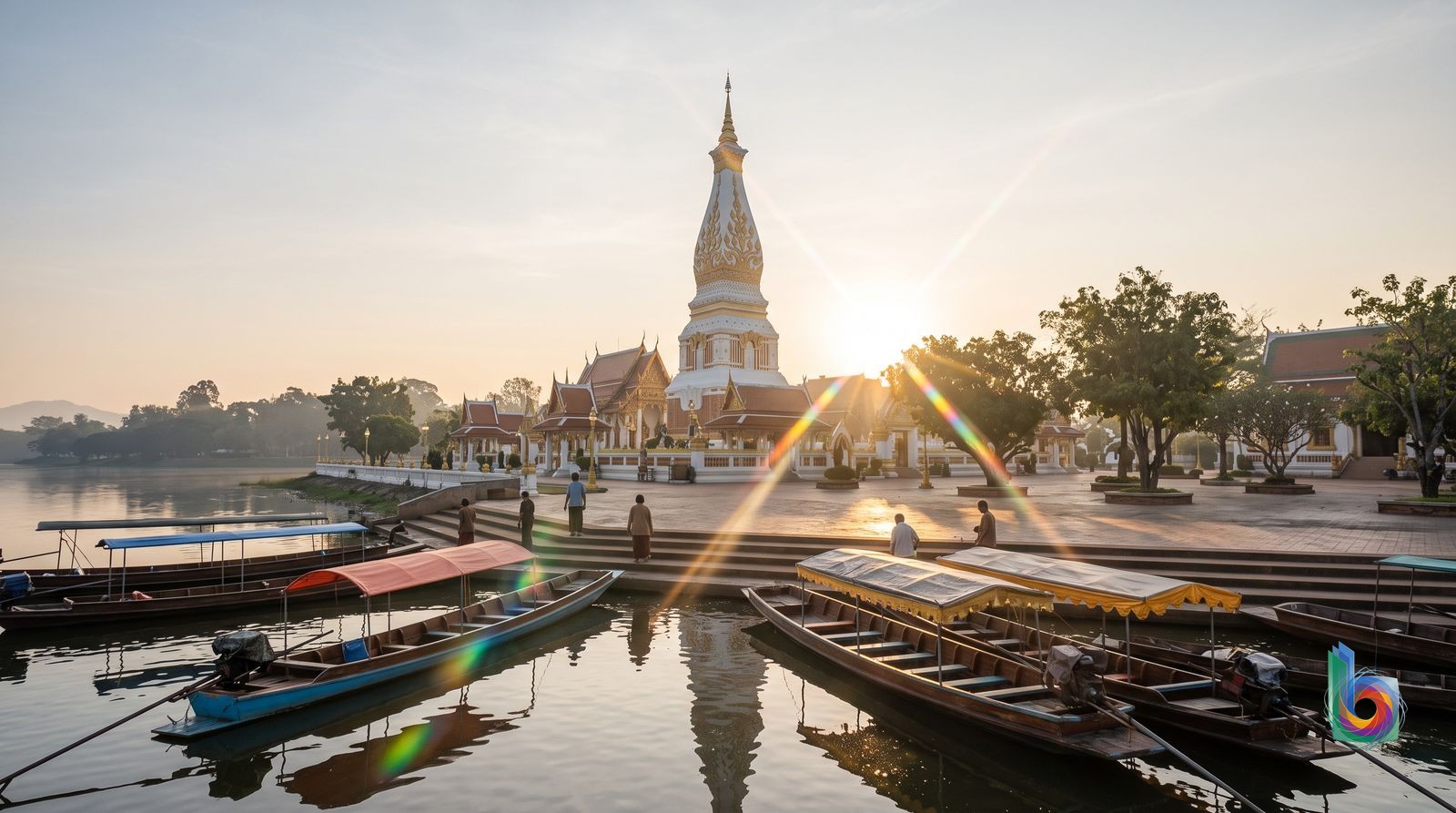
Take a boat if one can be arranged, or enjoy the parks and shore, but do not swim: local guidance warns of parasitic liver-fluke risk. The lakefront is best treated as a short scenic stop rather than a continuous walking promenade.
What transport mistakes should I avoid?
Do not assume Grab-style ride-hailing, frequent buses or a waiting return ride will appear outside the centre. Agree every negotiated fare before boarding—including waiting time and return transport—and make remote temples, dams and Phu Phan stops round trips.


 1


