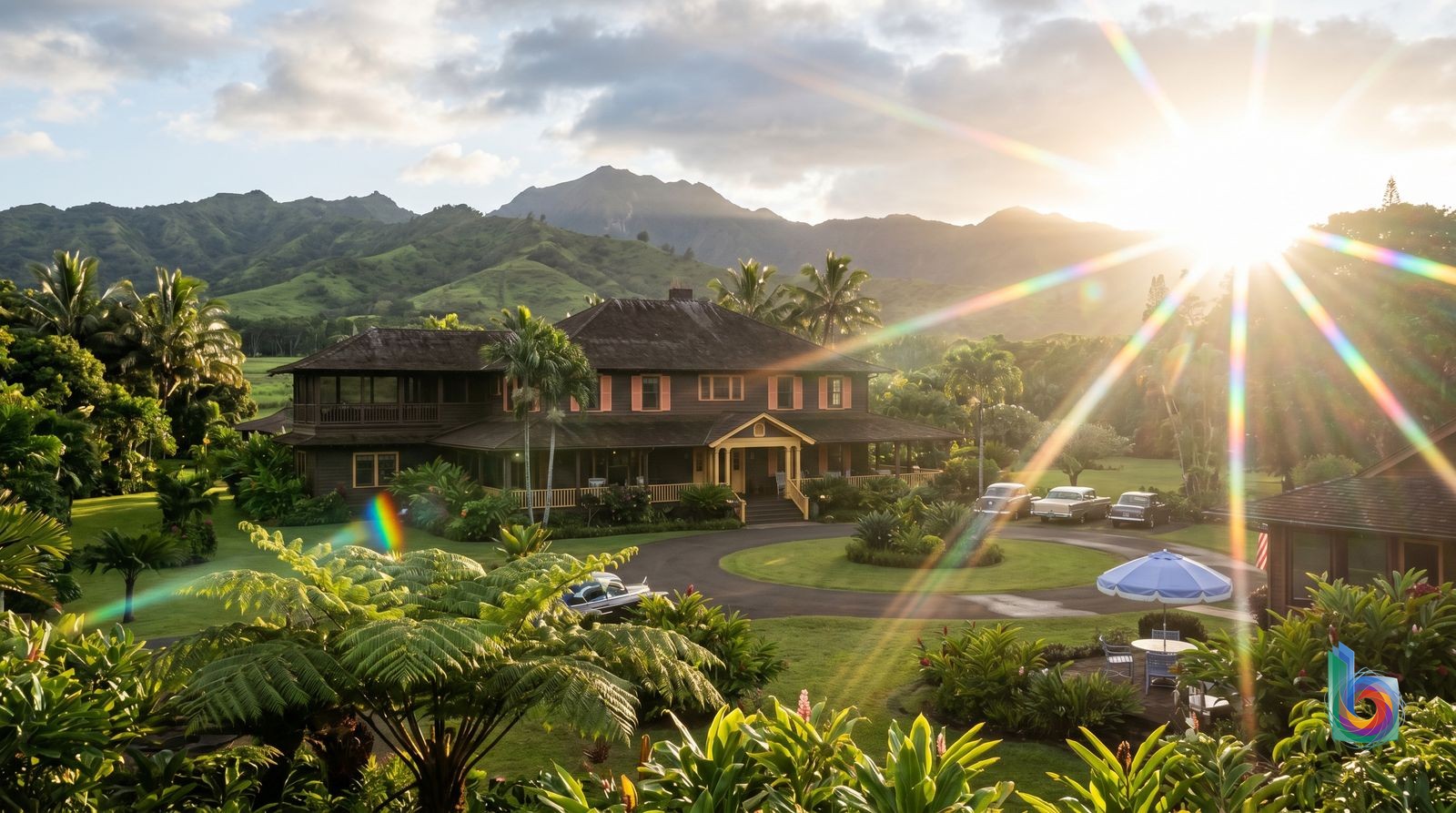
First visit? Stay in Kapaʻa & Coconut Coast.
For a first Kauaʻi trip, Kapaʻa & Coconut Coast is the least compromising one-base choice: it has more everyday food, groceries, modestly priced condos and resorts, an actual old-town strip, and the coastal bike path, while sitting closer to the north shore than Poʻipū and closer to Līhuʻe than Hanalei. It is not the island’s sunniest or prettiest base—the east side is wetter, and Route 56 traffic is real—but it wastes less of an island-wide itinerary in the car. Rent a car; the bus is useful between population centers, not for reliably reaching the island’s major natural sights.
luxury →
Choose Poʻipū & Kōloa for the strongest concentration of upscale resort amenities, beach-oriented stays, and generally sunnier south-shore weather. Kōloa gives the otherwise spread-out resort coast a useful village stop. Skip it if a north-shore-heavy itinerary is the point: Hanalei and Hāʻena make a long day from here.
value →
Kapaʻa has the island’s most practical mix of older resorts, condos, groceries, casual restaurants, and services, usually making it easier to control costs than a polished south-shore or north-shore resort base. Look beyond direct oceanfront units: inland or garden-view lodging can be materially cheaper, though the highway-facing parts are not romantic.
family →
Wailua & Lydgate is the sensible family compromise: Lydgate’s protected swimming area, parks, coastal-path access, and location between Līhuʻe and Kapaʻa are more useful for low-stress days than a remote scenic base. It is dispersed, however; choose Poʻipū & Kōloa instead if a full-service resort and sunnier beach routine matter more than central positioning.
nightlife →
Kauaʻi does not have a meaningful nightlife district. Kapaʻa is the best imperfect fit because it has the broadest practical selection of casual restaurants, bars, shops, and evening foot traffic outside the resort compounds. Expect an early, quiet island night—not a Honolulu-style scene.
quiet →
Hanapēpē & Salt Pond suits travelers who would rather have a modest, local-feeling west-side town and easy access toward Waimea Canyon than a resort bubble. The trade-off is thin lodging and dining inventory, a very quiet evening, and a poor position for repeated north-shore outings.
rail-day-trips →
There is no rail service on Kauaʻi. For the equivalent—a transport-practical base for bus connections, rental-car pickup, airport access, and drives in either direction—use Līhuʻe Town & Rice Street. It is functional rather than scenic, with the Kauaʻi Museum and useful services but little beach life; choose Kalapakī instead if you want airport convenience with a beach-adjacent hotel setting.
return-visitor →
For a repeat visitor focused on Waimea Canyon, Kōkeʻe, dawn starts, and a less resort-shaped Kauaʻi, Waimea is the purposeful choice. A car is effectively essential for the uplands, and the town’s limited food, lodging, and evening options make this a specialist base rather than an all-island default.
Avoid sleeping near Līhuʻe Airport / airport-adjacent commercial blocks: Handy only for a late arrival or early departure. These blocks are built around roads, rental cars, and practical services rather than beach time or an evening wander; staying several nights usually means driving for the Kauaʻi people came to see.
Avoid sleeping near Route 56 highway-facing strip between Līhuʻe, Wailua, and Kapaʻa: Some properties look central and inexpensive on a map, but the corridor is one of Kauaʻi’s most congested and much of it is noisy, commercial, and poorly walkable. Confirm whether the specific lodging actually reaches the coast or bike path on foot rather than merely being near the highway.
Avoid sleeping near Nāwiliwili Harbor industrial/port edge: Kalapakī’s resort-and-bay pocket is a good short-stay choice; the harbor-facing working edge is not the same thing. It is isolated from independent dining and town life, and a harbor address does not guarantee a beach-holiday setting.
Avoid sleeping near Far-north Hāʻena for an island-wide first visit: Hāʻena is compelling when Nā Pali access and the north shore are the trip, but it is residential, remote, and reached by a small north-shore road. Rain, road conditions, and the long return drive to Poʻipū, Waimea, or even Līhuʻe turn a short all-island holiday into too much windshield time.
The neighborhoods
Pick the areas you want to be around — the hotels and tables below narrow to them.
Stay here Fine base Visit, don't sleep
Kapaʻa & Coconut CoastFirst-timer default
Central coast, practical, pleasantly scruffy
Kapaʻa is Kauaʻi’s most useful all-round visitor base rather than its prettiest town: a long, busy Kuhio Highway corridor with older low-rise resorts, condos, groceries, casual food, and a small walkable old-town strip. The oceanfront path and beaches give it real wander appeal, while its east-coast position makes a one-base island trip less punishing than staying at either scenic extreme.
Vs. others: Pick Kapaʻa & Coconut Coast over Poʻipū if you want a more central base, more everyday services, and easier north-shore access; pick Poʻipū if dependable sunshine and a resort beach holiday matter more than location.
Kuhio Highway/Route 56 runs through town; the Kauaʻi Bus links Kapaʻa with Līhuʻe and other major population and resort areas, but a car remains the realistic way to cover the island. The coastal bike path is useful for local beach wandering, not island sightseeing.
Best for: first-timers, value, families, foodies, budget
The Līhuʻe–Kapaʻa highway corridor is among the island’s most congested. · Much of the commercial strip is highway-facing rather than charming. · The windward east side is wetter and cloudier than the south coast. · There is no meaningful late-night scene.
See hotels in Kapaʻa & Coconut CoastLīhuʻe Town & Rice StreetAcceptable base
Useful county seat, not resort Kauaʻi
Central Līhuʻe is the working heart of Kauaʻi: county offices, shops, services, the airport nearby, and the Kauaʻi Museum in the older Rice Street area. It is the place to understand that people live and work here, not a beach-town fantasy; its appeal is convenience, local history, and a sensible launch point for driving in either direction.
Vs. others: Pick Līhuʻe Town & Rice Street over Kapaʻa & Coconut Coast if airport convenience, errands, and west/south driving matter most; pick Kapaʻa if you want a more vacation-like beach base and a better evening stroll.
This is the island’s transport hub in practice: Līhuʻe Airport and rental-car facilities are nearby, and the Kauaʻi Bus serves the town. Rice Street is walkable for the museum and a few blocks, but beaches and most visitor sights require a car or bus.
Best for: value, rail-day-trips, return-visitor, travelers with early flights, travelers who want local history
It is a civic/commercial town, not a resort district. · Limited beach access and limited evening atmosphere. · Road traffic around Līhuʻe can be frustrating at busy times. · Accommodation choices can feel functional rather than memorable.
See hotels in Līhuʻe Town & Rice StreetKalapakī & Nāwiliwili HarborExcellent base
Convenient harbor beach, upscale edges
Just southeast of central Līhuʻe, Kalapakī is the town’s most vacation-oriented pocket: a sheltered-looking bay, harbor activity, larger hotels and residences, and access to Nāwiliwili. It works exceptionally well for a short stay around flights or for travelers who want resort comfort without committing to Poʻipū, but it is a self-contained area rather than a real town center.
Vs. others: Pick Kalapakī & Nāwiliwili Harbor over Līhuʻe Town & Rice Street if a beach-adjacent hotel setting matters; pick Līhuʻe Town if you prefer lower-key, more practical lodging and the museum/old-town area.
Very close to Līhuʻe Airport and easy by car to both Route 50 west/south and Route 56 north. Local walking is limited to the bay and hotel/harbor area; use a car or bus for Līhuʻe proper and island touring.
Best for: luxury, families, travelers with early flights, short stays, return-visitor
The harbor and resort setting can feel insulated from everyday Kauaʻi. · Dining and shopping choices are limited compared with a real town. · It is expensive relative to central Līhuʻe. · A beach here does not eliminate the need for a car for most of Kauaʻi.
See hotels in Kalapakī & Nāwiliwili HarborWailua & LydgateExcellent base
River, parks, family-friendly east coast
North of Līhuʻe, Wailua is a spread-out river-and-resort area rather than a compact village. Its strengths are Lydgate’s protected swimming area, the river, and a position between Līhuʻe and Kapaʻa; it is especially practical for families who want east-coast scenery without Kapaʻa’s busiest commercial strip.
Vs. others: Pick Wailua & Lydgate over Kapaʻa & Coconut Coast if you want more park-and-river calm and family beach time; pick Kapaʻa if restaurants, shops, and a more walkable town strip are more important.
On Kuhio Highway/Route 56 between Līhuʻe and Kapaʻa, with Kauaʻi Bus service along the corridor. The completed coastal path section around Lydgate is excellent for cycling and strolling, but a car is still needed for waterfalls, north shore, Poʻipū, and Waimea Canyon.
Best for: families, quiet, value, return-visitor, outdoorsy travelers
It is dispersed; many lodgings are not walkable to restaurants. · East-side rain and showers are part of the trade-off. · Highway traffic affects access at busy times. · River and ocean conditions should be respected; Kauaʻi currents can be dangerous.
See hotels in Wailua & LydgatePoʻipū & KōloaExcellent base
Sunny resort coast with real village
Poʻipū is the island’s principal south-shore resort district: beaches, condos, major hotels, golf-oriented development, and the strongest claim to a reliably sunny beach break. Nearby Kōloa adds a small historic plantation-town center and useful dining. This is the easy choice for travelers who want their holiday to happen close to the hotel, not from behind a windshield.
Vs. others: Pick Poʻipū & Kōloa over Kapaʻa & Coconut Coast if beach weather, resort facilities, and south-shore access are the priority; pick Kapaʻa if you want a more balanced location for the north shore and a less resort-dominated base.
Reached from Līhuʻe via Route 50 and the south-shore roads; the Kauaʻi Bus reaches major resort/beach areas, but schedules and island distances make a car much more practical. Kōloa is the walkable part; Poʻipū itself is spread out.
Best for: luxury, families, sun-seekers, foodies, travelers wanting resort amenities
It is generally pricier and more resort-oriented than east-coast bases. · Driving to Hanalei or the far north makes for a long day. · Beach conditions vary; do not assume every attractive beach is safe to swim. · The popular commercial pockets can feel designed for visitors rather than spontaneous local life.
See hotels in Poʻipū & KōloaHanapēpē & Salt PondAcceptable base
Art town, west-side pause
Hanapēpē has a modest old-town main street of galleries, crafts, and local businesses, plus the swinging footbridge over the river. Salt Pond Beach Park gives the area a beach counterweight. It is a rewarding stop and a characterful west-side base for the right itinerary, but it is quiet and limited after you have walked the main strip.
Vs. others: Pick Hanapēpē & Salt Pond over Poʻipū & Kōloa if you want a quieter, more local-feeling west-side base near canyon country; pick Poʻipū if you want many resorts, more restaurants, and easier beach-holiday logistics.
On Route 50 west of Līhuʻe and Poʻipū, with Kauaʻi Bus connections along the main corridor. The small downtown is walkable, but Salt Pond, Waimea Canyon, and nearly all practical lodging-to-sight connections are easier by car.
Best for: quiet, return-visitor, budget, art lovers, travelers focused on Waimea Canyon
Accommodation and restaurant choice is thin. · It is a long drive from the north shore. · The town is quiet outside its small gallery-and-shop core. · Do not book solely for beach swimming without checking current ocean conditions.
See hotels in Hanapēpē & Salt PondWaimea & Kōkeʻe GatewayAcceptable base
Old Kauaʻi before canyon country
Waimea is a small, lived-in west-side town with an old-Kauaʻi feel, a useful stop for supplies, and the natural gateway to Waimea Canyon and Kōkeʻe. It is better for travelers who want dawn access to the uplands or who enjoy places that are not curated into resort districts; it is not a beach-resort substitute.
Vs. others: Pick Waimea & Kōkeʻe Gateway over Hanapēpē & Salt Pond if Waimea Canyon and Kōkeʻe are the reason for staying west; pick Hanapēpē if you want a more arts-oriented town and easier access back toward Poʻipū.
Route 50 reaches Waimea from Līhuʻe through Hanapēpē. Bus service can cover the town corridor, but it does not solve access to rural attractions such as Kōkeʻe; a car is effectively essential for canyon exploration.
Best for: quiet, budget, return-visitor, hikers, travelers focused on Waimea Canyon
It is remote from Poʻipū, Līhuʻe, Kapaʻa, and the north shore. · Lodging, dining, and evening options are limited. · Kōkeʻe brings a distinctly cooler, wetter mountain climate than the coast. · The west-side base is about scenery and hiking, not a polished resort experience.
See hotels in Waimea & Kōkeʻe GatewayPrincevilleExcellent base
Planned north-shore comfort, dramatic setting
Princeville is a master-planned north-shore resort and condo community above Hanalei Bay, with golf, landscaped developments, and dramatic mountain views. It is convenient and comfortable for the north shore, especially for condo-style stays, but it is not Hanalei: the experience is residential-resort, car-dependent, and somewhat removed from the beach-town life below.
Vs. others: Pick Princeville over Hanalei if you want resort/condo inventory, planned amenities, and a quieter residential setting; pick Hanalei if you want to step into a real small town and be close to Hanalei Bay.
Reached via Kuhio Highway/Route 56, then the Princeville road network; bus access follows the north-shore corridor but is not a substitute for a car. Driving down to Hanalei is straightforward in normal conditions, while the rest of the island is a substantial journey.
Best for: luxury, families, quiet, return-visitor, travelers focused on the north shore
The north shore is wetter than Poʻipū and can be cloudier. · It can feel like a resort development rather than a Hawaiian town. · Beaches and services are more spread out than they look on a map. · North-shore road conditions and traffic can make day trips less predictable.
See hotels in PrincevilleHanalei & Hāʻena GatewayExcellent base
Iconic bay, real village, wet north
Hanalei is Kauaʻi’s most atmospheric visitor town: a relaxed small center, striking mountain-and-waterfall backdrop, and Hanalei Bay close by. Beyond it, Hāʻena is more residential and is the gateway toward the Nā Pali Coast. Stay here for the north shore itself, not because it is convenient to everything else; its beauty comes with distance, rain, and pressure on a small road network.
Vs. others: Pick Hanalei & Hāʻena Gateway over Princeville if village atmosphere, Hanalei Bay, and being close to the north-shore landscape outweigh resort convenience; pick Princeville if you prefer a more contained condo/resort base.
At the far end of Route 56/Kuhio Highway, beyond Princeville. Bus service follows the population corridor but is limited for remote attractions; a car is the practical tool, and the north shore is a poor base for frequent trips to Poʻipū or Waimea Canyon.
Best for: quiet, families, foodies, return-visitor, travelers focused on beaches and north-shore scenery
It is one of the island’s wetter areas; rain is not an exception. · The route in is long from Līhuʻe and vulnerable to congestion or changing conditions. · Dining and lodging can be costly and booking pressure is high. · Do not enter the ocean casually: north-shore surf and currents can be hazardous, especially outside calm conditions.
See hotels in Hanalei & Hāʻena GatewayWhere to stay
Hotels in Lihue
Timbers Kaua‘i - Ocean Club & ResidencesResort4.8 · 201 reviews
Marriott's Kauai Lagoons - Kalanipu'uHotel · $$$4.7 · 705 reviews
Garden Island InnHotel4.6 · 158 reviews
The Royal Sonesta Kaua'i Resort LihueResort4.5 · 3,537 reviews
Hale Hokuala Kauai, Curio Collection by HiltonHotel4.8 · 20 reviews
Marriott's Kaua'i Beach ClubHotel4.4 · 2,165 reviews