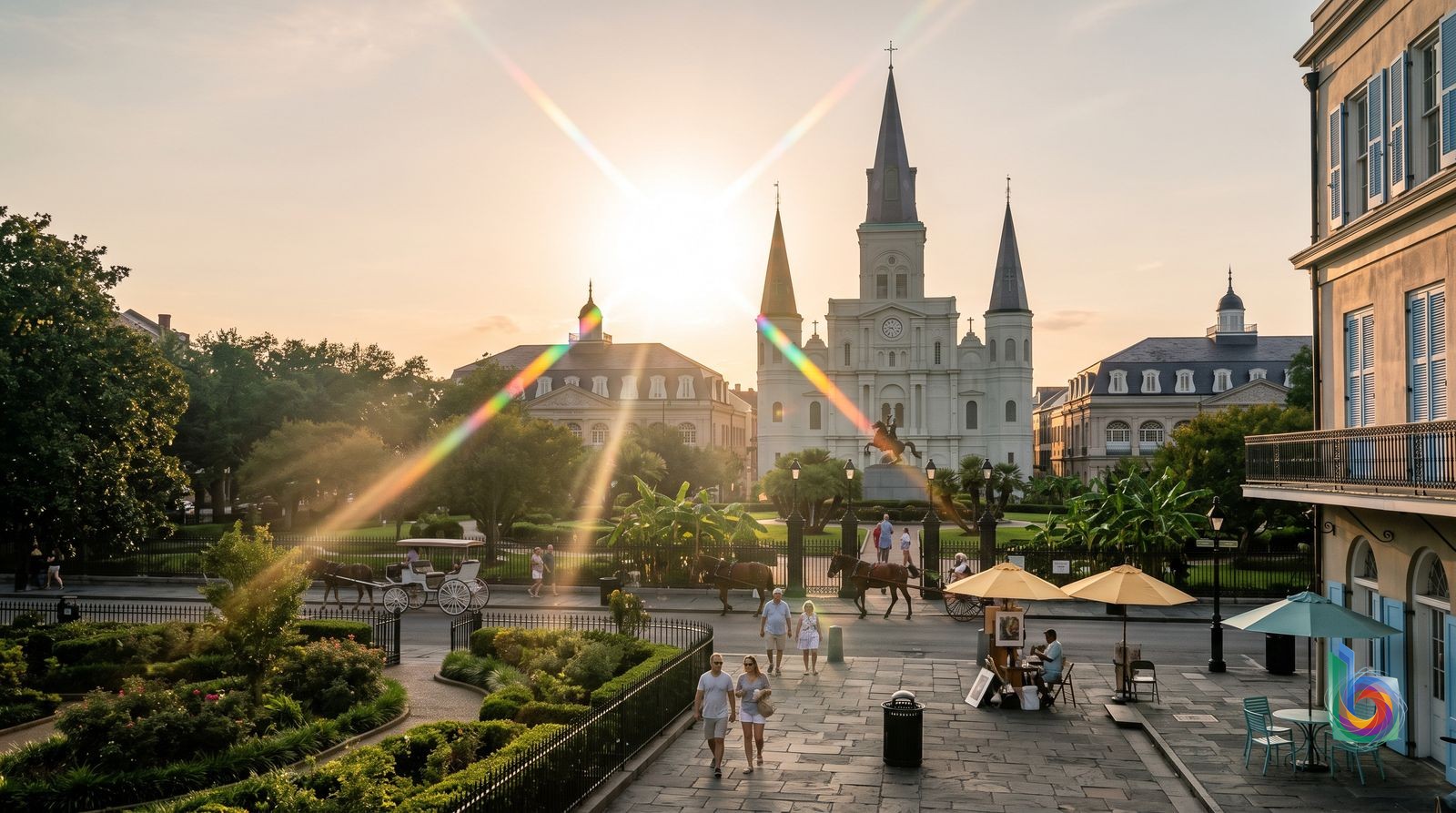
First visit? Stay in French Quarter.
For a first visit, the French Quarter is the least complicated base: the classic sights, riverfront, old restaurants, music, Canal Street transit, and the CBD are all walkable. Choose a hotel on a quieter Quarter block rather than directly on Bourbon Street; the convenience is real, but Bourbon’s noise and late-night mess are too.
luxury →
Best concentration of larger full-service and high-rise hotels, plus the World War II Museum, galleries, and serious restaurants. You remain close to the Quarter without sleeping in its party center.
value →
Usually a more practical, local-feeling alternative to core lodging, with neighborhood restaurants, cemeteries, City Park access, and Canal Street streetcars. Accept slower trips downtown and do not expect to walk to the Quarter.
family →
Calmer evenings, handsome streets for daytime walks, Magazine Street dining, and the St. Charles streetcar make this a better decompression base than the Quarter. It is not the right choice if the family wants to return to the hotel on foot from Frenchmen Street.
nightlife →
Stay here for Frenchmen Street’s live-music orbit and a more residential, creative setting than Bourbon Street. Book away from Frenchmen itself if sleep matters, and use a ride rather than assuming every late-night walk home is equally comfortable.
quiet →
The most genuinely low-key option among visitor-worthy districts: porches, river views, and a village rhythm across the Mississippi. It works for travelers willing to plan around the ferry and sacrifice late-night spontaneity.
rail-day-trips →
It is the most practical visitor district for Union Passenger Terminal/Amtrak while still offering a walkable downtown base. The station itself is functional rather than scenic, so stay in the museum/warehouse or Quarter-facing side rather than treating the station blocks as a destination.
return-visitor →
For a longer or second visit, Bywater offers colorful residential streets, neighborhood bars and restaurants, and less packaged wandering than the core. Its distance from the Quarter and thin full-service-hotel supply make it a poor trade for a short first trip.
Avoid sleeping near Bourbon Street and its immediate French Quarter party blocks: You may be centrally located, but direct exposure to amplified music, crowds, intoxicated pedestrians, litter, and late-night street noise can overwhelm the benefits. Stay elsewhere in the Quarter if you want its access without sleeping inside the spectacle.
Avoid sleeping near The convention-center end of the Central Business District & Warehouse District: It can be surprisingly blank after office hours or between conventions, and hotels marketed as downtown may leave you farther from the Quarter than expected. Better for a convention itinerary than for an atmospheric first visit.
Avoid sleeping near Union Passenger Terminal and surrounding station blocks: Convenient for an early train, but not a visitor neighborhood with the dining, activity, or easy sightseeing access most travelers expect from a New Orleans hotel base. Use the CBD/Warehouse District instead.
The neighborhoods
Pick the areas you want to be around — the hotels and tables below narrow to them.
Stay here Fine base Visit, don't sleep
French QuarterFirst-timer default
Historic core, maximum access, maximum spectacle
The compact old city is the first-time New Orleans fantasy: balconies, Jackson Square, the riverfront, old restaurants, museums, and an astonishing density of bars and music. It is genuinely convenient and beautiful in the right blocks, but Bourbon Street is not representative of the city—or even of most of the Quarter.
Vs. others: Pick French Quarter over the Central Business District & Warehouse District if walking straight out to the classic sights and late-night action matters most; pick the CBD if you want more modern hotels and a little separation from Bourbon Street.
The city’s most walkable visitor base: Canal Street streetcars run along its upriver edge, Riverfront service covers the Mississippi side, and the CBD is an easy walk. A car is more trouble than help here.
Best for: first-timers, nightlife, foodies, short stays, car-free travelers
Bourbon Street can be loud, messy, and aggressively party-focused well into the night. · Pickpocketing and phone theft are real risks around distracted, intoxicated crowds. · Restaurants range from excellent old standards to conspicuous tourist-menu traps; do not choose solely by neon or a host outside.
See hotels in French QuarterCentral Business District & Warehouse DistrictExcellent base
Museums, big hotels, downtown convenience
This is the practical downtown base immediately upriver of the Quarter: high-rise hotels, the Superdome, convention traffic, serious restaurants, Julia Street galleries, and the National World War II Museum and Ogden Museum. The Warehouse District has more character than the office-heavy CBD core, but this is still a working downtown rather than a porch-and-oaks neighborhood.
Vs. others: Pick Central Business District & Warehouse District over the French Quarter if you want larger full-service hotels and museums without sleeping amid Bourbon Street; pick the Quarter if atmospheric streets and all-hours wandering outweigh hotel convenience.
Walk to the Quarter in roughly one to several blocks depending on location; Canal Street and Riverfront streetcars are nearby, and the St. Charles line begins at Canal. It is the most practical lodging area for Union Passenger Terminal/Amtrak access, though the station is not a sightseeing hub.
Best for: first-timers, luxury, families, museum lovers, rail-day-trips, convention travelers
The convention-center end can feel quiet and blank after office hours or when no event is in town. · The area is spread out; a hotel marketed as 'downtown' may be farther from the Quarter than expected. · Street noise, traffic, construction, and event surges are common around major venues.
See hotels in Central Business District & Warehouse DistrictMarignyExcellent base
Frenchmen music, Creole cottages, late nights
Immediately downriver from the Quarter, the Faubourg Marigny is a lived-in historic neighborhood with colorful cottages and the city’s most visitor-friendly live-music strip on Frenchmen Street. It is the natural alternative for travelers who want music and neighborhood texture rather than Bourbon’s spectacle.
Vs. others: Pick Marigny over the French Quarter if Frenchmen Street music and a more residential feel appeal; pick the Quarter if you want the major sights and widest hotel choice immediately outside your door.
The Quarter is walkable, especially from the Marigny Triangle, and the Riverfront streetcar is useful near the river. Beyond that corridor, buses, rideshare, or a bike are more realistic than frequent rail service.
Best for: nightlife, music lovers, return-visitors, couples, travelers wanting boutique guesthouses
Frenchmen Street itself is loud, crowded, and increasingly visitor-oriented at night. · Block-by-block conditions vary, so choose lodging location carefully and use a ride late at night rather than assuming every route home is equally comfortable. · Accommodation inventory is smaller than in the Quarter or CBD.
See hotels in MarignyBywaterAcceptable base
Creative edge, colorful homes, slower pace
Bywater continues downriver from Marigny with shotgun houses, murals, corner bars, neighborhood restaurants, and a distinctly bohemian reputation. It rewards wandering without an agenda and feels less packaged for visitors, but it is not close enough to the core to pretend it is a frictionless first-time base.
Vs. others: Pick Bywater over Marigny if you want a calmer, more residential and creative neighborhood; pick Marigny if being able to walk to Frenchmen Street and the Quarter matters more.
Frenchmen Street and the Quarter are a long walk rather than a casual doorstep stroll. The Riverfront streetcar is useful only from the river-side edge; otherwise expect buses, biking, rideshare, or a car.
Best for: return-visitors, foodies, quiet-seekers who still want bars nearby, longer stays
It is farther from the main sights than maps can make it look. · Night walking on quiet side streets is not the same proposition as walking within the Quarter. · Limited hotel supply means stays are often small guesthouses or rentals rather than full-service hotels.
See hotels in BywaterGarden District & Lower Garden DistrictExcellent base
Mansions, gardens, Magazine Street, calmer evenings
This is the handsome nineteenth-century New Orleans of oak shade, elaborate houses, Lafayette Cemetery area, and Magazine Street’s shops and restaurants. The Lower Garden District adds the more urban, museum-adjacent end. It is lovely to wander, but visitors should not mistake a scenic residential district for a concentrated attraction zone.
Vs. others: Pick Garden District & Lower Garden District over Uptown if you want grand architecture while staying closer to the CBD and museums; pick Uptown if you want a deeper residential feel and more of Magazine Street or Audubon Park.
The St. Charles Avenue streetcar is the major link to Canal Street/CBD and runs through the corridor; Magazine Street is best handled on foot in sections or by bus/rideshare. The Quarter is not an easy walk for most travelers.
Best for: families, couples, luxury, quiet, architecture lovers, foodies
The streetcar is scenic, not a fast door-to-door substitute for walking or rideshare. · A quiet mansion street can be a long walk from restaurants or the streetcar. · The neighborhood’s polished image can make it feel less socially and culturally varied than other parts of the city.
See hotels in Garden District & Lower Garden DistrictUptown, Audubon & CarrolltonAcceptable base
Porches, universities, parks, local restaurants
Uptown stretches far beyond the Garden District: leafy residential streets, Tulane and Loyola, Audubon Park and Zoo, the long commercial run of Magazine Street, and the Riverbend/Old Carrollton at the end of St. Charles. It feels more like a place residents live than a visitor stage set, which is its appeal—and its logistical limitation.
Vs. others: Pick Uptown, Audubon & Carrollton over the Garden District & Lower Garden District if parks, universities, and a more local daily rhythm matter; pick the Garden District if you want easier access to downtown museums and the Quarter.
The St. Charles streetcar links much of Uptown to Canal Street and downtown, but the ride is slow and destinations can be far apart. Magazine Street has bus access; a car is useful once you are beyond the streetcar corridor.
Best for: families, quiet, foodies, return-visitors, longer stays
It is a sizable area, so 'Uptown' does not guarantee walkability to a particular restaurant, park, or streetcar stop. · Trips back from downtown at night take time. · Its residential calm can feel sleepy to travelers seeking constant music and action.
See hotels in Uptown, Audubon & CarrolltonMid-City & Bayou St. JohnExcellent base
City Park gateway, canals, local rhythm
Mid-City is a broad, practical neighborhood with old houses, neighborhood restaurants, cemeteries, the Canal Street streetcar corridor, and access to City Park. Bayou St. John adds a prettier waterside residential pocket. It offers more everyday New Orleans than the Quarter, without needing to go far out of town.
Vs. others: Pick Mid-City & Bayou St. John over the Garden District & Lower Garden District if City Park, cemeteries, and a more local/value-oriented base matter; pick the Garden District if architectural strolling and quicker downtown access are priorities.
Canal Street streetcars connect Mid-City toward downtown; City Park and the New Orleans Museum of Art are farther out and may require a walk, bus, or rideshare depending on where you stay. The Quarter is not walkable for most visitors.
Best for: families, value, foodies, return-visitors, City Park and museum visitors
The neighborhood is spread out, and the attractive residential blocks are not uniformly close to transit or restaurants. · Streetcar travel is slow and service outside the core is less dependable than simply walking the Quarter. · Visitors should not wander unfamiliar blocks late at night just because the area feels residential by day.
See hotels in Mid-City & Bayou St. JohnTremé & Esplanade RidgeAcceptable base
Deep history beside the tourist core
Tremé is one of the city’s most historically important Creole and Black neighborhoods, immediately inland from the Quarter, with Congo Square/Armstrong Park nearby. Esplanade Ridge continues toward the Fair Grounds along a grand old avenue. This is a place to approach with curiosity and respect, not as a backdrop for a themed nightlife crawl.
Vs. others: Pick Tremé & Esplanade Ridge over the French Quarter if historic Creole and Black New Orleans context matters more than hotel density; pick the Quarter if you want the easiest, most consistently active streets and broadest dining choice.
The Quarter is walkable from the southern end, and Canal Street transit is nearby; farther up Esplanade, rideshare or buses are more useful. The area is not served by a direct streetcar spine like St. Charles.
Best for: history lovers, culture travelers, return-visitors, travelers wanting proximity to the Quarter without staying in it
Conditions and comfort levels vary sharply by block, especially at night. · The Iberville project area west of Armstrong Park is specifically not a casual visitor wandering route. · Tourist lodging and late-night services are limited compared with the Quarter.
See hotels in Tremé & Esplanade RidgeCity Park & Fair GroundsVisit, don't sleep
Park, art, gardens, Jazz Fest grounds
This is the destination zone for City Park, the New Orleans Museum of Art, botanical attractions, the Louisiana Children’s Museum, cemeteries nearby, and the Fair Grounds during Jazz Fest. It is worth a dedicated daytime outing, not a substitute for a central sightseeing base.
Vs. others: Pick City Park & Fair Grounds over Mid-City & Bayou St. John for a focused park-and-museum day; pick Mid-City if you want restaurants, transit access, and a plausible neighborhood base.
Canal Street streetcars reach Mid-City, but the park and Fair Grounds are not universally a short walk from every stop. During major events, expect crowds and plan the final leg by walking, bus, rideshare, or event transport.
Best for: families, art lovers, park lovers, Jazz Fest visitors
It is dispersed, with limited mainstream visitor lodging and little night activity. · Jazz Fest periods bring very high demand across the city; book well ahead. · A beautiful park setting can be hot, wet, and tiring in subtropical weather.
See hotels in City Park & Fair GroundsAlgiers PointAcceptable base
River crossing, village calm, skyline views
Across the Mississippi from downtown, historic Algiers Point feels like a small river town with old houses, porches, and exceptional views back to the city. The ferry ride is part of the reason to come. It is a real neighborhood, not a convenient extension of the French Quarter.
Vs. others: Pick Algiers Point over Bywater if river views and genuine quiet matter more than restaurants and Frenchmen Street proximity; pick Bywater if you want to remain on the same side of the river as the Quarter and nightlife.
The pedestrian ferry to the foot of Canal Street makes a scenic downtown connection, but schedules and operating conditions matter; do not build an inflexible itinerary around it. Away from the ferry landing, a car, bus, or rideshare is more practical.
Best for: quiet, return-visitors, couples, travelers seeking a low-key stay
Ferry dependence makes late-night and bad-weather logistics less simple than they appear. · There are far fewer hotels, restaurants, and visitor services than on the east bank. · It can feel isolated if your plans revolve around evening music downtown.
See hotels in Algiers PointLakeview & LakeshoreVisit, don't sleep
Lakefront, neighborhood dining, suburban pace
Northwest of the visitor core, Lakeview offers lakefront parks, the Harrison Avenue restaurant cluster, and a more modern, residential side of New Orleans. It is useful for a meal, a lake walk, or travelers visiting friends; it is not where the city’s historic center happens.
Vs. others: Pick Lakeview & Lakeshore over Uptown, Audubon & Carrollton if lakefront space and a car-oriented residential setting appeal; pick Uptown if you want historic streets, better visitor transit, and easier access to downtown.
There is no direct streetcar connection from Lakeview to the Quarter; bus, rideshare, or a car is the realistic plan. The lakefront itself is spread out.
Best for: families with a car, quiet, return-visitors, lakefront visitors
It is inconvenient for the Quarter, Frenchmen Street, and the major museums without a car. · The atmosphere is suburban rather than historic-core New Orleans. · Visitor accommodation is limited, so a cheap-looking stay here can create daily transport costs and lost time.
See hotels in Lakeview & LakeshoreLower Ninth WardVisit, don't sleep
Katrina history, community, not a sightseeing set
The Lower Ninth Ward is inseparable from the story of Hurricane Katrina and levee failure, and it has important community and recovery history. It is not a polished tourist district and should not be treated as disaster tourism; visit only with a clear purpose, current local guidance, or an appropriate organized context.
Vs. others: Pick the Lower Ninth Ward over the French Quarter only if you have a specific interest in Katrina history and recovery; pick the French Quarter for a normal first visit and dense, walkable attractions.
It is downriver and not connected to the visitor core by streetcar. A car, rideshare, or organized tour is generally more practical than relying on public transit.
Best for: history travelers, repeat visitors with a specific interest, responsible guided visits
It is far from most visitor sights and has very limited tourist infrastructure. · Do not assume neighborhood conditions, services, or safety are uniform; check current local guidance. · Insensitive self-guided 'ruin' sightseeing is disrespectful to a living community.
See hotels in Lower Ninth WardWhere to stay


