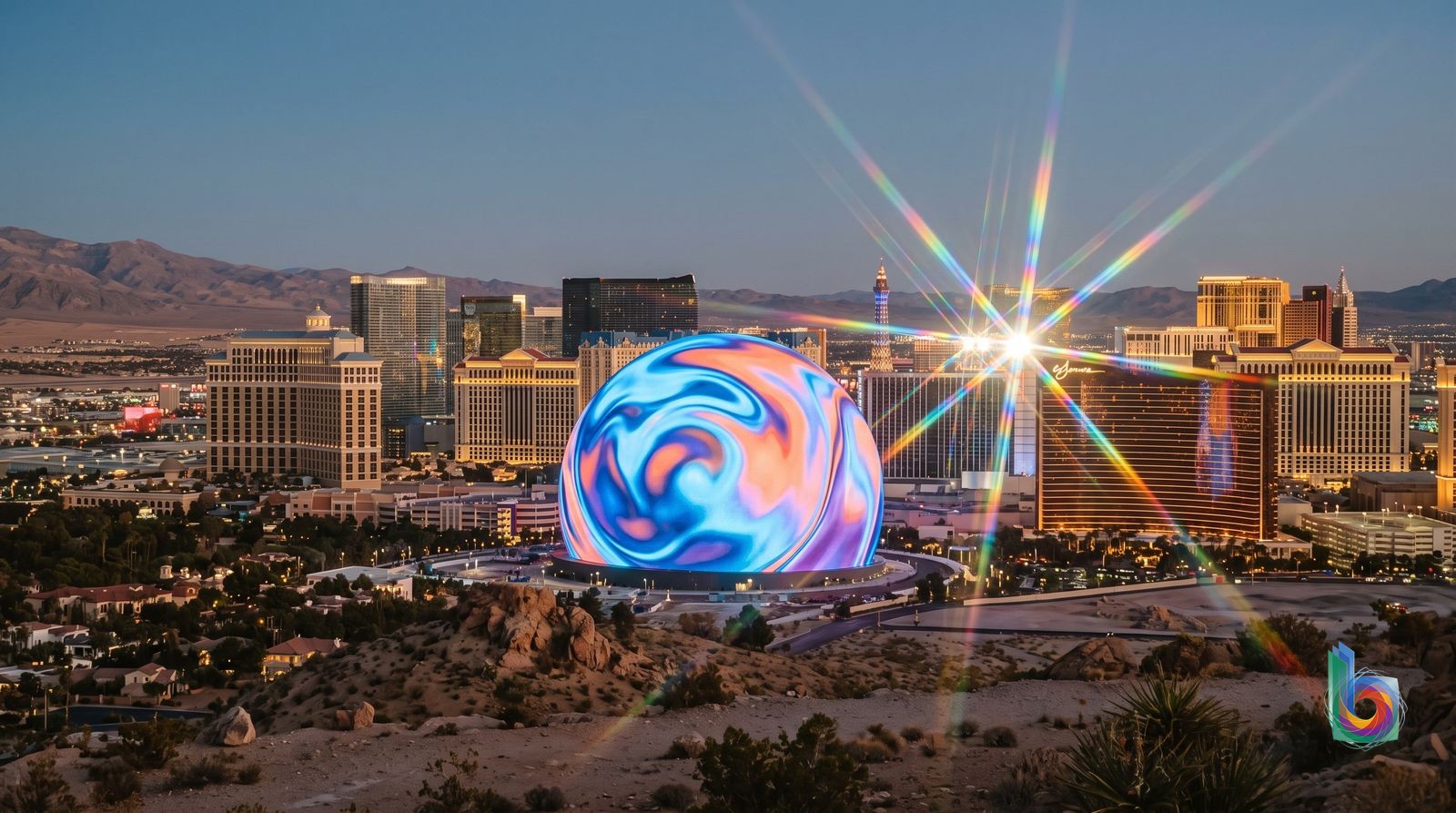
First visit? Stay in Central Strip.
For a first visit, Central Strip is the least logistically punishing choice: Bellagio, Caesars Palace, Flamingo, Paris, Cosmopolitan, Aria and Park MGM put the greatest concentration of landmark resorts, shows, dining and nightlife within one imperfect but usable walking area. It costs more once resort fees and weekend rates are included, and it is noisy and commercial, but it minimizes taxi time and the risk of spending a short Vegas trip shuttling between isolated properties.
luxury →
This is the strongest luxury base because the marquee dining, shopping, suites, spas and production shows are concentrated here. Choose it over Summerlin and Red Rock if the trip is about Vegas itself rather than a serene resort-and-desert escape.
value →
Downtown's compact older casinos can offer better-value rooms and gambling than the Strip, while putting nightlife directly outside. Choose it over North Strip if you want to walk to a real concentration of activity rather than stay in a newer but more isolated tower.
family →
The large Mandalay Bay–Luxor–Excalibur–MGM Grand end has big resort compounds, family-oriented attractions and arena access, with a free tram linking part of the cluster. Choose it over Fremont Street Experience for a more conventional resort stay; accept that the central Strip's headline sights are a long walk or ride away.
nightlife →
For club nights, cocktail bars, major shows and the option to walk back rather than organize a late rideshare, this is the sensible base. Pick it over Fremont Street Experience for polished mega-resort nightlife; pick Fremont instead for louder, cheaper, rougher-edged old-Vegas energy.
quiet →
This is the best retreat base for travelers who want a polished resort setting and Red Rock Canyon access without casino-floor intensity at every turn. Pick it over Henderson and Green Valley if Red Rock and western desert scenery matter most; rent a car and do not expect casual Strip nightlife.
rail-day-trips →
It is the most practical base for using the Las Vegas Monorail repeatedly, especially for convention-center business and east-side Strip access. This is not true intercity rail—Las Vegas's Monorail does not reach Downtown or the airport—and its stations are often set behind resorts, but it is more useful here than from a west-side property.
return-visitor →
For a second or third Vegas trip, stay amid Main Street's galleries, vintage shops, breweries, coffee and independent restaurants rather than repeat the resort bubble. Pick it over Fremont Street Experience if you want local-facing bars and meals; stay on Fremont if the casino action itself is the point.
Avoid sleeping near Boulder Highway and East Las Vegas: Cheap-looking rates can be a false economy: this is a car-oriented corridor far from both the Strip and Downtown, with little pleasant pedestrian life. Long rides and a less comfortable late-night street environment erase much of the saving.
Avoid sleeping near UNLV and East Flamingo: Useful for a university visit, but not for a typical leisure stay. Wide roads, surface parking and limited evening visitor activity mean rideshare or buses for nearly every Strip plan.
Avoid sleeping near Chinatown and Spring Mountain Road: Stay here only if food exploration outweighs sightseeing convenience. It is excellent for meals but a traffic-heavy strip-mall corridor, not a district where most visitors want to walk back to a hotel after a show or late night on the Strip.
Avoid sleeping near The far north end of the North Strip, especially around the Strat: A particular hotel or convention can justify it, but tourists often underestimate the gaps. The central Strip is not an easy stroll away, the pedestrian setting is thinner and less polished, and frequent back-and-forth rides blunt any room-rate advantage.
The neighborhoods
Pick the areas you want to be around — the hotels and tables below narrow to them.
Stay here Fine base Visit, don't sleep
Central StripFirst-timer default
The first-timer Vegas core
The stretch around Bellagio, Caesars Palace, Flamingo, Paris, Cosmopolitan, Aria and Park MGM is the most practical version of Las Vegas: dense with casinos, restaurants, shows and visual nonsense, but genuinely easy to use on a short first trip. It is relentlessly commercial rather than neighborhood-like, and resort interiors can make simple crossings feel absurdly long.
Vs. others: Pick Central Strip over Downtown if you want the classic mega-resort experience and walkable headline sights; pick Downtown if you prefer smaller casinos, neon history and a looser feel.
Walkable between adjacent resorts, though distances are deceptive and pedestrian bridges add time. The Las Vegas Monorail runs behind the east-side resorts rather than on Las Vegas Boulevard; the free Aria Express links Bellagio, Aria and Park MGM. Buses connect the Strip with Downtown.
Best for: first-timers, nightlife, luxury, foodies, families
Weekend prices and resort fees can turn an apparent bargain into an expensive stay. · Crowds, smoking, touts and late-night noise are normal. · Summer walks are punishingly hot, and each resort crossing can take far longer than it looks.
See hotels in Central StripNorth StripAcceptable base
Big resorts, thinner street life
North of the central cluster, around Resorts World, Fontainebleau, Sahara and the Strat, the Strip becomes more spread out and less naturally walkable. It suits travelers who want newer towers, convention access or a particular resort, not those expecting to stroll effortlessly between all the famous sights.
Vs. others: Pick North Strip over Central Strip if a newer resort, Sahara-area Monorail access or convention proximity matters; pick Central Strip if you want the easiest all-purpose sightseeing base.
The Monorail reaches Sahara and Las Vegas Convention Center stations, but its stations are behind properties and require long indoor walks. Buses run along the Strip; the central Strip and Downtown are not comfortable walking distances from most hotels here.
Best for: value, convention-goers, nightlife, return-visitors
The gaps between resorts make the area feel isolated on foot. · The Strat end is far from the central Strip's main sights. · Construction, traffic and a less polished pedestrian environment can intrude.
See hotels in North StripSouth StripAcceptable base
Airport-side resorts and sprawling compounds
The Mandalay Bay, Luxor, Excalibur, MGM Grand and southward airport-side end offers enormous resorts, arena events and often more room for the money than the center. It works well when your plans are concentrated here, but it is not a compact district and the classic mid-Strip spectacle is a serious walk away.
Vs. others: Pick South Strip over Central Strip if you are attending an event near MGM Grand or want Mandalay Bay's resort complex; pick Central Strip if your priority is being near the widest range of sights and dining.
Mandalay Bay, Luxor and Excalibur are linked by a free tram, while the free Aria Express connects Park MGM northward through Aria to Bellagio. Strip buses are the main link to Downtown; the airport is at the south end of the Strip.
Best for: families, value, nightlife, arena-event-goers
Resort-to-resort distances are substantial even before leaving the casino floor. · Aircraft noise may be noticeable near the airport. · The free Mandalay Bay tram has limited operating days and hours according to the current visitor guidance.
See hotels in South StripFremont Street ExperienceExcellent base
Old Vegas under a loud canopy
This is the pedestrianized casino strip in Downtown Las Vegas: older gambling rooms, a giant LED canopy, free light shows and constant amplified music. It is more compact, cheaper-feeling and less polished than the Strip, with genuine neon atmosphere but little pretense of calm.
Vs. others: Pick Fremont Street Experience over Central Strip if you want compact old-school casino energy and usually better value; pick Central Strip if you want major resort pools, luxury shopping and marquee production shows.
Very walkable within the Fremont canopy and adjacent Downtown blocks. Frequent buses connect Downtown and the Strip, but the two are several miles apart, so do not plan to walk between them.
Best for: value, nightlife, return-visitors, first-timers
Nighttime sound levels, street performers and crowds can be intense. · The party atmosphere can feel rougher after dark than inside Strip resorts. · Food immediately on the canopy is often more convenience than destination dining.
See hotels in Fremont Street ExperienceDowntown Las Vegas Arts DistrictAcceptable base
Murals, breweries, independent Vegas
South of Fremont around Main Street and Commerce, the Arts District is Las Vegas's most plausible urban neighborhood: galleries, vintage stores, coffee, bars, breweries and a growing restaurant scene in low-rise blocks. It is a refreshing counterpoint to casino resorts, though it is still patchy and small enough that visitors can exhaust the core quickly.
Vs. others: Pick the Arts District over Fremont Street Experience if you want independent bars, murals and local-facing restaurants; pick Fremont if you want casinos, the canopy and late-night spectacle outside your door.
Walkable within its Main Street core and reasonably close to Downtown, though it is not an effortless walk from the Fremont canopy in heat. Bus service is more useful than the Monorail; reaching the Strip generally requires a ride.
Best for: foodies, return-visitors, nightlife, quiet
Blocks outside the active core can feel empty, particularly late at night. · Hotel choice is limited compared with the Strip and Fremont. · It is not a substitute for being walkable to the Strip's major attractions.
See hotels in Downtown Las Vegas Arts DistrictChinatown and Spring Mountain RoadVisit, don't sleep
Vegas eats beyond the casino floor
West of the Strip along Spring Mountain Road, this is the valley's most useful dining district: Chinese, Japanese, Korean, Vietnamese and other Asian restaurants, dessert shops and late-night meals in strip malls. It is a food destination, not a charming pedestrian quarter, and its appeal is strongest to travelers willing to use a car or rideshare.
Vs. others: Pick Chinatown over Central Strip for better variety and generally less casino-marked dining; pick Central Strip if you need restaurants, shows and your hotel all within the same walkable resort zone.
A short drive or rideshare from the Strip, but difficult to reach pleasantly on foot across wide roads and large blocks. Local buses serve the corridor; the Monorail does not.
Best for: foodies, value, return-visitors, nightlife
Strip-mall geography and wide, traffic-heavy roads make wandering awkward. · Restaurant quality varies, so do not assume every storefront is a destination. · Staying here sacrifices easy access to Strip sights and resort amenities.
See hotels in Chinatown and Spring Mountain RoadLas Vegas Convention Center and Paradise RoadAcceptable base
Useful, not romantic, convention base
East of the Strip, this is a practical zone of convention halls, business hotels and large resorts such as the Westgate. It is sensible when a trade show dictates the itinerary, but otherwise lacks the instant spectacle and easy street life travelers expect from Vegas.
Vs. others: Pick Convention Center and Paradise Road over North Strip if your event is at the convention center and you want to minimize commute time; pick North Strip if you want more resort atmosphere and nightlife.
The Las Vegas Monorail serves the Las Vegas Convention Center and runs along the east side of the Strip. Stations are useful for the convention complex but often sit behind resorts, so allow extra walking time.
Best for: convention-goers, value, rail-day-trips, quiet
It can feel deserted outside convention hours. · The Monorail does not connect directly to Downtown or the airport. · It is functional rather than a place most leisure travelers will enjoy wandering.
See hotels in Las Vegas Convention Center and Paradise RoadUNLV and East FlamingoVisit, don't sleep
Local campus corridor, casino-adjacent
Around UNLV and Maryland Parkway, east of the Strip, this is a student-and-local-services corridor with the university, ordinary restaurants and access to the east side of the valley. It offers a break from resort pricing but little of the coherent visitor experience found on the Strip or Downtown.
Vs. others: Pick UNLV and East Flamingo over Central Strip only if you are visiting the university or prioritizing a more local, lower-key setting; pick Central Strip for a short leisure trip built around sights and shows.
Bus corridors serve Maryland Parkway and Flamingo Road. The Strip is nearby by vehicle but not a comfortable all-purpose walk, especially in heat; the Monorail is farther west.
Best for: budget, return-visitors, travelers visiting UNLV
Wide roads and surface parking make it a poor wandering district. · Accommodation here usually means rideshare or bus trips for core Vegas attractions. · The area has less visitor-oriented activity after campus and business hours.
See hotels in UNLV and East FlamingoHenderson and Green ValleyExcellent base
Suburban resorts, calmer desert base
Southeast of the Strip, Henderson and Green Valley offer a more residential, lower-pressure Las Vegas Valley stay, with resort casinos, shopping and access toward Hoover Dam and Lake Mead. This is where to retreat from Vegas rather than immerse yourself in it; it is not a realistic substitute for a Strip base on a first visit.
Vs. others: Pick Henderson and Green Valley over South Strip if you want a calmer, more suburban base and are driving toward Hoover Dam or Lake Mead; pick South Strip if you want immediate access to shows, casinos and late nights.
A car or rideshare is the practical choice. It is well outside comfortable walking range of the Strip and Downtown, and local transit is not a substitute for staying near the major sights.
Best for: quiet, families, value, road-trippers
You will spend time and money getting to the Strip. · Its suburban layout is car-dependent. · It lacks the spontaneous casino-and-show energy many visitors came for.
See hotels in Henderson and Green ValleySummerlin and Red RockExcellent base
Polished suburbs by desert trails
West of the Strip, Summerlin and the Red Rock area combine an upscale suburban resort setting with the valley's best access to Red Rock Canyon. It is excellent for a Vegas-plus-hiking trip and markedly calmer than the Strip, but it is geographically and psychologically separate from the main tourist action.
Vs. others: Pick Summerlin and Red Rock over Henderson and Green Valley if Red Rock Canyon and western desert scenery are central to the trip; pick Henderson if Hoover Dam, Lake Mead or the southeast valley is the priority.
Red Rock Canyon is roughly a 30-minute drive from the Strip according to the visitor guide; a car is strongly preferable for this area. There is no practical walk or direct Monorail connection to the Strip.
Best for: quiet, luxury, families, road-trippers, return-visitors
It is too far from the Strip for casual back-and-forth nightlife. · Desert hikes demand heat planning, water and transport. · The planned-suburb setting can feel generic if you came for old Vegas character.
See hotels in Summerlin and Red RockBoulder Highway and East Las VegasVisit, don't sleep
Budget-oriented, little tourist payoff
The Boulder Highway corridor and surrounding eastern valley have local casinos, lower-cost lodging and some museums, but they are primarily car-oriented residential and commercial territory. It can make sense for a specific event, visiting friends or a tightly constrained budget, not as the default place to experience Vegas.
Vs. others: Pick Boulder Highway and East Las Vegas over Henderson and Green Valley only when a lower-cost eastern location or a specific stop matters; pick Henderson for a calmer and more visitor-friendly off-Strip stay.
Bus service exists along major roads, but distances are large and a car is much more convenient. It is far from the Strip, Downtown and the Monorail corridor.
Best for: budget, return-visitors, travelers with a car
The corridor is not designed for pleasant pedestrian exploration. · Long trips to the Strip and Downtown erode apparent hotel savings. · Street conditions and late-night atmosphere are less comfortable than inside major resort districts.
See hotels in Boulder Highway and East Las VegasWhere to stay
Hotels in Las Vegas
Circa Resort & CasinoResort4.5 · 13,526 reviews
Golden Nugget Las Vegas Hotel & CasinoHotel · $834.3 · 54,045 reviews
Gold SpikeHotel · $10–204.3 · 4,384 reviews
Four Queens Hotel & CasinoHotel · $$4.2 · 22,779 reviews
Siegel Suites BonanzaHotel4.5 · 288 reviews
Fremont Hotel & CasinoHotel · £504.3 · 15,650 reviews