
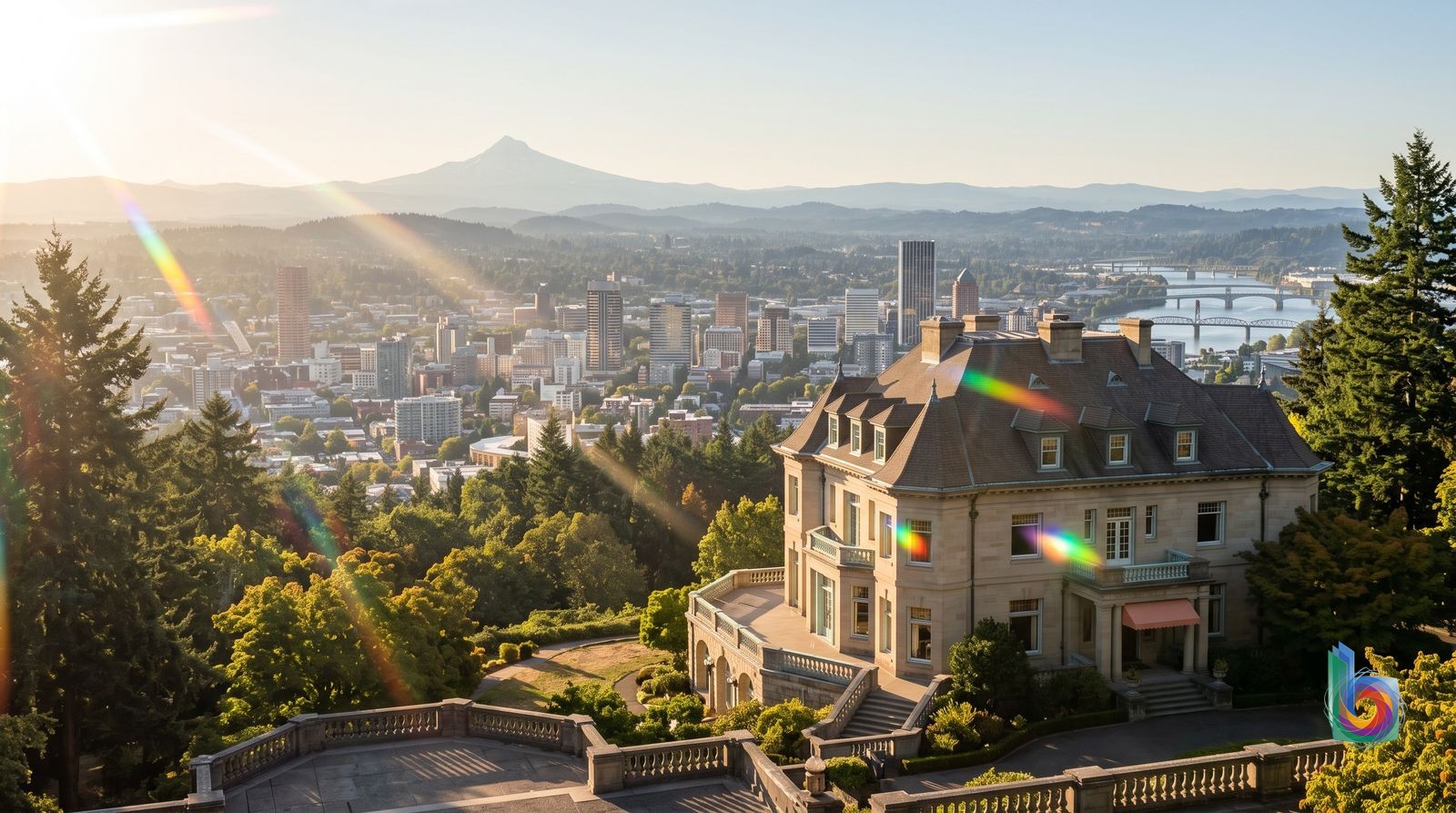
First visit? Stay in Downtown & Cultural District.
It is the most forgiving first-visit base: the broadest MAX and bus access, major hotels, museums, Pioneer Courthouse Square, food carts and the riverfront are close together. It is not Portland at its most charming, but it minimizes transit friction—especially for airport arrivals and day trips. Choose a hotel on an active, well-lit block and avoid drifting north toward Old Town late at night.
luxury →
The Pearl has the city’s most polished overnight experience: design-forward hotels, strong restaurants, galleries and an easy walk to Powell’s and downtown. It feels calmer and more residential than the downtown core, though it is pricier and less transit-central.
value →
For travelers willing to trade major-hotel convenience for a local eastside stay, this is a good-value-feeling base with excellent casual food, coffee and bars. It is best when the hotel or rental is near a useful bus corridor; lodging is thinner and scattered.
family →
This is the sensible green-space choice, with Washington Park’s gardens, zoo and forested walks close by and MAX access from Goose Hollow/Washington Park. Book with the hills in mind: attractions and hotels are not necessarily an easy flat walk apart.
nightlife →
Hawthorne puts independent bars, restaurants, vintage stores and late-evening energy close together, while Belmont offers a somewhat softer fallback nearby. It is a better sleep-and-go-out neighborhood than downtown, but rooms directly on Hawthorne can be noisy and airport trips are less simple.
quiet →
For a walkable but comparatively peaceful stay, NW 23rd and 21st offer restaurants, cafés, older houses and a lived-in feel without downtown’s rougher street conditions. It is not silent on busy weekends, and buses—not MAX—do most of the transport work.
rail-day-trips →
Downtown is the practical transit hub: MAX lines and frequent buses converge here, making the airport and citywide connections easiest. It wins over the prettier Pearl or Nob Hill when you expect to spend several days getting on and off transit.
return-visitor →
This is a strong second-trip base for independent shops, coffee, bars and a northside creative scene rather than landmark collecting. Choose which cluster you want—Alberta for strolling, Mississippi/Williams for denser dining and bars—because they are not one seamless district.
Avoid sleeping near Old Town Chinatown: Visit Lan Su Chinese Garden and historic sights by day, but do not make it the default hotel base. The area has a notably heavier concentration of visible homelessness, public drug use and street disorder; Wikivoyage specifically recommends avoiding it at night except around well-lit transit stations. Its Union Station/MAX convenience does not outweigh the uncomfortable late-night walk home for most visitors.
Avoid sleeping near Lloyd District & Convention Center: Sleep here only when the convention center, Moda Center or a compelling rate is the point. MAX and streetcar connections are excellent, but wide roads, superblocks and an event-driven office/arena rhythm leave much of Lloyd empty and unmemorable after hours. It is a functional hotel zone, not a satisfying Portland base.
Avoid sleeping near The northern Pearl/Union Station edge: The gallery-and-condo heart of the Pearl is a fine place to stay, but the blocks nearest Union Station shade toward Old Town’s late-night conditions. A cheaper hotel listing here can look like a Pearl deal while delivering a less relaxed walk back after dark; stay farther south and west in the Pearl if choosing the district.
The neighborhoods
Pick the areas you want to be around — the hotels and tables below narrow to them.
Stay here Fine base Visit, don't sleep
Downtown & Cultural DistrictFirst-timer default
Central, practical, uneven after dark
The most useful first stay: major hotels, museums, Pioneer Courthouse Square, food carts and the riverfront are close together. It is a real working downtown rather than a quaint historic core, and its street conditions can change block by block.
Vs. others: Pick Downtown & Cultural District over Pearl District if transit reach and major hotels matter most; pick Pearl District if you want a calmer, more polished evening scene.
This is Portland's easiest all-purpose transit base: MAX lines and frequent buses converge downtown, with the Portland Streetcar linking Pearl, the Central Eastside and Lloyd. Most central sights are walkable, but Washington Park is uphill/west of the core.
Best for: first-timers, luxury, rail-day-trips, car-free travelers, museum-goers
Visible homelessness, public drug use and occasional street disorder are part of the downtown experience. · Some blocks become quiet and less comfortable-feeling late at night; use well-lit routes rather than wandering toward Old Town. · Restaurant choices immediately around tourist nodes can be less distinctive than on the east side.
See hotels in Downtown & Cultural DistrictPearl DistrictExcellent base
Converted warehouses, galleries, polished living
The Pearl is Portland's sleek former-warehouse district: galleries, design stores, good restaurants, breweries and newer condos around the streetcar. It is more composed than much of Portland, not an underground arts quarter, and it is convenient for Powell's and the Northwest edge of downtown.
Vs. others: Pick Pearl District over Downtown & Cultural District for a more residential-feeling, polished base; pick Downtown if you need the broadest MAX access and closer access to the core museums.
The Portland Streetcar is useful along the Pearl-Downtown-Central Eastside/Lloyd corridor; downtown is an easy walk south. MAX is accessible at the district's edges rather than as omnipresent as in downtown.
Best for: luxury, first-timers, couples, foodies, walkers
Hotels, restaurants and shopping skew expensive. · It can feel curated and quiet after dinner compared with Hawthorne or Mississippi. · The northern edge near Union Station and Old Town requires more nighttime awareness than the gallery-and-condo core.
See hotels in Pearl DistrictNob Hill & NW 23rdExcellent base
Boutiques, Victorian houses, restaurant crawl
Often called Nob Hill by visitors, this is the compact Northwest Portland strip around NW 23rd and 21st: independent shops, cafés, restaurants and handsome older houses. It feels more like a lived-in shopping street than downtown, with Forest Park and Washington Park not far away.
Vs. others: Pick Nob Hill & NW 23rd over Pearl District if neighborhood restaurants and a leafy residential feel matter more; pick Pearl if you want streetcar convenience and quicker downtown access.
Very walkable within the district and served by frequent buses toward downtown, but it has no central MAX station. Downtown is reachable by bus or a longer walk; Washington Park is nearby but involves an uphill approach.
Best for: couples, foodies, return-visitors, walkers, quiet
It is less convenient than downtown for airport and regional rail connections. · NW 23rd gets crowded on good-weather weekends. · Accommodation is relatively limited and often not cheap.
See hotels in Nob Hill & NW 23rdOld Town ChinatownVisit, don't sleep
Lan Su, history, rough edges
Come in daylight for Lan Su Chinese Garden, Portland's historic Chinatown remnants, river-adjacent sights and some nightlife venues. This is not the easy, atmospheric Chinatown many visitors imagine: it has a heavy concentration of social distress and is markedly less inviting after dark.
Vs. others: Pick Old Town Chinatown over Pearl District for Lan Su and historic texture; pick Pearl District for nearly every overnight need and a more relaxed evening walk.
Union Station and several MAX/light-rail stops make it physically easy to reach, and downtown/Pearl are walkable. That access does not make every block pleasant at night.
Best for: history-minded travelers, garden visitors, nightlife visitors, daytime wanderers
Wikivoyage specifically advises avoiding it at night or staying close to well-lit transit stations. · Visible homelessness, public drug use and erratic behavior are more concentrated here than in most visitor districts. · The restaurant scene is not a reason by itself to choose the area over better east-side dining neighborhoods.
See hotels in Old Town ChinatownWashington Park & Goose HollowAcceptable base
Parks and culture above downtown
Goose Hollow is the practical lower-slope neighborhood; Washington Park is the destination above it, with gardens, memorials, the zoo and forested walks. Stay here for greenery and a calmer edge-of-center setting, not for dense street life or a late-night restaurant crawl.
Vs. others: Pick Washington Park & Goose Hollow over Downtown & Cultural District for park access and quieter nights; pick Downtown for restaurants, level walking and easier all-day sightseeing.
MAX serves Goose Hollow and Washington Park, making downtown and the airport connection manageable. The park itself is hilly and spread out; do not assume its attractions are a short flat walk from a hotel.
Best for: families, quiet, park lovers, museum and garden visitors
Steep grades make this a poor choice for travelers with limited mobility or anyone expecting effortless walks. · There are fewer dining and evening options than downtown or Northwest Portland. · Park attractions are destinations rather than something to casually cover in an hour.
See hotels in Washington Park & Goose HollowHawthorne & BelmontExcellent base
Vintage shops, cafés, relaxed eastside
The classic inner southeast wander: Hawthorne is the livelier vintage-shop, bar and restaurant corridor, while Belmont is slightly softer and more residential. It is a strong choice for the Portland many visitors came to see—independent businesses, old houses and casual eating—without being a sightseeing hub.
Vs. others: Pick Hawthorne & Belmont over Division & Clinton if you want more shops, vintage browsing and a busier all-day strip; pick Division & Clinton for more restaurant-centered evenings and a quieter residential feel.
Frequent buses connect the corridors to downtown, and inner southeast is bike-friendly and walkable block to block. There is no central MAX station, so airport trips and cross-town sightseeing take more planning than from downtown.
Best for: return-visitors, foodies, couples, nightlife, walkers
It is several miles from the central museums and riverfront, so walking downtown is not realistic for most travelers. · Nightlife noise can affect rooms directly on Hawthorne. · Some once-independent-feeling stretches are increasingly expensive and polished.
See hotels in Hawthorne & BelmontDivision & ClintonAcceptable base
Restaurant-led, residential inner southeast
This is a lower-key inner-southeast base built around excellent casual dining, coffee, bars and residential streets rather than marquee attractions. Clinton has a village-like, bike-oriented feel; Division is busier, longer and more restaurant-dense.
Vs. others: Pick Division & Clinton over Hawthorne & Belmont if dinner and a quieter local base are the priority; pick Hawthorne & Belmont for better browsing and more immediate visitor energy.
Buses are the practical link to downtown and the rest of inner southeast; the area rewards walking and cycling once there. It is not a rail-centered base.
Best for: foodies, quiet, couples, return-visitors, value
Lodging choices are thinner than downtown and may be scattered rather than clustered. · Division's traffic and road noise can undermine the otherwise residential atmosphere. · It is easy to spend a pleasant evening here but less efficient for a first-time sightseeing itinerary.
See hotels in Division & ClintonCentral EastsideAcceptable base
Breweries, warehouses, bridges, industry
Across the river from downtown, the Central Eastside mixes working warehouses, breweries, distilleries, food destinations and newer apartments. Its appeal is gritty-industrial rather than postcard-pretty, with excellent bridge views and quick access to the east side.
Vs. others: Pick Central Eastside over Pearl District if breweries, industrial character and east-side dining matter more; pick Pearl District for a more polished, consistently comfortable walk home.
The Portland Streetcar links parts of the district with downtown, Pearl and Lloyd, while bridges make central destinations close by. The district is broad, however, and individual hotels or venues may sit on long, quiet warehouse blocks.
Best for: foodies, nightlife, return-visitors, design and brewery fans, conference visitors
Some streets feel empty after business hours, especially away from restaurant clusters. · Traffic, rail/industrial activity and bridge approaches can mean noise. · The character is uneven: one block can be lively and the next feel purely utilitarian.
See hotels in Central EastsideAlberta Arts & Mississippi/WilliamsAcceptable base
Northside creative streets, separate clusters
These adjacent north/northeast visitor zones share independent shops, bars, coffee and an artsy, gentrified residential character, but they are not one continuous downtown-like district. Alberta is the strolling street; Mississippi and Williams offer a denser bar-and-restaurant run closer to the river.
Vs. others: Pick Alberta Arts & Mississippi/Williams over Hawthorne & Belmont for a northside bar-and-restaurant scene and Alberta's art-walk character; pick Hawthorne & Belmont for a more convenient inner-southeast base and broader vintage shopping.
Frequent buses are the main tool; Mississippi/Williams is closer to the Yellow Line than Alberta, but neither cluster functions like a MAX-centered visitor base. Downtown is straightforward by transit, not a short walk.
Best for: nightlife, foodies, return-visitors, LGBT travelers, walkers
The two corridors are distinct enough that treating them as one easy stroll can be misleading. · Late-night bar noise is common around Mississippi. · The area's rapid change has made it pricier and less bohemian than its reputation suggests.
See hotels in Alberta Arts & Mississippi/WilliamsSellwood-MorelandAcceptable base
Village calm beside the river
Sellwood-Moreland is a genuinely relaxed, small-town-feeling southeast enclave with antique browsing, neighborhood restaurants, older homes and access to riverfront green space. It is a rewarding change of pace, but deliberately far from the central city action.
Vs. others: Pick Sellwood-Moreland over Division & Clinton for quieter village atmosphere and green space; pick Division & Clinton for much better access to inner-southeast dining and downtown.
Buses connect Sellwood to the city, but this is not a rail-based or quick-downtown base. The neighborhood itself is pleasant on foot; reaching central attractions takes time.
Best for: families, quiet, return-visitors, antique shoppers, travelers with a car
Distance is the trade-off: it is inefficient for a sightseeing-heavy first visit. · Hotel inventory is limited compared with downtown. · Evenings are calm, which can read as sleepy rather than charming if you want bars and live music.
See hotels in Sellwood-MorelandLloyd District & Convention CenterVisit, don't sleep
Convenient rail, convention-zone blandness
Lloyd is the functional choice around the Oregon Convention Center, Moda Center and large retail blocks. It has excellent connections and can work for an event, but its wide roads, superblocks and office/arena rhythm lack the neighborhood texture visitors usually seek.
Vs. others: Pick Lloyd District & Convention Center over Downtown & Cultural District only if your event venue or a transit-connected deal is decisive; pick Downtown for a far better first-time base and evening walk.
MAX and the Portland Streetcar make Lloyd one of the best-connected areas, with quick links across the river, to downtown and toward the airport. The transit strength is better than the pedestrian atmosphere.
Best for: conference travelers, sports and concert visitors, rail-day-trips, value
Away from an event, parts of the district feel empty and car-oriented after hours. · It is more convention infrastructure than neighborhood Portland. · Wide crossings and traffic reduce the pleasure of casual wandering.
See hotels in Lloyd District & Convention CenterWhere to stay
Hotels in Portland
Hampton Inn & Suites Portland-Pearl DistrictHotel4.6 · 1,972 reviews
The Ritz-Carlton, PortlandHotel · $$$4.4 · 399 reviews
Hampton Inn & Suites Portland/VancouverHotel4.6 · 946 reviews
Cambria Hotel Portland - Pearl DistrictHotel4.6 · 175 reviews
The Benson Portland, Curio Collection by HiltonHotel4.5 · 2,144 reviews
Woodlark Hotel Portland, a Tribute Portfolio HotelHotel4.5 · 203 reviews
