
Season by season
December–February
High summer: hot, humid and prone to thunderstorms. Mid-afternoon is unpleasant for riverfront walking; plan the Costanera for early morning or, better, late afternoon and evening.
Heat and humidity are the main drawback, with storms capable of disrupting outdoor plans. Summer school holidays can also slow transport and the Paraguay border.
March 1–mid-March
Still summer-like—warm to hot and humid—but generally a transition toward more tolerable autumn conditions.
It is not yet the reliably comfortable shoulder season; keep daytime plans indoors or in the compact centre and save the riverfront for later.
Mid-March–late May
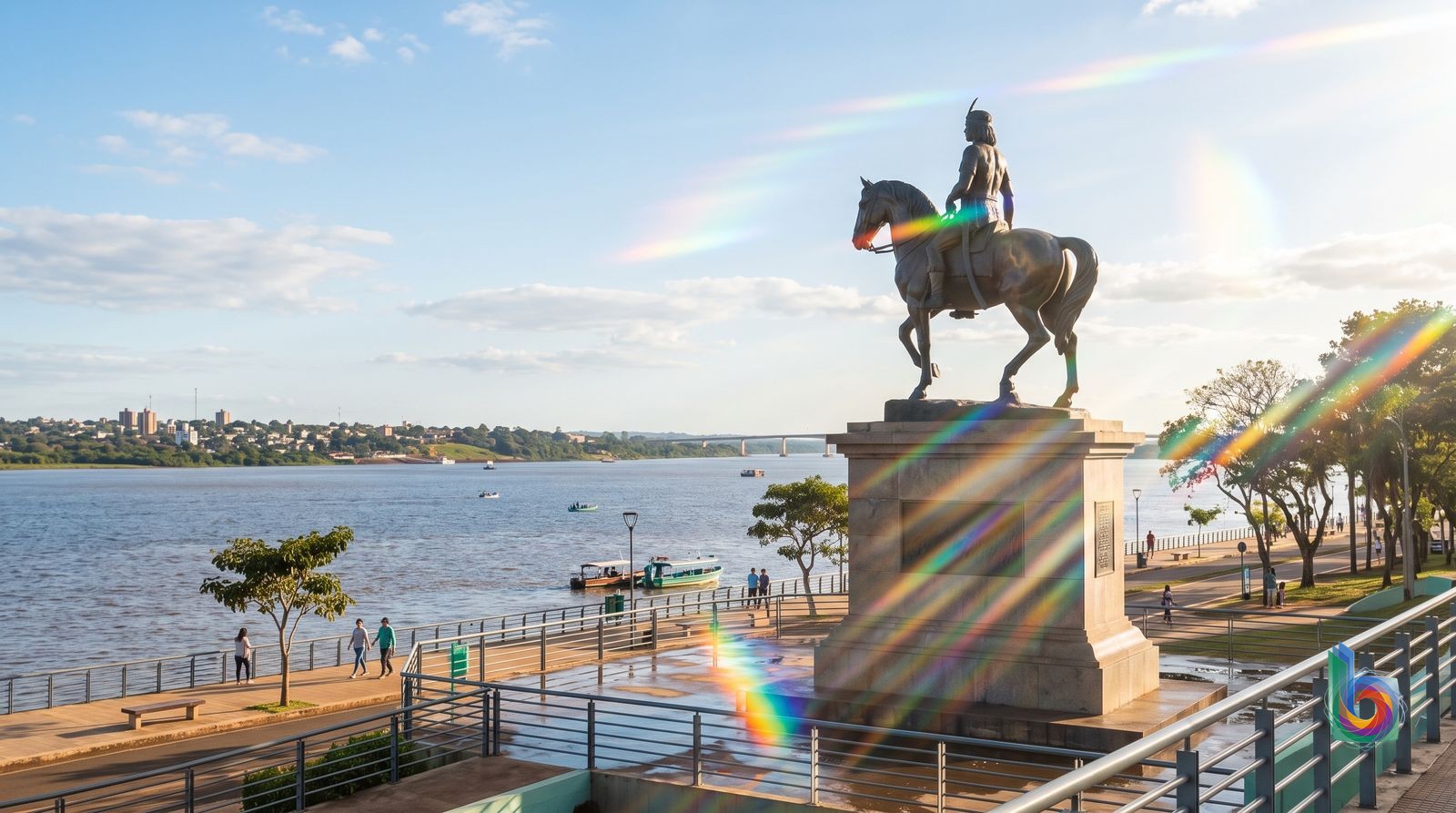
The strongest autumn window for Posadas: less punishing heat and good conditions for walking the Costanera, central plazas and Bajada Vieja.
Argentine long weekends can tighten long-distance bus capacity and slow the Encarnación crossing; reserve transport for fixed-date trips.
June–mid-August
The cooler part of the year, generally more comfortable for daytime walking than summer and without the same oppressive humidity.
This is less of a river-and-evening lifestyle season than the warmer months, and winter school-holiday travel can still affect buses and border waits.
Mid-August–November
Spring brings increasingly warm weather without the full intensity of summer, making this another excellent period for the Costanera and outdoor city time.
By late spring, heat and humidity begin building again. Check Argentine holiday calendars and Encarnación event dates, as cross-border transport can become markedly slower.
Events worth planning around
Argentine school-holiday periods · Usually winter and summer school breaks; exact dates vary by year and province.
Posadas is not normally overwhelmed by international tourism, but school-holiday demand can reduce long-distance bus availability and make the Encarnación border slower. Book fixed-date buses and mission excursions ahead.
Argentine public-holiday long weekends · Several times a year; dates vary, including moved holidays and bridge days.
These are the most reliable demand spikes for transport rather than for Posadas’s free core sights. Reserve long-distance buses and any fixed-date San Ignacio or wider-missions excursion; allow extra time at the Paraguay crossing.
Getting around
Walking
Centro, Villa Sarita, Bajada Vieja and the northern/western Costanera. Plaza 9 de Julio, the cathedral, the riverfront and Bajada Vieja make a satisfying on-foot day; the Costanera is especially good in the late afternoon and evening.
Base yourself in Centro, Villa Sarita or near the particular Costanera stretch you want to use. Treat the riverfront walk as an attraction rather than merely a way to get somewhere; carry water and plan indoor stops in the heat.
There is no compact citywide tourist circuit. The Costanera is long, and walking becomes inefficient toward El Brete and especially La Aguada; La Aventura and Itaembé Guazú are not walkable extensions of the centre. Summer midday heat and quiet river edges after dark are the bigger problems than hills.
Local bus
Budget trips to the airport, bus terminal, botanical garden and other destinations beyond the central core. Bus 28 is the useful airport link: it connects PSS airport and the bus terminal, with a roughly 20-minute ride; bus 32 links the Posadas–Encarnación rail station and the bus terminal in about 15 minutes.
Use buses for a practical point-to-point ride, not for sightseeing. Confirm the current route and fare locally—published Argentine peso fares age quickly. From the international train station, bus 32 is the cheap terminal connection; from PSS, bus 28 is a local service, not a dedicated airport shuttle.
The network is less convenient when luggage, time pressure or late hours are involved. It does not erase the distance to outer districts such as La Aventura and Itaembé Guazú, and it is a poor first move from the southern bus terminal to a central hotel with bags.
Taxi or remis
The straightforward choice from the bus terminal or airport with luggage, for reaching El Brete, La Aguada, La Aventura or Itaembé Guazú, and for returning from dinner or the Costanera after dark. A taxi/remis from the bus terminal to central Posadas or the Costanera usually takes about 15–25 minutes.
Taxis are plentiful. Agree the fare before leaving or make sure the meter is running; keep some Argentine pesos available and do not assume a foreign card will be accepted. Use them to bridge the long, linear gaps between Centro, the waterfront and outer neighborhoods.
Costs add up if you use them for every short central journey. They are most worth it in late-night or low-footfall areas—Bajada Vieja and La Aguada can be very quiet after dark—rather than replacing easy walks around Centro, Villa Sarita and the main Costanera.
Car
Independent trips beyond Posadas, particularly the Jesuit missions and the wider Misiones province. It can also make a stay in outlying La Aventura or La Aguada easier.
Rent only if the city is a base for provincial driving, not just for central sights. For a city-only stay, walk the core and use buses or taxis for the airport, terminal and longer urban hops.
Do not rent a car merely for Posadas: parking and driving are more hassle than the compact central sights warrant. It adds little in Centro, Villa Sarita or along the Costanera, while even a car does not make Itaembé Guazú a useful tourist base.
Safety: After dark, stick to active, well-lit stretches of the Costanera, keep phone and valuables out of sight at quiet riverfront edges, and check same-day conditions before swimming in the Paraná.
Book before you land
None of Posadas’s core sights—the Costanera, plazas, cathedral, Bajada Vieja, Parque República del Paraguay or the usual local museums—routinely require advance tickets. Do not pre-buy generic city tours. · Book long-distance buses and any fixed-date private excursion to San Ignacio or the wider Jesuit missions ahead for Argentine long weekends and school-holiday periods; this is a transport-capacity issue, not a city-attraction sell-out.
- At the Paraguay crossing, immigration is not optional paperwork: make sure you receive the relevant exit/entry stamp. On the international city bus, ask the driver to let you off at the Paraguayan border post for your exit stamp; keep the ticket, as the old traveler guidance says it can be used to re-board after formalities.
- Carry some Argentine pesos and, if crossing, Paraguayan guaraníes. Prices and exchange conditions move quickly in Argentina, so treat old online ARS fares—especially for buses and the cross-border train—as historical, not current.
- Posadas is a riverfront city, not a checklist city. Save the Costanera for late afternoon into evening, when the heat drops and Encarnación’s lights come on; daytime is better for the compact centre and indoor stops.
- Drink mate if it is offered, but follow the small social rule: do not stir or move the bombilla. Saying “gracias” usually means you have finished, not merely that you are being polite.
- Use normal city precautions after dark: stay on active, lit stretches of the Costanera and avoid displaying phone, cash or camera gear at quiet riverfront edges. The main practical annoyance is heat and distance, not the need to treat the central sights as dangerous.
- If you are planning to swim at El Brete or use a riverside beach, check local conditions and any posted restrictions that day rather than assuming the Paraná is safe everywhere.
Worth leaving the city for
San Ignacio Miní Jesuit RuinsFull day
This is the obvious upgrade on a second day in Posadas: monumental Guaraní-Jesuit ruins with actual historical weight, rather than another lap of the Costanera. It is the strongest Argentine-side excursion from the city; add the smaller Santa Ana and Loreto missions only if you have a car or a properly organized circuit, not by trying to improvise three sites on infrequent transport.
Jesuit Missions of Trinidad and Jesús, ParaguayFull day, including border formalities
Crossing to Paraguay is worthwhile when it culminates in the UNESCO-listed mission ruins, not merely to say you crossed the bridge. From Encarnación’s bus terminal, Trinidad and Jesús are about 40 minutes by bus; the downside is that the Argentina–Paraguay border process can consume enough time to make this a deliberately early-start, document-in-hand day.
Researched Nov 17, 2026
