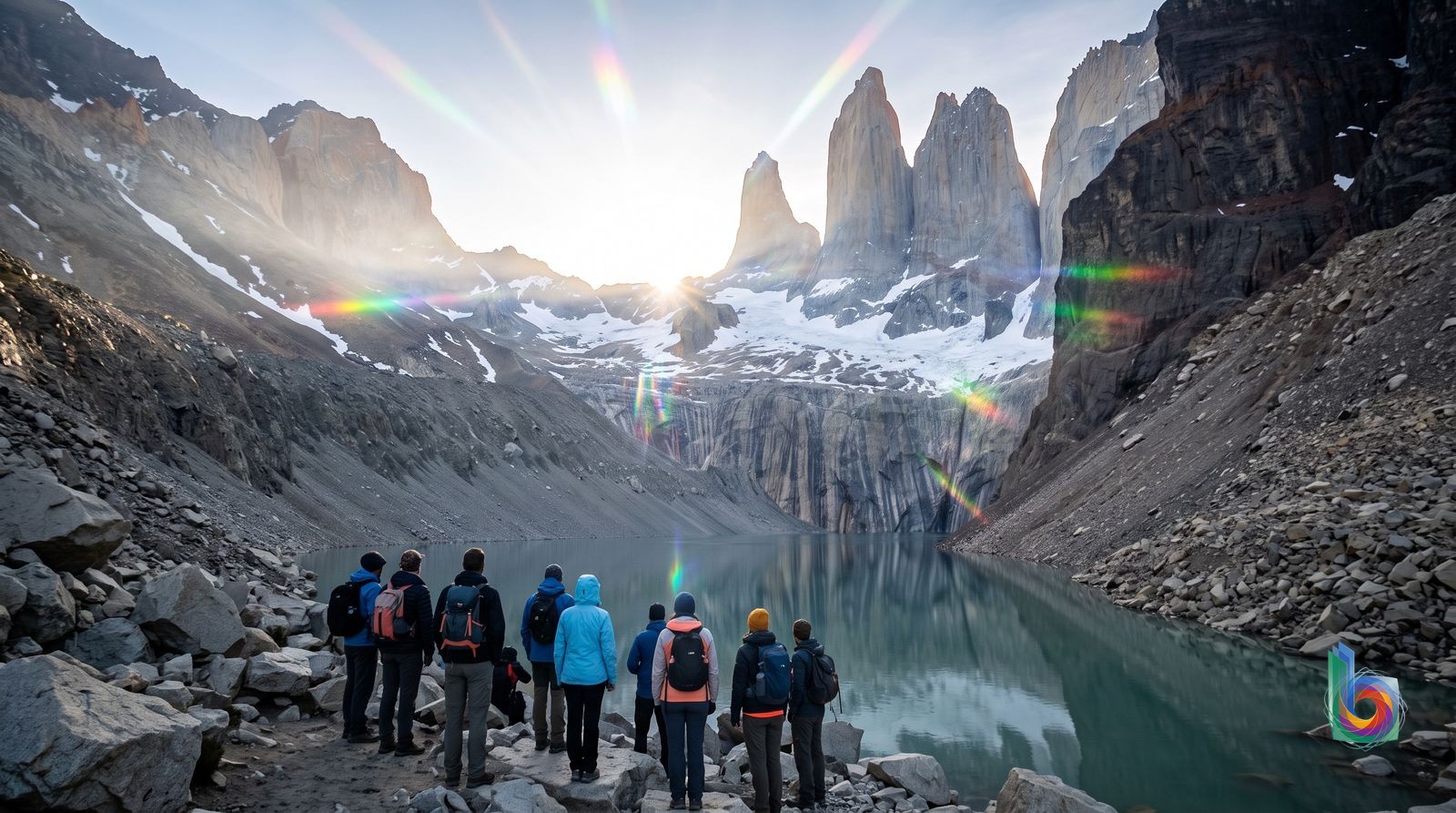
Torres del Paine is absolutely worth a special trip for world-class Patagonian scenery, whether you hike or explore by car; it works best when you book mountain accommodation first and leave room for weather disruption.
Reserve W/O beds before entry
For overnight treks, confirmed refuge or campsite reservations are mandatory and sell out before the CONAF admission pass; then buy your Pases Parques ticket at least 24 hours before arrival.
MoreBuy entry online 24 hours ahead
CONAF requires advance park admission through Pases Parques, with a QR code checked at a staffed gate; a foreign adult daily pass costs CLP 32,400.
MoreChoose the right gate and transport
Use Laguna Amarga for Base Torres and bus arrivals, Pudeto for the Paine Grande catamaran, or Serrano for Grey and the western road sector.
MoreBuild in a weather-buffer day
Wind, rain, snow, road delays and ranger trail closures can overturn a fixed itinerary, so do not make Base Torres or a catamaran-linked hike your only possible park day.
MoreBase Torres / Las Torres sector
~540 min · Park admission at Laguna Amarga; Base Torres is a full-day hike, with a seasonal shuttle from the gate to Las Torres Welcome Center.
Paine Grande / W Trek western sector
Park admission plus Pudeto–Paine Grande catamaran; overnight routes require confirmed campsite or refugio bookings.
Grey Glacier and Lago Grey sector
Accessible by park road via Serrano/Administration; glacier navigation is a separate paid operator activity.
Eastern road circuit, Laguna Amarga and Sarmiento
Park admission through Laguna Amarga or Sarmiento gate; best explored by rental car or guided road tour.
| Monday | 7 AM – 9 PM |
|---|---|
| Tuesday | 7 AM – 9 PM |
| Wednesday | 7 AM – 9 PM |
| Thursday | 7 AM – 9 PM |
| Friday | 7 AM – 9 PM |
| Saturday | 7 AM – 9 PM |
| Sunday | 7 AM – 9 PM |
Hours from Google; check before you go.
Torres del Paine National Park is a 227,298-hectare protected landscape in Chilean Patagonia’s Última Esperanza province, established in 1959 and designated a UNESCO Biosphere Reserve in 1978. Managed by CONAF, it protects the granite Paine Massif, the Towers and Cuernos, Southern Patagonian Ice Field glaciers, turquoise lakes, steppe and lenga forest across 17 ecosystems inhabited by guanacos, condors, foxes, ñandú and pumas. It is a large, weather-exposed wilderness of roads, viewpoints and trails rather than a single attraction.
It is one of the world’s great mountain landscapes, equally rewarding for serious hikers tackling Base Torres, the W Trek or O Circuit and for self-drivers combining short walks, wildlife viewing and glacier-and-lake viewpoints. Give it time and a flexible weather buffer: wind, rain, closures, costly scarce accommodation and long transport links are normal. Skip it, or limit yourself to a guided road day, if you dislike exposed weather, pre-booking, uneven terrain, long drives or an itinerary that cannot absorb delays.
Yes. CONAF requires a park-admission pass and advises buying it through Pases Parques at least 24 hours before arrival. Download the QR code and show it, with photo ID, at a staffed gate. For foreign adults aged 18–59, the 2026 daily pass is CLP 32,400; the 2-or-more-days pass, valid for a continuous stay of up to 10 days, is CLP 48,500. Buy entry after fixing your dates, but reserve trekking accommodation first.
Book every refugio bed or campsite first—confirmed accommodation is required for each overnight in the mountain sector. Then buy the CONAF entry pass and arrange transport. Do not rely on being able to find a campsite after arrival. The W normally takes 4–5 nights; the O Circuit takes 7–9 nights. The O/Macizo Paine Circuit is scheduled to operate November 1–March 31, subject to conditions.
Not under the published 2026–27 rules. The W requires an accredited specialized guide from May 1 through September 15, 2026. Independent hiking resumes September 16–April 30 if conditions allow. Winter snow, ice, wind and trail closures can still override the plan; bring the mandated winter equipment and use an accredited guide for mountain routes.
For the fullest range of hikes, boats, buses and services, go January or February, accepting peak crowds and strong winds. November and March are the best compromises: broadly workable services, fewer people and good hiking conditions. April is attractive for autumn color and quieter road touring but has increasing seasonal closures. May–August are genuine winter, with limited services, severe weather risk and guide requirements for mountain trekking.
Allow two days for a strong first visit: one full day for Base Torres and one for the road loop through the eastern steppe, Salto Grande/Mirador Cuernos, Mirador Cóndor and Lago Grey. A drive-through can be done as a very long day from Puerto Natales, but it is rushed. Base Torres needs 8–10 hours from the trailhead; Grey Glacier or French Valley as a day trip also requires a full, carefully timed day.
Take an early Puerto Natales bus to Laguna Amarga; the 07:00 Bus-Sur departure is scheduled to arrive around 09:10. Pass through the gate, then take the seasonal Las Torres shuttle to the Welcome Center trailhead. The shuttle costs CLP 5,000/US$6 one way, cash only. Start as early as practical: the trail is exposed, weather often worsens later, and latest permitted starts are enforced.