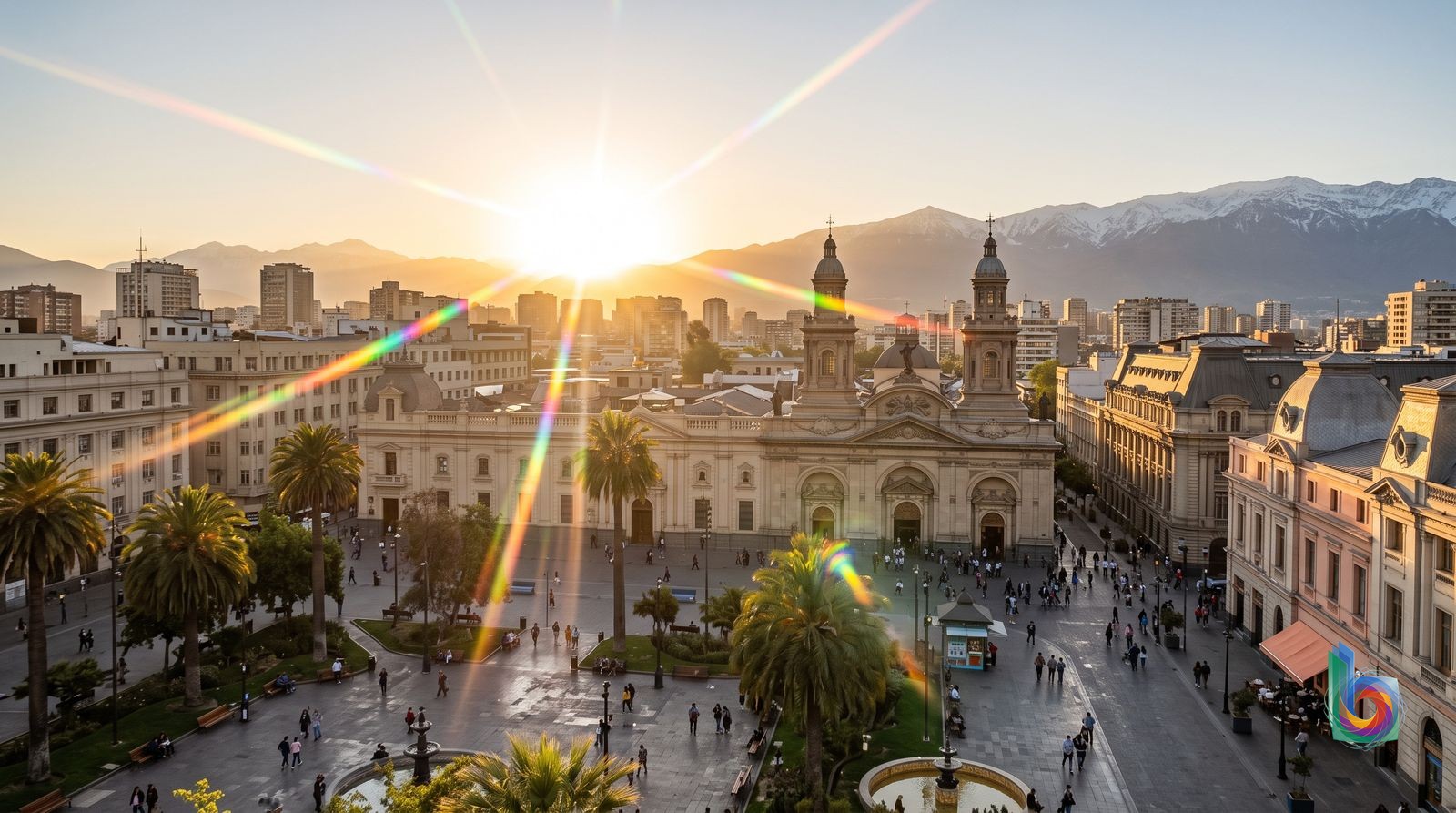
December–February
Dry high summer, commonly 25–35°C or hotter. Long, bright days are good for outdoor neighbourhoods and day trips, but the dry heat can feel punishing and temperatures still drop after dark. January and February are the busiest holiday months.
This is the heat-and-holiday peak: January–February bring the heaviest demand, and summer/holiday-weekend tours should be reserved several days ahead.
March–April
Autumn is one of Santiago’s most comfortable windows: more forgiving temperatures than summer, good light and a city less exhausted by heat.
It is not the main holiday peak, but popular small-group winery, mountain and coast tours can still fill on weekends.
May–August
Cool winter with cold, wet days; the basin can trap serious smog, reducing Andes views and making the period a poor fit for travellers with respiratory sensitivity. It is also the ski season.
Poor air quality and cloud can undermine mountain panoramas. Winter-weekend ski transport, lessons, rentals and accommodation are Santiago’s major advance-booking pinch point.
September–November
Spring is the other standout period, with forgiving temperatures and good light. September can still have late-winter coolness and occasional pollution, but conditions generally improve into October and November.
The September 18 Fiestas Patrias period is not a normal city week: domestic travel surges, fondas are packed and some businesses alter hours.
Fiestas Patrias · Around 18 September; celebrations and associated holidays vary slightly by year.
Expect high domestic-travel demand, packed fondas, altered business hours and more pressure on transport and tours. Book accommodation and any holiday-weekend day tour ahead rather than treating it as a quiet spring break.
Walking
Exploring compact daytime clusters: Centro Histórico, Lastarria, Bellas Artes and the civic sights; Providencia’s Manuel Montt–Parque Bustamante stretch; and Bellavista in daylight.
Treat walking as the last mile, not the citywide transport plan. Link close sights on foot, then take the Metro between neighborhoods; save your destination in Spanish on your phone.
Santiago is far too spread out to cover end to end on foot. Do not use Parque Forestal, quiet Centro streets or Bellavista’s isolated routes as late-night shortcuts; the climb on Cerro San Cristóbal is also not a casual cross-city walk.
Metro
The default for moving efficiently between Centro, Lastarria, Bellas Artes, Providencia, El Golf and other visitor bases. Lines 1, 2 and 5 are especially useful around the historic core; Line 4 serves eastern districts.
Buy a bip! card at a Metro station for integrated Metro-and-Red-bus travel. The network is legible and generally operates roughly 06:00–23:00; avoid weekday peaks around 07:00–09:00 and 18:00–20:00 if you can. Supplied guidance reports contactless bank-card payment on Metro from February 2026.
It is crowded at rush hour and not a late-night solution. It also stops being truly convenient in Vitacura, which has no Metro through its core; Barrio Italia and Plaza Ñuñoa require a walk or bus beyond their nearest stations, while Bellavista is served only around its edges.
Red Movilidad bus
Filling the Metro’s gaps—particularly Vitacura, the spread-out parts of Ñuñoa and Barrio Italia—and travelling after the Metro closes.
Use a bip! card and the official Red Movilidad journey planner. Buses are the practical connection from Vitacura to Line 1, and they make sense when the nearest Metro station is too far from your actual hotel or restaurant.
Routes are less intuitive without Spanish and can be slow in traffic. For a first short visit, do not make buses your main sightseeing strategy through Centro or along congested corridors around Estación Central.
Cabify, Uber or official taxi
Door-to-door trips after dark, luggage runs, travelling with children, and areas where Metro access is weak—especially Vitacura. Also sensible for getting back from Bellavista after an evening out.
Use Cabify or Uber with the destination entered in Spanish, or take an official black-and-yellow taxi. Arrange ride-hail pickups discreetly and confirm the car and driver in the app before getting in.
Ride-hail drivers are not officially licensed, and airport pickups can be awkward. Traffic can erase their advantage at busy times; they are a poor substitute for the Metro for routine trips between Centro, Lastarria and Providencia.
Rental car
Leaving Santiago independently, rather than urban sightseeing—for example if you have a specific onward itinerary that genuinely needs a car.
Avoid hiring one just to see the city. Use Metro, buses and rideshare for Santiago proper; collect a car only when departing the metropolitan area if your itinerary requires it.
City traffic, electronic motorway tolls and difficult parking make a car costly and irritating. It offers little benefit in Centro, Providencia, Lastarria or Bellas Artes, and even in eastern Vitacura it is usually less convenient than a taxi for a visitor.
Safety: Pickpocketing is the main visitor risk: keep your phone and valuables out of sight—especially in Centro, crowded Metro cars and busy squares—avoid quiet parks and downtown streets after dark, and hand over property rather than resisting if confronted.
Book before you land
Valparaíso (with a brief Viña del Mar stop only if you have the stamina)Full day — realistically 10–12 hours door to door; buses are frequent, but each direction takes roughly 2 hours to/from central Santiago.
This is the one urban escape that genuinely changes the picture: steep Pacific-facing hills, port grit and street art are a sharper contrast to Santiago’s basin-and-Andes cityscape than another afternoon in Lastarria. Go for Valparaíso, not for Viña’s resort strip; Viña is useful for lunch, beach or a garden break, but it is not the reason to make the trip. The downside is real: Valparaíso can feel rough, steep and scruffy, and it is a poor place to wander with a phone or camera on display. Do not try to ‘do’ both cities exhaustively in one day.
Cajón del MaipoFull day — allow 9–11 hours door to door from central Santiago, longer on busy weekends.
Choose this over another city day when the Andes, rather than museums and neighborhoods, are the point of the trip. The Maipo valley delivers mountain scale, river scenery and access to the outdoor landscape that frames Santiago but is hard to feel from the city. It is especially worthwhile in spring, when the valley is at its best. The catch: it is not a quick hop, and independent transport is awkward; weekend traffic and scattered opening hours for lunch stops can turn it into a long, stop-start day.
Maipo Valley winery countryFull day — typically 7–9 hours door to door, depending on the winery area and number of visits.
Worth leaving town for if you want to understand why central Chile’s geography matters: vineyards, tasting rooms and a rural counterpoint to Santiago’s financial capital. It beats another Santiago day for wine-focused travelers; it does not if you only want a scenic drive or have little interest in tastings. Pick one or two wineries and linger rather than joining an itinerary that treats wine country as a bus-window checklist. Arrange transport or a tour—this is a drinking day, not a self-drive day.
Farellones / Valle Nevado / La Parva / El ColoradoFull day — plan 9–12 hours door to door; the nearer resorts can take about 1.5 hours by car in clear conditions, but return traffic and winter conditions are the variable.
In ski season, a day in the high Andes is a better use of time than an extra city day for skiers, snow seekers or anyone who wants the improbable Santiago-to-mountains contrast. The resorts northeast of the city are close on a map but high and slow by road; choose one area, not a grand resort crawl. This is seasonal—roughly May to August—and weather, road conditions and mountain traffic can make the journey far longer than expected.
Researched Nov 11, 2026