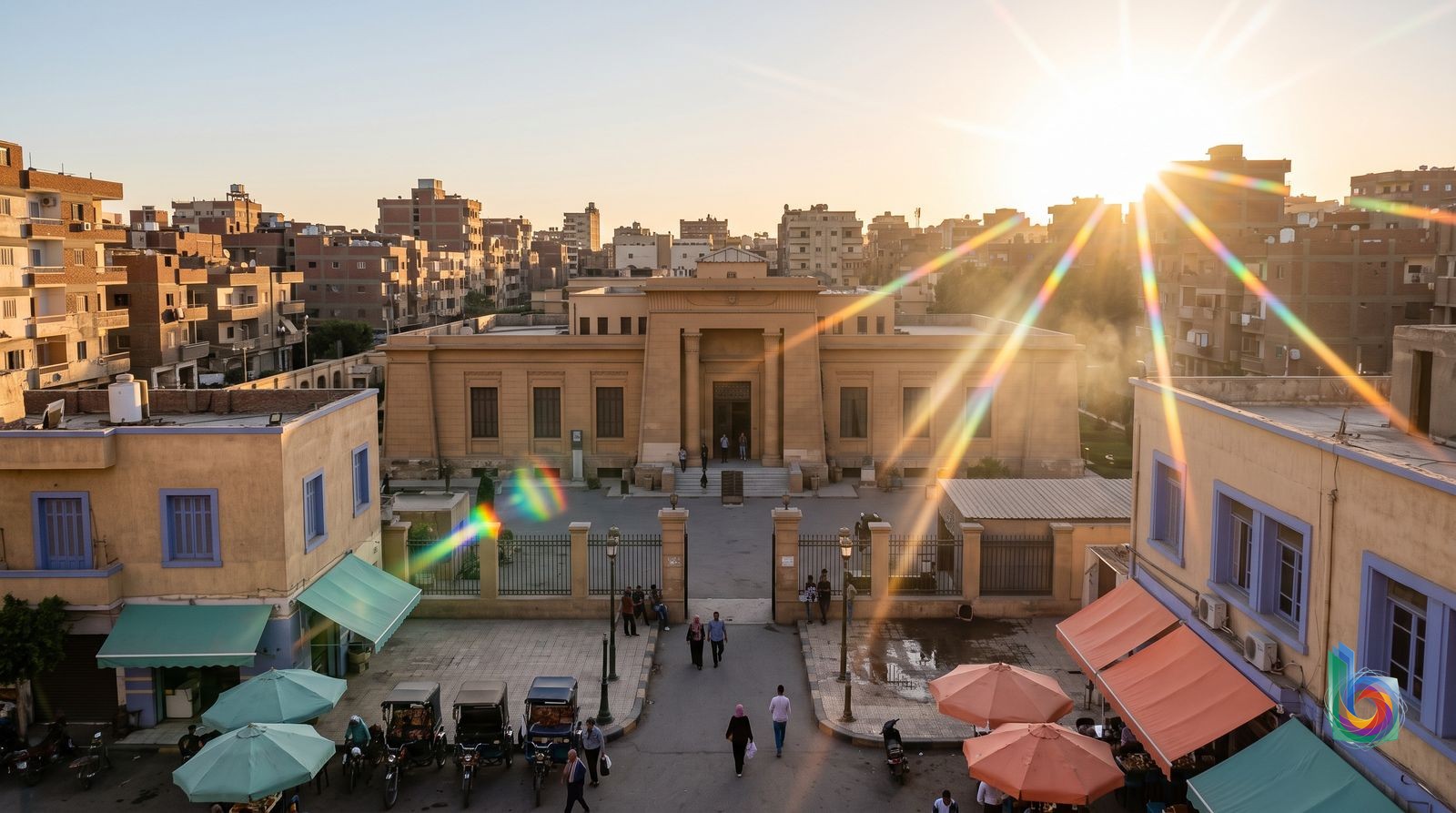
October–November
The Delta begins to cool after summer, making central Tanta walkable and far less draining than in the hot months. Days are generally comfortable, though streets remain busy and dusty.
Check the movable date of the mawlid of Sayyid Ahmad al-Badawi before booking. If it falls in this period, transport, accommodation and the mosque area can become exceptionally crowded.
December–February
The coolest part of the year and generally the best period for daytime walking and train-based visits from Cairo or Alexandria. Expect shorter daylight and occasional cool, damp or rainy spells rather than reliably warm weather.
This is not a resort-style winter destination: Tanta is a working Delta city, and cool or wet weather can make its traffic-heavy streets feel drab. Dress in layers.
March–April
Usually pleasant to warm, with good daylight and manageable temperatures before the real summer heat arrives.
Dusty, windy conditions can occur in spring. Ramadan, when it overlaps this period, changes daytime eating and some opening patterns; plan museum visits early and do not count on normal daytime restaurant routines.
May–June
Heat builds quickly, and the city becomes less comfortable for long walks, especially around midday. Early morning and late afternoon are the workable parts of the day.
Heat and dust make Tanta’s limited conventional sightseeing less rewarding. There is little reason to choose this period over October–April unless your dates are fixed.
July–August
The hardest months: hot, dusty and tiring in a dense, traffic-heavy working city. Outdoor walking is most uncomfortable from late morning through afternoon.
This is the least appealing time for a discretionary trip. Sightseeing feels more limited in the heat, and walking between the station, mosque and museum can be punishing.
September
Still hot, though conditions begin to ease late in the month. It remains better suited to short, early-start visits than all-day exploration.
Summer heat and dust still dominate for much of the month. Wait until October if choosing dates freely.
Mawlid of Sayyid Ahmad al-Badawi · Annual; the date is movable and should be checked locally before committing to travel.
Tanta’s defining religious gathering can make Ahmad al-Badawi Mosque and surrounding streets extraordinarily crowded. Transport and accommodation patterns are disrupted, so book any overnight stay and train plans early, allow extra time, and avoid it if you want a quiet conventional sightseeing visit.
Ramadan · Annual Islamic lunar month; shifts roughly 10–11 days earlier each Gregorian year.
Daytime eating, business rhythms and some opening patterns change. Confirm museum hours locally, plan essential sightseeing early in the day, and expect the mosque and streets to become more active around prayer and after sunset.
Walking
The Sayyid al-Badawi Mosque & Old Center, the station-to-shrine stretch with light luggage, and short hops around El-Bahr Street and Al-Galaa Civic Center. Central Tanta is compact enough that the mosque, museum and commercial streets can be combined on foot.
Walk in daylight when possible, keep crossings defensive, and treat pavements and traffic as obstacles rather than pedestrian infrastructure. From Tanta Railway Station, Ahmad al-Badawi Mosque is under 1 km away.
It stops being pleasant in the heat, amid shrine crowds, and on traffic-heavy streets such as El-Bahr. Qahafa, Sabarbay and the stadium side are not sensible sightseeing walks from the center; there are no hills, but traffic, poor pavement and distance are the real barriers.
Taxi
The default visitor option for cross-town trips: station to hotel, the Railway Station Quarter to the shrine, Tanta University & Sibirbay, El-Seger & Stadium Side, Qahafa, or Sabarbay Southern Edge.
Keep your destination written in Arabic on your phone. Agree the fare before setting off if there is no working meter, carry small Egyptian-pound notes, and use a taxi rather than attempting to drive yourself.
Traffic, honking and slow progress are normal, especially around the station, El-Bahr Street and prayer times near Sayyid al-Badawi Mosque. Expect greater reliance on taxis after dark in Qahafa and Sabarbay; match-day movement can also slow trips to the stadium side.
Local minibus
Cheap local movement if you speak Arabic, know the route, or have a local person to point you in the right direction. They can be useful within residential areas and on ordinary city routes.
Ask locally for the correct vehicle and listen for Arabic destination calls; pay cash and have small notes. Use it only when the route is clear to you and time matters less than cost.
This is not a visitor-friendly network: routes are not designed for tourist wayfinding, and the system becomes especially impractical for trips to Sabarbay, Qahafa and Tanta University & Sibirbay without local knowledge. Late-night use is a poor bet—take a taxi instead.
Rail
Arriving from or leaving for Cairo or Alexandria, and staying in the Railway Station Quarter when an early or late train is the priority. Tanta station is central rather than an out-of-town terminal.
Use Egyptian National Railways’ direct services for Cairo and Alexandria; confirm the day’s timetable and fare at ENR or the station. From the station, walk to the old center with light luggage or take a short taxi.
Rail is an intercity tool, not local transport. The station quarter is convenient but noisy, congested and not particularly appealing after dark; use a taxi for outer districts rather than expecting rail to solve onward travel.
Safety: Walk central Tanta in daylight, cross traffic defensively, use agreed-fare taxis beyond the centre, and avoid photographing police, military or government sites or debating politics in public.
Book before you land
CairoFull day — allow 4–6 hours of round-trip door-to-door travel and transfers, plus the time you spend in Cairo.
Tanta is a worthwhile Delta stop, not a substitute for Egypt’s capital. Take the train to Ramses and use the day for one concentrated Cairo district—Islamic Cairo, central Cairo, or the Egyptian Museum area—not an impossible pyramids-and-everything sprint. It decisively beats a second day in Tanta if you want major museums, urban history, or serious food choice.
AlexandriaLong full day — plan roughly 6–8 hours door-to-door for the return journey and local transfers; train timing can make it longer.
Alexandria gives you something Tanta cannot: the Mediterranean, the Corniche, Greco-Roman layers, and a far more distinctive café-and-seafront city experience. Go only if you can commit to the long rail day; it is better as an overnight, but still beats lingering in Tanta once you have seen the mosque and central streets.
Tanis (San el-Hagar)Full day — roughly 7–9 hours door-to-door with road transport, depending on the driver, traffic, and time at the site.
For archaeological-minded travelers, the temple ruins of ancient Tanis are the strongest nearby counterpoint to Tanta’s living religious cityscape: a sprawling, under-visited Delta capital rather than a polished tourist complex. The downside is the logistics—this is not a casual train-and-walk excursion, and a car/driver is the realistic option.
Rosetta (Rashid)Full day — typically 6–8 hours door-to-door by car or arranged transport; public-transport connections are slower and less straightforward.
Rosetta is worth the effort for its unusually intact Ottoman-era domestic architecture, old streets, and setting near the Nile’s Rosetta branch and the Mediterranean. It has far more texture than a generic Delta town. Do not expect Alexandria-scale museum infrastructure or seamless opening information.
Researched Nov 18, 2026