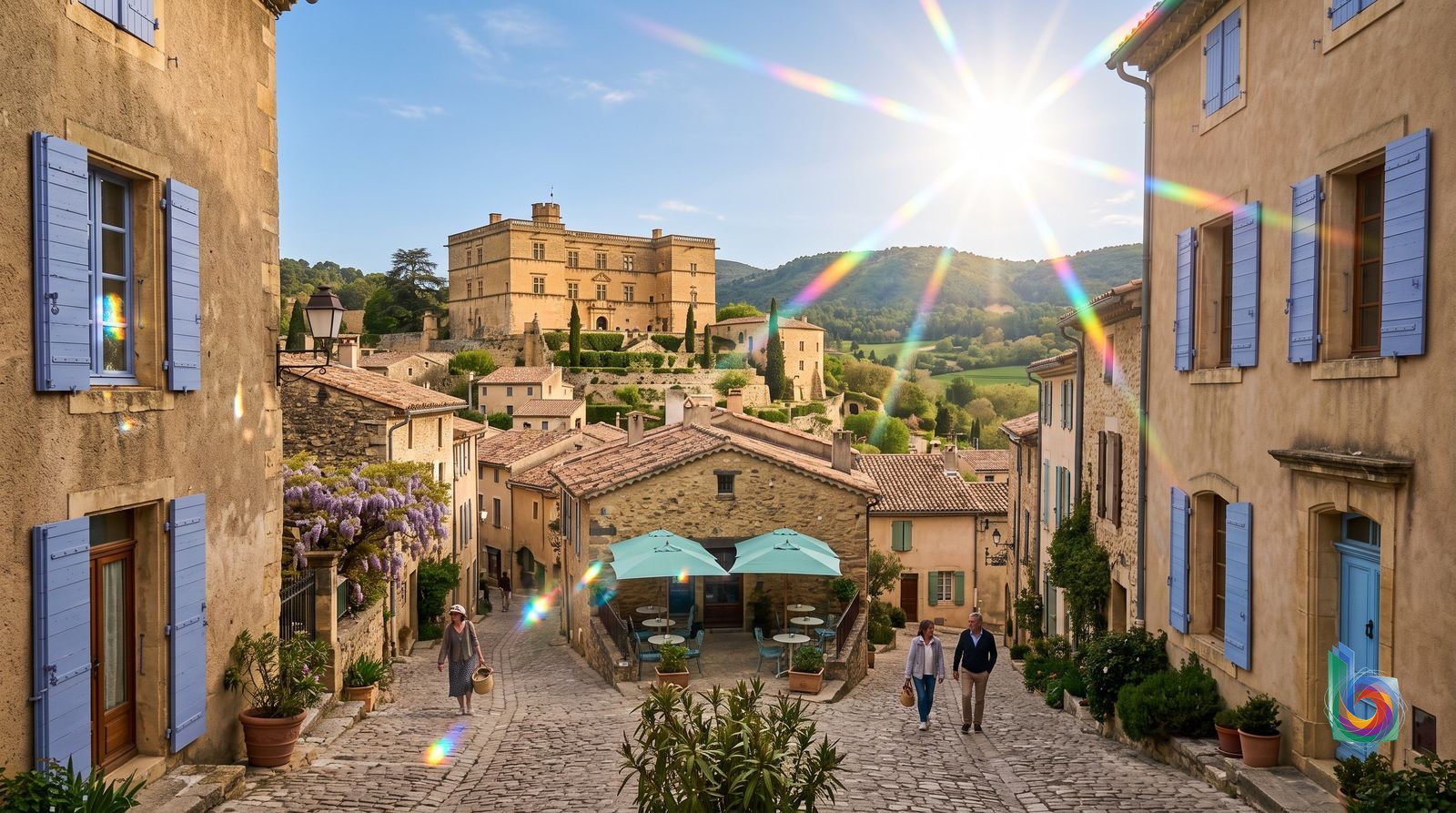
The village’s defining sight is a handsome Renaissance castle built around an earlier fortress, with interiors that reward more than a quick exterior photo. Visit it early in a Lourmarin day, then use the village lanes and cafés as the rest of the outing.
Buy admission on arrival; check seasonal opening days before making a special trip.
Pairs with: Lourmarin Village · Église Saint-André · Fontaine aux Trois Masques
Lourmarin itself is the essential attraction: a notably picturesque Luberon village of lanes, stone houses, small squares, churches, galleries, and café life. Leave unscheduled time to wander rather than trying to turn it into a checklist between formal sights.
Pairs with: Château de Lourmarin · Marché de Lourmarin · Église Saint-André

Camus chose Lourmarin as his home late in life, and his deliberately simple grave gives literary travelers a quiet, human-scale reason to visit the cemetery. Treat it as a brief, respectful stop while walking the village rather than a destination requiring a long detour.
Pairs with: Tomb of Henri Bosco · Lourmarin Village · Église Saint-André

The market is one of the best ways to experience Lourmarin as a living Provençal village rather than just a picturesque stop on a driving route. Come for provisions and local atmosphere, then continue on foot through the center instead of treating it as a standalone sightseeing attraction.
Pairs with: Lourmarin Village · Fontaine aux Trois Masques · Château de Lourmarin

The village’s Catholic church, dating from the 11th century, is one of the principal historic anchors behind Lourmarin’s good looks. Make it a short stop during a center walk and appreciate it as part of the village fabric rather than expecting a major cathedral-style visit.
Pairs with: Lourmarin Village · Fontaine aux Trois Masques · Château de Lourmarin

This is a small local wine-estate stop rather than a substitute for the historic Château de Lourmarin. It works for travelers who want to put a tasting into a relaxed Luberon afternoon, not for those trying to cover the village’s essential heritage sights.
Arrange tastings ahead, particularly on weekends and during harvest season.
Pairs with: Château Fontvert · Château de Lourmarin · Lourmarin Village

A vineyard visit here is a useful way to connect Lourmarin’s polished village atmosphere with the wine country around it. Choose it if you want a producer-led tasting; otherwise, devote the time to the castle and old village.
Contact the estate before arriving, as tasting availability can be limited by vineyard work and private appointments.
Pairs with: Château Constantin · Château de Lourmarin · Marché de Lourmarin

A small gallery stop can add a contemporary-art counterpoint to Lourmarin’s Renaissance and village heritage. Pop in while wandering the center if its current exhibition appeals; it is not worth reshaping a tight first visit around.
Pairs with: Galerie Midiune · Galerie Le Hangart · Lourmarin Village

This is a concise browse for visitors interested in local contemporary art and craft. It belongs in a flexible village ramble, rather than in the core itinerary ahead of the château and historic streets.
Pairs with: Galerie du Dome · Galerie Le Hangart · Lourmarin Village

This modest public fountain is a worthwhile detail in the historic center, not a separate major sight. Use it as a visual waypoint while strolling between the château, church, market, and village lanes.
Pairs with: Lourmarin Village · Marché de Lourmarin · Église Saint-André

A small independent gallery is an optional enrichment for art-minded visitors exploring Lourmarin’s compact center. Check what is showing and step in if it interests you, but do not prioritize it over the town’s landmark architecture.
Pairs with: Galerie du Dome · Galerie Midiune · Lourmarin Village
Les Pastras offers a rural-Provence experience that can be more memorable than another boutique browse, especially for food and farm-focused travelers. It is an excursion-style visit, so reserve it for a day with a car and enough time outside the village center.
Reserve activities in advance; farm experiences are typically scheduled rather than walk-in.
Pairs with: La Ferme de Gerbaud · Château Constantin · Château Fontvert

The Protestant temple reflects an important strand of local religious history and provides a quieter contrast to Saint-André. Its organ dates from 1840, but the principal value for most visitors is seeing how it fits into the village’s layered heritage.
Opening can be limited outside services or events, so regard interior access as a bonus.
Pairs with: Église Saint-André · Lourmarin Village · Belfry

The 17th-century belfry is a quick but characterful piece of the old village skyline, built on the ruins of an earlier seigneurial castle. See it while wandering; it is a rewarding architectural detail, not a place needing a dedicated visit.
Pairs with: Lourmarin Village · Protestant Temple · Fontaine aux Trois Masques

Henri Bosco’s burial in Lourmarin makes the cemetery worthwhile even for visitors who come principally for Camus. Combine the two graves in one restrained literary stop; it is meaningful context rather than a large-scale attraction.
Pairs with: Grave of Albert Camus · Lourmarin Village · Église Saint-André

This is a niche countryside estate stop, best approached as part of an interest in local wine or rural properties rather than as a major monument. Confirm that visits are available before going, since it should not displace the historic Château de Lourmarin on a first trip.
Contact the property in advance to confirm whether tastings or visits are offered.
Pairs with: Château Constantin · Château Fontvert
This rural stop is for travelers who want a more agricultural, hands-on side of the Luberon than the village center provides. It is best folded into a car-based outing and treated as optional unless its particular farm activity matches your interests.
Check directly before visiting, as farm activities and access may be by arrangement.
Pairs with: Les Pastras · Château Fontvert