- Pace
- Do not try to cover the whole region from one hub unless the trip is very short
- When to go
- Late April–June and September–mid-October are the best windows
- Daily budget
- €170–300
Puglia is Italy’s long southeastern heel: a working, food-driven region of Adriatic cliffs, Ionian sand, white limestone towns, olive groves, trulli and Baroque Lecce. It rewards travelers who treat it as a spread-out road-and-rail region rather than a single resort—come for exceptional bread, olive oil, burrata, orecchiette and seafood as much as for the postcard coast.
Known for
- Alberobello’s conical trulli
- Whitewashed Valle d’Itria towns and olive-grove countryside
- Polignano a Mare’s limestone cliffs and sea caves
- Salento’s contrasting Adriatic and Ionian coasts
- Baroque Lecce
- Orecchiette, focaccia, burrata, olive oil and inexpensive seafood
Where to go
Bari
1 · Base · 1–2 days
Bari
The practical arrival hub, but worth a night or two for Bari Vecchia, San Nicola and unfussy seafood and focaccia. It is the strongest no-car base for the central Adriatic rail line.
first-timers · solo travelers · foodies
Explore Bari
2 · Base · 1–2 days
Monopoli
The better place to stay on the central coast: a substantial old town, working harbor, swim spots and an evening scene that outlasts Polignano’s photo-stop appeal.
couples · foodies · beach travelers

3
Polignano a Mare
Come for the limestone cliffs, sea caves and spectacular views over the Adriatic. It is easy from Bari by train, but better treated as a day trip or brief stop than a relaxed high-season base.
first-timers · couples · photographers
Valle d'Itria
4 · Base · 2–3 days
Valle d'Itria
Puglia’s trullo-and-olive-grove core, best explored from a masseria with a car. Alberobello is the essential early-morning sight; Locorotondo, Martina Franca and Cisternino make the area worth lingering in.
road trippers · couples · architecture lovers

5 · Base · 2 days
Ostuni
The whitewashed hill town is one of the region’s strongest dusk stops, with olive country and Torre Guaceto within driving range. It works well as a car-based compromise between Valle d’Itria and Salento.
road trippers · couples · stylish stays

6 · Base · 1–4 days
Lecce
Puglia’s most useful southern city: dense Baroque streets, serious restaurants and enough life to justify several nights. Stay here for urban Salento, then day-trip or move to a coast if swimming is the priority.
architecture lovers · foodies · public-transport itineraries

7 · Short stop · 1 day
Otranto
A fortified harbor town with a real historic center and access to Salento’s rugged Adriatic coves and coastal roads. It is the better east-coast choice for travelers who want history alongside beach time.
beach travelers · history lovers · road trippers
Gallipoli and the Ionian Salento
8 · Short stop · 1 day
Gallipoli and the Ionian Salento
Choose the west coast for broad sandy water, sunsets and a holiday-first atmosphere. Gallipoli supplies the old-town character; Porto Cesareo and nearby shores are for dedicated beach days.
families · beach-first trips · groups
Gargano
9 · Base · 3 days
Gargano
Puglia’s green, mountainous northern spur feels genuinely separate from the dry south: use Vieste or Peschici for coves and white towns, and Foresta Umbra for walks. Give it at least three nights; it is not a Bari day trip.
return visitors · drivers · hikers
Tremiti Islands
10 · Base · 2 days
Tremiti Islands
The region’s proper island escape, focused on clear water, coves, diving and walking rather than town sightseeing. Add it to a Gargano stay with time for ferry schedules and weather.
summer swimmers · snorkelers · couples
Alta Murgia
11
Alta Murgia
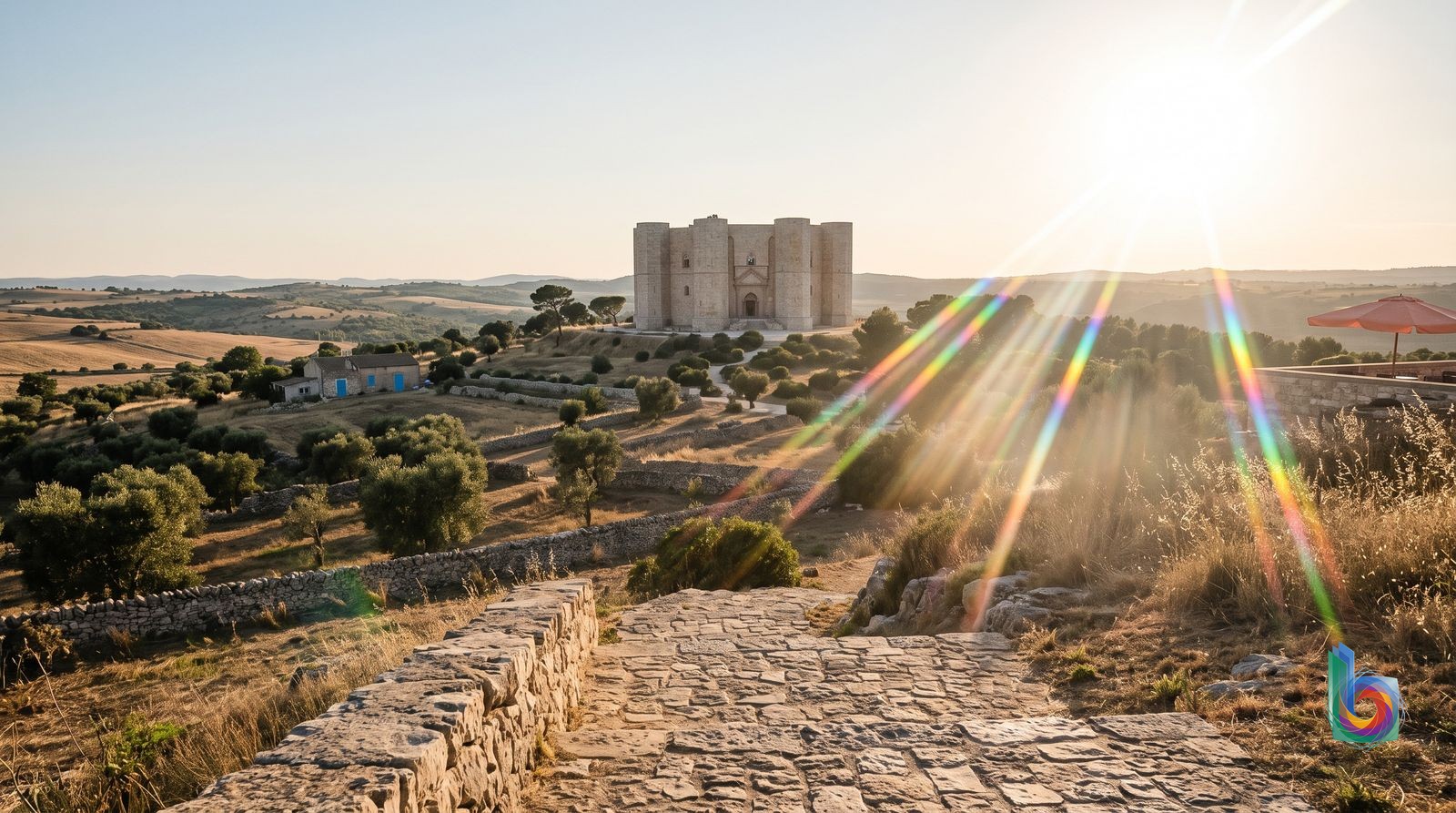
The limestone interior rewards travelers who want bread, ravines and Frederick II history instead of another beach. Base a driving day around Altamura, Gravina and Castel del Monte rather than trying to do it by casual rail connections.
history lovers · foodies · drivers
Don't miss
- 1
Grotte di CastellanaMetropolitan City of Bari (BA)
These are Apulia’s most substantial show caves, with a genuinely dramatic underground route rather than a quick roadside stop.
- 2
Trulli, Rione MontiMetropolitan City of Bari (BA)
Alberobello’s dense trullo quarter is the region’s signature built landscape and the essential first encounter with these conical-roofed dwellings.
- 3
Castel del MonteBarletta-Andria-Trani (BT)
Frederick II’s enigmatic octagonal castle is one of southern Italy’s great medieval monuments and an architectural outlier in the Apulian landscape.
- 4
Polignano a MareMetropolitan City of Bari (BA)
Its old town perched above a narrow turquoise cove makes Polignano one of Apulia’s most photogenic coastal stops.
- 5
OstuniBrindisi (BR)
The compact, whitewashed hill town is one of the Valle d’Itria’s defining urban views, with enough twisting lanes to justify more than a photo stop.
- 6
Lecce Historic CenterLecce (LE)
Lecce is the essential city break in southern Apulia: its warm local stone and extravagantly carved Baroque churches make the historic center distinct from the trulli country.
Getting your bearings
Numbers match Where to go · dots are headline sights
- The mental map
- Slice Puglia into four practical zones: Gargano and the Tremiti Islands in the north; the central Adriatic corridor of Bari, Polignano and Monopoli; the inland Valle d’Itria/Murgia around Alberobello, Ostuni and Altamura; and Salento, centered on Lecce, Otranto, Gallipoli and the southern cape. The coast is not interchangeable: the Adriatic side is rockier and more dramatic, while the Ionian side is generally sandier and more lido-oriented. Rail works well along the Bari–Monopoli–Ostuni–Lecce spine, but rural towns, coves and much of Salento are far easier by car.
- When to go
- Late April–June and September–mid-October are the best windows: warm enough for town-hopping and, from late May, credible swimming without August’s gridlock. September is the strongest all-round month, with warm sea, harvest-season food and fewer holiday crowds. July–August delivers the fullest beach-and-nightlife version of Puglia, but August—especially Ferragosto—is expensive, crowded and reservation-heavy; winter suits food, cities and hiking rather than a beach trip.
- Pacing a visit
- Do not try to cover the whole region from one hub unless the trip is very short. A sensible first visit is 4–5 nights around the central coast or Valle d’Itria, plus 3–5 nights in Lecce or Salento; add Gargano only on a slower 10–14 day trip. Bari–Lecce is about 1 hour 27 minutes by fast regional train, but Bari–Vieste is roughly three hours by road, and Gargano’s local roads are slow.
Book before you land
- Tremiti Islands ferry crossings in summer, especially weekends and August/Ferragosto.
- Beach clubs (lidi) in Otranto, Gallipoli, Porto Cesareo and other popular Salento beaches for July–August, especially front-row umbrellas and weekend dates.
Getting in
BRIBari Karol Wojtyła Airport
The main arrival airport for a first Puglia trip: use it for Bari, Monopoli/Polignano, the Valle d’Itria and onward rail to Lecce. It is the best all-round choice, especially if collecting a car after leaving Bari.
Flights and transfers into BariBDSBrindisi Airport (Salento Airport)
The sensible airport for Lecce, Ostuni and Salento, particularly if you are finishing south rather than backtracking to Bari. It is much closer to Lecce than Bari and works well for open-jaw itineraries.
Flights and transfers into BrindisiBari Centrale
The region’s useful long-distance rail gateway, with connections from Rome, Milan and other Italian cities. It is the right arrival point for a no-car itinerary along the Bari–Monopoli–Ostuni–Lecce corridor.
Flights and transfers into BariFoggia railway station
Useful mainly for Gargano-bound travelers arriving by train. It is not a substitute for a car in Gargano: onward buses and transfers are limited, and Vieste/Peschici are still a slow journey.
Flights and transfers into Foggia
Where to stay
Hotels in Apulia
Picked from Bari, Monopoli and Polignano a Mare.
B&B MurexBed and Breakfast4.9 · 136 reviews
Atipico B&BLodging4.8 · 121 reviews
Monopoli Guest HouseHotel5.0 · 35 reviews
My Monopoli - Casa dei Fiori Suite "Mimosa" Casa d'epocaBed and Breakfast4.6 · 48 reviews
B & B in Polignano a Mare: Ancient WorldBed and Breakfast5.0 · 540 reviews
Storie di MareLodging5.0 · 100 reviews
Questions worth settling
How many days do I need for a first trip to Puglia?
Allow 7–10 nights for a balanced first visit: 4–5 nights around the central coast or Valle d’Itria, then 3–5 nights in Lecce or elsewhere in Salento. Add Gargano only on a slower 10–14 day trip, as it is too far for a sensible Bari day trip.
Where should I base myself in Puglia?
Use two bases rather than trying to cover the region from one place: Monopoli or the Valle d’Itria/Ostuni area for the center, plus Lecce, Otranto or Gallipoli for Salento. Without a car, Bari, Monopoli and Lecce are the most practical bases on the main rail line.
Which towns and areas work well together?
Combine Bari, Polignano a Mare and Monopoli by train, using Polignano mainly as a day trip or brief stop. Pair Alberobello, Locorotondo, Martina Franca and Cisternino on a Valle d’Itria driving route; pair Lecce with Otranto for Adriatic coves or Gallipoli and Porto Cesareo for sandy Ionian beaches.
Do I need a car in Puglia?
Not for a trip focused on Bari, Polignano a Mare, Monopoli, Ostuni, Brindisi and Lecce, which sit on the useful Adriatic rail spine. Rent one for Valle d’Itria, Alta Murgia, Gargano, Salento beach-hopping and rural masserie; park outside historic centers because ZTL zones, narrow streets and limited parking make driving inside a liability.
Which airport should I fly into?
Bari Airport is the best all-round arrival point for Bari, Monopoli, Polignano a Mare, Valle d’Itria and rail onward to Lecce. Brindisi Airport is the better choice for Lecce, Ostuni and Salento, especially for an open-jaw itinerary that avoids backtracking.
When is the best time to visit Puglia?
Late April through June and September through mid-October offer the best balance of pleasant weather, town-hopping and manageable crowds; September is the strongest all-round month for warm sea and lighter crowds. July and August are best for full beach and nightlife season, but August—especially around Ferragosto—is the busiest, most reservation-heavy period.
What should I book ahead?
In July and August, book accommodation, popular dinner tables in places such as Monopoli, Ostuni, Gallipoli and Otranto, and beach clubs well ahead. Reserve Tremiti Islands ferries in summer, particularly on weekends and around Ferragosto; book Salento lidi early for Otranto, Gallipoli and Porto Cesareo.
Do I need a visa to visit Puglia?
Italy is in the Schengen Area: EU/Schengen citizens may enter with a valid national ID card or passport, while many non-EU visitors, including U.S. citizens, can generally visit visa-free for up to 90 days in any 180-day Schengen period. Requirements and passport-validity rules vary by nationality, so check Italy’s official visa checker and verify the current ETIAS status before travel.
Known for
- Alberobello’s conical trulli
- Whitewashed Valle d’Itria towns and olive-grove countryside
- Polignano a Mare’s limestone cliffs and sea caves
- Salento’s contrasting Adriatic and Ionian coasts
- Baroque Lecce
- Orecchiette, focaccia, burrata, olive oil and inexpensive seafood