- Pace
- For a first visit of 4–7 nights, stay in Lisbon and do one full Sintra day and one Cascais day. Both suburban train rides take roughly 40 minutes, but Sintra is a 10–12-hour undertaking once shuttle queues, hills and palace access are included. With 8–10 nights, add Cascais or Ericeira as a second base; at 11–14 nights, rent a car for 3–5 days after leaving Lisbon to connect Sintra’s coast, Mafra, Ericeira and Torres Vedras—never for central Lisbon.
- When to go
- Late April–May and September are the best all-round windows: comfortable for Lisbon’s hills, Sintra and the coast, without peak-summer room rates and queues. June is excellent if you want warm evenings and Lisbon’s street-party energy; July–August are driest but busiest, with cold, windy Atlantic beaches despite the sun. Winter is mild and good value for museums and restaurants, but expect rain and a damp, misty Sintra.
- Daily budget
- €220–350
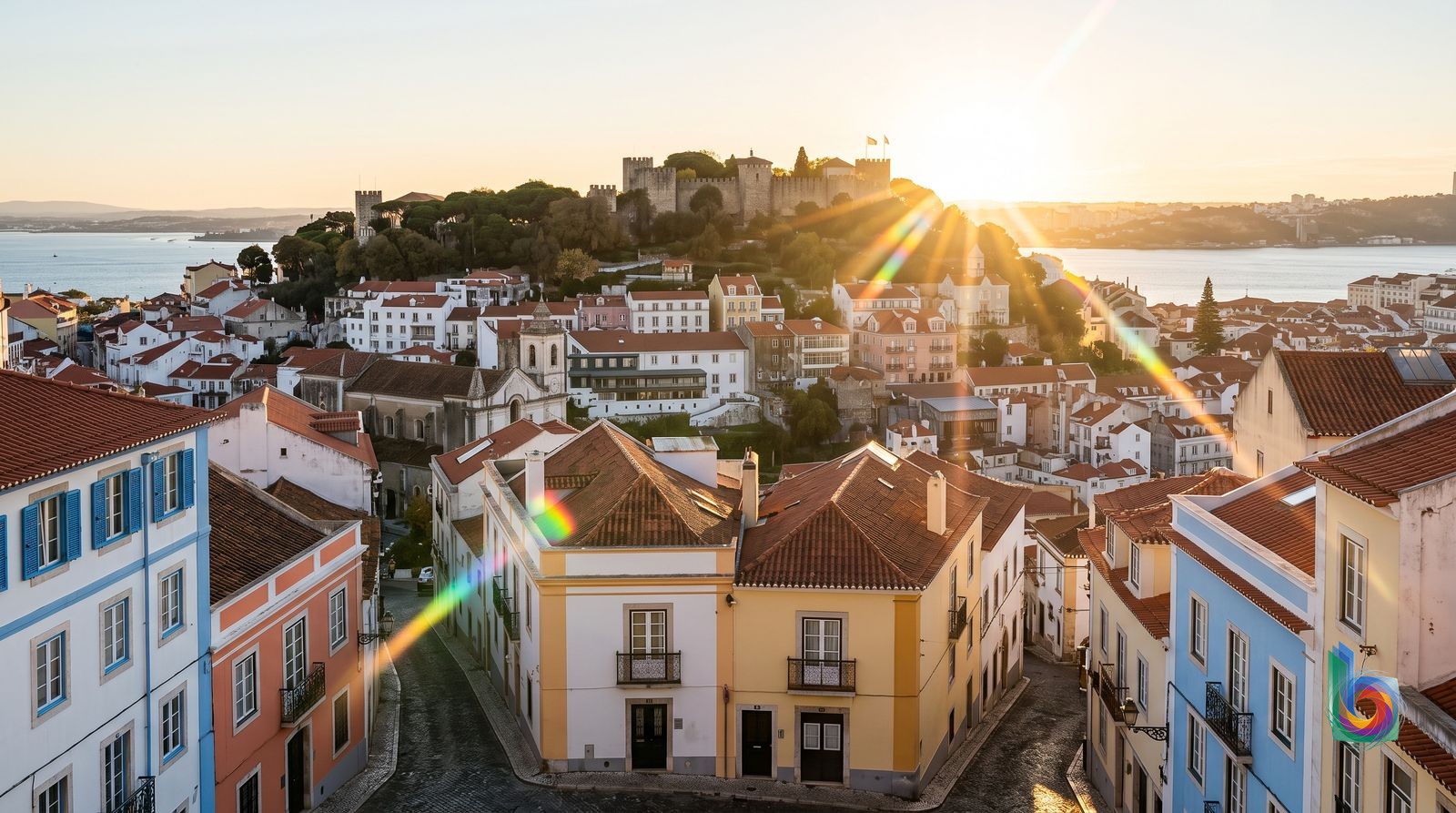
Lisbon District is far more than Lisbon with a Sintra day trip: it is Portugal’s most complete compact mix of capital-city intensity and Atlantic escape. You get Lisbon’s steep tiled streets, fado, museums and late nights; Sintra’s damp, wooded palace mountain; the polished resort coast of Cascais and Estoril; and, farther north, the working surf-and-fishing country of Mafra, Ericeira and Torres Vedras. It rewards travelers who treat the city as the anchor but make room for cliffs, seafood, pastries, vineyards and beaches that are usually cooler, windier and rougher than the postcard suggests.
Known for
- Lisbon’s historic hills, viewpoints, azulejos, fado, museums and nightlife
- Sintra’s Romantic palaces, estates and wooded mountain setting
- The easy Cascais–Estoril rail coast and Atlantic beach escapes
- Atlantic surfing and seafood around Ericeira
- Pastéis de Belém, pastel de nata, Sintra pastries and Lisbon snack-bar food
- Cliff-lined coast, Colares wine and the quieter vineyards and beaches north of Mafra
Where to go
 1
Base · 2–4 days
Lisbon
The essential base for the region: historic hills, Alfama and Baixa, fado, miradouros, serious museums and the best choice of food and nightlife. Stay here first; the steep streets and tourist crowds are the price of being in the middle of it all.
first-timersculture loversfoodiesnightlife travelers
Explore Lisbon Belém, Ajuda & Alcântara
2Belém, Ajuda & Alcântara
Short stop · 1 day
Lisbon’s monument-and-museum waterfront, with Jerónimos, MAAT, the Coach Museum and the original Pastéis de Belém. Give it a proper day rather than bolting it onto an already overloaded old-town itinerary.
architecture loversmuseum visitorsfamilies
 3
Sintra
Short stop · 1 day
The region’s indispensable palace day: Pena, the Moorish Castle, Regaleira, the National Palace and Monserrate sit in cool wooded hills above town. Pick two major sights, not five—queues and slopes make overambitious plans miserable.
first-timersarchitecture loversfamilies
Cascais & Estoril
4Cascais & Estoril
Base · 1–2 days
The easy, polished beach extension at the end of Lisbon’s suburban rail line, with a walkable centre, marina and promenade through Estoril. It is busy and pricey in summer, but it works exceptionally well as a car-free second base.
couplesfamiliesbeach travelers
Sintra Coast: Colares, Azenhas do Mar & Cabo da Roca
5Sintra Coast: Colares, Azenhas do Mar & Cabo da Roca
Short stop · 1 day
The worthwhile counterweight to Sintra’s palace circuit: cliff roads, Atlantic beaches, Colares wine and Cabo da Roca’s exposed headland. Use a car, driver or carefully planned bus day; this is not a frictionless add-on from the train station.
drivershikerscoast lovers
Oeiras & Carcavelos
6Oeiras & Carcavelos
Short stop · 1 day
The practical beach strip between Lisbon and Cascais, especially useful for Carcavelos’ broad sand and beginner-friendly surf. It is better for an uncomplicated beach day than for a romantic overnight stop.
familiesbeginner surfersbeach travelers
 7
Mafra
Short stop · 1 day
Come for the immense Mafra Palace-Convent, wildly outsized for its small town, then pair it with Ericeira or the north-coast drive. It is a satisfying half-day stop, not a destination to linger in for days.
architecture lovershistory travelersroad trippers
 8
Ericeira
Base · 2 days
A compact fishing town with serious Atlantic surf, seafood and a looser, younger feel than Cascais. Stay two to four nights if surf and coast are priorities; buses exist, but a car makes the surrounding coast far more usable.
surferscouplesremote workers
Torres Vedras & Santa Cruz
9Torres Vedras & Santa Cruz
Short stop · 1 day
A working inland town with vineyards and Carnival energy, paired with a less polished Atlantic beach coast at Santa Cruz. Choose it for wine, surfing or a slower provincial rhythm, not headline sightseeing.
wine travelersroad trippersCarnival visitors
Lourinhã & the North-Coast Beaches
10Lourinhã & the North-Coast Beaches
Short stop · 1 day
A rural northern detour of cliffs, broad surf beaches and dinosaur-focused attractions. It makes sense on a car-based loop with Torres Vedras, especially for families, but it should not displace Sintra on a first trip.
familiesroad trippersbeach repeaters
Don't miss
1
Castelo de São JorgeAlfama
This is Lisbon’s essential hilltop orientation stop: come for the city-and-river panorama as much as the fortifications. Go early, then use the descent through Alfama as the rest of your walk rather than treating the castle as an isolated visit.
2
Praça do ComércioBaixa
This is the grand riverfront room of central Lisbon and the natural place to understand the relationship between Baixa and the Tagus. Walk through it rather than lingering for long, then continue along the waterfront or up Rua Augusta.
3
Jerónimos MonasteryBelém
The monastery is Belém’s defining historic interior and the strongest reason to make time for the district beyond its riverside monuments. See the cloister, then build the rest of the visit around the nearby tower and museum stops.
4
Belém TowerBelém
The tower is Lisbon’s most recognizable riverside landmark, best appreciated as part of a Belém walk rather than as a lengthy standalone museum visit. The exterior and setting often matter more than the constrained interior visit.
5
National Palace of Pena
Pena is the headline sight of Sintra and one of the region’s defining day-trip experiences, combining dramatic architecture with a hilltop setting. Build a timed, transport-aware Sintra day around it rather than trying to squeeze it into an afternoon from Lisbon.
6
Quinta da Regaleira
Regaleira is Sintra’s most immersive counterweight to Pena, with a theatrical estate that rewards wandering rather than rushing. Pair it with one major hilltop monument, not every Sintra attraction, to keep the day enjoyable.
Getting your bearings
Pins are the top attractions, ranked by the corner badge — click one for details.
The mental map
Think in four bands. Lisbon proper is the dense, hilly urban core and the obvious first base; the western rail coast runs from Belém through Oeiras, Carcavelos, Estoril and Cascais and is easy without a car. Sintra divides into rail-friendly palace town and a much less convenient Atlantic coast around Colares, Azenhas do Mar and Cabo da Roca; north of that, Mafra, Ericeira, Torres Vedras and Lourinhã are the surf, beach and vineyard edge where a car becomes increasingly useful.
When to go
Late April–May and September are the best all-round windows: comfortable for Lisbon’s hills, Sintra and the coast, without peak-summer room rates and queues. June is excellent if you want warm evenings and Lisbon’s street-party energy; July–August are driest but busiest, with cold, windy Atlantic beaches despite the sun. Winter is mild and good value for museums and restaurants, but expect rain and a damp, misty Sintra.
Pacing a visit
For a first visit of 4–7 nights, stay in Lisbon and do one full Sintra day and one Cascais day. Both suburban train rides take roughly 40 minutes, but Sintra is a 10–12-hour undertaking once shuttle queues, hills and palace access are included. With 8–10 nights, add Cascais or Ericeira as a second base; at 11–14 nights, rent a car for 3–5 days after leaving Lisbon to connect Sintra’s coast, Mafra, Ericeira and Torres Vedras—never for central Lisbon.
Book before you land
Pena Palace timed entry, Sintra—book well ahead in spring, summer, school holidays and weekends; choose an early slot. · Quinta da Regaleira, Sintra—timed entry can sell out on high-demand dates. · Jerónimos Monastery, Belém—reserve ahead in peak season if entry matters rather than accepting a long queue. · Popular Lisbon tasting-menu and destination seafood restaurants, especially Friday–Sunday in summer; this is a reservation issue rather than an attraction ticket.
Getting in
LISHumberto Delgado Airport, Lisbon
The real international gateway for the district and almost every first visit. It is inside Lisbon’s metro network; use it for a Lisbon base, then reach Sintra and Cascais by suburban train rather than collecting a rental car on arrival.
Lisboa Oriente station
The practical long-distance rail and intercity-bus gateway, especially from Porto, Faro, Spain and elsewhere in Portugal. It is east of the historic centre but linked by Metro; useful for onward buses and trains, not a reason to stay nearby unless you want Parque das Nações.
Santa Apolónia station
A central long-distance rail gateway, particularly convenient for travelers continuing into the old city. It is closer to Alfama than Oriente, but neither station serves Sintra or Cascais directly; change onto Lisbon’s urban rail/metro network.
Before you go
Questions worth settling
How many days do I need for Lisbon and the surrounding region?
For a first visit, allow 4–7 nights based in Lisbon: enough for the city, one full day in Sintra and a day in Cascais. With 8–10 nights, add Cascais or Ericeira as a second base; with 11–14 nights, add a 3–5-day car segment for the Sintra Coast, Mafra, Ericeira and Torres Vedras.
Where should I stay on my first trip: Lisbon, Cascais or Sintra?
Stay in Lisbon for a first 4–7-night visit, as it has the best transport, food, nightlife and access to both Sintra and Cascais. Cascais & Estoril is an excellent car-free second base if beach time matters; Sintra is better visited as a long day trip than used as the sole base.
Can I combine Sintra and Cascais in one day?
Do not plan to combine Sintra’s palace circuit and Cascais in one day. Sintra takes 10–12 hours in practice once palace shuttles, timed entries, hills and queues are included; give Cascais its own easy rail day, or stay there after Lisbon.
Do I need a car in the Lisbon region?
No car is needed—and it is a liability—in central Lisbon; use the Metro, trams, buses and suburban trains. Sintra and Cascais are each roughly 40 minutes by train, but rent a car for 3–5 days after leaving Lisbon if you want to link Colares, Azenhas do Mar, Cabo da Roca, Mafra, Ericeira, Santa Cruz, Torres Vedras or Lourinhã; do not drive to Pena Palace or the Moorish Castle, where private access is restricted.
When is the best time to visit Lisbon, Sintra and the coast?
Late April–May and September are the best all-round periods for Lisbon, Sintra and the coast, with comfortable conditions and generally lighter pressure than peak summer. June is ideal for warm evenings and festival energy, while July–August are busiest and the Atlantic coast can still be cold, windy and foggy; winter is mild and good value but wetter, especially in misty Sintra.
What should I book ahead?
Book Pena Palace timed entry well ahead for spring, summer, weekends and school holidays, ideally for an early slot; Quinta da Regaleira can also sell out on high-demand dates. Reserve Jerónimos Monastery in peak season if entry matters, and book popular Lisbon tasting-menu or destination seafood restaurants, especially Friday through Sunday in summer.
Do I need a visa to visit Lisbon, Portugal?
Portugal is in the Schengen Area: EU/EEA/Swiss travelers can enter with an ID card or passport, while many visitors with US, Canadian, UK, Australian and New Zealand passports can usually visit visa-free for up to 90 days in any 180-day Schengen period. Passport-validity and ETIAS requirements can change, so confirm the current official Portuguese and Schengen rules before booking.
Known for
- Lisbon’s historic hills, viewpoints, azulejos, fado, museums and nightlife
- Sintra’s Romantic palaces, estates and wooded mountain setting
- The easy Cascais–Estoril rail coast and Atlantic beach escapes
- Atlantic surfing and seafood around Ericeira
- Pastéis de Belém, pastel de nata, Sintra pastries and Lisbon snack-bar food
- Cliff-lined coast, Colares wine and the quieter vineyards and beaches north of Mafra

