- Pace
- For a first visit, base yourself in Porto or central Gaia for 3–5 nights: Porto itself deserves at least two unhurried days, with Gaia and the coast as straightforward excursions. Add a second base only from six nights onward, preferably Amarante or Baião if the inland district matters to you. The airport and urban corridors are easy, but rural sights, trailheads, estates and river beaches are not efficiently linked by public transport.
- When to go
- March–May is the best all-round window: green, walkable and less pressured than summer, though Atlantic weather still changes quickly. June is Porto at full volume—excellent if you want São João and festival energy, a bad choice if you want sleep or bargains. July–August is for beach time on the Matosinhos–Póvoa coast, not the most relaxed city break; September is arguably the smartest first-trip month, while October–February suits museums, lodges and restaurants rather than reliable outdoor plans.
- Daily budget
- €150–260
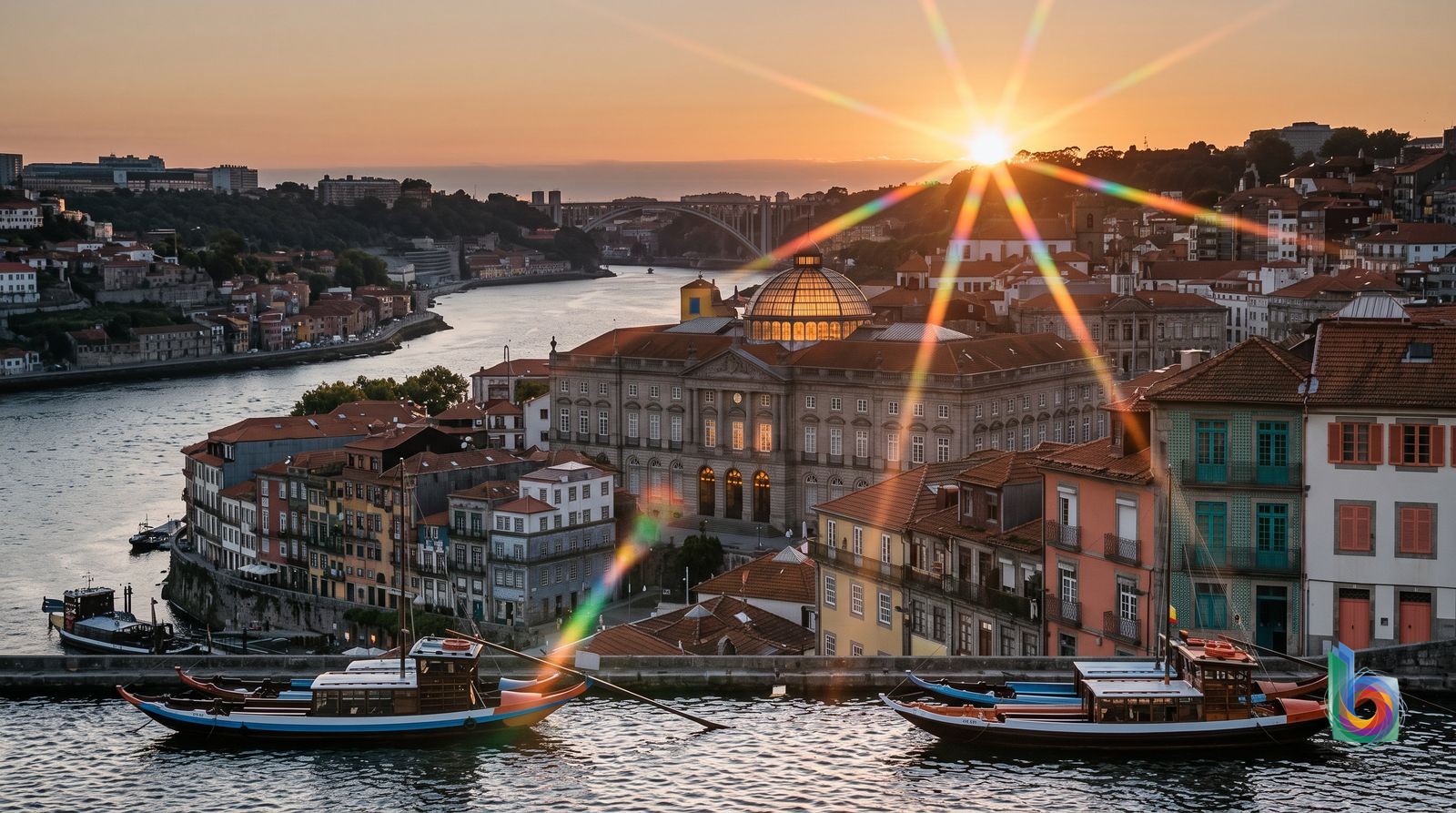
Porto District is not shorthand for all of northern Portugal; it is a compact Atlantic-and-river region centred on Porto. For travelers, it combines a dense, steep city of granite, tiles, bridges and nightlife; Gaia’s Port-wine lodges across the Douro; working fish towns and beaches on the Atlantic; and, farther east, a quieter country of green valleys, Romanesque heritage, vineyards and low mountains. The headline sights are real, but the useful experience is the contrast between urban Porto, the coast and the inland edge—not a rushed detour to every place branded as the north of Portugal.
Known for
- Port wine lodges in Vila Nova de Gaia
- Porto’s UNESCO-listed historic core, bridges, azulejos and granite architecture
- Atlantic seafood, especially grilled fish in Matosinhos and Leça da Palmeira
- The Douro riverfront and its city-to-coast contrast
- Amarante’s Tâmega riverside and convent-style sweets
- Quiet inland valleys, Romanesque heritage and hiking around Penafiel, Amarante and Baião
Where to go
 1
Base · 2–5 days
Porto
The essential base: Baixa, Ribeira, Cedofeita, Boavista and Foz cover the historic core, tile-and-granite streets, museums, restaurants and nightlife. Give it at least two full days; trying to reduce it to a single highlights walk is a mistake.
first-timersculture travelersfoodiessolo travelers
Explore Porto  2
Vila Nova de Gaia
Short stop · 1 day
Across the Dom Luís I bridge, Gaia is where Port lodges, river views and the Jardim do Morro sunset come together. Treat it as Porto’s indispensable wine-and-river counterpart, not as a substitute for the city centre.
wine travelerscouplessunset walkers
Matosinhos and Leça da Palmeira
3Matosinhos and Leça da Palmeira
Short stop · 1 day
Come for charcoal-grilled fish and seafood, not quaint-village atmosphere: this is a working Atlantic city with broad beaches, surf and Leixões harbour. It is the most rewarding easy coastal break from central Porto.
seafood loverssurfersfamilies
 4
Amarante
Base · 2 days
The district’s best inland overnight is a compact riverside town built around the Tâmega, São Gonçalo bridge, art and serious convent sweets. One night is usually enough, but two makes the transfer feel unhurried and leaves room for the surrounding hills.
couplesphotographersart lovers
 5
Vila do Conde
Base · 2 days
A calmer coastal alternative to Porto, with an actual old centre, shipbuilding history, beaches and a more lived-in rhythm than the bigger resort towns. Stay for sea air, walks and meals rather than a headline-sight checklist.
slow travelersfamiliescoastal walkers
 6
Póvoa de Varzim
This is the district’s unfussy northern resort and fishing town, best for its long seafront, surf and 12-km coastal walkway through dunes and quieter shoreline. It works especially well paired with Vila do Conde, rather than in place of Porto.
beach walkerssummer travelersCamino walkers
Baião
7Baião
Base · 1–3 days
The quiet rural end of the district: green agricultural slopes, Douro views, Serra do Marão, Aboboreira hiking and scattered heritage. Stay overnight and use a car; it is too dispersed to treat as a quick Porto day trip.
drivershikersrural-stay travelers
Penafiel and the Sousa Valley
8Penafiel and the Sousa Valley
Base · 2 days
Penafiel is the most practical gateway to the district’s Romanesque countryside, small villages and estates, with a workable train link from Porto. The town alone is not the whole point—use it as an inland base if you have a car or are willing to take taxis.
heritage travelerswine-and-country travelersinland overnighters
Gondomar and the eastern Douro riverbank
9Gondomar and the eastern Douro riverbank
A quieter continuation of Porto along the Douro, with riverside walking, small beaches and traditional gold-filigree workshops. It is a worthwhile extra day for repeat visitors, not a replacement for Porto’s historic core.
craft enthusiastscyclistsrepeat visitors
Valongo and the Serra de Santa Justa/Pias
10Valongo and the Serra de Santa Justa/Pias
This is the near-city escape for forest, slate landscapes, geology and proper hill walking. Go prepared with maps and footwear: it is appealing precisely because it is less polished and less plug-and-play than the coast.
hikerstrail runnersclimbers
Don't miss
1
Porto Cathedral
The cathedral anchors the oldest part of Porto and provides a useful orientation stop before wandering downhill toward the river. Go inside for the layered interiors, then use the surrounding lanes as the start of a Ribeira walk.
2
Torre dos Clérigos
This is Porto’s essential vertical landmark and one of the clearest ways to understand the city’s dense, hilly historic core. Treat the climb as a viewpoint stop rather than a long museum visit, then continue through the Clérigos and Carmo area.
3
Luís I Bridge
Walking this bridge is a defining Porto experience: it joins the historic centre to Gaia while putting the river, roofs and port lodges in one view. Cross it as part of a route rather than merely photographing it from below.
4
Miradouro da Serra do Pilar
This Gaia-side lookout supplies the classic broad view of Porto, the river and the bridge in a single frame. Reach it after crossing the upper deck, then continue into the port-lodge area rather than immediately retracing your route.
5
Ribeira
Porto’s riverfront quarter is the city’s essential atmosphere stop: steep lanes, worn facades, bridges and constant movement all converge here. Wander it without a rigid route, but expect restaurants on the main square to trade convenience for crowds.
Getting your bearings
Numbers match the places above; small dots are the headline sights.
The mental map
Think in three bands: urban Porto and Gaia along the Douro; the Atlantic coast from Foz through Matosinhos to Vila do Conde and Póvoa de Varzim; and the inland Tâmega–Sousa–Douro edge around Penafiel, Amarante and Baião. The first two are easy from a Porto base by metro or train; the last becomes scattered quickly and rewards a car or an overnight stay.
When to go
March–May is the best all-round window: green, walkable and less pressured than summer, though Atlantic weather still changes quickly. June is Porto at full volume—excellent if you want São João and festival energy, a bad choice if you want sleep or bargains. July–August is for beach time on the Matosinhos–Póvoa coast, not the most relaxed city break; September is arguably the smartest first-trip month, while October–February suits museums, lodges and restaurants rather than reliable outdoor plans.
Pacing a visit
For a first visit, base yourself in Porto or central Gaia for 3–5 nights: Porto itself deserves at least two unhurried days, with Gaia and the coast as straightforward excursions. Add a second base only from six nights onward, preferably Amarante or Baião if the inland district matters to you. The airport and urban corridors are easy, but rural sights, trailheads, estates and river beaches are not efficiently linked by public transport.
Book before you land
Livraria Lello timed entry, especially from spring through early autumn. · Premium or small-group Port-lodge tastings in Vila Nova de Gaia, particularly on summer weekends and around São João.
Getting in
OPOFrancisco Sá Carneiro Airport, Porto
The main gateway for the district and the obvious arrival point for most international visitors. Metro Line E links the airport to Trindade in central Porto in roughly 30 minutes; it is also the sensible place to collect a car only when heading inland.
Flights and transfers into PortoPorto-Campanhã railway station
Porto’s principal long-distance rail station, used for services from Lisbon and other Portuguese cities. It is east of the centre but connected by metro and local train; use it for arrivals, then stay around central Porto, Gaia or Matosinhos rather than treating Campanhã itself as a base.
Flights and transfers into PortoSão Bento railway station, Porto
The central terminus for many regional and urban CP services, including the line toward Penafiel. It is more convenient than Campanhã for a central-Porto arrival, but not the main hub for long-distance trains.
Flights and transfers into Porto
Where to stay
Hotels in Porto
Picked from Porto.
Add dates to see nightly prices.
2


Before you go
Questions worth settling
How many days do I need for Porto District?
Plan 3–5 nights based in Porto or central Vila Nova de Gaia for a first visit. Give Porto at least two full days, then use Gaia and the coast for easy excursions; add an inland base only if you have six or more nights.
Where should I stay: Porto, Gaia or the coast?
Stay in central Porto for the easiest first trip, city sights, restaurants and nightlife; central Gaia suits Port-lodge visits and river views. Matosinhos and Leça da Palmeira work well for seafood and beach access, while Vila do Conde is a calmer coastal overnight rather than a substitute for Porto.
Which places are worth combining on one trip?
Combine Porto with Vila Nova de Gaia and Matosinhos or Leça da Palmeira without changing hotels. For a longer trip, pair Amarante with Baião or Penafiel and the Sousa Valley; Vila do Conde and Póvoa de Varzim make a natural coastal combination.
Can I visit without a car?
Yes for Porto, Gaia, Matosinhos, Vila do Conde and Póvoa de Varzim, using walking, metro and urban trains. A car is most useful for Baião, Valongo, and scattered inland sites, estates, trailheads and rural villages; buses can be more practical than trains for Amarante, while Penafiel has a train link from Porto.
Do I need a visa for Portugal?
Portugal is in the Schengen Area. EU/EEA/Swiss citizens can enter freely, while travelers from the US, Canada, UK, Australia, New Zealand and many other visa-exempt countries can generally stay up to 90 days in any 180-day Schengen period; check current passport, Schengen and ETIAS requirements before departure.
What is the best time to visit Porto District?
March–May is the best all-round period for a first visit, with green inland scenery and less pressure than summer, although rain remains common. September is often the smartest month for a city-and-coast trip; choose June for São João and festival energy, or July–August primarily for coast days rather than a quiet city break.
What should I book ahead?
Reserve timed entry for Livraria Lello from spring through early autumn, and book premium or small-group Port-lodge tastings in Vila Nova de Gaia for summer weekends and around São João. Book central accommodation well ahead for São João on 23–24 June, NOS Primavera Sound, and summer weekends.
Known for
- Port wine lodges in Vila Nova de Gaia
- Porto’s UNESCO-listed historic core, bridges, azulejos and granite architecture
- Atlantic seafood, especially grilled fish in Matosinhos and Leça da Palmeira
- The Douro riverfront and its city-to-coast contrast
- Amarante’s Tâmega riverside and convent-style sweets
- Quiet inland valleys, Romanesque heritage and hiking around Penafiel, Amarante and Baião
