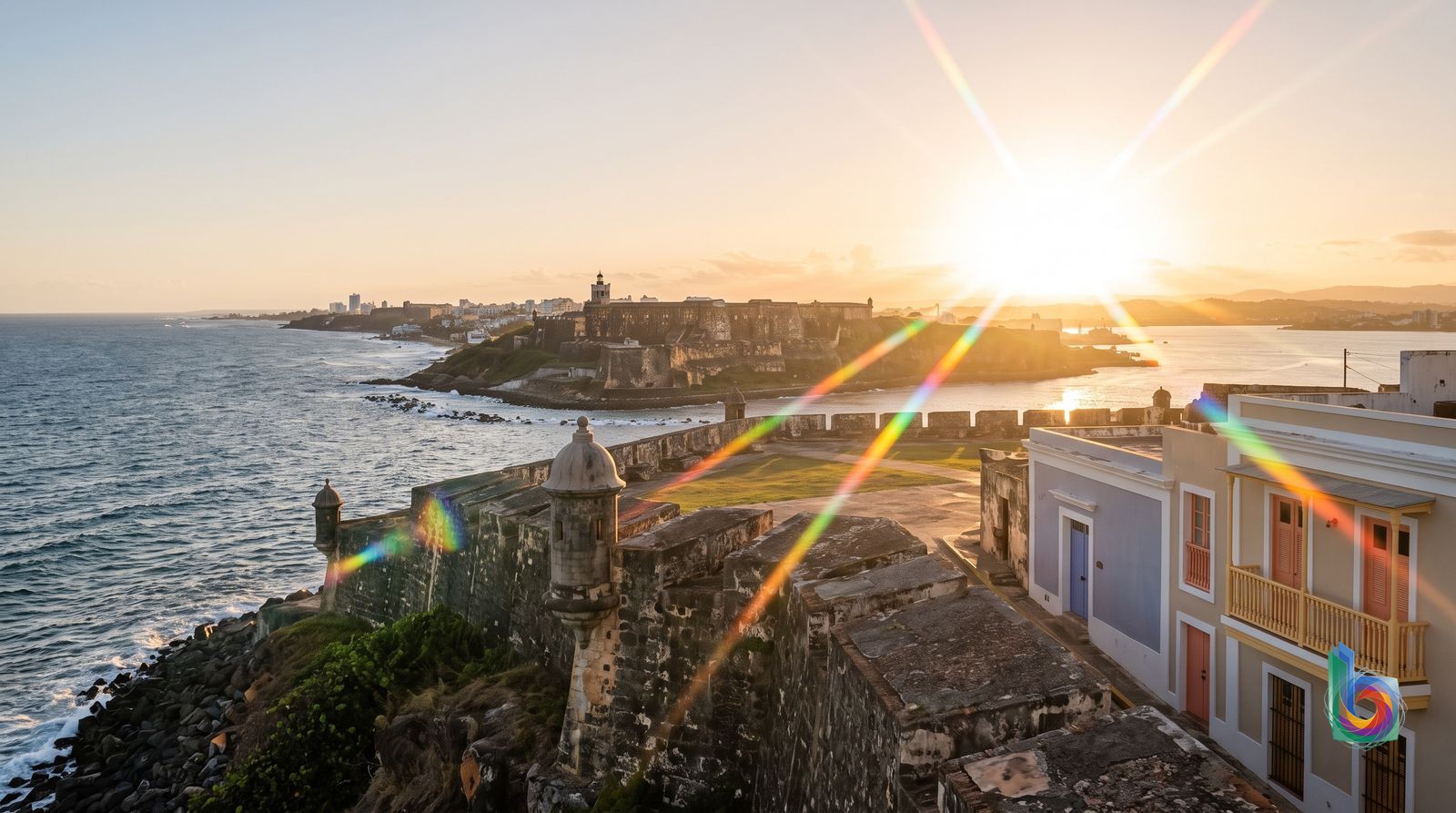
Puerto Rico is a compact but logistically varied Caribbean island: a U.S. territory where Spanish is the everyday cultural language, with a polished but lively San Juan metro area, lush Atlantic-facing northeast, dry Caribbean south, slow mountain interior and genuinely separate offshore islands. For travelers, it is less a single beach destination than a mix of colonial city, roadside food culture, rainforest, surf coast and island-hopping—held together by Taíno, Spanish, African and U.S. influences that make it feel neither mainland American nor generic resort Caribbean.

1 · Base · 1–5 nights
San Juan
Base here for Old San Juan’s forts and streets, plus Santurce’s restaurants and nightlife; Condado and Isla Verde add easy city beaches. It is the only genuinely workable car-free base, but cruise-ship days can make the old city feel overrun.
first-timers · short breaks · foodies
Explore San Juan2 · Base · 2 nights
Río Grande, El Yunque, Luquillo and Fajardo
Puerto Rico’s best northeast circuit: rainforest in the morning, Luquillo beach and kiosks in the afternoon, then Fajardo or Ceiba for boats and island connections. Stay around Río Grande or Luquillo if you want El Yunque without a long San Juan return drive.
families · nature travelers · beach travelers

3 · Base · 2 nights
Vieques
This deserves an overnight island stay, not a rushed bio-bay excursion: rent a jeep, work through the beaches, and base near Esperanza or Isabel Segunda. Mosquito Bay is the payoff, but plan around the moon and accept that weather affects the glow.
couples · beach travelers · repeat visitors

4 · Base · 2 nights
Culebra
Come for Flamenco Beach, clear water and snorkeling, then stay long enough to stop treating it as a ferry checklist. Dewey is the practical base, but book rooms and wheels early because supply is thin.
serious beach travelers · snorkelers · couples
5 · Base · 2 nights
Ponce and the South Coast
Ponce gives the dry south an urban anchor: colonial streets, museums, plazas and a more local rhythm than San Juan. Use it as a base for Salinas seafood, Guayama and the hotter Caribbean-facing coast rather than expecting a resort beach town.
history-minded travelers · foodies · road trippers
6 · Base · 1–2 nights
Cabo Rojo and La Parguera
The southwest is for salt flats, cliffs, Combate and Boquerón beaches, and long sunset drives—not polished sightseeing. La Parguera adds mangrove channels and a bio-bay outing; weekends can be loud, hot and busy in the best and worst sense.
self-drivers · couples · beach travelers
7 · Base · 2 nights
Rincón, Aguadilla and Isabela
Puerto Rico’s west-coast base for surf, sunsets and a looser pace, with Rincón as the most appealing place to sleep. Winter swells are excellent for surfers but can make exposed beaches poor choices for casual swimming.
surfers · couples · repeat visitors
8
Cayey and Guavate
Make this a deliberate lunch stop rather than an overnight destination: Guavate’s lechoneras serve the island’s canonical roast pork spread with rice, yuca, morcilla and cold beer. Arrive early on weekends before traffic, parking and the best cuts disappear.
foodies · groups · road trippers
9 · Base · 2 nights
Jayuya, Adjuntas, Utuado and Lares
The high interior is the antidote to beach repetition: coffee haciendas, greener roads, river valleys and cooler air. It works as a one- or two-night self-drive stop, but mountain roads are slow and lodging is limited.
coffee enthusiasts · hikers · self-drivers
10
Arecibo, Manatí and the North Karst Coast
Use this limestone coast for caves, karst scenery and rugged beaches on a San Juan-to-west drive. It is a strong planned day or transit stop, not a destination that needs its own hotel base.
road trippers · nature travelers · cave enthusiasts
Castillo San Felipe del Morro
The great coastal fortress is the essential San Juan image, but its real payoff is understanding how the harbor and city were defended.
Castillo San Cristóbal
San Cristóbal complements El Morro rather than repeats it: its tunnels, defenses and city-facing position make the military landscape easier to read.
El Yunque National Forest
Puerto Rico's lush rainforest is the necessary nature counterweight to a San Juan city stay, offering trails, waterfalls and mountain views in a distinctly tropical setting.
Flamenco Beach
Culebra's signature beach earns the trip for its extraordinarily clear water, broad pale sand and protected-feeling bay.
Mosquito Bay
Vieques' celebrated bioluminescent bay is one of Puerto Rico's genuinely singular night experiences, best appreciated on a responsible guided paddle or electric-boat outing.
Numbers match Where to go · dots are headline sights
SJULuis Muñoz Marín International Airport, San Juan
The island’s main gateway and the obvious arrival point for first visits, San Juan stays, the northeast, and most international connections. It is about 15–25 minutes from Isla Verde/Condado in normal traffic, but Old San Juan can take longer.
Flights and transfers into San JuanBQNRafael Hernández Airport, Aguadilla
Use this for Rincón, Aguadilla, Isabela and the northwest when flights work. It can save a punishing final drive from San Juan, but has far fewer routes and rental-car choices than SJU.
Flights and transfers into AguadillaNRRJosé Aponte de la Torre Airport, Ceiba
A small regional-air gateway for Vieques and Culebra connections; useful after reaching the east coast, not a substitute for SJU for most international arrivals. Flights are quicker and generally more reliable-feeling than building a tight island itinerary around the ferry.
Ceiba Ferry Terminal
The mainland ferry gateway for Vieques and Culebra. It is the budget route, but requires getting from San Juan to Ceiba first and should not be used on the same day as an inflexible international departure.
Three to five nights works well with San Juan as a base for Old San Juan, Santurce, Condado or Isla Verde, plus El Yunque, Luquillo and Fajardo. With a week, pair San Juan with the east and Vieques, or with a west-coast base such as Rincón; for 10–14 nights, plan two or three bases.
Stay in San Juan if you want a car-free base with Old San Juan, restaurants and nightlife in Santurce, and beaches in Condado or Isla Verde. Stay around Río Grande or Luquillo instead if El Yunque and the northeast beaches are your priority, and choose Rincón for a slower surf-and-sunset west-coast trip.
Combine San Juan with Río Grande, El Yunque, Luquillo and Fajardo for an easy first-trip circuit. Vieques or Culebra should be added as overnight stays, not rushed day trips; the west coast—Rincón, Aguadilla and Isabela—is better paired with its own base than attempted from San Juan every day.
Puerto Rico follows U.S. entry rules. U.S. citizens arriving from the mainland U.S. do not need a passport; foreign visitors need the same passport and U.S. visa or ESTA eligibility required to enter the United States, and should verify requirements before travel.
No car is necessary for a San Juan-only stay, where Uber and taxis work well enough. For El Yunque, Luquillo, the mountains, Ponce, Cabo Rojo, La Parguera or the west coast, a rental car is the practical default; use regional flights or the Ceiba ferry for Vieques and Culebra, then arrange local transport or rent a jeep/cart.
December through April is the easiest first-trip period, with drier-feeling weather and reliable beach days, but higher demand in Old San Juan, Vieques, Culebra and Rincón. May–June is a better-value option if you accept heat and short showers; September–November is quieter and cheaper but wetter and more hurricane-sensitive, so use flexible bookings.
Reserve Mosquito Bay tours in Vieques around the moon calendar, plus Vieques or Culebra flights or Ceiba ferry tickets, especially for weekends, winter and holidays. Book Culebra or Vieques rental vehicles early, along with El Portal timed tickets in El Yunque and small-group snorkeling or sailing charters from Fajardo when those are on your plan.