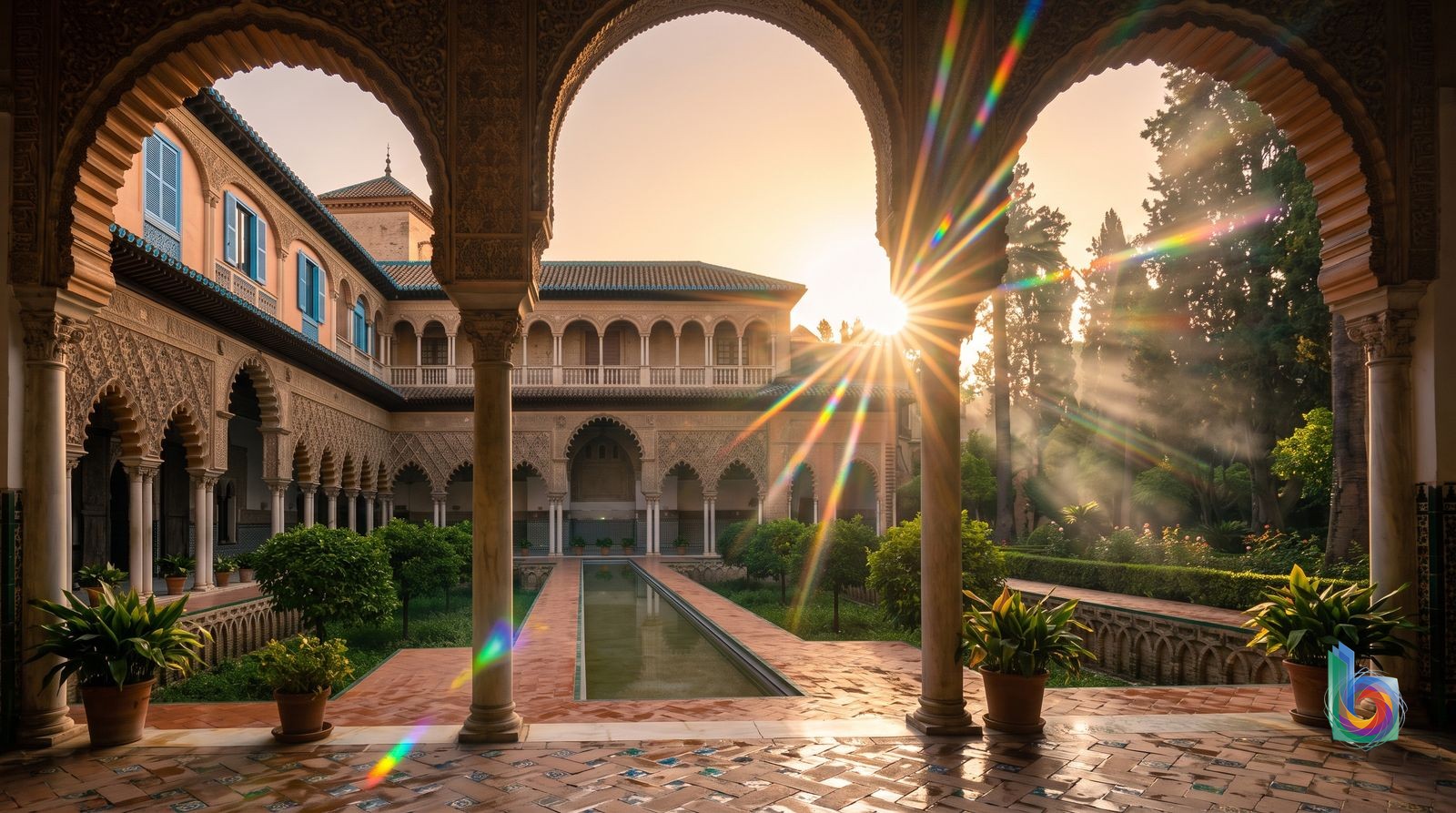
Season by season
January
Mild by northern-European standards, quiet and comparatively wet; daylight is short and some attractions may run shorter winter hours.
It is not reliably warm, and rain can blunt the pleasure of Seville’s outdoor streets and plazas.
February–March
One of the strongest windows: increasingly warm, green and comfortable for walking, before summer heat. Late February and March are the best part of this period.
Semana Santa can fall in March or April and changes the city entirely; if it coincides with your dates, crowds, accommodation costs and street access rise sharply.
April
Often glorious spring weather, but this is Seville’s most disruptive month when Semana Santa and Feria de Abril fall here.
During the major festivals, hotel availability and prices, restaurant reservations, transport and movement through central streets are all affected. Avoid festival dates for an uncomplicated first sightseeing trip.
May–June
Early May, once the big festivals have passed, is an excellent warm-weather compromise. Heat builds quickly through June.
By late May and especially June, midday sightseeing becomes tiring; carry water, sunscreen and a hat, and plan indoor stops in the afternoon.
July–August
Brutally hot, often with fierce daytime sun. The city works best on a dawn–siesta–late-evening rhythm.
This is poor weather for all-day walking and midday outdoor activities. Schedule the Alcázar or another indoor sight in the hottest hours; do not treat a midday horse-carriage ride as a sensible solution.
September
Still hot, particularly early in the month, but easing toward more workable walking weather later on.
It can still feel like high summer, so expect to use the same heat-avoidance strategy as July and August.
Events worth planning around
Semana Santa · Holy Week before Easter; usually March or April, with dates changing annually.
The city’s major processions reshape central-street access and the daily rhythm. Accommodation and good flamenco reservations tighten dramatically; book far ahead or avoid it for a straightforward first sightseeing visit.
Feria de Abril · Usually April, though it can fall in early May; dates vary with Easter.
A major citywide demand spike, especially for hotels and restaurants. It follows or sits near Semana Santa in the spring calendar and materially affects prices, availability and the feel of the city.
Getting around
Walking
The default for Centro, Santa Cruz, Alfalfa, El Arenal and the Cathedral–Alcázar–Plaza Nueva–Las Setas circuit. It is usually faster than waiting for transport in the maze-like historic core, and the river walk to Triana is easy via Puente de Triana.
Treat the old centre as a walking city; use an offline map because the lanes can be confusing. Walk Santa Cruz early or late, and carry water, sunscreen and a hat from late spring to early autumn.
Walking stops being effortless in summer heat and at the northern/southern edges: Macarena, Alameda and San Lorenzo are roughly 15–25 minutes from the core, while Plaza de España/San Bernardo and Triana add distance. Santa Cruz’s narrow lanes are poor for luggage, wheelchairs and taxi access.
Metro
Useful for practical cross-city trips rather than sightseeing: Plaza de Cuba for Triana/Los Remedios, and Prado de San Sebastián or San Bernardo for Plaza de España, the university area and rail connections. It is most useful if staying in San Bernardo, Nervión, Los Remedios or near Plaza de Cuba.
There is only one line. Use it to shorten journeys across the south/east-central corridor, then walk or change to a bus for the final approach. A rechargeable green transport card works across the network.
The metro largely skirts the visitor sights: it does not serve Santa Cruz, the Cathedral, Alfalfa, Alameda, Macarena or La Cartuja directly. Do not choose a hotel assuming the metro will make the old town conveniently door-to-door.
Tram
A simple, low-stress link between Prado de San Sebastián, the Cathedral corridor and Plaza Nueva—handy from the Prado bus station, San Bernardo/Plaza de España area, or when legs are tired after sightseeing.
Use it as a short central connector, especially to avoid the walk between Prado and the Cathedral/Plaza Nueva end of Centro. The same rechargeable green card can be used across modes.
It is a very short line, not a citywide network. It does not solve transport for Triana, Alameda, Macarena, Nervión or La Cartuja, and it is not useful inside Santa Cruz’s pedestrian lanes.
City bus
The practical gap-filler for districts beyond easy walking range: Macarena, Alameda/San Lorenzo, Nervión, Los Remedios and La Cartuja. It is also the sensible choice when the single metro line does not go where you need.
Ordinary city-bus fares are about €1.40; a rechargeable green transport card works across modes. Find stops on the larger perimeter avenues rather than expecting buses in the oldest lanes.
Buses are less intuitive in the historic centre, where traffic restrictions and pedestrian streets make walking quicker. Alameda, Macarena and La Cartuja rely on buses but are not especially convenient for spontaneous late-night returns; check the last service rather than assuming all-night coverage.
Taxi and ride-hailing
Late arrivals, heavy luggage, groups, trips after an evening out, and places where the network is thin—especially La Cartuja or a hotel outside the old-centre walkable core. A short ride is often the least stressful way to reach Santa Justa from central accommodation.
Use regulated official taxis or an app. Cabify is the least fussy app option; Uber, Bolt, Free Now and PideTaxi are also available. At Seville Airport, app pick-ups are in the ground-level parking garage beside arrivals, not at the curb.
Cars cannot penetrate much of Santa Cruz, Alfalfa and the Cathedral-area lanes, so expect a walk from the drop-off point. Use official taxis or an app if a fare feels unclear; do not accept an unregulated ride.
Bike
A good daytime option along the Guadalquivir and on segregated lanes, particularly between the centre, Triana, Plaza de España/María Luisa Park and some wider east-side districts. It can be pleasant when the heat is moderate.
Keep to the river paths and marked cycling infrastructure where possible, and use a bike for a specific cross-city ride rather than trying to thread every old-town lane.
Bikes are awkward in the pedestrian crush around Santa Cruz, the Cathedral and the tight lanes of Alfalfa. They are also a poor idea in peak summer heat or on late-night bar streets around Alameda and Triana.
Safety: Seville is generally easy-going, but guard phones and wallets in crowded Santa Cruz and transport hubs, use official taxis or apps, and never leave bags or valuables visible in a parked car.
Book before you land
Real Alcázar: the one non-negotiable advance booking. Reserve an official timed entry as soon as dates are fixed; in spring, festival weeks and other high-demand periods, desirable morning slots can disappear weeks ahead. Avoid reseller mark-ups. · Cathedral and Giralda: book a timed ticket ahead in spring, autumn weekends and holiday periods, chiefly to avoid a long queue and secure a sensible time after the Alcázar. The Salvador combination ticket can be a useful alternative if the cathedral queue is bad. · Royal Apartments at the Alcázar: reserve with the palace ticket if you specifically want them; access is by tour and depends on royal use. · A specific flamenco show—especially a small venue or a preferred evening—should be booked a few days ahead, and earlier during Semana Santa/Feria. Do not assume every flamenco bar needs a ticket; La Carbonería’s nightly performances are free, but seats go early.
- Eat on Spanish time or adjust expectations: lunch runs late and dinner commonly starts after 20:30. Tourist-zone kitchens may serve earlier, but that does not make them the best choice.
- Santa Cruz is worth walking but is also the city’s most tourist-saturated quarter. Wander it early or late, then eat and drink in less theatrical areas such as Alameda de Hércules or across the river in Triana.
- Carry water, sunscreen and a hat from late spring through early autumn. In high summer, schedule the Alcázar or another indoor sight in the hottest hours; horse-carriage rides in midday heat are a poor idea for both you and the animals.
- Use official taxis or an app if a fare feels unclear; taxi tariffs are regulated. At SVQ, app pick-ups are in the ground-level parking garage beside arrivals, not at the curb.
- Keep valuables out of sight and never leave anything in a parked car. Ignore unsolicited ‘parking attendants’ who cannot issue a receipt.
- For genuinely free Seville, walk Plaza de España and Parque de María Luisa, follow the Guadalquivir past Torre del Oro and Triana, browse the streets of Santa Cruz and Alameda, and visit the University’s former Royal Tobacco Factory respectfully during term-time opening. La Carbonería is a worthwhile free flamenco option if you arrive early; do not build a plan around claimed free-entry museum days without checking the official site, as rules and reservations change.
Worth leaving the city for
CórdobaFull day — roughly 8–10 hours door to door, including station transfers and the walk into the historic centre.
The one unequivocal escape: the Mezquita is an architectural experience Seville cannot duplicate, and Córdoba’s compact old town, Jewish quarter and Roman bridge make a coherent day rather than a transit exercise. Take the fast train from Santa Justa; the rail journey is usually under an hour. Skip it only if this is your first visit and you have fewer than three full days in Seville.
Itálica, SantiponceHalf day — allow 4–5 hours door to door. The M-172 runs from Plaza de Armas to Santiponce.
A genuinely worthwhile half-day if you want a sharp change of era without sacrificing the city: Roman streets, house mosaics and an enormous amphitheatre built for about 25,000. It is much better value than spending another afternoon in souvenir-heavy Santa Cruz, but it is ruins, not a polished all-day attraction; pair it with a slow Seville evening rather than forcing a second destination.
CádizFull day — realistically 9–11 hours door to door by train, once you include getting to Santa Justa and walking around Cádiz.
Go for the Atlantic light, sea air, fish and a genuinely different urban texture: a weathered, walkable old port on a peninsula, not another inland Andalusian historic centre. It earns the day if Seville has already had three or four full days of your time. Do not go expecting a checklist of blockbuster monuments; the reward is atmosphere.
Sierra de AracenaFull day — allow 9–11 hours door to door by bus from Plaza de Armas; a car makes it substantially easier.
Choose this over another Seville day only if countryside, walking and excellent jamón matter more to you than monuments. The natural park’s small villages and cork-and-chestnut landscape are a proper break from the Guadalquivir plain; without a car, however, it is slower and less flexible, so it is not the efficient default day trip.