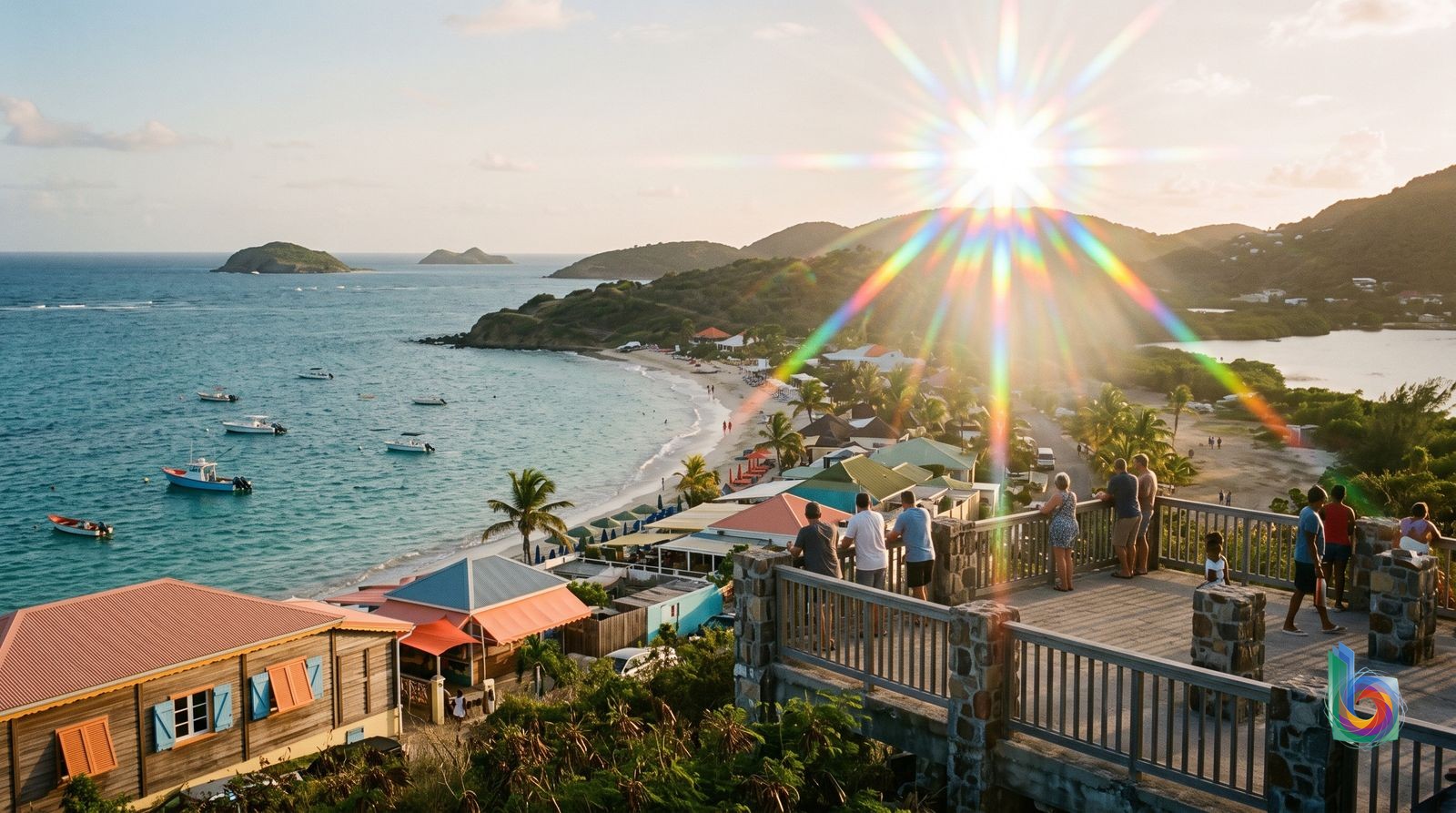
Saint-Martin/Sint Maarten is one small Caribbean island split between two jurisdictions: French Saint-Martin in the north and Dutch Sint Maarten in the south. For travelers, it works less like a country to tour than a compact, traffic-prone island of beach neighborhoods, where you can cross the unpoliced land border freely but encounter different currencies, laws, holiday calendars and styles of travel. Come for the unusually strong food scene, beach-hopping and boating—not to tick off sights.

1 · Base · 1–7 nights
Grand Case
The island’s best food base: Creole lolos, serious French-Caribbean kitchens and seafood restaurants packed into a low-key beach village. Come for dinner-led days rather than nightlife or shopping.
foodies · couples · repeat visitors
Explore Grand Case
2 · Base · 3–6 nights
Orient Bay
The strongest all-round French-side beach base, with a long beach, water sports, beach clubs and enough restaurants to avoid driving every night. It is livelier and windier than Grand Case, with clothing-optional sections at the southern end.
first-timers · beach lovers · families with older children
3
Marigot, Baie Nettlé and Terres Basses
This is the practical western French side: Marigot for the market, Fort Louis and Anguilla ferries; Terres Basses for car-access beaches such as Baie Rouge and Long Bay. Marigot itself is useful rather than beautiful, so pair it with the coast instead of making it a full beach day.
self-caterers · villa renters · Anguilla day-trippers
4
Cul-de-Sac and Îlet Pinel
The easy nature-and-snorkel outing: take the short shuttle to Pinel for shallow water, sand and a walk around the quieter side of the islet. It gets busy at lunch, so go early and do not expect an undiscovered beach.
families · snorkelers · beach-day travelers
5
Anse Marcel and the North Coast
A sheltered, polished bay behind the northern hills, with calmer water than Orient Bay and a quieter small-resort feel. It is a good antidote to the busier beach strips, but you will need a car and dinner options are limited nearby.
couples · families · quiet-beach seekers
6
Pic Paradis and Loterie Farm
The green interior break from the beach circuit, combining hill walks, canopy activities and pool time. Loterie Farm is a curated paid-day-out rather than wilderness, but it earns its place on stays of a week or more.
active travelers · families with teenagers · groups
7 · Base · 2–4 nights
Simpson Bay and Pelican Key
The Dutch side’s most useful base for marinas, sailing charters, restaurants and actual nightlife. It is convenient, energetic and close to the airport, though traffic and development make it less romantic than the French north.
nightlife travelers · sailors · groups
8 · Short stop · 1 night
Maho, Mullet Bay and Cupecoy
Stay here for resort convenience, casinos and airport proximity; visit Maho Beach for the plane-spotting spectacle and Mullet Bay for the better beach day. This is the commercial southwest, not the island’s quiet side.
aviation enthusiasts · resort travelers · nightlife travelers
9
Philipsburg and Great Bay
Sint Maarten’s cruise-port capital is worth one targeted afternoon for duty-free shopping, the boardwalk and a city-beach walk. On ship days it is crowded and retail-heavy, so it should not define your impression of the island.
shoppers · cruise extensions · first-timers
Pinel Island Beach
Pinel is the easy, classic day trip for clear shallow water, calm swimming, and an island-within-an-island feel.
National Nature Reserve of St. Martin
The reserve protects much of the French side's lagoon, wetlands, reefs, and offshore islets, making it the ecological counterweight to the resort beaches.
Maho Beach
The beach at the end of Princess Juliana International Airport's runway is Saint Martin's unmistakable spectacle: low-flying aircraft pass directly overhead on final approach.
Orient Bay Beach
Orient Bay is the French side's signature long, lively beach: dependable facilities, water sports, restaurants, and a distinctly French-Caribbean rhythm.
Grand Case
This small French-side village is the island's best place to combine a beautiful bay, Creole character, and its strongest concentration of serious restaurants and casual lolo barbecue stands.
Numbers match Where to go · dots are headline sights
SXMPrincess Juliana International Airport, Sint Maarten
The island’s real international gateway, with flights from North America, Europe and Caribbean hubs. It is on the Dutch side; French-side bases are only 30–45 minutes away in clear traffic, but allow much longer around Simpson Bay, Marigot and peak arrival times.
SFGGrand Case–Espérance Airport, French Saint-Martin
A small regional airport useful mainly for connections from nearby Caribbean islands, particularly St. Barthélemy and Guadeloupe. It is not the practical choice for most long-haul arrivals, but is convenient for a French-side itinerary or island-hopping.
Marigot Ferry Terminal, French Saint-Martin
The principal sea gateway for Anguilla ferries and day trips. It is a border crossing, not a domestic commute: carry passports, check entry rules, and do not rely on a weather-dependent return ferry before an international flight.
Flights and transfers into MarigotDr. A.C. Wathey Cruise & Cargo Facilities, Philipsburg
The gateway for cruise passengers and occasional private-yacht arrivals. It is useful if extending a cruise stop, but Philipsburg is not where most independent air travelers should base themselves.
Plan 5–7 nights from one base for a first visit; that is enough for beach-hopping, a boat day and several good meals without spending the trip in traffic. Stay 8–10 nights or more only if you want separate French-side and Dutch-side stays.
Choose Grand Case for a quiet, food-led stay, Orient Bay for the best all-round French-side beach base, or Simpson Bay for marinas, charters, restaurants and nightlife. Maho, Mullet Bay and Cupecoy suit travelers who prioritize resorts, casinos and being near SXM airport.
Usually no: the island is compact but traffic-prone, and constant hotel changes are not worthwhile on a 5–7-night trip. Split between a French-side base such as Grand Case or Orient Bay and a Dutch-side base such as Simpson Bay only on stays of 8–10 nights or longer, or if you want both a slow beach-and-food stay and a resort/nightlife stay.
The land border is normally open and can be crossed freely, but French Saint-Martin and Sint Maarten have separate immigration regimes. U.S., Canadian and most EU/UK visitors generally enter visa-free for short tourist stays, but passport validity, permitted stays and visa requirements differ, so verify both sides’ current rules before departure—especially if arriving from Anguilla by ferry.
A rental car is the best option for beach-hopping, reaching Anse Marcel, Cul-de-Sac and Terres Basses, and staying on the French side. Taxis can work for short stays and dinners, but buses are informal and limited at night; confirm that a rental is insured for cross-border use.
March–April is the strongest all-round period for relatively dry weather, warm water, dining and sailing; May–June offers better value with more heat and passing showers. December–February is reliable but expensive and busy, while September–October is cheapest but has the greatest hurricane risk and widespread reduced hours, particularly on the French side.
In December–April, reserve sought-after Grand Case dinners, sailing or snorkel charters, rental cars and Loterie Farm activities in advance. Also book early around the Heineken Regatta in early March, Sint Maarten Carnival in April into early May, and French-side food events such as the November Gastronomy Festival.
French Saint-Martin uses euros and Sint Maarten uses the Caribbean guilder, although U.S. dollars are widely accepted on both sides. Cards work at larger businesses, but bring cash for lolos, taxis, small vendors and ferries, and confirm the exchange rate before paying in U.S. dollars.
Go deeper