Mueang Phuket is the part of the island that gives a beach holiday some texture: Phuket Old Town’s Sino-Portuguese streets and serious Peranakan food, the temple-and-marina belt around Chalong, family-friendly west-coast beaches, the more lived-in seafood south around Rawai, and the offshore Racha islands. It is not all of Phuket—Patong, Kamala, Bang Tao and the airport are outside the district—but it contains the island’s strongest mix of urban culture, swimming beaches and southern Thai-Chinese food.

1 · Base · 2–3 days
Phuket Old Town
The district’s cultural and food core: Sino-Portuguese shophouses, shrines, serious breakfast noodles and Peranakan cooking around Thalang, Dibuk, Krabi and Phang Nga roads. Stay here for atmosphere and eating, not beach time.
foodies · history and design enthusiasts · couples
Explore Phuket Old Town2 · Base · 3–4 days
Kata & Kata Noi
The most practical all-round beach base in Mueang Phuket, with a swimmable beach in season, plenty of places to eat and manageable access to Karon, Rawai and Old Town. Kata Noi adds a quieter, more upscale bay nearby.
first-timers · families · couples
3 · Base · 2–4 days
Rawai, Nai Harn & Promthep
The southern tip feels more residential and sea-facing than the resort strips: use Nai Harn for the real beach, Rawai for seafood and boat departures, and Promthep for sunset. Rawai Beach itself is a working waterfront, not a swimming beach.
repeat visitors · long-stay travellers · villa stays
4 · Base · 2 days
Karon
A long, broad beach with more room to breathe than Kata and enough hotels and restaurants for an easy first Phuket stay. It is a sensible compromise between Old Town, Kata and the far south, though it is less distinctive after dark.
first-time beach travellers · families · beach walkers
5
Chalong
A practical inland-and-harbour hub for Wat Chalong, marinas, wellness businesses and many southern boat departures. It is useful rather than charming: spread out, traffic-heavy and best handled by car or taxi.
boat-trip travellers · wellness travellers · temple visitors
6 · Base · 2 days
Cape Panwa & Ao Yon
Choose this quiet east-coast pocket for small coves, headland views and resort downtime rather than a busy beach strip. Ao Yon is calmer in feel than the west coast, but taxis are essential and sunsets are not the point.
couples · quiet resort stays · travellers avoiding nightlife
7
Wichit & Naka
The useful southern edge of Phuket City, close to Chalong and home to the sprawling Naka Weekend Market. Come for casual street-food grazing and practical services, not heritage streets or a polished resort setting.
budget travellers · families · market fans
8 · Base · 1–2 days
Koh Racha Yai
An offshore change of scene with clear water, diving and snorkelling when conditions cooperate. It earns an overnight if you can afford it; as a rushed day trip, it is too dependent on boat schedules and sea state.
divers · snorkellers · honeymooners
Karon Viewpoint Phuket
The classic south-coast overlook makes the most sense if you are already traveling between Kata, Karon and Rawai.
Freedom Beach
This is one of the more rewarding beach escapes near the busy Patong side, valued for its relatively undeveloped feel rather than a long list of facilities.
Wat Chalong
Phuket's most important temple complex belongs on a first visit because it adds religious and local context to an itinerary otherwise dominated by beaches.
Phuket Big Buddha
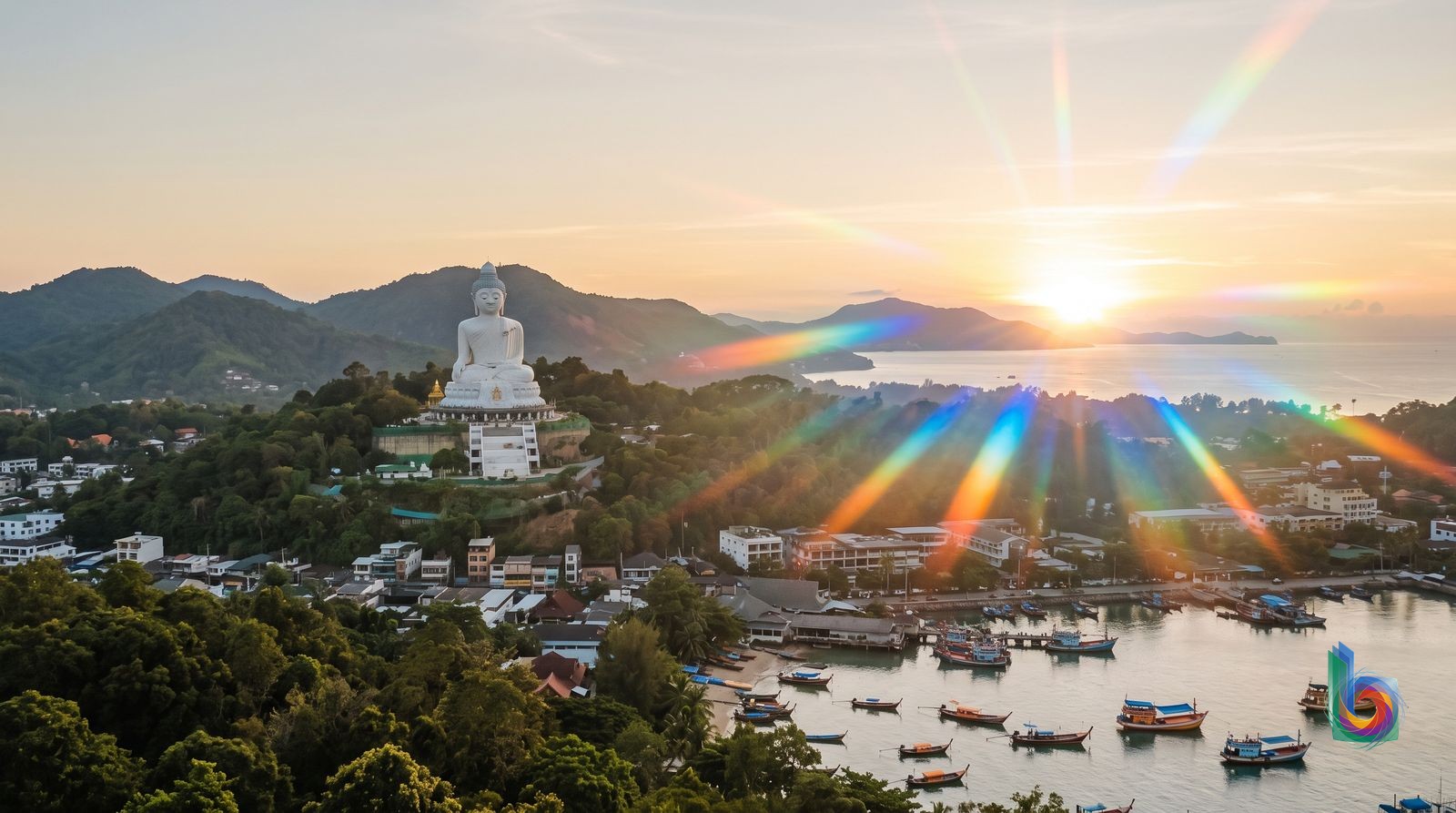
The hilltop Buddha has long been one of Phuket's defining visual landmarks, combining island-wide views with a more contemplative stop than the beach scene.
Promthep Cape
This is Phuket's signature southern headland and the most obvious place to understand why the island's sunsets are so celebrated.
Kata Beach
Kata is the best all-round first-time beach stop: scenic enough to feel distinctly Phuket, with enough services to make a half-day easy.
HKTPhuket International Airport
The practical air gateway for virtually all visitors, although it is in Thalang district, not Mueang Phuket. Allow roughly 40 minutes to Old Town and about an hour or more to Kata, Karon or Rawai by car; the airport Smart Bus is cheaper but much slower.
Phuket Bus Terminal 2
The island’s overland gateway for buses from Bangkok and southern Thailand. It is north of central Old Town rather than walkable from it, so plan on a taxi or Grab for the final leg.
For up to five nights, use one base: Kata for an easy beach holiday, Rawai for the quieter south, or Phuket Old Town for food and culture. With seven nights or more, split time between Old Town and a beach base; drives between Old Town and Kata or Rawai commonly take 35–60 minutes and can take longer in rain or rush hour.
Choose Kata or Karon for the simplest first-time beach stay, with swimmable west-coast beaches in season, hotels and restaurants nearby. Stay in Phuket Old Town if food, Sino-Portuguese streets and markets matter more than beach time; choose Rawai–Nai Harn for a more residential southern base, using Nai Harn rather than Rawai Beach for swimming.
Yes, but do not try to commute across the district every day. Combine Phuket Old Town with Kata/Karon or Rawai/Nai Harn on a week-long trip, and treat Koh Racha Yai as an overnight or a weather-flexible boat excursion rather than a fixed last-day activity.
Many major passport holders can enter visa-exempt for short tourism stays, but some nationalities need a visa or Visa on Arrival, so check the Thai embassy guidance for your passport before booking. Every non-Thai national must submit the free Thailand Digital Arrival Card through the official Immigration Bureau site within three days of arrival, including arrival day.
Walk within Phuket Old Town, Kata or Karon, but use Grab, taxis or a prebooked car for temples, beaches, Rawai, Chalong and hotel changes; public transport is too patchy for luggage-heavy itineraries. The Smart Bus can work for a cheaper airport-to-west-coast or Rawai trip, but it is slow and not door-to-door; rent a scooter only if you are experienced, licensed and insured.
December–February offers the best odds of dry weather, calmer seas, beach days and Racha Yai snorkelling or diving, but Kata and Karon are busiest and most expensive. May–August can offer better-value stays between showers, but keep boat plans flexible and heed west-coast red flags; September–October is the wettest period and a poor choice for an inflexible beach or island itinerary.
Book Koh Racha Yai accommodation and resort transfers well ahead for December–February and holiday periods, along with scuba courses, popular dive boats and private Rawai–Chalong charters when dates matter. Reserve serious Peranakan dinners in Phuket Old Town on Friday or Saturday nights, and book Old Town early during the Phuket Vegetarian Festival.