Visas & entry
Thailand entry rules change often. Many major-passport holders, including travelers from the US, Canada, UK, Australia, Japan and most EU countries, have visa-exempt tourist entry, but verify your passport’s current allowance with an official Thai embassy before ticketing. Complete the free Thailand Digital Arrival Card (TDAC) before arrival and carry onward-travel evidence.
Getting in
Getting around
Train is worthwhile from Bangkok to Pak Chong or Korat City, but it does not connect the sights in any useful way. Rent a car or hire a driver for Khao Yai, Wang Nam Khiao, Sikhio, Pak Thong Chai and Sung Noen; for two or more people, this is usually the sane choice. Grab, taxis and songthaews can cover Korat City but are not a dependable strategy for rural sightseeing; weekend traffic on the Bangkok–Khao Yai corridor is real.
Money
Thailand uses Thai baht (THB). Cards work at proper hotels, malls, wineries and many Mu Si resorts, but carry cash for markets, food stalls, parking, village workshops and small guesthouses. Tipping is optional: round up small bills and tip good drivers or guides rather than adding automatic North American-style tips everywhere.
Daily budget · THB (Thai baht), per person per day, assuming two people share a room; excludes international flights.
Eating well
Book before you land
Entry rules change — verify visa requirements for your passport before booking this region.
November–February
The dry, relatively cool season brings comfortable Khao Yai walks, clear highland mornings and crisp dawns in Wang Nam Khiao, but Mu Si/Khao Yai fills up sharply around weekends, Christmas, New Year and Thai holidays.
Book Mu Si lodging and cars early; weekday Khao Yai visits are far less congested and less expensive.
March–May
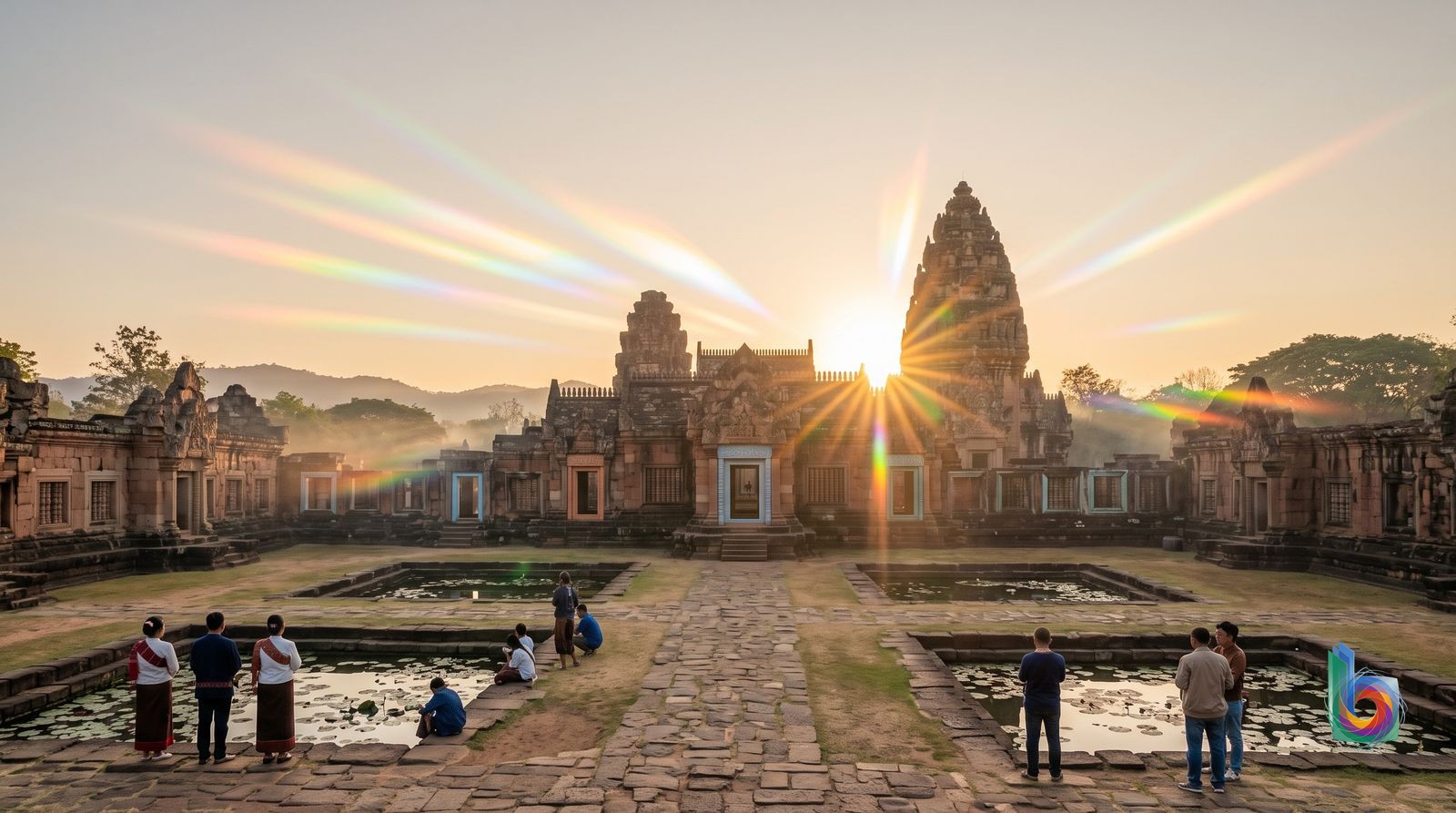
The plateau is intensely hot by afternoon, especially in Korat City and at the exposed Phimai sanctuary, so plan outdoor stops at dawn and retreat indoors or to a winery at midday.
This is poor weather for long hikes, all-day park exploration and unshaded historical sites.
June–October
Rain turns Khao Yai lush and improves waterfall flow, while room rates usually soften outside weekends; expect heavy downpours, road spray, leeches and muddy or slippery trails.
Check park conditions immediately before travel: trails and viewpoints can close at short notice during the wettest periods.
Thao Suranari Victory Celebration · Usually late March to early April · Central Korat City
Processions, performances and street stalls make the city livelier, but central traffic and hotel availability worsen; book centrally located rooms ahead.
Korat Candle Festival · Usually July · Korat City
A worthwhile addition if already in the city, but not enough reason to cross the province; expect localized crowds and traffic.
Phimai Festival · Generally November; dates vary · Phimai
Boat races and a light-and-sound show at Phimai Historical Park can justify an overnight, but confirm dates before building an itinerary around it.
Pak Thong Chai Silk Fair · Generally December · Pak Thong Chai
Useful for textile-focused visitors and silk buying; expect busier roads and accommodation around the district during the fair.
Eat Korat as its own border cuisine, not as a generic Isan stop: start with phat mi Korat, then build a shared meal around grilled meat, sticky rice, salads and fermented flavours. Have noodles and khanom chin early in the day; use markets and specialist stalls rather than hotel restaurants for the dishes that matter.
Korat City / Ban Pradok: Phat mi Korat · Khanom chin Pradok for breakfast or early lunch · Som tam Korat and full Isan-style shared dinners
Pak Chong and Mu Si: Khao Yai farm produce and dairy · Wine-region meals and vineyard lunches · Fresh produce rather than a single defining local dish
Wang Nam Khiao: Locally grown greens and salads · Coffee · Seasonal fruit and farm produce
Kham Thale So / Lam Takhong: Mi nam cha, especially on weekends
Mittraphap Road corridor: Sai krok Isan · Mu yo and other sausage purchases to take onward
Researched Nov 17, 2026