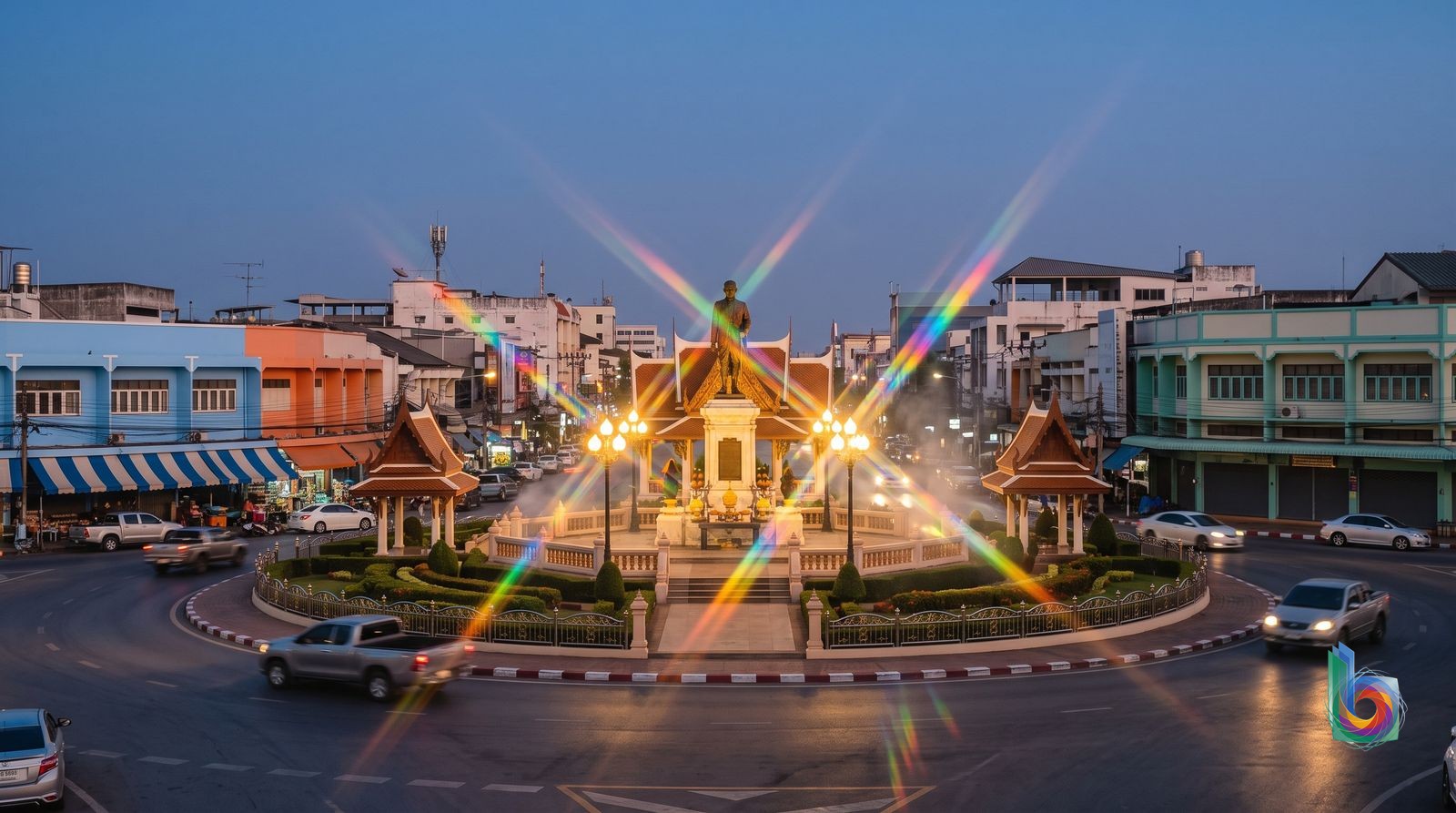
Udon Thani is upper Isan at its most practical: a working regional capital on the Khorat Plateau, not a postcard old town or resort province. Travelers come for two very different UNESCO sites—prehistoric Ban Chiang and the sandstone-and-sīma-stone landscape of Phu Phrabat—plus the winter Red Lotus Sea, deeply Lao-leaning Isan food, and the living pilgrimage culture of Kham Chanot. Its appeal is intellectual, culinary and road-trip based rather than scenic in an effortless way: this is a place to use as a base, get out into the countryside, and return to a proper city meal.
1 · Base · 2 days
Udon Thani City
The only genuinely practical base: best hotels, transport, Grab coverage, markets and the province’s strongest Isan and Vietnamese-Thai food. Give it one relaxed day, then use it as a hub rather than expecting a historic old town.
first-timers · foodies · independent travelers
Explore Udon Thani City2 · Short stop · 1 day
Kumphawapi and Nong Han Lake
The Red Lotus Sea is worth an early-morning boat ride when the lilies bloom from December to February, especially in January. Outside that window, it is just a lake and should not anchor an itinerary.
photographers · couples · birders

3 · Short stop · 1 day
Ban Chiang
Thailand’s essential prehistoric site pairs a serious museum with a protected excavation in an ordinary farming village. Come for the archaeology—burials, pottery, early farming and metalworking—not for grand ruins.
history travelers · archaeology enthusiasts · first-time visitors
4 · Short stop · 1 day
Phu Phrabat Historical Park
Udon’s most atmospheric outing: weathered sandstone shelters, prehistoric traces and Dvaravati sīma stones threaded through a wooded, uneven landscape. It is more memorable than Ban Chiang for walkers, but go early before the heat takes over.
walkers · archaeology enthusiasts · photographers

5 · Short stop · 1 day
Kham Chanot
This naga shrine is a vivid encounter with living Isan pilgrimage culture—offerings, ritual commerce, lottery hopes and crowds of Thai devotees. It is compelling precisely because it is active and a little chaotic, not because it is tranquil.
pilgrimage-culture travelers · religion enthusiasts · return visitors
6 · Short stop · 0.5–1.5 days
Wat Pa Phu Kon and the Na Yung–Nam Som Forest Edge
A long but rewarding northwestern drive for a dramatic modern temple, reclining Buddha and hillier rural scenery than most of the province. Treat it as a full slow day or an overnight excursion, not an add-on between other sights.
drivers · temple architecture fans · rural road-trippers
7 · Short stop · 0.5 days
Ban Na Kha
The province’s best stop for pha khit weaving and mud-fermented textiles, with far more substance than generic souvenir shopping. It works neatly with a northern or northwestern drive, but it is a market stop rather than a standalone destination.
textile collectors · design-minded travelers · shoppers
8 · Short stop · 0.5 days
Wat Pa Ban Tat
A working forest monastery associated with Luang Ta Maha Bua, best approached quietly and respectfully rather than as a decorative temple stop. It offers a useful counterpoint to Kham Chanot’s crowded, public-facing devotion.
Buddhist-culture travelers · meditators · quiet travelers
9 · Short stop · 0.5 days
Phu Foi Lom and the Southern Hills
The closest green escape from Udon city, with short trails, viewpoints and enough forest to break up an urban stay. Pleasant for an early or late outing, but too modest to replace Ban Chiang or Phu Phrabat on a first trip.
families · casual walkers · city-based travelers
Red Lotus Lake Kumphawapi
A boat trip through the lotus-covered lake is Udon Thani’s signature nature experience, but it is strongly seasonal rather than an all-year spectacle.
Thai-Chinese Cultural Center
This is the essential context for Udon Thani’s influential Chinese-Thai community, with better historical value than a shrine visit alone.
Ban Chiang Archaeological Site
Ban Chiang is the province’s essential archaeological draw, making prehistoric settlement and burial culture tangible in the place where it was found.
Ban Chiang National Museum
The museum supplies the interpretation that makes Ban Chiang Archaeological Site much more rewarding, especially its ceramics, burials, and wider regional context.
Phu Phrabat Historical Park
This extraordinary landscape combines dramatic rock formations with ancient sacred markings and later Buddhist associations.
Wat Pa Ban Tat
This respected forest monastery offers a quieter, more contemplative side of northeastern Thai Buddhism than the city temples.
UTHUdon Thani International Airport
The practical arrival point for the province, with domestic links from Bangkok and other Thai cities. It is close to Udon Thani city, the only genuinely useful all-purpose base for first-time visitors.
DMKDon Mueang International Airport, Bangkok
Usually the most useful Bangkok airport for low-cost domestic flights to Udon Thani. Fly onward rather than attempting an overnight bus unless budget is the overriding concern.
BKKSuvarnabhumi Airport, Bangkok
Useful for international arrivals connecting to a domestic Udon flight, though schedules can be less convenient than Don Mueang. Leave a proper connection buffer if changing airports in Bangkok.
Udon Thani Railway Station
The sensible overland gateway from Bangkok for travelers who prefer a day or overnight train. The station is central, but rail is slower than flying and does not solve the province’s rural transport problem.
Nong Khai Railway Station / Thai–Lao border
Relevant only for travelers arriving overland from Vientiane or Laos. It is outside the province; continue by road or train to Udon Thani city, then base there rather than treating Nong Khai as an Udon sightseeing base.
Plan 3–5 nights in Udon Thani City. That allows separate day trips to Ban Chiang, Phu Phrabat Historical Park, Kham Chanot, and—only in season—the Red Lotus Sea; add an overnight or extra day for Wat Pa Phu Kon.
Base yourself in Udon Thani City for the broadest hotel, food and transport options. Consider a rural overnight only for a pre-dawn Red Lotus Sea boat trip, a Kham Chanot visit, or the far-northern Wat Pa Phu Kon area.
Use Udon Thani City as a hub rather than trying to move between rural towns. Ban Chiang and Phu Phrabat each work best as their own day trip; Ban Na Kha fits naturally into a northwestern drive, while Wat Pa Phu Kon should be a full slow day or overnight—not combined with Kham Chanot.
For Ban Chiang, Phu Phrabat, Kham Chanot, Nong Han Lake and Wat Pa Phu Kon, arrange a rental car, driver or private day trip. Grab and songthaews are useful for errands in Udon Thani City, but rural public transport is sparse and inefficient for sightseeing.
November–February is the best overall period: it is drier and cooler, and the Red Lotus Sea blooms from December to February, usually strongest in January. March–April is extremely hot; May–September is greener and quieter but humid and rain-prone, while October is a useful shoulder month without lotus blooms.
Yes, but only during the December–February bloom season, especially January. Go at dawn or early morning—roughly 6–10am—and do not build an itinerary around Nong Han Lake outside that period.
Book Red Lotus Sea transport or a dawn boat ahead for December–February weekends and Thai holidays. Also reserve flights, rental cars and better hotels early during lotus season and around Songkran (April 13–15).
Visa rules change frequently; from 15 September 2026, passport holders from the US, Canada, UK, Australia, New Zealand, EU/EFTA states, Japan, India and many other listed countries were generally eligible for up to 30 days visa-exempt entry. Check the current rule for your nationality with an official Thai embassy or immigration source before booking.