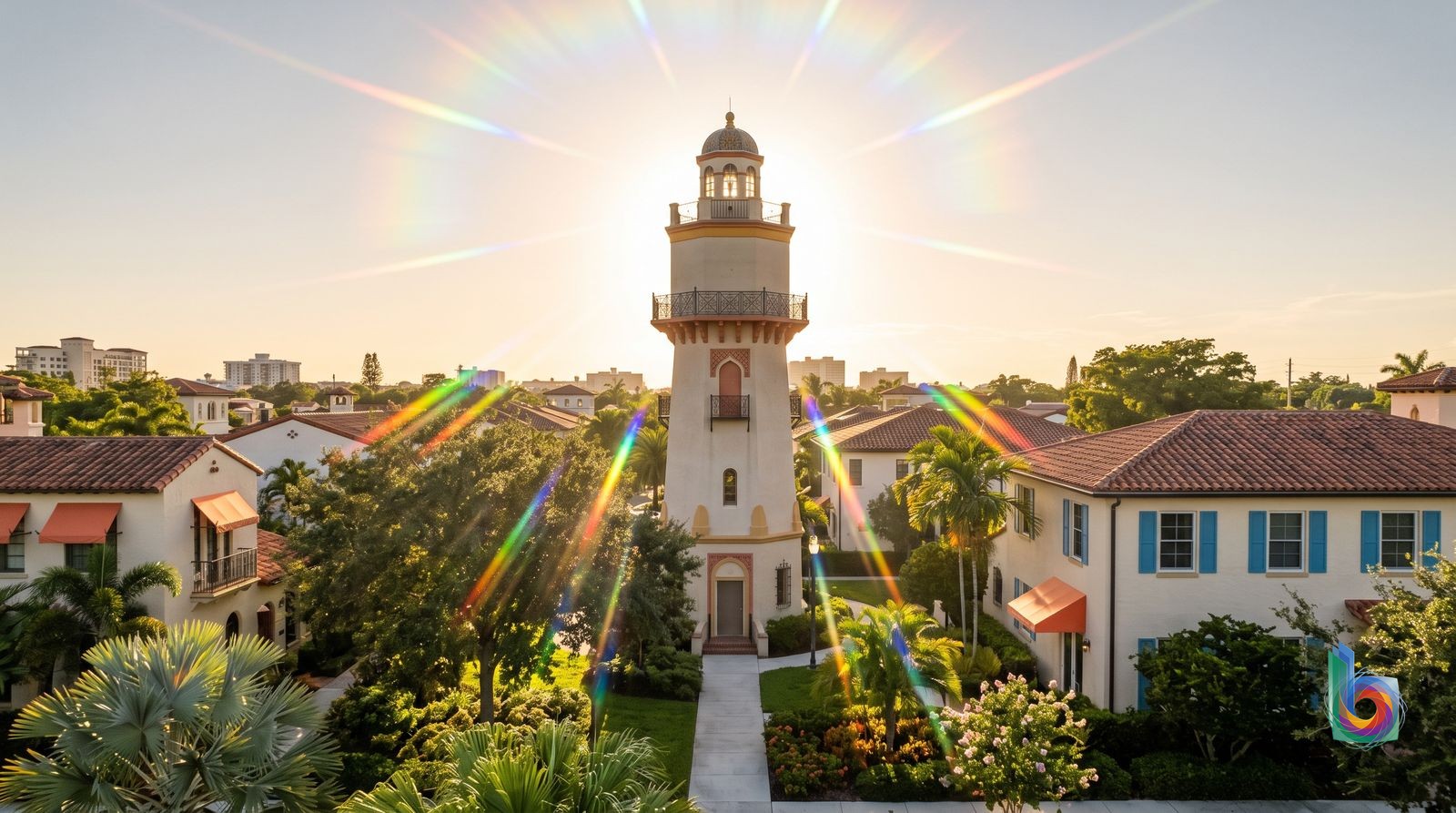
Season by season
December–February
The most comfortable stretch for walking Miracle Mile, touring the historic core and spending time in gardens: lower humidity, milder temperatures and generally more reliable outdoor weather than summer. It is also high season, with higher hotel rates and more visitors.
Expect peak-season pricing and busier restaurants and attractions; January can be particularly busy around Fairchild’s Chocolate Festival.
March–April
Still among the best weather months: warm, comparatively dry and very good for outdoor sightseeing. March is notably busy around South Florida spring break.
This is expensive, popular weather. Spring-break crowds and traffic make March the least serene part of the otherwise excellent dry-season window.
May
A workable shoulder month: summer heat and humidity are building, but it can still reward travelers who plan outdoor time for morning and retreat indoors or poolside later.
Humidity and afternoon showers become more likely, so it is less comfortable for all-day walking than winter or early spring.
June–October
Hot, humid, stormy and within hurricane season. Outdoor plans are most realistic early in the day; keep an indoor or flexible rain backup and take weather alerts seriously.
This is the hardest period for walking and broad-road sightseeing. Heavy rain, thunderstorms, oppressive humidity and possible tropical-weather disruption can alter plans; June through October is not the time to schedule an inflexible outdoor-only trip.
November
A useful shoulder month as humidity and rain begin to ease, though conditions can still feel summery and vary year to year.
Weather is less reliably mild than December through April, and late-season tropical-weather risk is not entirely gone.
Events worth planning around
Fairchild Tropical Botanic Garden Chocolate Festival · Usually January
A worthwhile reason for chocolate-minded visitors to choose a winter weekend, but it can make Fairchild busier than usual. Check the garden’s current schedule and buy event-specific admission ahead if offered.
Fairchild Tropical Botanic Garden Mango Festival · Usually June or July
This is the principal exception to the advice to avoid summer heat: it can draw substantial crowds to Fairchild and makes that weekend worth planning in advance. Expect hot, humid, potentially rainy conditions even if the festival itself is appealing.
Getting around
Walking
Downtown Coral Gables and Miracle Mile, where restaurants, galleries, theater, and side streets make a compact, genuinely pleasant walking area.
Base yourself around Miracle Mile or central Ponce de Leon Boulevard and do the core on foot; use the trolley or a rideshare to bridge longer hops.
Walking stops being a good visitor strategy beyond the downtown core: Merrick Park-to-Miracle Mile is possible but unappealing in heat or rain, while the Venetian Pool, Biltmore & Granada Golf, University of Miami, Riviera, and South Gables are separate trips. Summer heat, storms, broad roads, and wide crossings matter more than map distance.
Coral Gables Trolley
Free, easy transport between Douglas Road Metrorail station, Ponce de Leon Boulevard, and the downtown/Miracle Mile area—particularly useful for car-free visitors staying near the corridor.
Ride it as the last-mile link from Douglas Road station into downtown, or for moving along Ponce rather than walking in the heat. No fare is required.
It is a corridor service, not a citywide network. It does not solve trips to the Venetian Pool, Biltmore & Granada Golf, Fairchild Tropical Botanic Garden, Matheson Hammock, Riviera, or Cocoplum and Gables Estates; those areas usually need a bus connection, bike, rideshare, or car.
Metrorail
Rail trips between Coral Gables and central Miami, and airport access. Douglas Road is the useful stop for downtown/Miracle Mile via trolley; University station is best for the University of Miami and nearby South Gables.
Use the Orange Line from the Miami Intermodal Center/MIA toward Douglas Road or University, and connect onward by trolley, bus, or rideshare. From downtown Miami, transfer at Government Center after using Metromover from MiamiCentral.
Coral Gables is not rail-knit. Neither station puts you at the Venetian Pool, Biltmore, Fairchild, Matheson Hammock, Merrick Park, or the historic residential core, and the rail does not substitute for a late-evening ride home from those districts.
Rideshare or taxi
The most efficient option for a full sightseeing day, airport-hotel transfers with luggage, and isolated attractions: Venetian Pool, Biltmore & Granada Golf, Fairchild, Matheson Hammock, and the southern residential waterfront.
Combine it with walking and the free trolley: take rail for a longer Miami journey, then call a car for the final awkward leg. It is especially sensible for two or more people with bags or when rain and heat make transit connections tedious.
Costs add up quickly, and traffic can make trips slow—especially around downtown corridors and University of Miami events. Do not assume a quick late-night pickup in quiet residential areas such as Riviera or Cocoplum will be as seamless as central Miami.
Rental car or own car
Fairchild Tropical Botanic Garden, Matheson Hammock, multi-stop days beyond the core, and onward day trips where public transport is plainly inefficient.
Use it selectively rather than as the default downtown transport; park once around Miracle Mile and explore on foot. Keep all bags and electronics out of sight.
For Downtown Coral Gables, Ponce de Leon, and Merrick Park, parking, traffic, and the hassle of moving the car can outweigh its freedom. It is also a poor substitute for a night out: the Gables is calmer than Miami Beach, but car break-ins remain a reason never to leave valuables visible.
Local bus
Budget travelers with flexible schedules, or as a backup connection from Metrorail/trolley to places the rail does not reach directly.
Use buses for a targeted point-to-point connection after checking the route and timing on the day; pair them with walking rather than trying to cover several sights by bus.
Buses are slower and less intuitive for a visitor on a short itinerary. They are not the efficient answer for linking the Venetian Pool, Biltmore, Fairchild, Matheson Hammock, and the residential southern districts in one day, and waits are particularly unrewarding in summer storms.
Safety: Coral Gables is generally calmer than central Miami, but keep valuables out of parked cars, lock bikes, and use a rideshare rather than walking isolated park or trail stretches after dark.
Book before you land
No permanent Coral Gables sight is a dependable, weeks-ahead sellout in the way that major-city headline attractions are. Buy Fairchild Tropical Botanic Garden and Venetian Pool admission ahead for a weekend, holiday or festival date if the operator offers timed entry, but do not build a trip around the idea that ordinary weekday entry will disappear. · Book event-specific tickets rather than generic attractions: University of Miami Hurricanes football—played in Miami Gardens—plus popular games, concerts and theater performances can tighten up well ahead. For a major opponent or a fixed-date show, buy when dates are announced; otherwise one to two weeks is usually the sensible precaution. · Coral Gables Merrick House is guided-tour-only and has limited weekend tour times. Check its schedule before planning around it, rather than assuming you can drop in.
- Call it “the Gables,” not a Miami Beach suburb. It is its own planned, largely residential city seven miles southwest of downtown Miami; Miracle Mile is the visitor center, not the whole place.
- English is universal and Spanish is everyday life. A simple greeting in either is normal; service staff will not find Spanish unusual or presumptuous.
- Budget for U.S.-style restaurant tipping: 18–20% for competent table service before any automatic gratuity. Check the bill first, especially with larger groups.
- Use a card or phone payment almost everywhere, but carry a little cash for small historic-site admissions and incidental needs; Merrick House’s listed guided-tour pricing is cash-based.
- The Gables is calmer than South Beach or downtown, not consequence-free. Keep bags and electronics out of a parked car, lock bicycles, and avoid isolated park or trail stretches after dark.
- Respect pool and park rules rather than treating them as beach spaces: Venetian Pool has controlled entry and does not allow outside food; Matheson Hammock closes at sunset.
Worth leaving the city for
Everglades National Park — Shark ValleyFull day — allow roughly 1–1.5 hours each way by car, plus 2–3 hours in the park.
This is the one essential escape: a radically different landscape of sawgrass, alligators and huge skies, rather than another round of Mediterranean-revival architecture and restaurant reservations. Go early, rent or bring a bike if conditions suit, or take the tram; midday heat and mosquitoes can make it punishing. A car is effectively necessary from Coral Gables.
Key Biscayne — Crandon Park Beach and Bill Baggs Cape Florida State ParkHalf day at minimum; a relaxed full day. Expect about 45–75 minutes each way from Coral Gables depending on traffic.
Better than staying in the Gables when you want a proper beach-and-nature day, not South Beach crowds. Crandon offers the easier beach stop; continue to Bill Baggs for the quieter, more scenic end of the island and the Cape Florida lighthouse. Traffic over the Rickenbacker Causeway can spoil the plan, especially on weekends, so leave early.
Biscayne National Park — Convoy Point and a boat trip onto Biscayne BayFull day — roughly 45–60 minutes each way by car to Convoy Point, plus the boat-trip time.
Worth it for clear-water bay, mangrove shoreline, reefs and the sense that Miami’s urban sprawl has abruptly ended. The catch is important: most of the national park is water, so merely driving to the visitor-center area is not the experience; book a boat outing if you want islands, snorkeling or reef scenery. Weather can cancel the good part.
Key Largo and John Pennekamp Coral Reef State ParkFull day — approximately 1.5–2 hours each way by car before park/boat time.
Choose this over a second Coral Gables day only if you will get on the water—snorkeling, diving or a glass-bottom-boat trip. The drive itself and roadside Keys commerce are not a substitute for that. It is a more realistic one-day Keys outing than trying to force Key West into a day trip.