December–March
The wettest-feeling, most volatile stretch on Hanalei’s windward north shore: rain is common, north-shore surf can be large, and seas may disrupt Nā Pali boat operations. Winter is excellent for dramatic wave watching, but not dependable for casual swimming.
Christmas/New Year is a high-demand exception, with higher accommodation pressure. Outside that period, weather remains the central compromise: do not plan around guaranteed beach or boat days.
April–June
One of the year’s best compromises: generally agreeable weather, lush landscapes and lighter crowds than the major holiday periods. North-shore ocean conditions usually begin to become more manageable than in winter, though rain and changing currents remain possible.
Spring-break weeks can sharply raise demand, and rain is never off the table on this coast. Reserve Hāʻena access and other small-capacity activities rather than assuming availability.
July–August
Typically the strongest period for calmer north-shore ocean conditions and summer beach time. It is still tropical, humid and capable of showers, but generally offers the better odds for north-shore boating and water activities.
Summer school holidays bring heavier demand and higher pressure on lodging, rental cars, Hāʻena reservations and small boat tours. Calmer does not mean safe everywhere; currents and surf still require local checks.
September–November
Another sensible shoulder season, combining generally agreeable conditions with lighter crowds after the summer-school rush. The landscape stays intensely green, and rain remains part of the north-shore deal as conditions gradually become less settled toward winter.
Ocean conditions can become more variable later in the season, and autumn rain can interrupt plans. Thanksgiving week is a demand spike, so it is not the same bargain as the rest of the period.
Christmas and New Year holiday period · Usually mid-December through the first week of January
One of Hanalei’s busiest and most expensive periods. Book north-shore lodging, rental cars, Hāʻena parking/shuttle and any desired tours well ahead; winter surf and rain can still derail beach-focused plans.
Spring break travel period · Usually March–April; timing varies by school district and Easter
Crowds and accommodation demand rise noticeably even though April–June is otherwise a useful shoulder season. Lock in Hāʻena access and limited-capacity north-shore activities once dates are fixed.
Summer school holidays · Usually June–August, with the heaviest demand around June–July
The season’s generally calmer north-shore seas attract beach and boat travelers, while family demand tightens lodging, cars and Nā Pali tour availability. Reserve early and choose boat operators with cancellation terms you can accept.
Thanksgiving week · Late November
A short but meaningful holiday-demand spike within an otherwise less-crowded fall period. Expect tighter lodging and activity availability, particularly over the long weekend.
Walking
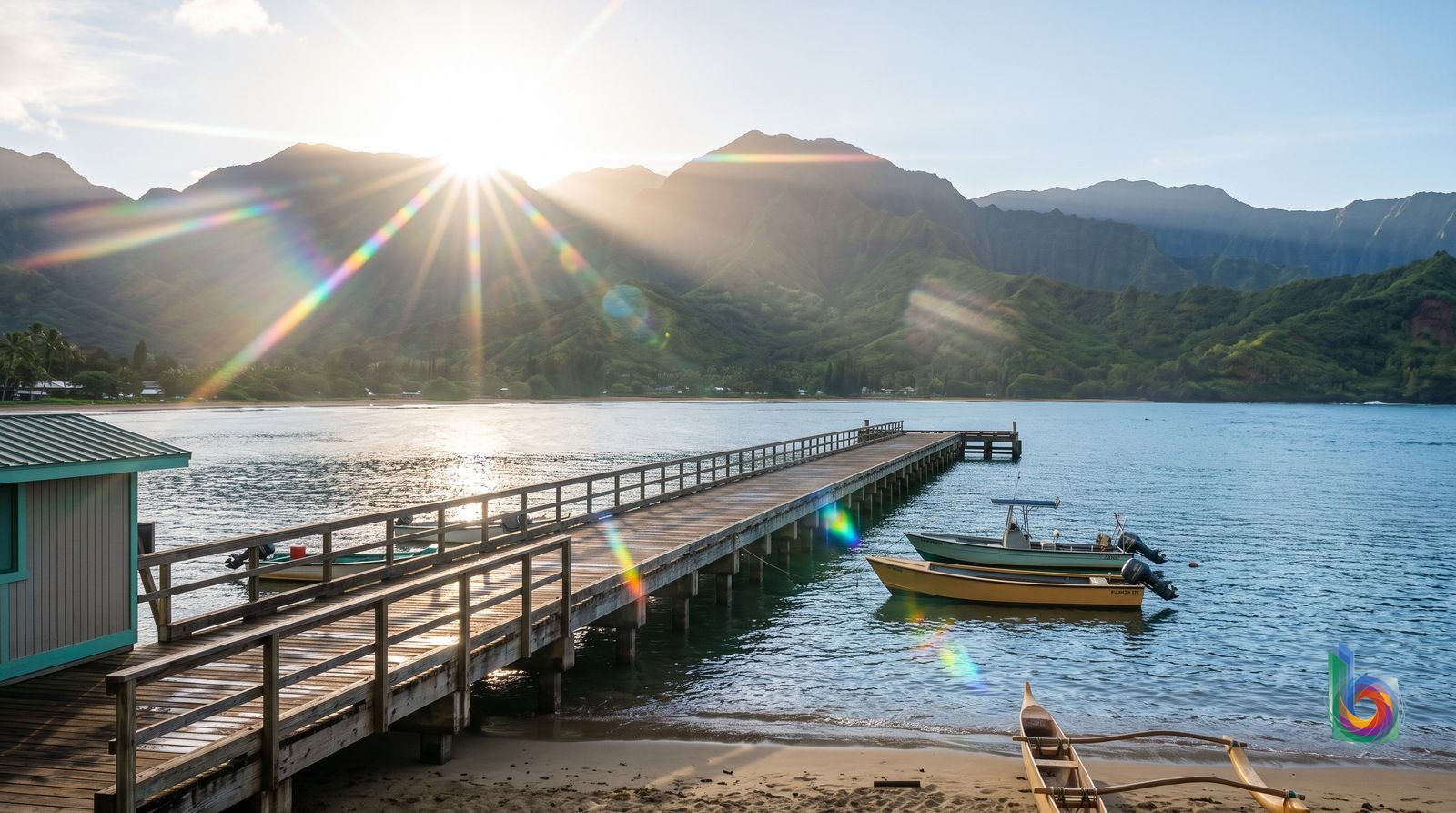
Central Hanalei: the small commercial center, Hanalei Bay and the pier are the part of a Kauaʻi trip best enjoyed on foot.
Park once in or near town, then walk for meals, shops, the bay and pier rather than repeatedly moving the car.
It stops working well beyond town. Princeville’s bluff-top, spread-out layout and separated beach access involve long or steep walks; Wainiha and Hāʻena are not practical town-to-town walks, especially after dark.
Rental car
The practical default for a Hanalei stay, North Shore beaches, trailheads, Kīlauea and nearly every island-wide day trip.
Rent at or near Līhuʻe Airport and allow time rather than planning to the minute. Use Kūhiō Highway for Hanalei, Princeville, Kīlauea and Kapaʻa; reserve Hāʻena park access or shuttle separately if heading to Kēʻē Beach or the Kalalau Trail.
Kauaʻi is not a loop drive: Kūhiō Highway ends beyond Hāʻena and Kaumualiʻi Highway ends toward Nā Pali, with no road around the island. Expect slow traffic through the Līhuʻe–Kapaʻa corridor and at Hanalei Bridge; do not take a standard rental onto rough or restricted areas such as Polihale without confirming coverage.
Kauaʻi Bus
A low-stress, low-cost connection between larger population centers, particularly around Līhuʻe, Wailua and Kapaʻa on the east-side corridor.
Treat it as a point-to-point option when your schedule is flexible, and check the current timetable before committing. It is most credible for stays or errands along the Līhuʻe–Kapaʻa corridor.
It is not a frequent visitor shuttle or a reliable tightly timed sightseeing plan. It works poorly for Hanalei-to-trailhead travel, Wainiha and Hāʻena, and does not solve remote sights such as Kōkeʻe, Waimea Canyon or Nā Pali access; late-night service is not something to assume.
Bicycle
Leisure rides on the east coast, especially the approximately eight-mile completed coastal path between Lydgate Park and Donkey Beach via the Wailua–Kapaʻa area.
Use a bike as a local recreation and short-distance tool from Wailua, Lydgate or Kapaʻa, not as the backbone of an island itinerary.
It is much less useful in Hanalei, Princeville and the far North Shore, where roads, rain, distance and scattered destinations work against practical cycling. It will not bridge the gap to Hāʻena, canyon country or Poʻipū comfortably.
Taxi, private transfer or rideshare
Airport transfers when you do not want to drive, a dinner outing where nobody should be behind the wheel, or a pre-arranged one-way ride.
Book ahead—particularly for Hanalei, Princeville, Wainiha and Hāʻena—and confirm the pickup plan and return availability before setting out.
There is no useful city-style taxi grid, and rideshare coverage should not be assumed on the North Shore or late at night. These rides are expensive for island distances and are a poor substitute for a car for beaches, trailheads and multi-stop days.
Bookable experiences per person, per day
Based on 205 currently available tours and tickets. Hotels, meals and transport are not included.
Safety: Treat the ocean and freshwater seriously: check local surf and lifeguard warnings, skip swimming in rough conditions, and avoid untreated stream water or muddy-water contact with cuts.
Book before you land
Hāʻena State Park and the first stretch of the Kalalau TrailFull day; roughly 30–45 minutes each way from Hanalei, plus a 4-mile round-trip hike if walking to Hanakāpīʻai.
This is the essential north-shore escape even from Hanalei: Keʻe Beach, the trailhead into the Nā Pali Coast, and the two-mile walk to Hanakāpīʻai Beach deliver terrain Hanalei Bay cannot. Access is managed, so secure the required park entry/parking or shuttle arrangement before building a day around it. Do not treat the beach as a casual swimming stop; Nā Pali currents and surf are serious.
Nā Pali Coast by boat from HanaleiMost of a day; allow 4–6 hours door-to-door including check-in and a several-hour water tour.
The boat is the way to see the towering, otherwise inaccessible Nā Pali cliffs at their proper scale; it beats another beach day in town if conditions are good. Departing Hanalei minimizes the dead transit before the scenery. The catch is material: north-coast boat operations are effectively curtailed in winter by rough Pacific conditions, and ocean motion can make this a bad choice for anyone prone to seasickness.
Waimea Canyon and Kōkeʻe State ParkFull day—expect about 2–2.5 hours each way from Hanalei before stops, longer with traffic.
Kauaʻi’s great contrast to the wet, green north: a vast red-and-green canyon, high-elevation forest, and overlooks toward the Nā Pali cliffs. On a clear day it is absolutely worth sacrificing a Hanalei day; in cloud or fog it is a punishingly long drive for compromised views. Aim to reach the canyon after about 9:30am, when views are more likely to have cleared.
Wailua River valley: Opaekaʻa Falls, Wailua Falls and a river paddleFull day; roughly 75–90 minutes each way from Hanalei, traffic dependent.
This east-side outing earns its place if you want a freshwater Kauaʻi day rather than another surf-and-sand day: short waterfall viewpoints pair well with kayaking on one of the island’s navigable rivers. The overlooks alone are not worth the drive from Hanalei; make it a river-focused day. Do not enter untreated freshwater or muddy trails casually—leptospirosis is a real Kauaʻi risk.
Researched Nov 15, 2026