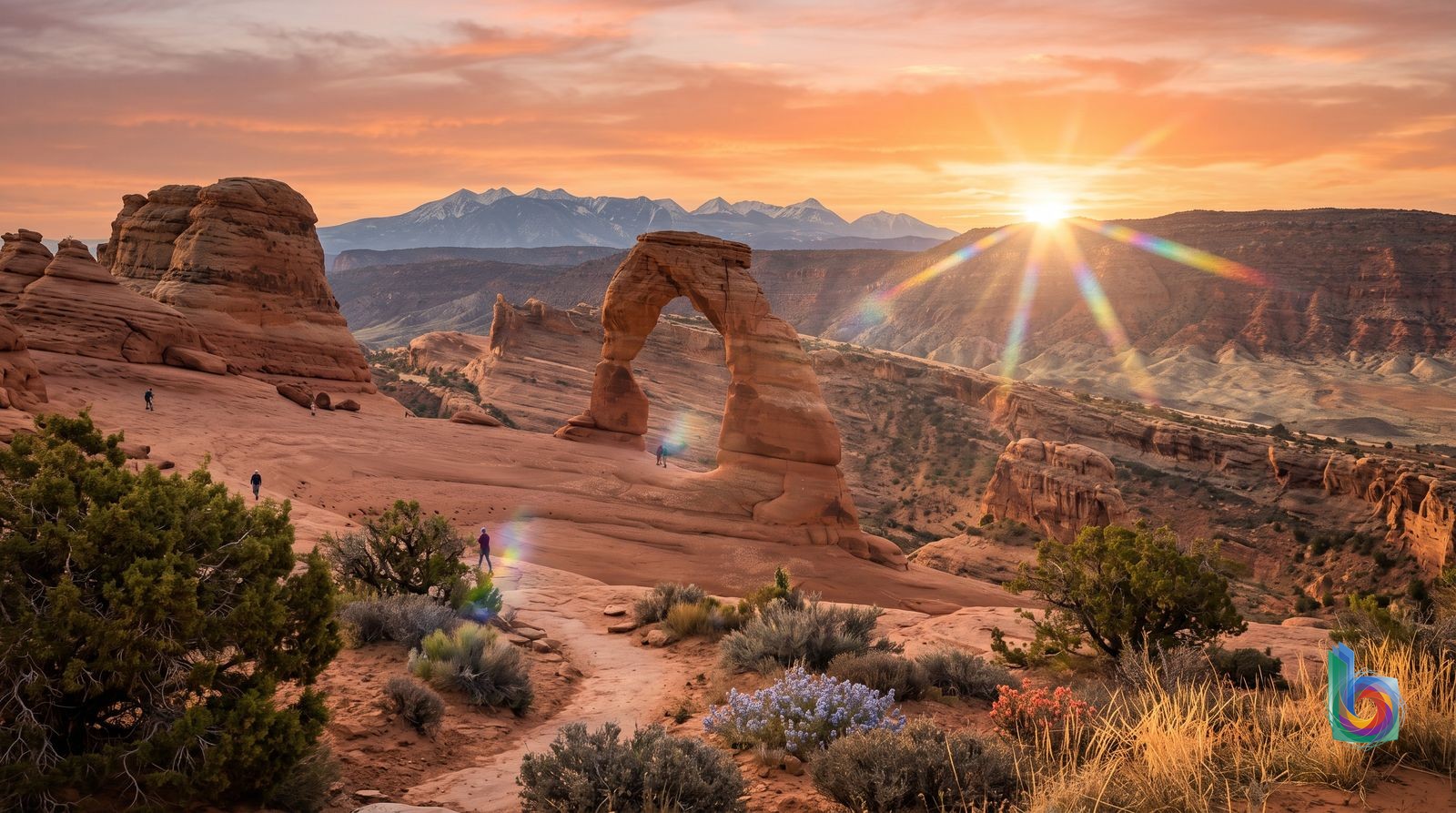
Utah is a high-desert road-trip state, not a compact park collection: its red-rock headliners are separated by long, scenic, service-light drives, with mountain and ski country in the north. Come for landmark geology and hiking, but plan around real distances, early starts, sparse fuel stops and changing weather rather than trying to collect parks from one hotel.
1 · Base · 3 nights
Zion National Park and Springdale
Utah’s must-do first stop for canyon hiking: the Narrows, Angels Landing/Scout Lookout and the Zion Canyon shuttle corridor. Stay in Springdale if Zion Canyon is the priority; Kanab is better only for a broader, quieter southern-Utah loop.
first-timers · hikers · families
Explore Zion National Park and Springdale
2 · Base · 3–4 nights
Moab
The state’s strongest adventure base, with Arches, Canyonlands’ Island in the Sky and Dead Horse Point all reachable without changing hotels. It is busy and pricey, but three nights here buys real hiking time rather than windshield touring.
first-timers · hikers · mountain bikers
3 · Short stop · 1 night
Bryce Canyon and Tropic
Bryce is compact enough for a short stay but deserves more than a roadside viewpoint stop: hike below the rim, then catch sunrise or sunset over the hoodoos. Tropic is the less strip-like base; Bryce Canyon City is the simplest logistical choice.
first-timers · families · photographers
4 · Base · 2 nights
Capitol Reef and Torrey
The quietest and most livable of the marquee parks, centered on the Waterpocket Fold, Fruita orchards and good day hikes. Base in Torrey for two nights rather than treating it as a rushed transfer between Bryce and Moab.
hikers · geology lovers · road-trippers
5 · Base · 3 nights
Escalante, Boulder and Highway 12
This is the stretch to slow down for: Highway 12, slickrock walks, slot-canyon country and tiny service towns. Escalante is the practical hiking base; Boulder is the more scenic, food-minded overnight.
hikers · landscape photographers · road-trippers
6 · Base · 1–2 nights
Salt Lake City
Use Utah’s main gateway for a night or two at the start or end of a road trip, not as a substitute for the red-rock south. It earns time for its mountain setting, museums, food scene and easy access to ski terrain.
first-timers · city breaks · skiers
7 · Base · 3 nights
Park City and the Wasatch Resorts
Park City supplies the best walkable resort-town stay, while Deer Valley and the Cottonwoods are for serious skiing. It is polished, expensive in peak winter and far more convincing as a dedicated mountain break than a quick detour from a desert itinerary.
skiers · snowboarders · couples
8
St. George and Snow Canyon
A warm, service-rich southern base for Snow Canyon, golf and winter sun. It works well for families or travelers who want chain-hotel ease, but it is too far from Springdale to be the smart base for dawn starts in Zion.
families · winter sun seekers · golfers
9 · Base · 3 nights
Bears Ears, Bluff and Monument Valley
Southeast Utah’s slower, more culturally grounded counterweight to the national-park circuit: archaeological landscapes, remote mesas and Monument Valley’s buttes. Base in Bluff for character and use local, especially Diné-led, guidance rather than treating the area as an unguided scenic playground.
repeat visitors · cultural travelers · road-trippers
10
Ogden, Antelope Island and the Northern Wasatch
A lower-key northern alternative for Snowbasin skiing, bison and Great Salt Lake landscapes, with Ogden as the useful town base. Choose it for a focused northern trip or a second visit, not as a detour on a Zion-to-Moab route.
families · skiers · wildlife watchers
Zion National ParkSouthern Utah
Utah’s most accessible big-canyon experience combines towering walls, river walks, and serious hiking in one compact valley.
Arches National Park (Tourist attraction)Canyon Country
This is the most concentrated and easy-to-read introduction to Utah’s red-rock geology, with major formations reachable by short walks and scenic drives.
Bryce Canyon National Park (Tourist attraction)Southern Utah
Bryce is not a canyon in the usual sense;
Canyonlands National ParkCanyon Country
Canyonlands supplies the immense scale that Arches does not: layered canyons, mesas, and long-distance Colorado River country.
Delicate ArchCanyon Country
Utah’s signature natural landmark earns the extra effort because the approach turns a familiar image into a genuinely dramatic reveal.
Monument ValleySouthern Utah
The isolated buttes and sandstone towers are among the American Southwest’s most recognizable landscapes and carry far more weight than a quick movie-location photo.
Numbers match Where to go · dots are headline sights
SLCSalt Lake City International Airport
The best all-purpose Utah gateway: use it for Salt Lake/Park City skiing, a north-to-south road trip, Capitol Reef or Moab starts, and return flights after a southern Utah loop. Rent a car here unless you are staying in Salt Lake or using ski buses.
Flights and transfers into Salt Lake CityLASHarry Reid International Airport, Las Vegas
Usually the smarter arrival airport for a Zion-first trip. It is roughly 2.5 hours from the Zion/Springdale area and works well for a one-way drive through Bryce, Capitol Reef and Moab, finishing at Salt Lake or Grand Junction.
Flights and transfers into Las VegasGJTGrand Junction Regional Airport, Colorado
A useful smaller gateway for Moab and eastern Utah, about 1.5–2 hours from town by car. It is particularly practical for an Arches/Canyonlands-focused trip or an open-jaw itinerary, but has far fewer flight options than SLC or Las Vegas.
Flights and transfers into Grand JunctionSGUSt. George Regional Airport
Convenient for St. George, Snow Canyon and Zion access, but usually only worth using when its connecting-flight fares are sensible. It is not a substitute for a car: Springdale is about an hour away and Zion dawn starts are still awkward from St. George.
Allow 7–10 days for a sensible Mighty Five trip, and two weeks if you want proper hikes rather than brief overlooks and constant hotel changes. A full loop is more than 600 miles and 10–12 hours of driving before scenic stops.
Use multiple bases: Springdale for Zion, Bryce Canyon City or Tropic for Bryce, Torrey or Escalante for Capitol Reef and Highway 12, and Moab for Arches and Canyonlands’ Island in the Sky. No single town is a realistic base for the whole state.
Zion and Bryce Canyon are the easiest two-park pairing, while Moab is the natural single base for Arches, Canyonlands’ Island in the Sky and Dead Horse Point. Add Torrey or Escalante between Bryce and Moab to experience Capitol Reef and Highway 12 rather than rushing through them.
Yes—rent a car for almost any trip beyond Salt Lake City or a ski holiday, since parks, towns and trailheads are widely spread out. A standard sedan works on paved park roads and Highway 12, but remote routes such as Cathedral Valley, the Maze and many Bears Ears or Canyonlands backroads require high clearance and often proper 4WD.
Fly into Las Vegas for a Zion-first trip; it is about 2.5 hours from Springdale and works well for a one-way drive through Bryce, Capitol Reef and Moab. Salt Lake City is the best all-purpose gateway for statewide trips, while Grand Junction is useful for a Moab-focused itinerary.
April–May and September–October are the strongest first-visit windows for southern Utah, with generally workable hiking weather and more reliable high roads. Summer demands dawn hikes because Zion and Moab become intensely hot, while winter suits quiet low-desert hiking or Wasatch skiing rather than a statewide road trip.
Book Angels Landing through Zion’s permit lottery if you want the chained route, and reserve Arches timed entry as soon as your date opens during its posted seasonal hours. Reserve Fruita Campground and Zion, Arches and Moab-area camping well ahead for spring, fall and holidays; peak-season rafting, canyoneering and 4WD tours also need advance booking.
Utah follows U.S. federal entry rules: Visa Waiver Program visitors generally need an approved ESTA and qualifying e-passport, while most other visitors need a B-2 visa; check current U.S. State Department guidance, including ESTA travel-history exceptions, before booking. Non-U.S. residents aged 16 and over may face an additional per-person charge at Zion and Bryce Canyon unless covered by specified pass arrangements.
Where to stay
Picked from Moab and Salt Lake City.