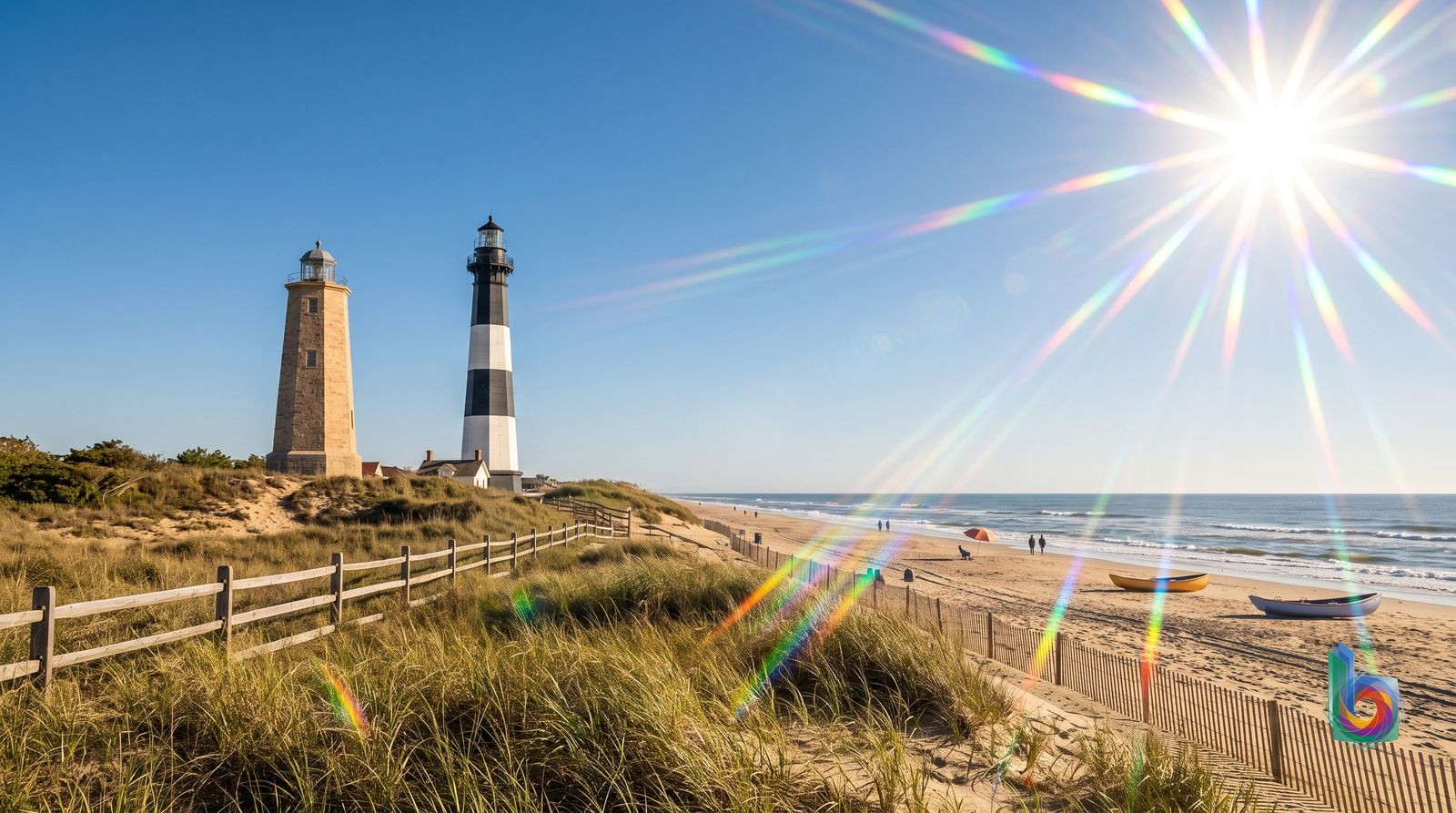
January–February
Quiet, cool off-season coastal weather; beach time is not dependable, but the Oceanfront is markedly less busy.
Some seasonal businesses and services are reduced, and it is not reliable swimming or sunbathing weather.
March–April
Spring begins to improve outdoor conditions, though temperatures can still be variable and beach weather is hit-or-miss.
March’s Shamrock events can bring unusually heavy traffic, crowds and higher hotel demand; the water is still cold.
May–mid-June
The year’s best all-round window: increasingly beach-capable weather before the worst humidity and school-holiday crush.
Late May can be busy around holiday weekends, and weather is not yet as consistently hot as high summer.
Late June–August
Hot, humid peak beach season, with the fullest Oceanfront, busiest roads and strongest demand for rooms, parking and tours.
Expect congestion, higher prices and humidity. August’s East Coast Surfing Championships adds crowds around the surf zone and Oceanfront.
September–October
Another standout period: beach-capable early fall weather, easing humidity and fewer family travelers after summer holidays.
Later in the period, swimming weather becomes less dependable; major conventions or race weekends can still push up hotel rates and traffic.
November–December
Cool, quiet off-season conditions, best approached as a coastal getaway rather than a beach holiday.
Seasonal operations thin out and beach weather is unreliable.
Yuengling Shamrock Marathon Weekend · Usually March
A major race weekend that can distort Oceanfront hotel prices and create traffic and access disruptions. Reserve lodging early if your dates overlap, or avoid the resort corridor if you are not attending.
East Coast Surfing Championships · Usually August
Brings added crowds and activity around the Oceanfront surf zone, with heavier demand for nearby rooms and slower movement along the beach and Boardwalk.
Walking
Central Oceanfront & Boardwalk, South End & Rudee Inlet, and ViBe/Old Beach. The three-mile Boardwalk and Atlantic Avenue resort core are the rare part of Virginia Beach where walking is genuinely the best transport.
Stay near the Oceanfront and plan beach, Boardwalk, meals and rentals on foot; ViBe is a short inland walk or bike ride from the sand.
Virginia Beach is flat, so hills are not the problem—distance is. North End becomes increasingly inconvenient the farther north you stay, and Sandbridge, Chic’s Beach, Shore Drive/Cape Henry, Town Center, Pungo/Back Bay and First Landing are not casual walks from the Boardwalk. Summer heat, beach gear and late-night gaps between districts make walking a poor citywide strategy.
Bike or Boardwalk rental
Covering the Oceanfront more quickly than on foot, especially the Boardwalk between the central resort strip, North End and Rudee Inlet. Good for a beach-focused day without moving the car.
Rent a bike or surrey around the Oceanfront and use the Boardwalk and nearby beach-area streets; it is an enjoyable way to link the beach, King Neptune area and the southern Boardwalk.
The Boardwalk is busy in summer, and pedestrians often drift into the bike lane. This is not a practical way to reach Town Center, Sandbridge, Back Bay, Chic’s Beach or Cape Henry; do not mistake a pleasant resort ride for a connected city cycling network.
HRT bus and seasonal beach trolley
Short, patient trips within the Oceanfront area and a low-cost alternative when you do not want to park. Useful for travelers based in Central Oceanfront, South End or ViBe who are not on a tight schedule.
HRT local bus fare is about $2 per ride. Use beach-area trolley and bus service for local hops, and check the current timetable rather than assuming frequent all-day service.
Service is not a substitute for a car for parks, Sandbridge, Back Bay, the Military Aviation Museum or cross-region sightseeing. It also becomes much less liberating in North End and outside the resort core, particularly at night and in the off-season when seasonal services thin out.
Rental car
Any itinerary beyond the Oceanfront: First Landing State Park, Cape Henry, Shore Drive, Chic’s Beach, Town Center, Sandbridge, Pungo/Back Bay and the Military Aviation Museum. Essential for Sandbridge and effectively essential for Pungo and Back Bay.
Rent only for the days you leave the resort corridor if possible. Build days by geographic zone: pair First Landing with Cape Henry/Shore Drive, or Sandbridge with Back Bay, rather than crisscrossing the city.
At the Oceanfront, a car is more burden than freedom in summer: parking costs money, lots fill, and Atlantic Avenue traffic crawls. Beach-season congestion also slows the drive to Sandbridge; do not plan a quick back-and-forth between it and the Boardwalk.
Taxi or rideshare
Norfolk International Airport transfers, late-night dinners or events, and one-way trips when you want to drink or avoid Oceanfront parking. It is sensible for an occasional excursion from the resort, not a full sightseeing plan.
Use Uber/Lyft or a taxi for ORF—normally about 25–35 minutes to the Oceanfront and commonly roughly $30–50 before surge—and for evening trips where waiting for a bus is unappealing.
Repeated rides get expensive fast in a spread-out city. Availability and surge pricing can be worse late at night and in remote districts such as Sandbridge, Pungo/Back Bay and around Cape Henry; arrange a return rather than assuming an instant pickup.
Safety: At the Oceanfront, use normal beach-resort precautions: lock your car and keep valuables out of sight, stay with well-lit busy routes after dark, and obey lifeguard flags and rip-current warnings rather than swimming alone.
Book before you land
Colonial Williamsburg and Historic JamestowneFull day; roughly 1–1.5 hours each way by car from the Oceanfront, with tunnel traffic capable of making it longer.
This is the clear history day: Virginia Beach has Cape Henry’s 1607 landing marker, but Williamsburg and Jamestowne provide the depth, buildings and archaeological context the beach city does not. Do not try to add Busch Gardens unless you want to turn the day into motorway time.
Northern Outer Banks — Kitty Hawk, Kill Devil Hills and Jockey’s RidgeFull day; about 1.5–2 hours each way by car from the Oceanfront, longer on peak summer weekends.
Go if you want a radically different coast: bigger dunes, Wright brothers history and a less resort-engineered beach landscape. It is a better use of a spare day than another lap of Atlantic Avenue, but only if you have a car and accept that summer traffic can be punishing.
Cape Charles and Kiptopeke State Park, Eastern ShoreFull day; roughly 1.5–2 hours each way by car from the Oceanfront, plus Chesapeake Bay Bridge-Tunnel tolls.
Crossing the Chesapeake Bay Bridge-Tunnel is the point as much as the destination. Cape Charles is a small bayside town rather than an attraction machine, while Kiptopeke adds beach, trails and fishing. Choose it for quiet, bay scenery and a change of pace—not for a packed sightseeing itinerary.
Norfolk — Chrysler Museum of Art, Ghent and the waterfrontHalf to full day; roughly 35–60 minutes each way by car from the Oceanfront, depending on tunnel traffic.
Norfolk supplies the urban museum-and-neighborhood day Virginia Beach largely lacks. The Chrysler Museum is the anchor; pair it with a walk through Ghent and the downtown waterfront. It is not an escape to nature, but it beats spending a gray or cold day at the Oceanfront.
Virginia · United States
Researched Oct 28, 2026
