Da Nang is no longer just a beach city: since its 2025 merger with former Quảng Nam Province, it is central Vietnam’s most practical all-purpose short-trip region, combining a polished airport-and-resort city with Hội An’s heritage lanes, Mỹ Sơn’s Cham ruins, island water at Cù Lao Chàm and a quieter southern coast. Use Da Nang proper for urban food, beach hotels and easy logistics; Hội An for atmosphere, cycling and evenings; and the inland or island trips for contrast rather than as boxes to tick.
1 · Short stop · 1 day
Central Da Nang
The practical urban core for the Cham Sculpture Museum, Han River walks, markets and straightforward local eating. Stay here if you want city energy and easy airport logistics, not historic streets.
first-timers · solo travelers · foodies
Explore Central Da Nang2 · Short stop · 0.5–1 days
My Khe, Phước Mỹ and An Thượng
Da Nang’s main urban beach strip: a long swimmable beach backed by the region’s deepest choice of hotels, cafés and casual restaurants. Choose it for convenience; do not expect an undeveloped coast.
families · remote workers · first-timers
3 · Short stop · 0.5–1 days
Sơn Trà Peninsula
The best half-day escape from Da Nang: forested coastal roads, Linh Ứng Pagoda, broad sea views and a real chance of spotting red-shanked doucs. Go early, before traffic and haze flatten the views.
photographers · active travelers · wildlife enthusiasts
4 · Short stop · 0.5 days
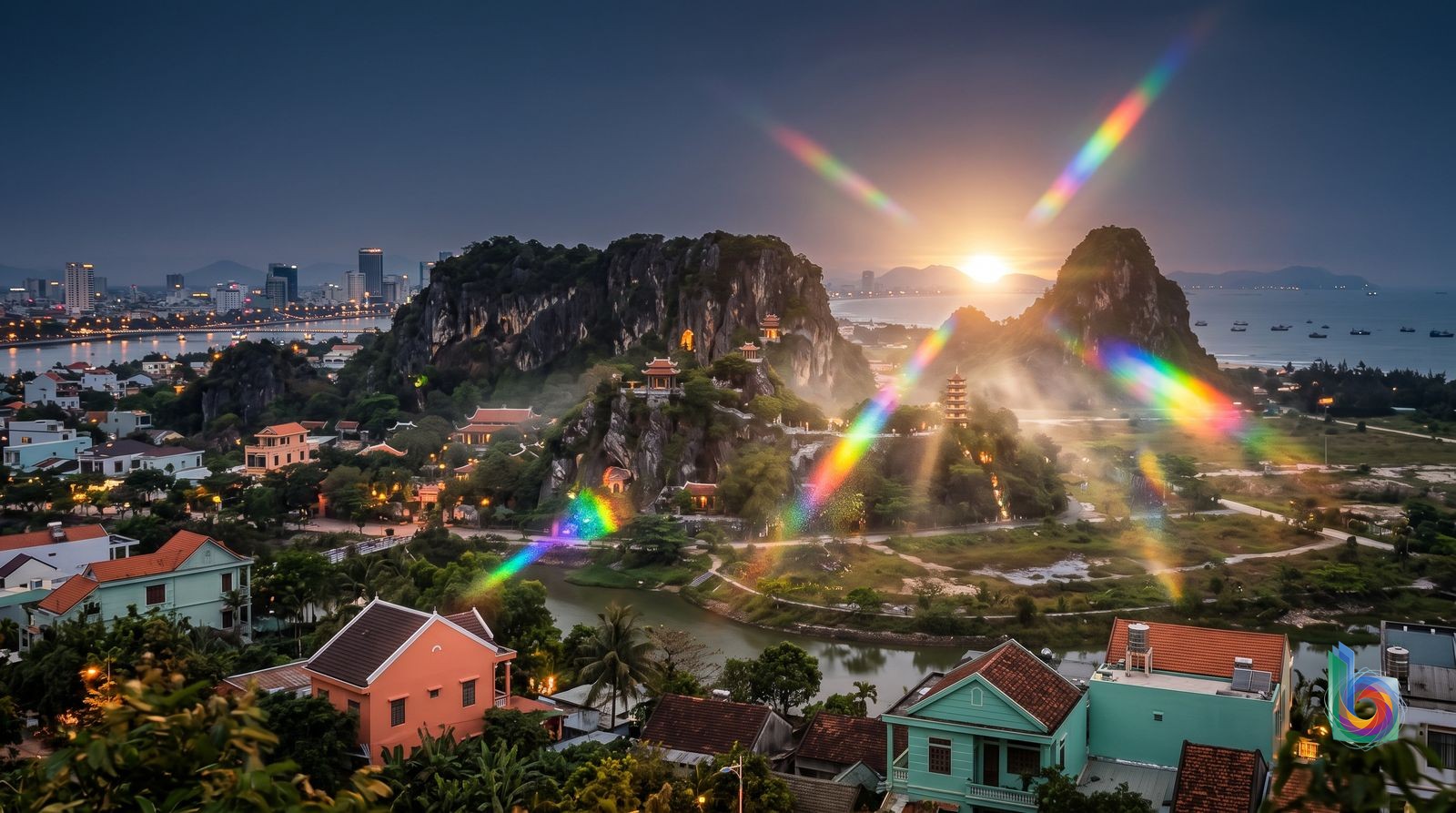
Non Nước and the Marble Mountains
A useful stop between Da Nang and Hội An, with cave temples, pagodas and worthwhile views from the limestone hills. It works best early or late in the day, when the steps and coach groups are less punishing.
first-timers · families with older children · culture travelers

5 · Base · 1–2 days
Hội An Ancient Town
The region’s essential heritage stop: merchant houses, assembly halls, riverfront lanes and the best after-dark atmosphere in central Vietnam. It is commercial and crowded, but vastly better when you stay overnight rather than rush through on a day trip.
first-timers · couples · foodies
6 · Short stop · 1 day
An Bàng, Cẩm An, Trà Quế and Cẩm Thanh
Hội An’s slower outer ring combines low-rise beach stays, rice-field cycling and herb gardens with easy access to the Old Town. Base here for space and calm; skip the loud, assembly-line basket-boat tours in Cẩm Thanh.
families · couples · longer stays
7 · Short stop · 1 day
Mỹ Sơn Sanctuary and Duy Xuyên
The essential inland history trip: weathered Cham Hindu temples in a green valley, best seen at opening before the heat and tour buses arrive. It is smaller and more damaged than Angkor, but gives real context to Da Nang’s Cham museum.
history buffs · architecture lovers · archaeology travelers
8 · Short stop · 1 day
Bà Nà Hills and western Hòa Vang
Go for the Golden Bridge and dramatic cable-car ascent, not for an authentic mountain experience. It is an expensive, polished theme-park day, worthwhile for families or travelers who actively want the spectacle.
families · Golden Bridge visitors · theme-park fans
9 · Base · 2 days
Cù Lao Chàm
The region’s proper island break, with clearer water, snorkeling, seafood and simpler village stays than the mainland coast. It deserves one or two nights in calm conditions, rather than being treated as a rushed boat excursion.
snorkelers · beach travelers · adventure travelers
10 · Base · 3 days
Tam Kỳ, Tam Thanh and Tam Hải
The quieter southern coast offers murals, low-key beaches and a more local rhythm well beyond the Da Nang–Hội An corridor. It is a deliberate second-visit choice, not something to squeeze into a first week.
repeat visitors · slow travelers · quiet-beach seekers
The Marble Mountains
The caves, pagodas, viewpoints and rough-hewn stone make this the most rewarding historic-natural stop close to central Da Nang.
Golden Bridge
The giant-hands bridge is the image most visitors now associate with Da Nang, and it delivers its best effect in misty or clear early light.
Linh Ung Pagoda (Lady Buddha)
The peninsula pagoda is Da Nang’s most important easy-to-visit religious sight and has a setting that connects city, sea and mountain views.
Son Tra Peninsula
Son Tra is the nearby escape that explains why Da Nang feels unusually close to both city life and wild coastal landscape.
Hoi An Ancient Town
Hoi An is the indispensable heritage complement to modern Da Nang, with its walkable lanes, merchant architecture and riverfront atmosphere.
Numbers match Where to go · dots are headline sights
DADDa Nang International Airport
The default gateway for the whole Da Nang–Hội An corridor, with domestic links and international service. It is about 30 km/40–60 minutes by car to Hội An, longer in heavy rain or peak traffic.
Flights and transfers into Da NangHUIHue Phu Bai International Airport
Useful only if combining Huế with Da Nang; allow roughly 2.5–3.5 hours by road to Da Nang depending on the Hải Vân Pass route and traffic. It is not a sensible airport for a short Da Nang–Hội An-only trip.
Flights and transfers into HuếVCLChu Lai Airport
A practical alternate for Tam Kỳ, Tam Thanh and the southern coast of the enlarged municipality, rather than for Da Nang or Hội An. Ground transport north to Hội An/Da Nang is substantial, so use it only when the southern coast is a real part of the itinerary.
Flights and transfers into ChũAllow 6–8 nights for a first culture-and-beach trip: 3–4 nights in Da Nang, followed by 3–4 in Hội An or An Bàng. A 3–4-night break can work from one base, but do not try to add Cù Lao Chàm and Tam Kỳ/Tam Thanh to a one-week first visit.
Choose Central Da Nang for airport convenience, food, the Han River and city sights; choose My Khe, Phước Mỹ or An Thượng for the widest choice of beach hotels and restaurants. Stay in Hội An Ancient Town for heritage atmosphere and evenings, or in An Bàng, Cẩm An, Trà Quế or Cẩm Thanh for a quieter beach-and-cycling base with easy Old Town access.
The natural combination is Da Nang, Non Nước and the Marble Mountains, Hội An, Sơn Trà Peninsula and a morning at Mỹ Sơn Sanctuary. Add Cù Lao Chàm only in calm weather and with enough time for one or two nights; treat Tam Kỳ, Tam Thanh and Tam Hải as a separate southern trip rather than a casual day trip.
Vietnam offers a 90-day e-visa to citizens of many countries, while some ASEAN and other passport holders have visa-free entry for varying lengths of stay. Eligibility and rules change, so check Vietnam’s official immigration portal before booking flights.
Fly into Da Nang International Airport, then use Grab, reputable metered taxis or pre-booked drivers; the drive to Hội An is about 30 km and usually takes 40–60 minutes. Cycle around Hội An, An Bàng, Trà Quế and Cẩm Thanh, but avoid daily long loops between bases and use scooters only if you are experienced, properly licensed and insured.
February to April is the best all-round period for drier weather, manageable heat, calmer seas and combining Da Nang, Hội An and Cù Lao Chàm. May to August is hottest, busiest and best for reliable swimming; September to November can bring tropical rain, Hội An flooding and cancelled island boats, while January and December are better for food and city breaks than guaranteed beach weather.
Reserve desirable beachfront hotels and Hội An boutique stays for March–April weekends, and book early around Tết and Da Nang International Fireworks Festival nights. Pre-book DIFF grandstand tickets, Bà Nà Hills admission or transfers on holiday peaks, and Cù Lao Chàm boats and overnight stays during the calmer March–August season.
Where to stay
Picked from Mỹ Khê and Tam Kỳ.