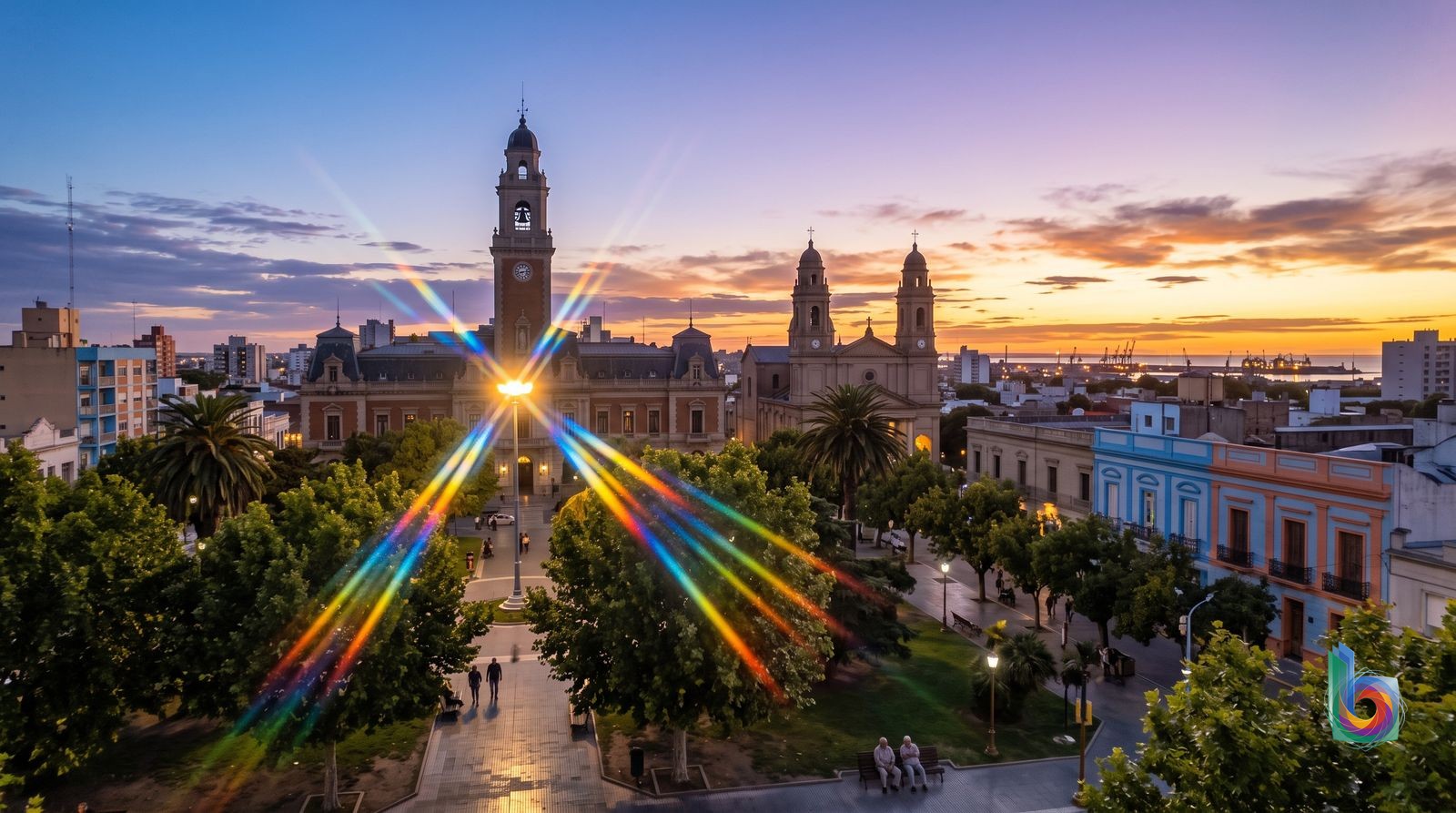
March–May (autumn)
Generally pleasant for walking the compact centre, Avenida Alem and daytime visits to Puerto Ingeniero White; the city is past the busiest beach-season pressure.
Weather cools through the season, and individual museums or cultural venues may reduce hours around public holidays.
June–August (winter)
The quietest, coolest period. It remains workable for museums, cafés and performances, but outdoor and port-side exploring is less inviting.
Less appealing weather for long walks and Ingeniero White; check cultural calendars and holiday-hour changes before making a special trip.
September–November (spring)
One of the two best windows: comfortable enough for exploring on foot without the hardest summer heat or the peak flow toward nearby beaches.
It is not a resort destination even in good weather; expect a working port and university city rather than a polished waterfront break.
December–February (summer)
Warm and often sunny, but Bahía itself can feel hot. This is the main holiday season for nearby Monte Hermoso and Pehuen-Có.
Beach-bound traffic makes intercity buses and regional accommodation tighter, especially on weekends and holidays. Reserve transport and lodging early; the city is less compelling in peak heat.
Argentine public-holiday weekends · Throughout the year; dates vary, with several long weekends.
Bahía is not normally a major tourist-queue city, but nearby coastal routes and accommodation can tighten during holiday weekends, particularly in summer. Teatro Municipal and museums may operate reduced or altered hours, so check calendars before planning a visit around a specific performance or venue.
Walking
Centro / Plaza Rivadavia: the historic core, Calle Alsina, Teatro Municipal and the lower Avenida Alem corridor fit comfortably into a half-day on foot.
Base yourself near Plaza Rivadavia and treat the centre as a compact circuit rather than a capital-city-sized downtown. The bus terminal is also walkable in about 25–30 minutes if you are travelling light.
Walking stops being efficient toward the university end of Avenida Alem, Napostá / Parque de Mayo and every outer residential district—especially Palihue, Villa Mitre and Barrio Patagonia. After dark, avoid isolated streets and take a taxi or remise back from theatre or dinner.
City bus
The practical low-cost link beyond the centre, particularly for Ingeniero White; line 500 is the strongest choice for the port and has the best frequencies.
Buy and load a SUBE card at a kiosk before relying on buses. It is required on local buses and can also be used in Buenos Aires and many other Argentine cities. Check the municipal map and timetable for routes serving the university side, Parque de Mayo and residential areas.
There is no metro, tram or tourist shuttle, and the network is less forgiving when you are staying far out: Palihue, Barrio Patagonia and parts of Villa Mitre depend heavily on the exact route. Do not assume a convenient late-night service after bars or shows.
Taxi or remise
Evening returns, airport transfers, luggage, trips between dispersed districts, and the simplest ride to Ingeniero White. It is the sensible option from Palihue and Barrio Patagonia, where walking and late buses are poor substitutes.
Use a registered taxi/remise or the local Taxi Ya Bahía Blanca app where available. Verify or agree the fare before a longer journey, particularly from Comandante Espora Airport or to the port.
Unregulated ride-hailing should not be assumed legal or consistently available. A taxi is convenient, but it is a need rather than a luxury after dark in outer districts and can add up if you choose a residential base far from Centro.
Cycling
Daytime exploration on quieter streets, especially around Napostá / Parque de Mayo and between the park-university side and Avenida Alem.
Use it as a short-range, fair-weather supplement to walking rather than the backbone of a visit. Keep to calmer streets and lock up carefully.
Cycling infrastructure is thin. Central traffic is less pleasant, and it is not a good way to tackle the long, industrial run to Ingeniero White or to bridge the distance from Barrio Patagonia, Palihue or Villa Mitre to the visitor core.
Rental car
Leaving Bahía Blanca—for the coast, including Monte Hermoso or Pehuen-Có, or for the Sierras de Ventania. It also makes an outer-suburban stay in Barrio Patagonia or Palihue easier.
Rent only if your itinerary continues beyond the city or your accommodation is deliberately car-oriented. For a central short stay, combine walking, SUBE buses and taxis instead.
In the city, a car is more nuisance than advantage: Centro has irritating traffic and parking, while the sights themselves are compact. It does not improve the experience of Ingeniero White, where the appeal is industrial heritage rather than a scenic drive.
Safety: Bahía’s centre is straightforward by day; after dark, stick to busy streets, keep valuables out of sight, and take a registered taxi/remís home from theatre or nightlife rather than walking isolated streets or the industrial port area.
Book before you land
Sierras de Ventania / Sierra de la VentanaFull day. The foothills begin roughly 40 km north, but reaching Sierra de la Ventana and doing a worthwhile hike makes this an early-start, late-return outing; a car is substantially more practical.
This is the clear first choice if you have a spare day: real relief, provincial high-country scenery and proper trekking replace Bahía’s low, industrial coastal landscape. Cerro Ventana—the rock formation that names the range—is the headline; the region also contains Buenos Aires Province’s highest peaks, including Cerro Tres Picos. Go for walking rather than trying to turn the resort town into a major cultural stop.
Pehuen-CóFull day. About 80 km southeast; allow roughly 1.5–2 hours each way by road plus beach time. Best with a car.
Choose Pehuen-Có over another day in Bahía when you want a quiet Atlantic beach rather than a developed resort: sandy shore, occasional rocks, and unusually leafy, shaded streets give it a calmer feel than Monte Hermoso. It is a better antidote to the city than a destination for big nightlife. Nearby Pueblo Darwin is still quieter, but has only basic services.
Monte HermosoFull day. About 100 km east; allow around 1.5–2 hours each way by road. Several buses run from Bahía Blanca’s terminal, so it is the easiest beach trip without a car.
The more convenient pick for a classic beach day: a substantial sandy beach, full visitor services and actual restaurant/nightlife options. It beats staying in Bahía in warm weather, but not in peak summer if you dislike crowds—the resort is heavily visited then and loses its charm fast.
Researched Nov 17, 2026