December–February (high summer)
Usually sunny, dry and windy, with long daylight. Nights can still be cold, and lake water is bracing rather than beach-warm. January and February are the busiest months.
Peak summer means fuller boats, more expensive accommodation and crowds around El Centro, Circuito Chico and the headline excursions. Weather can still change quickly in the mountains.
March–April (autumn)
March is the standout compromise: hiking conditions can remain good after the summer peak, with cooler temperatures and fewer visitors. By April, conditions become more variable and mountain weather can turn wet or snowy.
Days shorten and weather reliability declines through April. Do not treat autumn as guaranteed dry trekking weather.
May–June (late-autumn/early-winter shoulder)
Quiet, cold and changeable. This is an in-between period: winter weather may arrive, but snow cover and ski conditions are not yet dependable.
It can be an awkward time for a mountain-focused trip: less dependable snow, variable conditions and fewer reasons to commit to expensive ski logistics.
July–August (winter ski season)
The main ski period at Cerro Catedral. Expect cold weather, frequent mixed precipitation and storms; conditions and road access can change quickly.
This is the most expensive and crowded period, especially during school-holiday weeks. Lift queues, limited rental or lesson availability and weather disruption are real possibilities; reserve Catedral arrangements once dates are fixed.
September–November (spring)
A transitional season, with lingering snow at higher elevations early on and increasingly changeable spring weather. Wind and quick temperature shifts remain part of the deal.
Neither settled summer hiking weather nor guaranteed ski conditions. Check snow, trail and road conditions rather than assuming a season from the calendar.
National Snow Festival (Fiesta Nacional de la Nieve) · Winter; dates vary, generally during the July–August snow season.
It adds crowd pressure during an already busy ski period. Expect stronger demand for accommodation, Catedral ski services and popular winter activities; book earlier and allow extra time for transport and weather-related disruption.
Argentine winter school holidays · Usually July, with timing varying by province and year.
Not a festival, but the most consequential recurring domestic travel peak: ski passes, rentals, lessons and family-friendly accommodation can sell out or become markedly pricier. Avoid these weeks if value and shorter lift queues matter more than peak snow-season atmosphere.
Walking
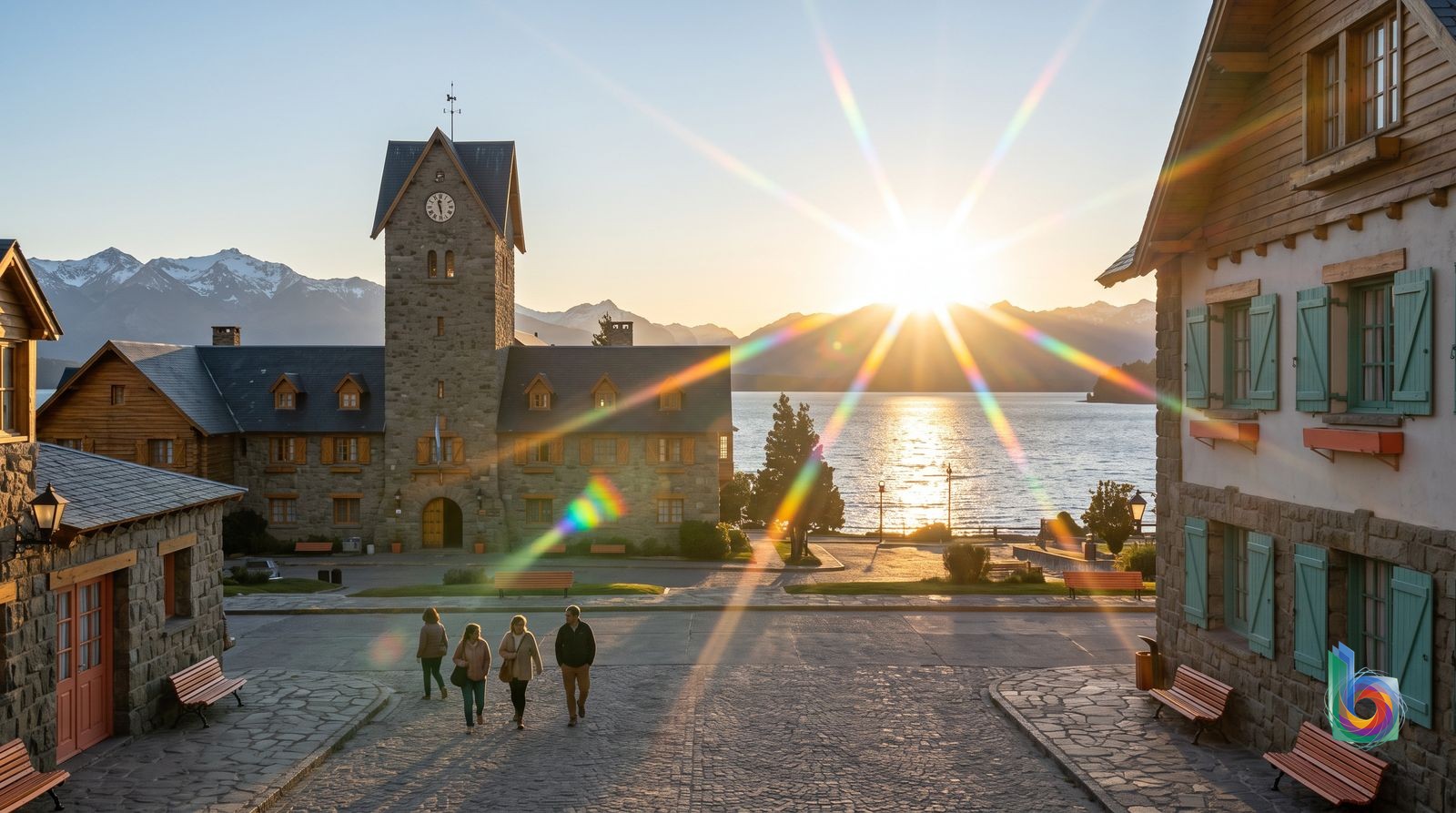
El Centro: Centro Cívico, Calle Mitre and the lakefront are the one genuinely walkable visitor core. It also works for short local errands in Villa Catedral’s immediate lift-base area.
Base yourself in Centro if you want to walk to restaurants, shops, banks and many tour desks. Use offline maps and start city-edge walks early and with company.
Walking stops working well on the uphill streets of Barrio Belgrano and Alto del Centro, the steep/far-from-stop addresses along Avenida Pioneros, and the dispersed western lakeshore from Melipal through Playa Bonita, Circuito Chico and Llao Llao. Do not treat Piedras Blancas or other city-edge trails as casual urban walks: robberies have been reported, particularly toward Piedras Blancas.
My Bus
The essential budget option for cross-city corridors: Centro to the airport and bus terminal, west along Avenida Bustillo toward Playa Bonita and Circuito Chico, and out to Cerro Catedral or Los Coihues. There is no metro.
Use a SUBE card; contactless payment may also work on My Bus. Line 72 is the useful airport connection via the bus terminal and Centro. Check the current route and frequency on the day—fares and service patterns change quickly. Ordinary local fares cited in December 2025 were AR$1,895, but that is not a reliable current budget figure.
It is a corridor network, not door-to-door transport. It becomes slow or inconvenient in spread-out Melipal, Playa Bonita, Lago Gutiérrez/Los Coihues, Colonia Suiza and Llao Llao; accommodation can be uphill from the main road. Cerro Catedral buses are a substantial ride from Centro and can be crowded around ski operations. Dina Huapi services may require the separate Solución card rather than SUBE.
Taxi or rideshare
The sensible time-saving choice after dark, with ski bags or heavy luggage, for a short link from the railway station, and when combining buses would consume much of the day. Particularly useful for uphill Barrio Belgrano addresses, remote rentals around Lago Gutiérrez and late returns from Cerro Catedral.
Use a taxi/rideshare rather than accepting unsolicited transfers, especially at the airport or bus terminal. Keep a charged phone and payment backup; cash is still worth carrying given Argentina’s fast-changing payment and price environment.
Costs add up quickly across Bariloche’s huge east–west footprint. A taxi makes sense for a late arrival or a group, but is an expensive substitute for planning when staying in Llao Llao, Colonia Suiza, Cerro Catedral or far along the western lakeshore.
Rental car
The best way to make the most of Circuito Chico, Colonia Suiza, Llao Llao, scattered trailheads and a cabin stay in Melipal, Playa Bonita or Lago Gutiérrez/Los Coihues. It is materially more convenient than buses for groceries and evenings outside Centro.
Treat it as a freedom tool for the low-density outskirts, not a necessity for a Centro-only stay. Confirm your accommodation’s parking and use current road and weather information before mountain drives.
Do not rent casually in winter unless you are comfortable driving on snow, ice and mountain roads in rapidly changing conditions. It is less useful in compact Centro, where traffic and high-season congestion undermine the benefit, and it does not make winter access to Cerro Catedral or Piedras Blancas risk-free.
Bookable experiences per person, per day
Based on 240 currently available tours and tickets. Hotels, meals and transport are not included.
Safety: Keep valuables out of sight around El Centro, bus stops and the waterfront, and avoid hiking alone—especially on trails toward Piedras Blancas; use formal exchange services rather than street changers.
Book before you land
Cerro Tronador and Ventisquero NegroFull day — roughly 9–10 hours door to door on a tour; longer and less convenient independently.
The one outing that changes the scale of Bariloche: a volcanic massif, glacier scenery and the black glacier at Ventisquero Negro, rather than another lakeside viewpoint. Go if you have only one full day beyond town. The downside is a long, road-heavy day and weather can erase the mountain.
Isla Victoria and Bosque de ArrayanesFull day — allow 8–10 hours from central Bariloche, including getting to Puerto Pañuelo and navigation time.
Worth paying for a boat day because Nahuel Huapi is best experienced from the water, and the cinnamon-coloured arrayán forest is a real change of scene, not just a cruise with photo stops. It beats staying in Centro, but it is a polished, busy excursion in peak season.
Puerto Blest and Lago FríasFull day — about 9–11 hours door to door from central Bariloche.
Choose this over Isla Victoria if you care more about rainforest, turquoise water and the close-up approach toward snow-covered Tronador than about the famous arrayán trees. It is among the city’s strongest lake-and-forest days, though organized boat logistics make it expensive and schedule-dependent.
Villa La Angostura and Bosque de Arrayanes hikeFull day — around 1½ hours each way by bus from Bariloche’s terminal, plus the hike or local connections.
A genuinely lovely lakeside town across the provincial border, with access to the 12-km Bosque Arrayanes trail. The drive/bus ride along the lake is part of the reward. Do it for the walk and scenery, not for the town centre alone; in poor weather it is a lot of transit for little payoff.
Ruta de los Siete Lagos to San Martín de los AndesFull day — typically 9–10+ hours door to door.
An excellent scenic-road day for travelers with a car or a well-run tour: lakes, forest and mountain passes in rapid succession, ending in San Martín de los Andes. It beats another city day only if you accept that it is primarily a drive; there is not much unhurried time at each stop.
El BolsónFull day — about 2 hours each way by road/bus, plus time in town.
A useful contrast to Bariloche’s resort polish: a smaller, countercultural mountain-valley town, best on one of the twice-weekly outdoor-market days. Go early; the market winds down around 15:00. Skip it on other days unless you specifically want the journey and a slower town.
Researched Nov 17, 2026