- Pace
- For up to five nights, base in Salzburg City and add one proper outing—Werfen or Hallein/Golling—not a frantic Alps checklist. With six to nine nights in summer, split the stay between Salzburg City and Zell am See–Kaprun; add Gastein or Upper Pinzgau only with roughly 10 nights or more. Salzburg–Werfen is an easy 40–50-minute train run, while Zell am See is a full transfer and Krimml, Saalbach, Grossarl and Lungau need their own base or careful bus/car logistics.
- When to go
- For the broadest Salzburg State trip, go in September to early October: hiking is cooler, light is clearer, and Salzburg City has shed its Festival-season prices. June is the best compromise for full mountain infrastructure before peak summer; July–August is for lakes, high trails and festivals, but book Salzburg City early and expect storms. Winter splits cleanly between Advent/concert Salzburg and ski valleys—stay in the actual resort for skiing, especially snow-reliable Obertauern. April–May is excellent for the city and lowlands but unreliable for high roads, lifts and serious hiking.
- Daily budget
- €220–350
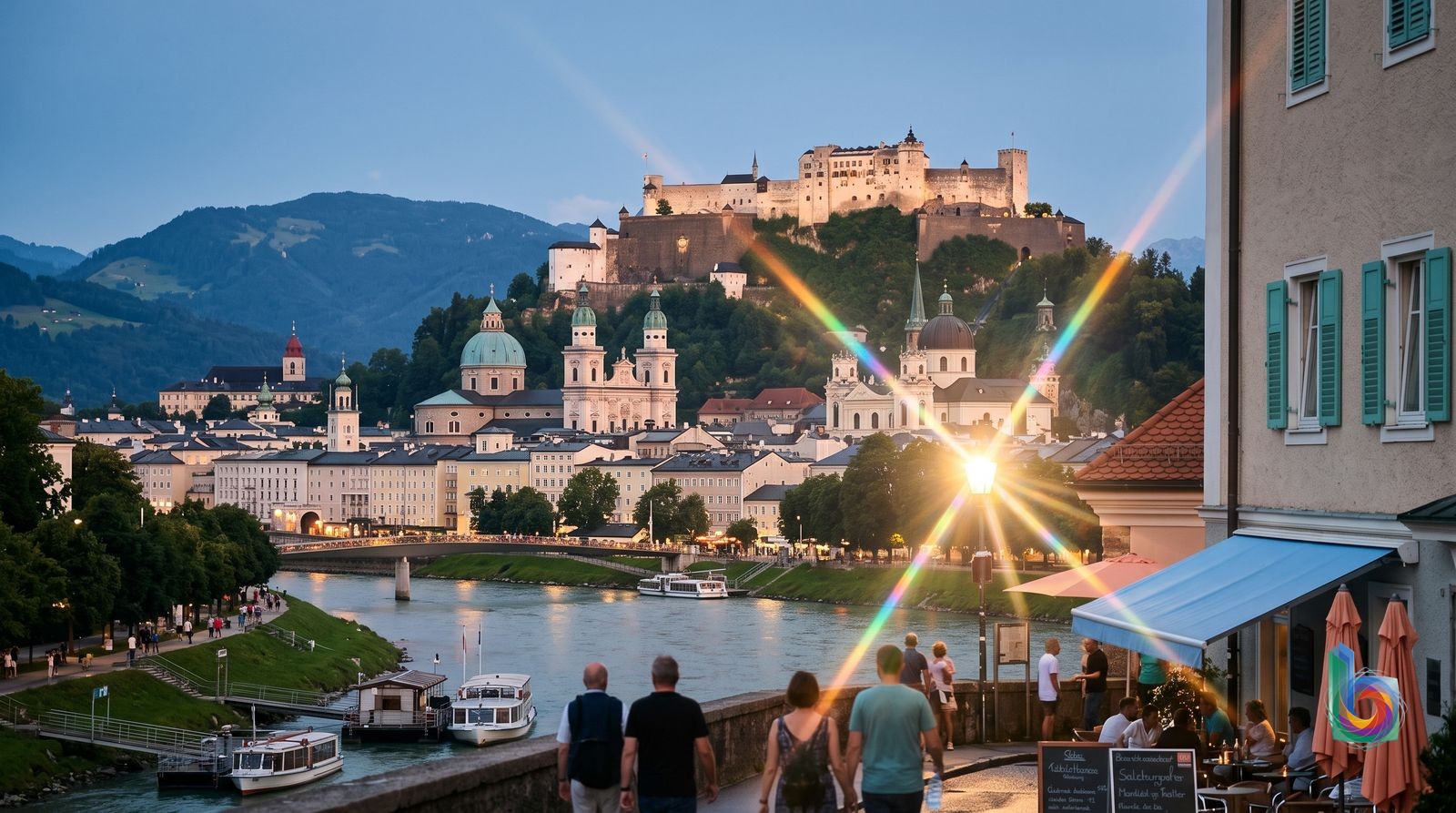
Salzburg is not just its polished baroque capital: it is an Alpine state that runs from Salzburg City’s Mozart-and-festival culture through low northern lake country to serious mountain valleys, national-park terrain, ski resorts and the distinct Lungau plateau. Come for the city’s compact cultural weight, then treat the mountains as a separate, properly paced trip rather than decorative day-trip scenery.
Known for
- Mozart, the baroque Old Town and Hohensalzburg Fortress
- The Salzburg Festival and classical music
- The Sound of Music locations and mythology
- Hohe Tauern National Park, Krimml Waterfalls and high Alpine scenery
- Major ski and mountain resorts including Saalbach, Gastein, Obertauern and Zell am See–Kaprun
- Lakes, thermal spas, caves and scenic mountain roads
Where to go
Salzburg City
1Base · 3–5 nights
Salzburg City
The essential first stop for the fortress, baroque Old Town, Mozart sites, serious music and the region’s best rail connections. Two concentrated days covers the core; use it as a cultural base, not a substitute for the mountains.
first-timersculture-led travelersshort breaksrail users
Explore Salzburg City Tennengau: Hallein, Golling and Werfen
2Tennengau: Hallein, Golling and Werfen
Base · 1–2 days
The most rewarding south-of-city corridor for salt-mining history, waterfalls, gorges and Werfen’s castle and giant ice cave. It is practical without a car and works as a full day trip from Salzburg City.
first-timersfamilieshistory fans
Zell am See–Kaprun
3Zell am See–Kaprun
Base · 1–3 nights
The strongest all-round Alpine base: lake time and a rail station in Zell am See, glacier and high-mountain infrastructure in Kaprun. It is busy and resorty, but hard to beat for groups who want hiking, cycling, skiing and scenery from one base.
first-time Alps travelersfamiliesmixed-interest groups
 4
Gastein Valley
Base · 2 nights
A train-accessible mountain valley with thermal baths, proper skiing and hiking, and more character than a generic resort strip. Base in practical Bad Hofgastein, or choose steep, grand, slightly rough-edged Bad Gastein for atmosphere.
coupleswellness travelersskiers
Hohe Tauern and Upper Pinzgau
5Hohe Tauern and Upper Pinzgau
Base · 3 nights
National-park country around Mittersill, Bramberg, Neukirchen and Krimml, with big valley walks and the Krimml Waterfalls. Stay locally rather than attempting it as a casual day trip from Salzburg City.
hikersnature-first familiesscenic rail travelers
Flachgau and Salzburger Seenland
6Flachgau and Salzburger Seenland
Short stop · 1 day
The quiet lake-and-farmland belt north and east of Salzburg City, best for swimming, cycling and village inns rather than headline sights. Fuschlsee is the easy city escape; Mattsee and Obertrumer See reward slower stays.
familiescyclistsswimmers
Hochkönig, St. Johann and Grossarl Valley
7Hochkönig, St. Johann and Grossarl Valley
Base · 3 nights
A more lived-in central-Alps choice for hut walks, farm stays and village-based skiing, centred on places such as Maria Alm, Dienten, Mühlbach and Grossarl. Choose a village beside the lift or trail network you actually plan to use; transport hubs are not the scenic bases.
walkersfamiliesroad-trippers
Saalbach Hinterglemm–Leogang
8Saalbach Hinterglemm–Leogang
Go here for lift-assisted mountain biking, huge linked ski terrain and frictionless active-holiday logistics. It is polished, pricey and busy, so it suits travelers who value trails and convenience over quiet village life.
skiersdownhill bikersenduro bikers
Lungau and Obertauern
9Lungau and Obertauern
Base · 3 nights
Salzburg’s high south-eastern plateau combines rural food culture, larch forests, lakes and gentler walking with Obertauern’s snow-reliable skiing. Base around Mauterndorf, Tamsweg or St. Michael in summer; treat Obertauern as the ski-focused option.
second visitsskierscross-country skiers
Don't miss
1
Fortress Hohensalzburg
This is Salzburg’s essential skyline sight and the best place to get oriented over the old city and surrounding mountains. Take the funicular up early, explore the substantial interiors rather than only the ramparts, then descend into the cathedral quarter.
2
Salzburg Cathedral
The cathedral anchors the old town’s grandest square and gives the city’s baroque core its sense of scale. Combine a look inside with the surrounding Residenzplatz and a visit to the DomQuartier rather than treating it as a separate long stop.
3
Getreidegasse Street
This is the old town’s most characteristic shopping lane, defined by ornate hanging signs, dense historic fabric and Mozart’s birthplace. Walk it as a route between the river and cathedral district, but duck into the side passages rather than lingering only at the busiest storefronts.
4
Mirabell Gardens
The gardens offer the classic framed view toward the fortress and are Salzburg’s easiest high-reward outdoor stop. Use them as a short scenic link between the river, Mirabell Palace and the station side of town.
5
Eisriesenwelt Werfen
This spectacular ice-cave experience is one of the region’s defining natural excursions, combining mountain access with a guided underground visit. It demands more effort than a city museum, so reserve it for travelers comfortable with a long, weather-dependent outing.
6
Krimml Waterfalls
These waterfalls are among Salzburg’s defining Alpine landscapes and make a memorable full-day escape from the city. Come prepared to walk uphill along the falls rather than treating the roadside viewpoint as the entire experience.
Getting your bearings
Pins are the top attractions, ranked by the corner badge — click one for details.
The mental map
Think north to south, not as a single compact destination. Salzburg City and the gentler Flachgau lakes form the northern gateway; Tennengau around Hallein, Golling and Werfen is the easy first mountain corridor; Pongau and Gastein follow the main rail spine; Zell am See, Kaprun and Upper Pinzgau sit west in bigger mountain country; Lungau and Obertauern are the more remote south-eastern plateau and ski country. There are no coasts or islands—distances are governed by valleys, passes and transport connections, not map proximity.
When to go
For the broadest Salzburg State trip, go in September to early October: hiking is cooler, light is clearer, and Salzburg City has shed its Festival-season prices. June is the best compromise for full mountain infrastructure before peak summer; July–August is for lakes, high trails and festivals, but book Salzburg City early and expect storms. Winter splits cleanly between Advent/concert Salzburg and ski valleys—stay in the actual resort for skiing, especially snow-reliable Obertauern. April–May is excellent for the city and lowlands but unreliable for high roads, lifts and serious hiking.
Pacing a visit
For up to five nights, base in Salzburg City and add one proper outing—Werfen or Hallein/Golling—not a frantic Alps checklist. With six to nine nights in summer, split the stay between Salzburg City and Zell am See–Kaprun; add Gastein or Upper Pinzgau only with roughly 10 nights or more. Salzburg–Werfen is an easy 40–50-minute train run, while Zell am See is a full transfer and Krimml, Saalbach, Grossarl and Lungau need their own base or careful bus/car logistics.
Book before you land
Eisriesenwelt Ice Cave, Werfen — timed entry is capacity-limited; book ahead in its May–November season, especially in summer. · Salzburg Festival performances — book as soon as dates are fixed; central hotels should also be reserved early during the July–August festival. · High-demand classical concerts in Salzburg during Advent, Christmas/New Year and Festival season — reserve before arrival if a particular venue or programme matters.
Getting in
SZGSalzburg Airport W. A. Mozart
The closest airport for Salzburg City and the northern half of the state. It is convenient for a city break, Werfen and the main rail corridor, but has a limited route network; use the bus/taxi into Salzburg Hbf or the Old Town, then continue by train.
Flights and transfers into SalzburgMUCMunich Airport
Often the best long-haul and low-fare gateway. From Munich Airport, connect by rail via Munich Hbf to Salzburg; it is especially practical for Salzburg City, Zell am See/Kaprun and western Pinzgau.
Salzburg Hauptbahnhof
The real transport gateway for rail travelers: direct or easy connections link Munich, Vienna, Innsbruck and major Austrian/German cities. It is the right arrival point for car-free stays in Salzburg City, Werfen and Gastein.
Flights and transfers into SalzburgVIEVienna International Airport
A sensible alternative when flights are substantially better or when combining Vienna and Salzburg. Rail to Salzburg takes roughly 2.5–3 hours, then the Salzburg–Bischofshofen–Gastein spine handles the most rail-friendly mountain bases.
Flights and transfers into ViennaINNInnsbruck Airport
Useful mainly for a west-to-east Alpine itinerary or for reaching Zell am See/Kaprun and Pinzgau from Tirol. It is not the default airport for Salzburg City, but can make sense for ski or mountain trips with a rental car.
Flights and transfers into Innsbruck
Before you go
Questions worth settling
How many days do I need for Salzburg State?
For up to five nights, stay in Salzburg City and make one proper outing to Werfen or Hallein/Golling. With six to nine nights in summer, split your trip between Salzburg City and Zell am See–Kaprun; add Gastein Valley or Upper Pinzgau only with around 10 nights or more.
Where should I base myself on a first visit?
Base in Salzburg City for two concentrated days of Old Town, fortress, Mozart and music, then choose a mountain base if you want a real Alpine stay. Zell am See–Kaprun is the best all-round choice; Gastein Valley is especially good without a car, while Upper Pinzgau, Lungau and Saalbach are better treated as separate stays.
Can I do the mountains, Krimml Waterfalls or ski resorts as day trips from Salzburg City?
Werfen and the Hallein/Golling corridor work well as full day trips by train. Zell am See is a substantial transfer, and Krimml, Saalbach, Grossarl, Lungau and Obertauern should not be treated as casual city day trips; stay locally or plan carefully around buses and driving.
Do I need a car in Salzburg State?
No for Salzburg City, Hallein, Werfen or Gastein Valley, where the north–south rail corridor is efficient; Zell am See–Kaprun is also manageable by train. Rent a car for a multi-base hiking or road-trip itinerary, especially for Saalbach, Grossarl Valley, Upper Pinzgau beyond the rail corridor, Lungau, Obertauern and Kaprun’s reservoirs.
When is the best time to visit Salzburg and the mountains?
September to early October is the best broad-season choice for cooler hiking weather, clear light and Salzburg City outside Festival-season pressure. June is the best compromise for operating mountain infrastructure before peak crowds; July–August is best for lakes, high trails and festivals, while winter is for Advent in Salzburg City or skiing from the resort itself.
What should I book ahead?
Book Eisriesenwelt Ice Cave in Werfen ahead during its May–November season, especially in summer. Reserve Salzburg Festival tickets and central Salzburg hotels as soon as dates are fixed, and book sought-after classical concerts early for Advent, Christmas/New Year and Festival season.
Do I need a visa to visit Salzburg, Austria?
Austria is in the Schengen Area. EU/EEA/Swiss visitors can enter with valid ID or a passport; US, Canadian, UK, Australian and many other visa-exempt visitors can normally stay up to 90 days in any 180-day Schengen period, but confirm current Austrian embassy or official EU rules for your passport before booking.
Known for
- Mozart, the baroque Old Town and Hohensalzburg Fortress
- The Salzburg Festival and classical music
- The Sound of Music locations and mythology
- Hohe Tauern National Park, Krimml Waterfalls and high Alpine scenery
- Major ski and mountain resorts including Saalbach, Gastein, Obertauern and Zell am See–Kaprun
- Lakes, thermal spas, caves and scenic mountain roads
