May–August (winter)
Cold, snowy and operationally constrained. Public buses from Puerto Natales generally do not run, and conditions can close even the Base Torres and Valle Francés routes. The O Circuit’s back side is closed through this period.
This is not a casual low-season bargain trip: transport is scarce, snow closures are possible, daylight is short and the full Circuit is unavailable.
September–October (early spring)
Spring is unsettled, with snow and wind still possible and services only beginning to return. In September, park-bus service is reduced to one daily departure/return; late October marks the practical start of the main hiking window.
September remains logistically thin, and early-season trail conditions can change quickly. Do not assume every route is open simply because the weather looks clear.
November–March (main hiking season)
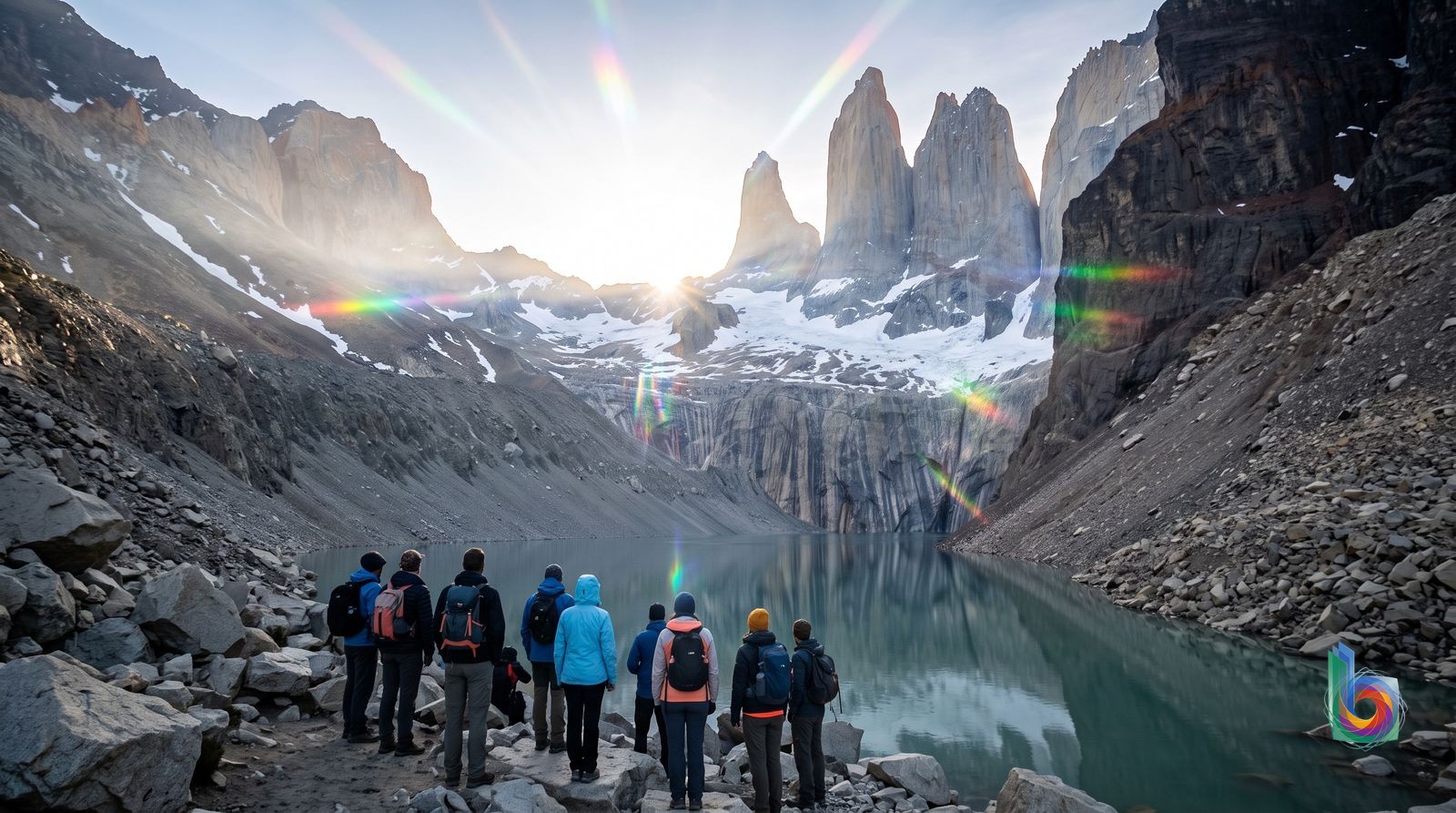
The most reliable period for the W, O and day hikes, with the fullest transport, catamaran and refuge/campsite operations. December–February is warmest, but January typical highs are still below 16°C and strong wind is routine. November and March are the best overall compromise; March is not secret or empty.
December–February is the peak: refugios, campsites, buses and boats can sell out well ahead, especially on the W. Wind, rain, intense sun and sharp temperature shifts remain possible in a single day.
April (autumn shoulder)
A quieter transition month with autumn conditions, shorter days and wetter weather. Park buses are reduced to one daily departure/return, so transport timing matters more than in summer.
It is increasingly easy to lose a day to weather or a missed connection; build slack into every itinerary. This is not the month to depend on a tight final-hike, catamaran and bus connection.
Peak summer trekking season · December–February
This is the busiest and warmest stretch. W Trek beds and campsites are the critical sell-out and should be secured roughly 3–6 months ahead before buying transport; reserve the Pudeto–Paine Grande catamaran and Grey II boat ahead when they are integral to the itinerary.
Shoulder-season bus timetable reduction · Usually April and September
Public service between Puerto Natales and the park drops to one daily departure and return. A missed bus, catamaran or shuttle can mean an overnight delay, so buy the return with the outbound where possible and leave substantial timing margin.
Winter transport shutdown and Circuit back-side closure · May–August for public buses; the O Circuit back side is closed May–October
Public buses generally do not operate in winter, while the Circuit cannot be completed via its back country. Snow and ranger closures can also affect Base Torres and Valle Francés, requiring private logistics and flexible plans.
Walking and trekking
All W and O Circuit sectors: Base Torres from Las Torres / Laguna Amarga; the Francés Valley and Los Cuernos; Paine Grande to Grey; and Dickson on the O Circuit.
Once you leave a roadhead or ferry, walk is the transport system. Build stages around confirmed refugio/campsite bookings, carry weatherproof layers and food, and check CONAF trail status each morning.
Walking stops being a practical link across the road-served park: Lago Sarmiento & Eastern Steppe, Río Serrano and Pudeto are far too spread out to connect on foot. Winter snow can close Francés Valley and the northern O Circuit; do not treat a signed trail as an all-weather route.
Puerto Natales–park scheduled bus
Car-free visitors making a day trip or starting/ending a W Trek via Laguna Amarga and Pudeto.
Book from Puerto Natales bus terminal, ideally buying the outbound and return together. Services normally call at Laguna Amarga and continue to Pudeto for the Paine Grande catamaran; allow roughly two hours each way from Puerto Natales.
This is not an internal park bus network. It works well for Laguna Amarga and Pudeto, but poorly or not at all for Río Serrano, Lago Sarmiento & Eastern Steppe, and Grey’s road approach. In April and September departures can drop to one daily service; public buses generally do not run May–August, and there is no late-night fallback.
Laguna Amarga–Hotel Las Torres shuttle
Base Torres hikers and guests staying around Las Torres / Laguna Amarga who arrive by the Puerto Natales bus.
Connect at Laguna Amarga for Hotel Las Torres and the nearby trailhead/refugio area. Carry cash as backup; the published one-way fare is CLP 3,000, and on-site payment has been reported as cash-only.
It is a narrow connector, not a park-wide shuttle. It will not solve transport to Pudeto, Paine Grande, Río Serrano or Grey, and it does not run on your hiking timetable—missing the connection can cost a valuable early start.
Pudeto–Paine Grande catamaran
W trekkers heading to or from Paine Grande, Grey Glacier and the Francés Valley; also worthwhile for the classic Lago Pehoé crossing and views.
Use Hielos Patagónicos’ catamaran from Pudeto to Refugio Paine Grande. Check the current seasonal timetable and reserve ahead when the crossing anchors your trek; coordinate it closely with the Puerto Natales bus.
Paine Grande has no road access once you cross. Wind and schedule disruption can make the exposed wait at Pudeto unpleasant, and a missed boat can unravel a W itinerary—especially if it also means missing the last bus back to Puerto Natales.
Rental car
Independent road-based sightseeing: Salto Grande, Lago Pehoé/Pudeto, Laguna Azul, Lago Sarmiento & Eastern Steppe, and lodge stays in Río Serrano.
Collect in Puerto Natales, fuel there before entering the park, and use it to link viewpoints and trailheads at your own pace. It is particularly useful for wildlife and landscape stops in the eastern steppe.
A car is poor value for a consecutive W or O: it will be parked at the wrong trailhead while you are days away on foot. It cannot reach Paine Grande, Los Cuernos, Francés Valley, Refugio Grey or Dickson, and fuel/services are sparse beyond Puerto Natales.
Lodge transfer or organized excursion
Río Serrano guests, families and travelers who want western scenery or steppe wildlife without driving; also useful when a fixed lodge itinerary includes transfers.
Arrange through your lodge or a reputable Puerto Natales operator before arrival. This is the sensible substitute for self-driving in Río Serrano and the Lago Sarmiento approaches, where public transport is thin.
It is expensive and less flexible than a rental car. It does not create an on-demand network: transfers to the east-side Base Torres sector take time, and there is no reliable late-night taxi, Uber or rescue ride inside the park.
Safety: Treat every hike as an exposed mountain outing: check CONAF’s daily trail status, carry windproof/waterproof layers, sun protection, food, water and navigation, and leave enough margin not to miss the last boat or bus.
Book before you land
Researched Nov 27, 2026