
First visit? Stay in Puerto Natales Centre & Waterfront.
For a first visit, Puerto Natales is the least brittle choice: it has the buses, food shops, gear stores, restaurants and booking backup that the park itself lacks. It works especially well for guided or self-arranged day trips while you learn what weather and trail conditions will allow. The trade-off is substantial road time to the park; switch to Las Torres / Laguna Amarga if the Base Torres hike is the trip’s non-negotiable objective.
luxury →
The strongest choice for lodge comfort, guided excursions and west-side scenery without sleeping in a shared refugio. It is isolated and expensive, but better suited to a high-comfort park stay than the trek-focused Paine Grande sector.
value →
Town accommodation, supermarkets and the ability to use regular park buses make this the practical budget base. It saves on lodge costs, though not on the time required for park transfers.
family →
A reserved stay near Hotel Las Torres, Refugio Central/Torres or Camping Central gives families direct access to the signature east-side trails and avoids a dawn transfer from Puerto Natales. It only works if accommodation is booked well ahead and everyone is comfortable with limited evening choice.
nightlife →
Torres del Paine has no meaningful nightlife district; Puerto Natales is simply the only base with a real choice of restaurants, bars and people out after an excursion. Expect a small working gateway town, not a late-night scene.
quiet →
Choose this for open steppe, wildlife, big skies and a quieter lodge setting away from the W Trek bottlenecks. You need a car, lodge transfer or tour, and should accept that services and close-up mountain drama are limited.
rail-day-trips →
There is no rail network serving Torres del Paine, so this is the closest equivalent to a transport base: buses, tours and transfer operators are concentrated here. Do not choose it expecting train-based day trips.
return-visitor →
For travelers who have already done the Towers-facing highlights, an overnight near Grey provides a more remote glacier-focused experience. It requires advance boat or trekking logistics and has virtually no fallback services.
Avoid sleeping near Lago Pehoé / Pudeto: Do not book it as though it were a normal hotel district. Pudeto is a spectacular but exposed ferry junction with thin services; a missed or weather-disrupted catamaran can unravel an itinerary, and there is no town-like supply or dining backup.
Avoid sleeping near Paine Grande: Excellent as a necessary W Trek overnight, poor as a relaxed standalone base. It is communal, often noisy, exposed to wind and dependent on the Pudeto ferry; sleep here for a booked trekking stage, not for flexibility or comfort.
Avoid sleeping near Dickson & the Northern O Circuit: This is not an independent sightseeing base at all. It is a remote, reservation-dependent O Circuit stop reached on foot, with difficult weather and no practical escape route for travelers who discover they dislike the itinerary.
Avoid sleeping near Los Cuernos / Francés Valley: Worth sleeping in only when it fits a confirmed W Trek stage. There is no road access, no alternative restaurant or lodging market, and booking gaps can create punishing pack-carrying days rather than a scenic, easy stay.
The neighborhoods
Pick the areas you want to be around — the hotels and tables below narrow to them.
Stay here Fine base Visit, don't sleep
Puerto Natales Centre & WaterfrontFirst-timer default
Practical gateway, real town, windy waterfront
Puerto Natales is the sensible logistics base rather than part of the wilderness experience: a compact Patagonian town with supermarkets, gear shops, restaurants and the waterfront. It is where independent travelers can sort food, reservations and buses before or after the park, and it gives non-hikers a more forgiving trip than committing to an isolated lodge.
Vs. others: Pick Puerto Natales Centre & Waterfront over Las Torres / Laguna Amarga if you need restaurant and supply choice plus flexible park day trips; pick Las Torres / Laguna Amarga if the Base Torres hike is your priority and you want to avoid a long transfer before dawn.
This is the regional transport hub for buses into the park, including services toward Laguna Amarga; there is no rail network. Within town, the centre and waterfront are walkable, but the national park is not—allow a substantial road transfer and arrange park transport or a tour.
Best for: first-timers, value, families, foodies
It is outside the park, so every park day begins and ends with road time. · The waterfront can be brutally windy and the town is functional rather than scenic enough to replace time in the park. · Popular departures can make early mornings and gear-shop areas busy.
See hotels in Puerto Natales Centre & WaterfrontLas Torres / Laguna AmargaExcellent base
Base Torres access, booked-in wilderness lodging
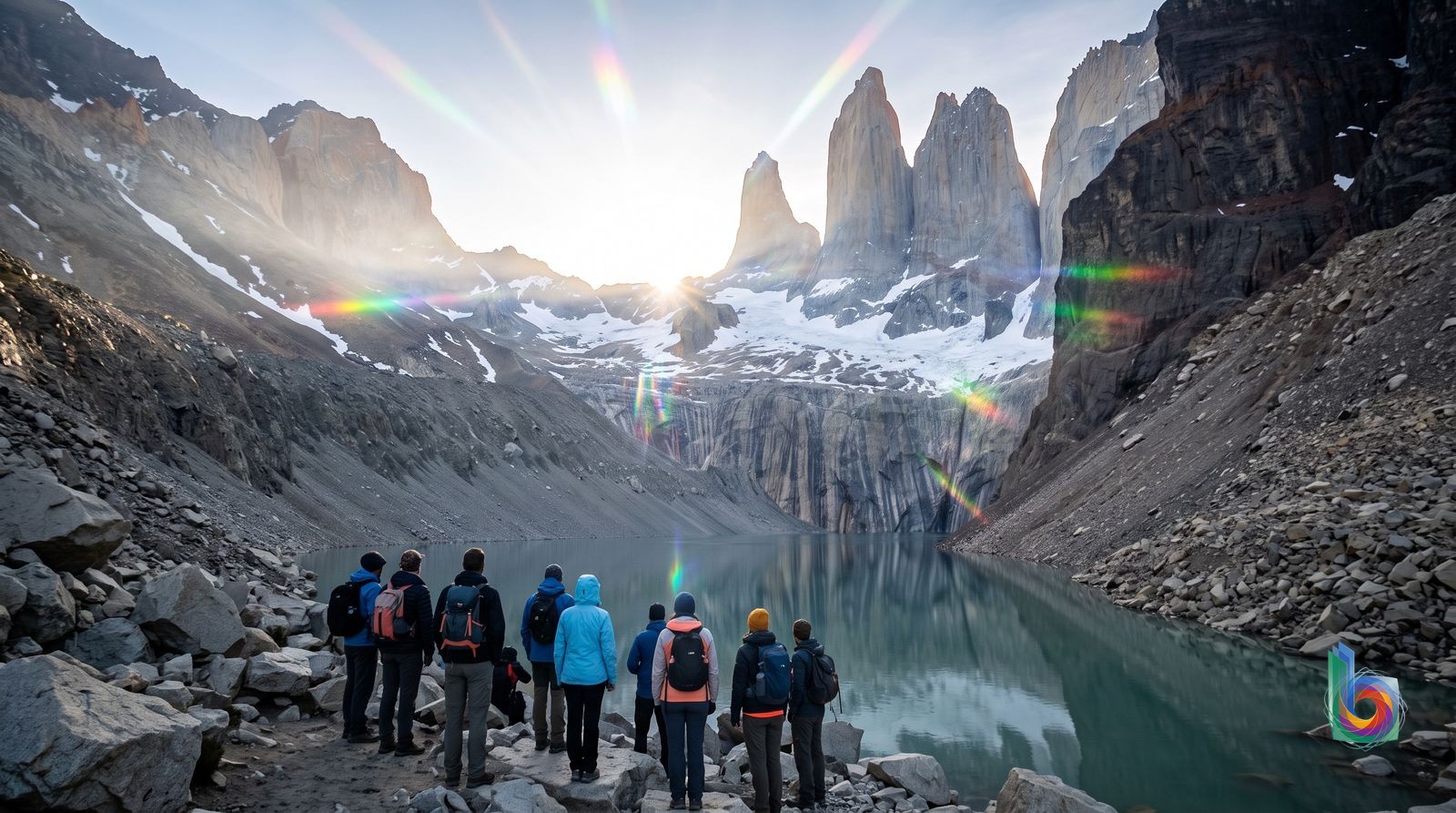
This is the east-side trailhead zone for the park’s signature Base Torres walk: Hotel Las Torres, Refugio Torres/Central, Camping Central and the former refugio facilities at Chileno are the practical names travelers use. It is a hiking base, not a village; once you have checked in, your days are governed by weather, trail status and reservations.
Vs. others: Pick Las Torres / Laguna Amarga over Puerto Natales Centre & Waterfront if a very early Base Torres start matters more than town convenience; pick Puerto Natales if you want flexible dining, supplies and day-trip options.
Buses reach the Laguna Amarga entrance from Puerto Natales, and a connecting van runs between Laguna Amarga and Hotel Las Torres. The Base Torres trail is on foot from the hotel/refugio area; there is no internal metro or town-style shuttle network.
Best for: first-timers, families, luxury, hikers
Accommodation and campsites need advance reservation; this is not a place to arrive and improvise. · The Base Torres route is among the park’s most crowded hikes in peak season. · Wind, rain and snow closures can undo a carefully planned summit-view day.
See hotels in Las Torres / Laguna AmargaRío SerranoExcellent base
Comfortable west-side lodge country
Río Serrano is the developed gateway west/southwest of the massif, around the Serrano River and park approach road. It suits travelers who want a lodge-based stay, guided excursions and the feeling of being near the park without sleeping in a shared refugio; it is less useful for independently linking the W Trek day by day.
Vs. others: Pick Río Serrano over Las Torres / Laguna Amarga if you want lodge comfort and western park scenery; pick Las Torres / Laguna Amarga if the Towers trail is the non-negotiable centerpiece.
Road access is the reality here: use a rental car, lodge transfer or organized excursion. It is not walkable to the park’s headline hikes, and public-transport frequency is far thinner than at Laguna Amarga.
Best for: luxury, families, quiet, return-visitors
It is isolated once you are there; there is no town strip to wander for alternative meals or supplies. · Transfers to the east-side Towers trail take time. · Lodge-based travel can be expensive and less flexible than staying in Puerto Natales.
See hotels in Río SerranoLago Pehoé / PudetoAcceptable base
Iconic views, ferry junction, little settlement
Pudeto and the shores of Lake Pehoé are an essential scenic stop rather than a conventional neighborhood. This is where broad massif views, lake weather and the catamaran connection make the park feel cinematic; it is also a transport choke point for W trekkers heading to Paine Grande.
Vs. others: Pick Lago Pehoé / Pudeto over Río Serrano for the most immediate Paine-massif views and Paine Grande access; pick Río Serrano if you need a comfortable, dependable sleep base rather than a transit stop.
The key connection is the Hielos Patagónicos catamaran from Pudeto to Refugio Paine Grande; schedules and sailings matter. Road visitors can stop at Pudeto, but the main hiking network beyond it is reached by ferry or on foot, not by local transport.
Best for: first-timers, photographers, hikers, families
Wind can make waiting at the ferry landing cold and unpleasant. · Services are limited; do not treat it as a town with backup dining or shopping. · A missed or disrupted boat connection can seriously affect a W Trek itinerary.
See hotels in Lago Pehoé / PudetoPaine GrandeExcellent base
W Trek crossroads, communal and exposed
Paine Grande is the western hub of the W Trek, centered on its large refugio and campsite after the Pudeto crossing. It is strategically excellent for walking toward Grey or the Francés Valley, but it is a busy shared-accommodation stop with a functional trekking atmosphere—not a peaceful lake retreat.
Vs. others: Pick Paine Grande over Los Cuernos / Francés Valley if you want the W Trek’s best junction for Grey and the Francés Valley; pick Los Cuernos / Francés Valley if you prefer to sleep farther east and reduce backtracking toward the Towers.
Reach it by catamaran from Pudeto, then continue solely on foot along the W routes. The refuge has lodging, food and a large campsite, but there is no road access or casual shuttle once across the lake.
Best for: hikers, value, return-visitors
It can feel crowded and noisy because so many W trekkers converge here. · The site is exposed to Patagonia’s wind and rapidly changing weather. · Reservation availability—not personal preference—often determines whether you can sleep here.
See hotels in Paine GrandeGrey Glacier / Refugio GreyAcceptable base
Glacier drama, remote overnight stop
The Grey sector delivers the park’s close glacier experience: ice, lake, forest and the end of the western W route. Refugio Grey is useful and atmospheric for trekkers, while visitors arriving by boat get a concentrated glacier outing; neither experience resembles a flexible hotel district.
Vs. others: Pick Grey Glacier / Refugio Grey over Paine Grande if glacier time and a more remote overnight are worth the extra leg; pick Paine Grande if you need the W Trek’s more useful transport and trail junction.
On foot, Grey links to Paine Grande; by water, the Grey II operates between Hostería Lago Grey and Refugio Grey and requires advance booking. Do not assume a road runs to the refugio.
Best for: hikers, return-visitors, photographers, quiet
Boat transport is costly and must be booked ahead. · Weather can make the sector feel more punishing than its map distance suggests. · Food, beds and supplies are limited to the refugio operation, with no alternatives nearby.
See hotels in Grey Glacier / Refugio GreyLos Cuernos / Francés ValleyExcellent base
Heart of the W, hard-earned scenery
This is the central-eastern overnight sector of the W: Refugio Los Cuernos, its campsite and cabins, plus the route into the Francés Valley. It is the best place to sleep when the itinerary calls for mountain scenery rather than transport efficiency, but it is still an on-foot, reservation-led stop rather than a district for casual exploration.
Vs. others: Pick Los Cuernos / Francés Valley over Paine Grande if you want an eastern W overnight and access toward the Francés Valley; pick Paine Grande if ferry connectivity and a direct line toward Grey matter more.
Access is by hiking from Paine Grande or the Las Torres side; there is no road shuttle to the refugio. Los Cuernos has refugio beds, camping and cabins, while the Francés Valley itself is a hiking destination.
Best for: hikers, photographers, return-visitors, quiet
It is a demanding place to reach with a full pack, not an easy scenic stop. · Reservations can force awkward W Trek stage lengths. · The Francés Valley can be closed in winter because of snow, even when other sectors seem manageable.
See hotels in Los Cuernos / Francés ValleyLago Sarmiento & Eastern SteppeAcceptable base
Guanacos, open skies, fewer services
The park’s eastern approaches around Lake Sarmiento are the place to see the broad Patagonian steppe rather than to chase the Towers or glaciers. Expect long views, guanacos and a sense of space; it works particularly well as a driving or guided wildlife-and-landscape sector, with isolated lodge accommodation rather than a walkable center.
Vs. others: Pick Lago Sarmiento & Eastern Steppe over Las Torres / Laguna Amarga if wildlife, open landscapes and a quieter lodge setting matter more than direct access to the Base Torres trail; pick Las Torres for the classic hike.
This is road territory, best handled by car, lodge transfer or a guided excursion. It is not linked by a frequent internal shuttle system, and distances are too large for practical walking between sights.
Best for: quiet, families, photographers, return-visitors
The exposed steppe amplifies wind and sun. · It is easy to underestimate driving distances and the lack of services. · The scenery is subtle compared with the Towers and Grey Glacier, so it can disappoint travelers expecting constant close-up drama.
See hotels in Lago Sarmiento & Eastern SteppeDickson & the Northern O CircuitVisit, don't sleep
Remote circuit country, not casual touring
Dickson is a remote northern stop on the full Paine Massif Circuit, with Refugio Vértice Dickson, camping and views into a wilder, less visited side of the park. It is rewarding precisely because it is difficult to reach—but it makes no sense as a conventional Torres del Paine base.
Vs. others: Pick Dickson & the Northern O Circuit over Grey Glacier / Refugio Grey only if you are committed to the full O Circuit and want the park’s remote northern side; pick Grey for a glacier-focused experience with far simpler access.
Dickson is reached on foot as part of the O Circuit; it is not served as an independent road-based sightseeing base. The northern/backside circuit between Laguna Amarga and Refugio Grey closes in winter (May–October), and all overnight arrangements should be reserved.
Best for: hikers, quiet, return-visitors
It is logistically unsuitable for most short visits. · Weather and distance leave little room to repair a bad itinerary decision. · The John Gardner Pass on the circuit is notably difficult in temperamental weather.
See hotels in Dickson & the Northern O Circuit