- Pace
- Use one hotel base; changing hotels inside Prague is needless friction. Four nights is the proper first visit, covering the historic essentials plus two or three non-core districts; six or seven nights lets you add parks, museums, food and neighbourhood time without turning the trip into monument collection. Vinohrady is the best all-round first base, Karlín suits contemporary food and easy transport, and Malá Strana trades convenience for atmosphere, hills and higher prices.
- When to go
- April–May and September–October are Prague’s best windows: enough daylight for long walks, tolerable temperatures and less pressure than peak summer, though May is busy around holidays and the Prague Spring festival. Summer is lively but crowded and expensive in the Castle–Charles Bridge–Old Town corridor; use early starts and spend afternoons in parks and outer neighbourhoods. Winter is good value for museums, concerts and cafés, except the late-November-to-early-January Christmas-market spike, when central rooms and weekends become expensive.
- Daily budget
- CZK 4,000–6,500
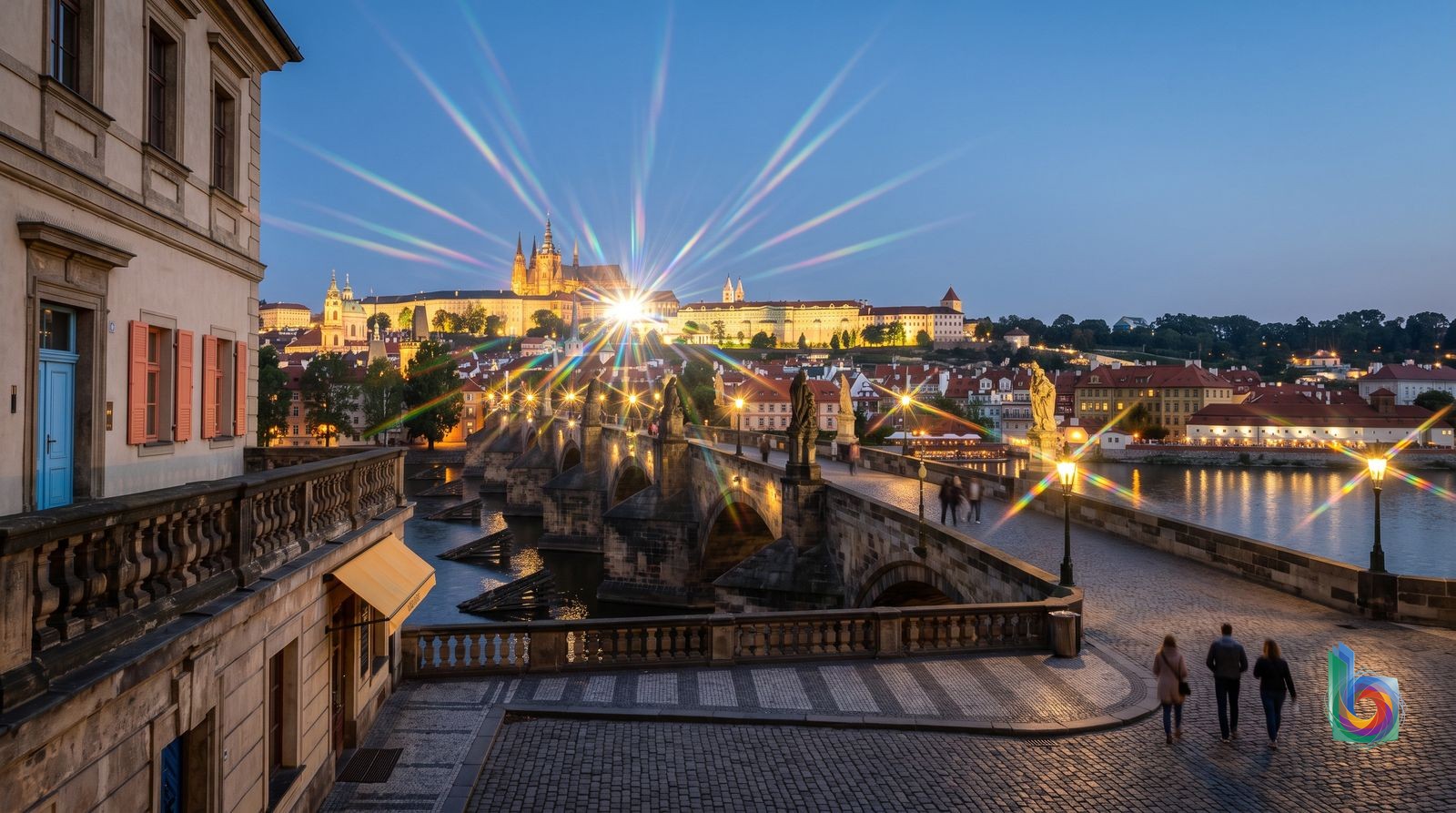
Prague is a river-cut Central European capital where medieval royal streets, Habsburg boulevards, Jewish history, Communist-era fabric and a genuinely lively contemporary food-and-design scene sit in one compact, hillier-than-it-looks city. It is best treated as a city break rather than a wider touring region: stay in a lived-in district, use the historic core early, and spend the rest of the trip in neighbourhoods, parks, pubs, museums and along the Vltava.
Known for
- Prague Castle and St Vitus Cathedral
- Charles Bridge and the Old Town astronomical clock
- Josefov and Prague’s Jewish heritage
- Art Nouveau, baroque and medieval architecture
- Classical music, theatres and concert culture
- Beer halls, Czech cooking and chlebíčky
Where to go
Staré Město and Josefov
1Short stop · 1 day
Staré Město and Josefov
Prague’s medieval core and Jewish Quarter pack the Astronomical Clock, Charles Bridge approaches, Old Jewish Cemetery and major synagogues into a small, crowded area. Start early: by late morning the lanes are a bottleneck.
first-timershistory-focused travelersarchitecture lovers
Explore Staré Město and Josefov Hradčany, Prague Castle and Malá Strana
2Hradčany, Prague Castle and Malá Strana
Short stop · 1 day
The Castle, St Vitus, palace courtyards and baroque lanes below it make Prague’s strongest architectural sequence. It is steep, busy and worth tackling in the morning rather than trying to squeeze in after lunch.
first-timersarchitecture loversphotographers
Nové Město
3Nové Město
Short stop · 1 day
New Town is the place for Wenceslas Square, the National Museum, theatres and Prague’s modern political history. It is more useful than picturesque, but gives the city needed context beyond the medieval postcard.
museum-goerstheatre loversdesign-minded travelers
Vinohrady and Vršovice
4Vinohrady and Vršovice
Short stop · 1 day
Leafy residential streets, cafés, wine bars and reliably better everyday dining than the Old Town make this the best antidote to sightseeing overload. It is also one of Prague’s smartest bases if you want direct transport without sleeping in the crush.
foodiescouplesrepeat visitors
 5
Karlín
Short stop · 1 day
A rebuilt former-industrial quarter with some of the city’s strongest coffee, restaurants and contemporary design, plus easy metro access. Choose it for current Prague, not for medieval scenery outside your door.
foodiesdesign travelersrepeat visitors
Letná and Holešovice
6Letná and Holešovice
Short stop · 1 day
Come for Letná’s broad city views, contemporary art around the Trade Fair Palace, and Holešovice’s studios and former-industrial texture. It is spread out, so treat it as a wandering day rather than a monument checklist.
art loversdesign travelersfamilies
Vyšehrad, Nusle and Podolí
7Vyšehrad, Nusle and Podolí
Short stop · 1 day
Fortifications, cemetery, river views and a slower southern stretch make this the right reset after the Castle–Old Town circuit. It works as a half-day hill-and-river walk, not as a substitute for Prague Castle on a first trip.
walkersrunnersfamilies
 8
Žižkov
Short stop · 1 day
Žižkov is denser, rougher-edged and more beer-oriented than polished central Prague, with the TV Tower looming over independent pubs and bars. Use trams for the uphill return rather than pretending the climb is charming.
nightlife seekersbudget travelersbeer lovers
Troja and Stromovka
9Troja and Stromovka
Short stop · 1 day
This northern green pocket combines the zoo, botanical garden, Troja Château, vineyards and Stromovka park. Save it for good weather, children, or a stay long enough to leave the centre without guilt.
familiesgarden loversoutdoor travelers
 10
Smíchov
Smíchov is a practical west-bank base with river access, transport, brewery history and easy approaches to Petřín. Stay on a quieter street near the river or lower slopes; the Anděl mall zone is functional, not atmospheric.
familiesvalue-conscious travelerspractical bases
Don't miss
1
Prague CastleCastle and Lesser Town
This is the essential hilltop complex for understanding Prague’s royal and civic center, rather than a single building to rush through. Enter early, choose a circuit that includes the cathedral and old palace, then continue downhill through Lesser Town.
2
Prague Astronomical ClockOld Town and Josefov
It is Prague’s most recognizable piece of public medieval theater, best treated as a stop within an Old Town walk rather than a destination requiring much time. Watch it once from the square, then use the Town Hall tower if you want the more rewarding view over the roofs.
3
Charles BridgeCastle and Lesser Town
The bridge is the indispensable walking connection between the Old Town and the castle side, with the route itself being the point. Cross it at a quiet hour, then return to it after dark for the atmosphere and river views.
4
Old Town SquareOld Town and Josefov
This is the central orientation point for a first visit: it puts the clock, Town Hall, church spires and Old Town lanes in immediate context. Visit at different times of day, but do not spend the whole day here; use it as the anchor for walks into Josefov and toward the river.
5
St. Vitus CathedralCastle and Lesser Town
The cathedral provides the visual and spiritual center of Prague Castle, with an interior that repays more attention than the quick photo stop many visitors make. See it as part of the castle circuit and take time to look at the chapels, tombs and views from the surrounding precinct.
6
Jewish Museum in PragueOld Town and Josefov
The synagogues, cemetery and exhibitions form the most important introduction to Prague’s Jewish quarter and its layered history. Give the combined route unhurried time, and do not try to squeeze it between unrelated Old Town sights.
Getting your bearings
Pins are the top attractions, ranked by the corner badge — click one for details.
The mental map
Think in riverbanks and neighbourhoods rather than separate regions. The historic core spans the Vltava: Castle, Malá Strana and Smíchov on the west bank; Old Town, Josefov and New Town at the centre; Vinohrady, Žižkov and Karlín to the east; Letná, Holešovice and Troja to the north; and Vyšehrad, Nusle and Podolí in the quieter south. The centre is walkable, but cobbles and hills make trams and the metro essential for Castle Hill, Petřín, Letná and Vyšehrad.
When to go
April–May and September–October are Prague’s best windows: enough daylight for long walks, tolerable temperatures and less pressure than peak summer, though May is busy around holidays and the Prague Spring festival. Summer is lively but crowded and expensive in the Castle–Charles Bridge–Old Town corridor; use early starts and spend afternoons in parks and outer neighbourhoods. Winter is good value for museums, concerts and cafés, except the late-November-to-early-January Christmas-market spike, when central rooms and weekends become expensive.
Pacing a visit
Use one hotel base; changing hotels inside Prague is needless friction. Four nights is the proper first visit, covering the historic essentials plus two or three non-core districts; six or seven nights lets you add parks, museums, food and neighbourhood time without turning the trip into monument collection. Vinohrady is the best all-round first base, Karlín suits contemporary food and easy transport, and Malá Strana trades convenience for atmosphere, hills and higher prices.
Book before you land
Prague Spring International Music Festival headline concerts (mid-May to early June) · High-demand classical concerts, opera and ballet performances on Friday/Saturday evenings or during major festival dates · Destination restaurants and tasting-menu restaurants, especially Friday and Saturday dinner
Getting in
PRGVáclav Havel Airport Prague
The obvious gateway for most international arrivals, about 17 km west of the centre. There is no rail link directly from the terminal: use the Airport Express bus to Praha hlavní nádraží, trolleybus/bus connections to Metro A, or a taxi/ride-hail; allow roughly 35–60 minutes to a central hotel.
Praha hlavní nádraží (Prague Main Station)
The principal rail gateway for arrivals from Vienna, Berlin, Dresden, Bratislava, Budapest and elsewhere in Czechia. It is central, on Metro C, and especially convenient for bases in New Town, Vinohrady and Karlín.
Praha Florenc bus station
The main long-distance coach hub, used by RegioJet, FlixBus and other services from Central European cities and Prague Airport alternatives. It sits between Karlín and the centre, with Metro B and C connections.
Before you go
Questions worth settling
How many days do I need for a first trip to Prague?
Plan four nights for the essential first visit: Staré Město and Josefov, Prague Castle and Malá Strana, plus time in Nové Město and two or three lived-in districts. Stay six or seven nights if you also want museums, parks, food, concerts and slower days in places such as Vinohrady, Karlín, Letná or Vyšehrad.
Where should I stay in Prague?
Use one hotel base rather than changing districts. Vinohrady is the best all-round first base, Karlín suits contemporary food and easy transport, and Malá Strana is atmospheric but hillier and generally pricier; central Nové Město is also highly practical.
Should I stay in Old Town Square or combine Prague with other towns?
Treat Hlavní město Praha as a compact city break, not a touring region: its districts are better combined from one Prague hotel base. Old Town Square is convenient but noisy, crowded and surrounded by mediocre tourist dining; sleep instead in Vinohrady, Karlín, Malá Strana or central Nové Město, then visit Staré Město and Josefov early.
Do I need a visa for Czechia?
Czechia is in the Schengen Area. Citizens of the US, Canada, UK, Australia, New Zealand, Japan and many other visa-exempt countries can generally stay up to 90 days in any rolling 180-day Schengen period, while many other nationalities need a Schengen visa; verify current requirements with the Czech Foreign Ministry and EU travel portal before travel.
Do I need a car, and how do I get around Prague?
Do not rent a car: parking is costly, driving is slow, and Prague works best by walking, tram and metro on the integrated PID network. Use trams or the metro for Prague Castle, Petřín, Letná and Vyšehrad, where cobbles and gradients make walking slower than it looks.
What is the best time of year to visit Prague?
April–May and September–October are the best overall windows for walking, daylight and manageable crowds, although May gets busy around holidays and the Prague Spring festival. Summer is lively but crowded and expensive in the Castle–Charles Bridge–Old Town corridor, while winter is good for museums and concerts except the late-November-to-early-January Christmas-market rush.
What should I book ahead?
Book Prague Spring International Music Festival headline concerts well ahead, especially for the mid-May to early-June festival period. Also reserve sought-after classical concerts, opera or ballet on Friday and Saturday evenings, and destination or tasting-menu restaurants for Friday and Saturday dinner.
Known for
- Prague Castle and St Vitus Cathedral
- Charles Bridge and the Old Town astronomical clock
- Josefov and Prague’s Jewish heritage
- Art Nouveau, baroque and medieval architecture
- Classical music, theatres and concert culture
- Beer halls, Czech cooking and chlebíčky