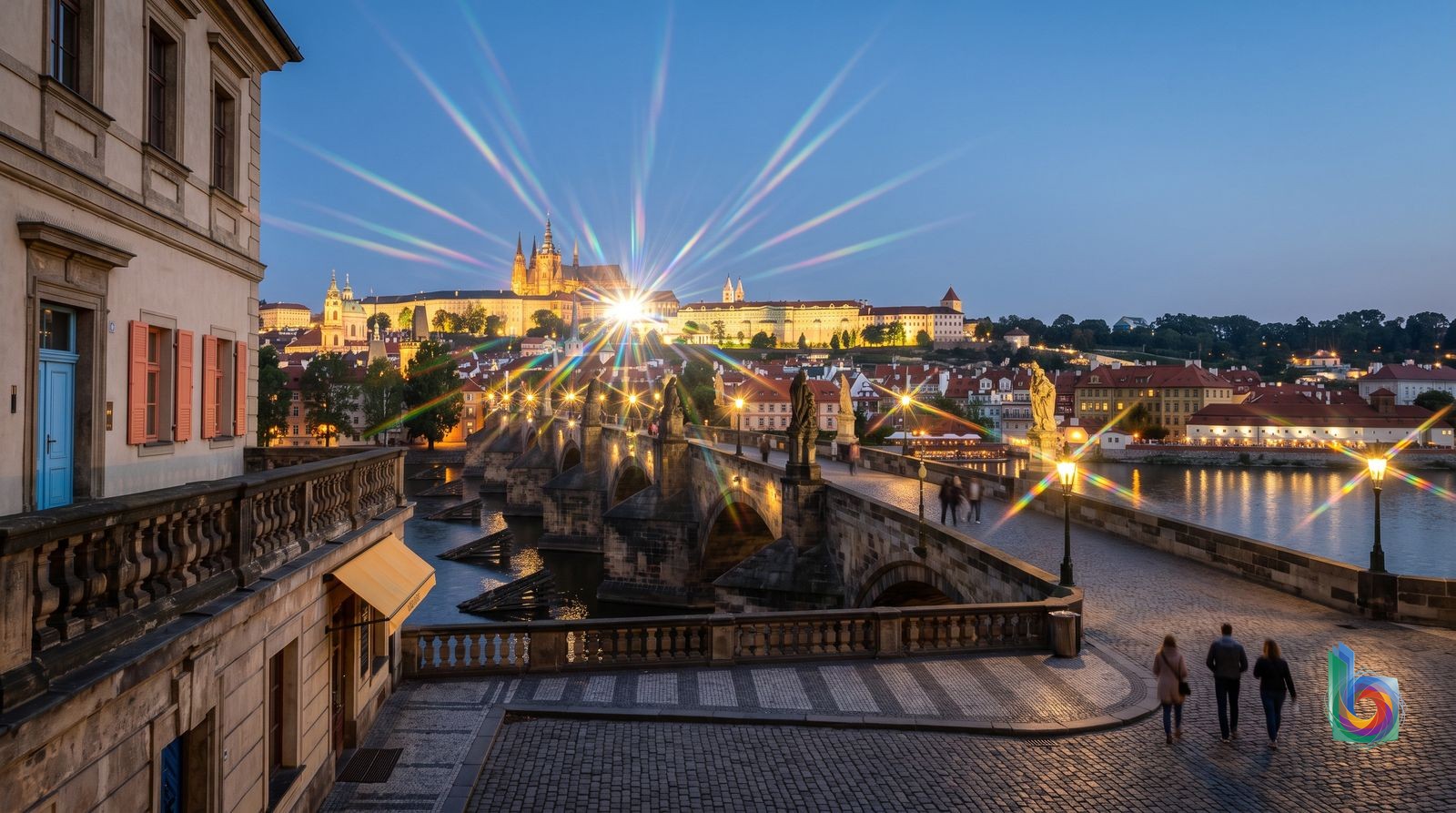
Visas & entry
Czechia is in Schengen. Citizens of the US, Canada, UK, Australia, New Zealand, Japan and many other visa-exempt countries can generally stay up to 90 days in any rolling 180-day Schengen period; many other nationalities need a Schengen visa. Passport-validity, EES and future ETIAS requirements are moving targets—verify with the Czech Foreign Ministry and EU travel portal immediately before travel.
Getting in
- Václav Havel Airport Prague: The obvious gateway for most international arrivals, about 17 km west of the centre. There is no rail link directly from the terminal: use the Airport Express bus to Praha hlavní nádraží, trolleybus/bus connections to Metro A, or a taxi/ride-hail; allow roughly 35–60 minutes to a central hotel.
- Praha hlavní nádraží (Prague Main Station): The principal rail gateway for arrivals from Vienna, Berlin, Dresden, Bratislava, Budapest and elsewhere in Czechia. It is central, on Metro C, and especially convenient for bases in New Town, Vinohrady and Karlín.
- Praha Florenc bus station: The main long-distance coach hub, used by RegioJet, FlixBus and other services from Central European cities and Prague Airport alternatives. It sits between Karlín and the centre, with Metro B and C connections.
Getting around
Do not rent a car for Prague: parking is costly, driving is slow, and the centre is built around trams, walking and public transport. Use the integrated PID system—metro for longer jumps, trams for neighbourhood-to-neighbourhood travel, and buses mainly for outer districts; tickets cover all three, plus suburban rail and ferries. The historic core is walkable but not flat: take trams or the metro for Castle Hill, Petřín, Letná and Vyšehrad rather than burning hours on cobbles and gradients. A 72-hour PID ticket costs CZK 340 in the Lítačka app in 2026.
Money
The currency is the Czech koruna (Kč/CZK), not the euro. Cards and contactless payment work almost everywhere, but carry some cash for small purchases, markets and the occasional old-school pub; use bank ATMs and decline poor exchange-rate conversion offers. Service is not automatically included: round up for casual service or leave roughly 5–10% for good sit-down service, preferably in cash or by stating the total before the card payment is processed.
Daily budget · CZK (Czech koruna; use Kč locally, not euros).
- Value
- CZK 2,000–3,200
- Mid-range
- CZK 4,000–6,500
- High-end
- CZK 9,000–16,000+
- Bands exclude international transport and assume two people sharing a room.
- Value covers a hostel bed or simple outer-central room, bakery or market breakfasts, a Czech lunch menu, a pub dinner, public transport and a paid sight every day or two.
- Comfortable mid-range covers a well-located three- or four-star hotel shared between two, sit-down meals, drinks, transit with the occasional ride-hail, and one or two paid sights daily.
- High-end means a top central hotel, taxis, serious contemporary or tasting-menu dining, premium concert seats, private guides and liberal spending.
- Accommodation is the main variable. Old Town and the Castle side cost markedly more than Vinohrady, Karlín or Smíchov; summer and Christmas-market weekends push rates higher.
- Spend intelligently: keep one base one or two tram or metro stops outside Old Town, use the integrated PID network, and eat a Czech denní menu at lunch rather than every meal on the Royal Route.
Eating well
- Have at least one Czech lunch between roughly noon and 2pm: soup plus a denní menu main is often the city’s best-value proper meal.
- For dinner, leave Old Town and the Royal Route where possible; central historic-core restaurants require more filtering to avoid inflated generic menus.
- Reserve destination restaurants and Friday/Saturday dinners several days ahead.
- For ordinary pubs, arrive early, be ready to share a table, and do not assume the kitchen runs late in the American style.
- Use Kč/CZK, not euros, and treat trdelník—especially ice-cream-filled versions—as an optional sweet snack, not a Prague culinary essential.
- Malá Strana and Hradčany deliver atmosphere but rarely bargain dining; eat there for the setting, not for the best value.
Book before you land
- Stay in one hotel base. Vinohrady, Karlín, Malá Strana or central New Town are more practical than changing districts; Old Town Square is atmospheric but noisy, crowded and full of mediocre tourist dining.
- Validate or activate public-transport tickets correctly before travel, or use the Lítačka app. Ticket inspections are routine and fines are not worth gambling on.
- Avoid street exchange bureaux and Euronet-style ATMs where possible. Pay in CZK, not euros, and refuse dynamic currency conversion when a terminal or ATM offers it.
- Start Charles Bridge, Old Town and Prague Castle at opening time or late in the day. The Castle–Bridge–Old Town corridor becomes unpleasantly congested by late morning in peak season.
- Prague’s cobbles and hills are real. Wear shoes with grip, and use trams for the Castle, Petřín, Letná and Vyšehrad rather than treating them as quick walks.
- For better-value Czech food, seek a weekday denní menu at lunch and eat dinner in Vinohrady, Karlín, Žižkov, Holešovice, Smíchov or Nusle rather than choosing a picture-menu restaurant on the Royal Route.
Entry rules change — verify visa requirements for your passport before booking this region.
Season by season
December–February
Days are short, often grey and near or below freezing, with occasional snow but no guarantee of a winter wonderland.
Christmas and New Year bring high central-room rates and crowds; Prague Castle interiors close earlier from November through March, and its principal gardens close November–February.
March–May
March still needs a coat, April is changeable, and May is green, sociable and increasingly busy.
Easter, May public holidays and the Prague Spring festival lift demand; headline festival concerts need advance booking.
June–August
This is the warmest period, with long days, outdoor tables and full cultural programming, but showers and thunderstorms are routine rather than exceptional.
It is Prague’s busiest and most expensive season, especially around the Castle, Charles Bridge and Old Town; start major sights at opening time and escape the core by midday.
September–November
September is usually mild and lively, October is excellent for walking with fast-shortening days, and November is often damp, dark and atmospheric.
Weather deteriorates through November, and late November Christmas markets begin pushing up central prices and crowd levels.
Events worth planning around
Prague Christmas Markets · Usually late November to early January; exact dates vary by market. · Old Town Square, Wenceslas Square and Náměstí Míru
They make central Prague markedly busier and raise weekend hotel rates; book a central room early if visiting in Advent, or stay outside the core for better value.
Prague Spring International Music Festival · Usually mid-May to early June. · Concert halls across Prague
It materially tightens hotel and concert availability; reserve headline performances as soon as sales open rather than expecting good last-minute seats.
What to eat
Prague food is Bohemian and Czech rather than a separate capital cuisine: eat one proper denní menu lunch, then balance a beer-hall meal with the city’s strong contemporary restaurant, bakery and coffee scene. Seek Prague ham and chlebíčky specifically, but do not spend a week eating only dumplings and roast meat; Vinohrady, Karlín, Žižkov, Holešovice, Smíchov and Nusle are better dinner territory than the Royal Route.
Vinohrady and Vršovice: Wine bars and modern bistros. · Good everyday Czech cooking alongside café culture. · A strong choice for dinner away from the tourist core.
Karlín: Contemporary restaurants, specialty coffee and bakeries. · A reliable area for design-conscious, modern Prague dining.
Žižkov: Traditional beer halls, pubs and independent bars. · Unpolished, good-value drinking-and-snacking culture.
Holešovice: Contemporary dining, coffee and bakeries. · Good for a less central, creative-food scene.
Smíchov and Břevnov: Old-school pubs and brewery traditions. · Useful for classic Czech pub meals rather than destination fine dining.
Náplavka and Jiřího z Poděbrad (Jiřák): Farmers-market grazing, local snacks and seasonal produce. · Jiřák is the more neighbourhood-oriented stop; check seasonal schedules.