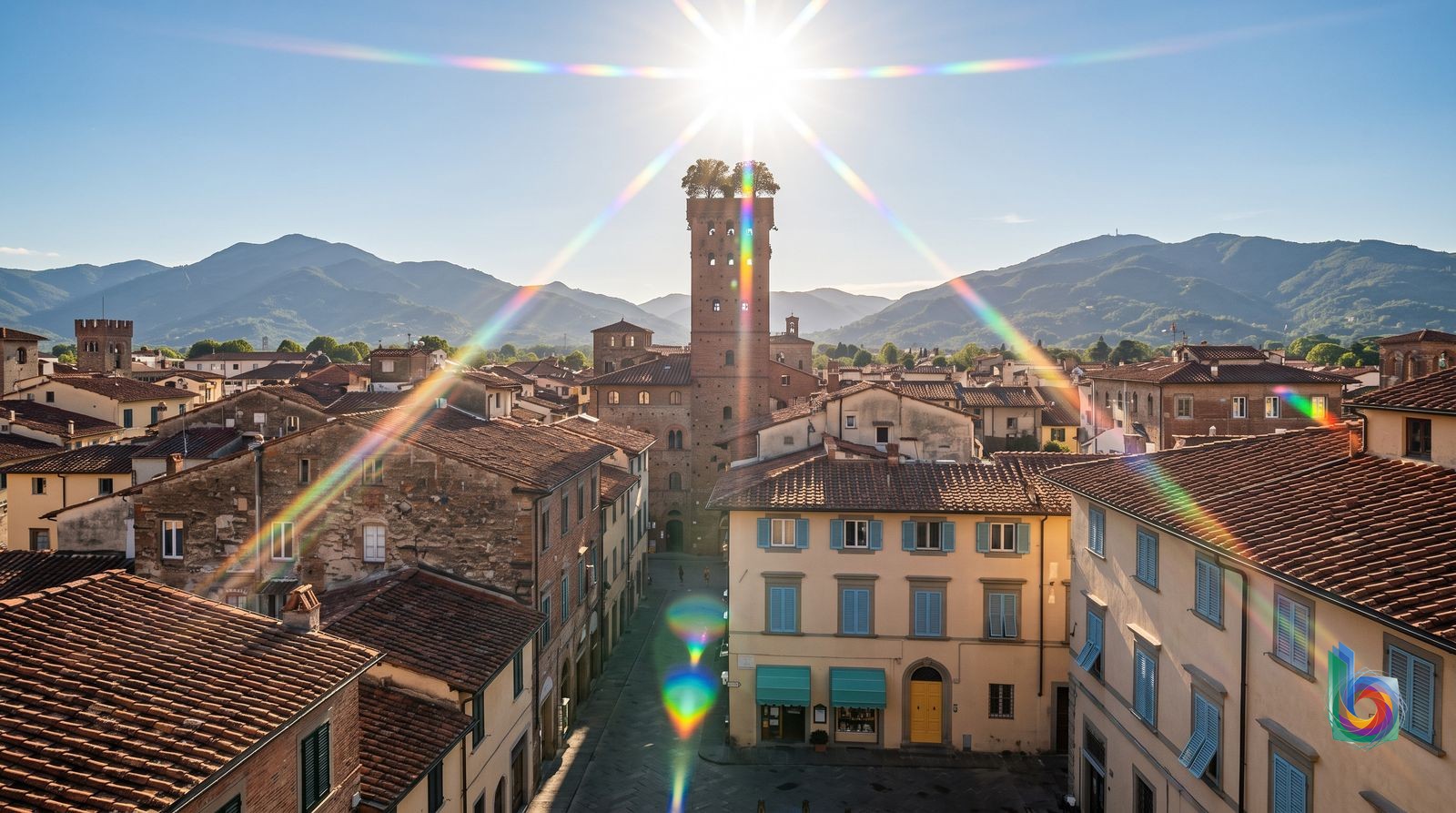
Season by season
January–March
Winter is quiet, with cooler weather, shorter daylight and a more local rhythm. It can be an appealing time for churches, cafés and uncrowded walks on the walls.
Some sights operate shorter hours or have seasonal closures; check individual opening days rather than assuming daily access.
April–June
Lucca’s most reliably pleasant season: comfortable walking weather and green, inviting city walls without high-summer heat.
Late June can overlap with the start of the Lucca Summer Festival, bringing concert-night crowds and tighter accommodation around Piazza Napoleone.
July–August
Hot, busy high summer. The walls remain enjoyable early and late in the day, but afternoons can be punishingly warm.
Heat, crowds and higher demand are the price. Lucca Summer Festival performances can take over Piazza Napoleone and surrounding streets; reserve beds early on concert dates.
September–October
The other standout period for a visit: generally comfortable walking weather, softer light and fewer heat-struck afternoons than summer.
Late October can cease to feel like shoulder season when Lucca Comics & Games approaches; rooms and transport tighten dramatically around the festival.
November–December
After the Comics & Games rush, Lucca returns to a calm, cooler late-autumn and early-winter rhythm. It suits indoor sights, cafés and quiet streets.
The long weekend around 1 November is the major exception: the centre becomes a packed convention city. Outside that period, expect short daylight and possible reduced or seasonal sight hours.
Events worth planning around
Lucca Summer Festival · Usually late June through July; individual concert dates vary.
A major headline-concert series centred on Piazza Napoleone. Concert nights make nearby streets busier and accommodation in or near the walls more competitive; book the specific act and lodging well ahead.
Lucca Comics & Games · Usually the late-October/early-November period, centred on the long weekend around 1 November.
This is the city’s most disruptive annual event for ordinary visitors: the whole historic centre fills, transport is under pressure, and accommodation can sell out months ahead. Buy day admission in advance if attending; avoid the dates if seeking a quiet Lucca break.
Puccini Festival at Torre del Lago · Usually July–August.
Held at Torre del Lago rather than in Lucca itself, but relevant for Lucca-based summer itineraries. Popular operas and weekend performances should be reserved before arrival.
Getting around
Walking
The default everywhere inside the walls: Via Fillungo & Piazza Anfiteatro, San Michele & Puccini Quarter, Guinigi Tower & Sant'Alessandro East, and the Cathedral/Southeast Walls. The old town is flat and can be crossed in about 20 minutes.
Walk from the station through Porta San Pietro; central piazzas are generally 15–20 minutes away. Use the 4 km City Walls circuit for orientation, a morning stroll or a run.
Walking becomes less convenient with heavy bags in Guinigi Tower & Sant'Alessandro East and the Cathedral/Southeast Walls, where narrow cobbled lanes and stairs in old buildings are common. South Lucca & Arancio and Capannori are not practical extensions of the centre on foot.
Bicycle
The City Walls & Rampart Gardens: the broad, flat 4 km tree-lined circuit is Lucca’s best bike ride. It also helps if you are staying beyond the centre or travelling with children.
Hire a bike near the Tourist Centre by the station and use the ramparts rather than treating the central lanes as a cycling network. Slow down around walkers, runners and children.
A bike is more nuisance than freedom on the narrow streets of Via Fillungo, Piazza Anfiteatro and the historic core. The walls can be busy, especially in summer; this is not a fast ride.
Local bus / navetta
A useful luggage-saving link between the railway station and the bus-station/Piazzale Verdi side of town, rather than a way to tour the historic centre.
Use #11 toward Piazzale Verdi and #12 for the return. Buy a paper ticket in advance at a tabacchi and validate it on board.
The small buses do not replace walking within the walls and are not a late-night solution: service is reported to finish around 20:00. They are particularly poor cover for South Lucca & Arancio late in the evening, while Capannori’s scattered villa area needs a car.
Taxi
Late arrivals, heavy luggage, mobility needs, or trips from the station to accommodation outside easy walking range—especially South Lucca & Arancio or a Capannori villa.
Treat taxis as an occasional practical backup, not a sightseeing strategy. Arrange one through your hotel or use the taxi rank when arriving by train.
Do not assume rideshare apps provide dependable urban coverage in Lucca. For ordinary in-wall trips, a taxi is usually slower or less useful than walking because of pedestrian lanes and restricted access.
Car and parking
A rural or villa stay in Capannori & East Lucca Villas, or a parking-focused hotel in South Lucca & Arancio or west of Porta San Donato. It is useful for countryside itineraries, not for central Lucca.
Park outside the walls and enter on foot. Choose a property with confirmed parking if driving is central to the trip.
Do not follow sat-nav through the gates into the walled centre: Lucca’s ZTL is largely resident-only and fines are the predictable outcome. A hotel address inside the walls does not automatically make vehicle access legal; Via Fillungo, San Michele and the other central districts are especially poor places to have a car.
Safety: Lucca is generally calm, but keep phones and wallets secure at the station, in crowded festival streets and around Piazza Napoleone events, and do not drive through the walled centre’s ZTL gates—park outside the walls to avoid fines.
Book before you land
- Treat the walls as a park, not a viewpoint to tick off: walk or cycle the full 4 km early or near sunset. In summer the circuit gets busy, and cyclists should slow for walkers, children and runners.
- Keep your car outside the walls. The historic centre’s ZTL is real, access is mostly resident-only, and a hotel address does not automatically make a route through restricted gates legal.
- If using a local bus, buy the ticket before boarding at a tabacchi and validate it when you get on. Do not assume you can pay the driver or sort it out later.
- Lucca’s towers are stair climbs, not elevator attractions: Torre Guinigi and Torre delle Ore have no lift. Choose one if stairs are an issue rather than discovering it halfway up.
- Dress and behave as you would in an active church when visiting San Martino, San Michele or San Frediano: shoulders and knees covered is the low-friction choice, and services take priority over sightseeing.
- Lucca is generally calmer at night than Florence, but the usual Italian-city basics still apply: keep phones and wallets secure in crowded festival streets, at the station, and around Piazza Napoleone events.
Worth leaving the city for
Pisa — for the Campo dei Miracoli, not a vague “Tuscan city” dayHalf day to a relaxed 5–6 hours door-to-door.
It earns the trip because the Leaning Tower, cathedral and baptistery are a genuinely singular ensemble, and Pisa is close enough not to consume the day. Take the frequent train from Lucca and use Pisa San Rossore rather than Pisa Centrale for the tower: it is about 400 m from the complex. If you have only one day in Lucca, stay in Lucca; Pisa is best when you have two or more.
Florence — only if it is not already a separate stopA long, tiring full day: roughly 10–12 hours door-to-door.
Florence overwhelmingly beats an extra Lucca day for first-time visitors who have not otherwise scheduled it: the scale and concentration of Renaissance art are in another league. But this is not a casual add-on—one day is an introduction, not Florence ‘done.’ Direct trains connect Lucca with Firenze Santa Maria Novella; the journey is about 90 minutes each way.
Barga and the Garfagnana — for mountains, woods and a real change of sceneFull day; allow 8–10 hours door-to-door, longer without a car.
Choose this over more lanes and churches in Lucca if you want the landscape Lucca does not provide: the forested Garfagnana rising toward the Apuan Alps, with Barga’s historic hill town and Duomo views as the anchor. It is slower and less frictionless than Pisa, which is precisely why it feels less like a checklist trip. Go in clear weather; low cloud can erase the point.
Bagni di Lucca — thermal history and the Lima ValleyFull day; about 7–9 hours door-to-door, depending on bus connections and whether you use the spas or trails.
This is the worthwhile low-key escape: a former spa town 27 km north of Lucca, set between the Apennines along the Lima and Serchio valleys. Come for the hot-spring/steam-grotto tradition and walks or outdoor activity, not for a polished resort-town experience. It is a better use of a spare day than Lucca’s minor paid sights if you need countryside and quiet.
Torre del Lago / Viareggio — for Puccini devotees, especially during the festivalFull day if combining the villa, coast and an evening performance; otherwise a half day for the villa area alone.
Puccini lived at Torre del Lago from 1891; his villa is now a museum and he is buried in its chapel. In July–August, the nearby Puccini Festival makes this a compelling opera outing rather than a token composer pilgrimage. Outside that season, it is chiefly for serious Puccini fans; otherwise, another evening in Lucca is likely the better choice.