
Lucca’s most memorable urban space traces the oval footprint of a Roman amphitheatre, though the surviving buildings are medieval rather than Roman ruins. Use it as a photogenic pause while walking Via Fillungo, then slip into the smaller streets rather than treating it as a long stop.
Pairs with: Via Fillungo · Torre delle Ore · Basilica di San Frediano

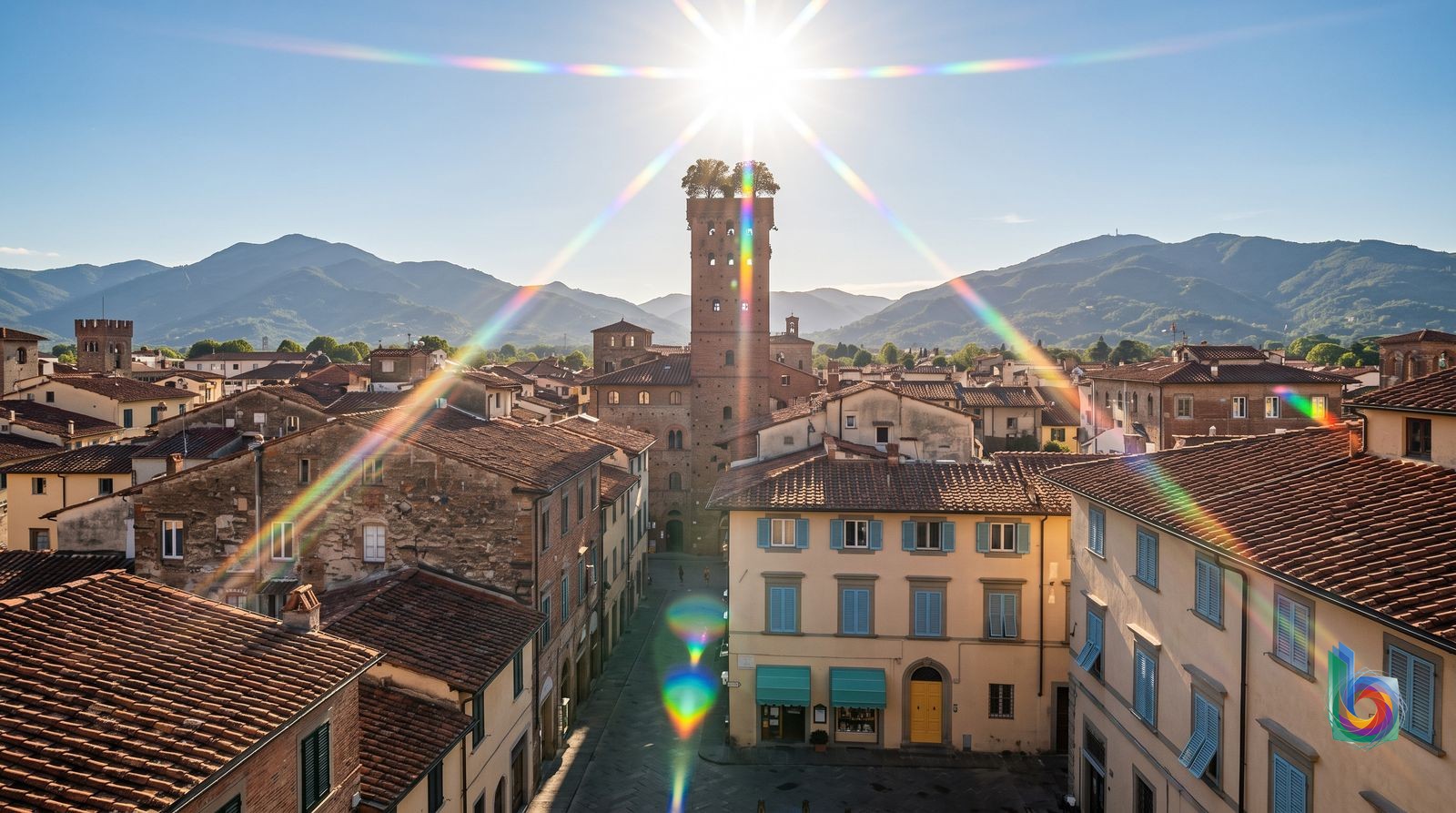
The tower crowned by trees is Lucca’s signature vertical image and one of the best places to understand the compact walled city from above. It is a stair climb with no lift, so make it a deliberate stop rather than an impulsive detour in midday heat.
Pairs with: Torre delle Ore · Duomo di San Martino · Via Fillungo

Lucca’s cathedral rewards more than a façade glance: go inside for the Volto Santo and Jacopo della Quercia’s Ilaria del Carretto sarcophagus. Look closely at the carved marble exterior and its labyrinth before entering.
Pairs with: Guinigi Tower · Torre delle Ore · Piazza Napoleone

Walking or cycling the broad, tree-lined ramparts is the essential first activity in Lucca: the circuit is about 4 km and makes the old city’s layout immediately legible. Treat it as orientation, not a checklist—walk a scenic stretch or rent a bike for the full loop.
Pairs with: Porta San Pietro · Orto Botanico di Lucca · Piazza Napoleone

This church stands on the old Roman forum and has one of Lucca’s most theatrical Romanesque façades. Stop for the exterior even if the interior is brief, then use the surrounding square as a natural break between the city’s central sights.
Pairs with: Piazza Napoleone · Via Fillungo · Puccini Museum - Casa natale di Giacomo Puccini

Lucca’s main pedestrian shopping street is the connective tissue of a first visit, with shops, bars, and many of the old town’s best people-watching. Walk it deliberately between the towers and Piazza dell’Anfiteatro, but duck into side lanes for a quieter sense of the city.
Pairs with: Piazza dell'Anfiteatro · Torre delle Ore · Chiesa di San Michele in Foro

Lucca’s largest square is more useful as the city’s civic living room than as a stand-alone monument; Palazzo Ducale anchors one side. Pass through on a central stroll, and check what is happening if you are visiting during the Lucca Summer Festival.
Pairs with: Chiesa di San Michele in Foro · Duomo di San Martino · Puccini Museum - Casa natale di Giacomo Puccini

Puccini was born and grew up in Lucca, and this compact birthplace museum supplies the human context behind the city’s musical identity. It is most worthwhile for opera fans, or for anyone pairing it with an evening recital.
Pairs with: Chiesa di San Michele in Foro · Piazza Napoleone · Via Fillungo

The working historic clock tower offers a different rooftop perspective, especially down Via Fillungo and across to Guinigi Tower’s trees. Choose it if you enjoy a less iconic but more street-oriented view; it also has no lift.
Pairs with: Via Fillungo · Guinigi Tower · Piazza dell'Anfiteatro

The basilica’s mosaic façade makes it one of the city’s strongest church exteriors, while the interior is a worthwhile calm counterpoint to the busy lanes outside. Combine it with Piazza dell’Anfiteatro rather than making a special cross-town journey.
Pairs with: Piazza dell'Anfiteatro · Via Fillungo · Palazzo Pfanner

This is a pleasing, manageable visit for its preserved family rooms and formal garden, with an unusual display of nineteenth-century medical equipment. It is not a first-day essential, but it is an excellent change of pace after Lucca’s churches and towers.
Pairs with: Basilica di San Frediano · Museo Nazionale di Palazzo Mansi · Piazza dell'Anfiteatro

This substantial city gate is best understood as part of the walls rather than as a destination in itself. Use it as a handsome entry or exit point when starting a rampart walk from the station side of town.
Pairs with: Mura di Lucca · Orto Botanico di Lucca · Duomo di San Martino

Palazzo Mansi is the choice for visitors wanting an intimate aristocratic-palace setting and a more serious art stop than Lucca’s headline sights provide. It works best on a rainy afternoon or for travelers who have already given the walls and main churches their due.
Pairs with: Palazzo Pfanner · Basilica di San Frediano · Chiesa di San Michele in Foro

The botanical garden is a quiet, green reset just inside the walls rather than a major sightseeing priority. It is especially useful after a rampart walk, for families, or when you need a shaded break from stone streets.
Pairs with: Mura di Lucca · Porta San Pietro · Duomo di San Martino

This museum gives historical and artistic depth to Lucca, particularly for visitors interested in local sacred art and the city’s medieval-to-Renaissance story. It is a selective stop, not a substitute for seeing the churches where much of that story still lives.
Pairs with: Mura di Lucca · Orto Botanico di Lucca · Duomo di San Martino

The partially excavated remains of a Roman house make a compact, useful stop for travelers curious about the city beneath medieval Lucca. It is small enough to add between central sights, but not substantial enough to displace the cathedral or walls.
Pairs with: Chiesa di San Michele in Foro · Puccini Museum - Casa natale di Giacomo Puccini · Piazza Napoleone

The long aqueduct is an appealing outer-city walk or bike objective, not a core old-town sight. Choose it if you have extra time and want a change from enclosed medieval streets; otherwise, keep your first visit centered inside the walls.
Pairs with: Porta San Pietro · Mura di Lucca

This is a place of modern religious devotion rather than a defining stop on Lucca’s standard art-and-architecture circuit. Visit if Santa Gemma or pilgrimage sites matter to you; most first-timers can prioritize the cathedral and older central churches.
Pairs with: Mura di Lucca · Orto Botanico di Lucca

This is a wine-estate experience outside the core city visit, appropriate for travelers who specifically want vineyard time and tastings. It does not belong ahead of Lucca’s walls, towers, churches, and historic center on a first short stay.
Reserve a tasting or estate visit ahead, especially for weekends and harvest-season travel.

This historic villa is an optional excursion for gardens, villa architecture, and travelers exploring the Lucchese villas beyond the walls. It requires more effort than the central sights and is best saved for a longer Lucca stay or a countryside-focused day.
Confirm visiting arrangements in advance, as access is more limited than at central Lucca sights.