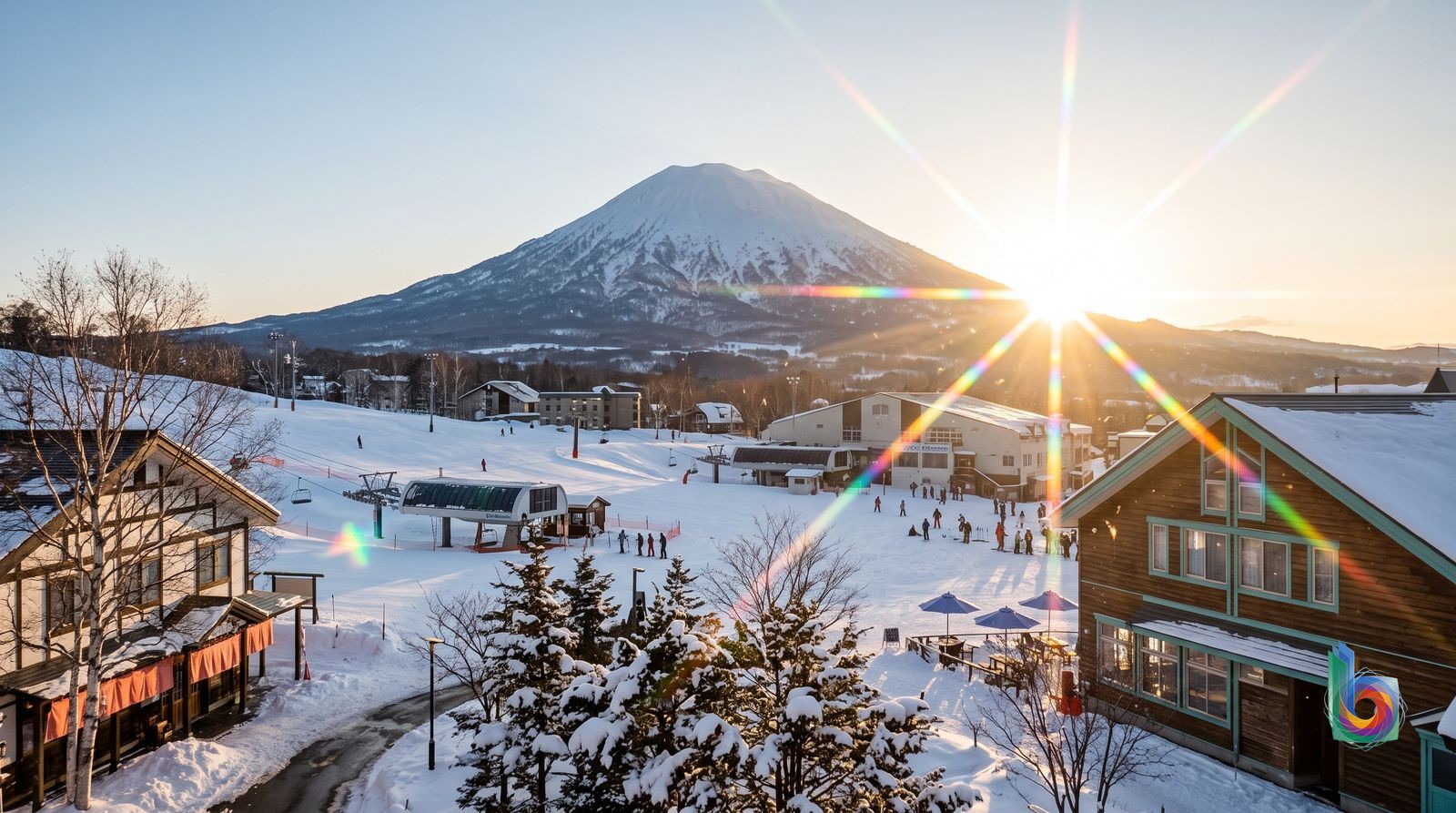
December
Winter operations begin and the airport/resort shuttle broadly starts for the season, but early-season snow cover is not guaranteed. Conditions can be excellent once storms settle in, while exact lift and upper-mountain access remains weather-dependent.
Less dependable base depth than midwinter; some terrain, lifts and services may not yet be fully running.
January–February
Niseko’s prime powder period: cold, deep and comparatively reliable snow, with frequent storms. This is also the busiest and most expensive stretch, particularly around holiday and school-break dates.
Accommodation, airport coaches, English-language lessons, rentals and Hirafu dinner reservations need early booking. Storms, wind and whiteouts can close upper lifts; do not assume every sector will be connected every day.
March–early April
Usually sunnier and more forgiving for beginners than the heart of winter, though snow quality becomes increasingly variable as temperatures rise. The shuttle season broadly runs until early April, but final resort and lift dates depend on weather.
Powder is less reliable, lower slopes can turn soft or patchy, and top-lift or area closures become more likely toward the end of the season.
Mid-April–June
A quiet transition after the main ski season. Snow-resort infrastructure is largely no longer the reason to come; the landscape shifts toward green-season outdoor activity.
This is not a conventional sightseeing destination, and seasonal restaurants, shuttles and activity operators may have limited hours or gaps between winter and summer operations.
July–September
Green, mild by Japanese standards and far quieter than winter. It is the best period for hiking, cycling and rafting, with Mt. Yotei and the surrounding countryside replacing skiing as the focus.
A car is particularly useful beyond Hirafu, Annupuri and Niseko Town. Do not expect dense urban attractions: one substantial outdoor activity, an onsen and dinner makes a realistic day.
October–November
Autumn shoulder season: quiet, increasingly cool and between the main green and snow seasons. It suits travelers comfortable with a slow rural stay rather than a guaranteed activity programme.
Weather is changeable and many seasonal activities and services may be reduced; it is too early to rely on ski conditions until winter operations are confirmed.
Kutchan Jaga Matsuri · Usually early August; confirm the current year’s dates.
Kutchan’s potato festival is the notable summer crowd and accommodation distortion in the Niseko area. Book rooms and transport earlier than usual if your stay coincides with it.
Niseko United Shuttle
Winter ski days between Hanazono, Grand Hirafu, Niseko Village and Annupuri, especially if you hold an All-Mountain pass; Hirafu is the practical hub.
It runs seasonally from about 08:00, generally every 40–60 minutes. The Annupuri-to-Hanazono trip takes roughly an hour. It is included with an All-Mountain day or season pass; otherwise pay a fare and check the current timetable.
This is not a turn-up-and-go city bus and is poor for spontaneous dinner plans. Last services shape evenings in Annupuri, Niseko Village and Hanazono; Moiwa is outside the four-base network.
Walking
Getting around Lower Hirafu for rentals, groceries, restaurants and the lower lifts; the compact resort core at Niseko Village is also manageable on foot.
Choose accommodation close to the places you expect to use daily, rather than trusting a map. Allow extra time in snow, wear proper winter footwear, and avoid hauling luggage or ski gear uphill where possible.
Walking stops working well between every base: Hirafu is not walkable to Hanazono, Niseko Village, Annupuri, Kutchan or Niseko Town. Upper Hirafu and parts of Lower Hirafu are steep, icy and tiring in ski boots; Annupuri, Moiwa and Konbu Onsen are too scattered.
Ski lifts and mountain traverses
Skiers and snowboarders moving between the Niseko United areas during a day on the mountain. When open, this is usually quicker than waiting for the inter-resort shuttle.
Use the lift and piste network to traverse between Hirafu, Hanazono, Niseko Village and Annupuri, keeping an eye on lift-status boards and allowing time to return before closing.
It is transport only while lifts, visibility and weather cooperate. Upper lifts can close in high wind or whiteouts, leaving Hanazono, Upper Hirafu and Annupuri guests reliant on the road shuttle or pre-arranged road transport.
Taxi or pre-booked transfer
Evenings, luggage-heavy arrivals, families, and accommodation away from a shuttle stop—particularly Moiwa, Konbu Onsen/Niseko Town and isolated Annupuri lodges.
Reserve rather than expecting to hail one. Arrange airport, Kutchan Station and dinner returns through your hotel, restaurant or a transfer provider; Kutchan-to-Hirafu is about 20 minutes by road.
Cars are limited in peak winter, late at night and during snowstorms. Do not assume taxis will be waiting at Kutchan Station, or that you can easily get back from Hirafu to Kutchan after drinks.
Rental car
Summer hiking, cycling and rafting trips; longer stays; and exploring dispersed Annupuri, Moiwa, Niseko Town and Konbu Onsen at your own pace.
A car makes sense where services are spread out. Confirm parking at your accommodation and use it to link rural lodgings, onsen and trailheads rather than trying to make every journey fit a sparse bus timetable.
In winter, this is not effortless freedom: snowy, icy Hokkaido roads demand confidence, suitable winter equipment and conservative driving. It is most useful around Annupuri, Moiwa and Niseko Town, but less necessary in Lower Hirafu.
Local bus and rail via Kutchan
Budget-minded arrivals and day trips based in Kutchan, plus reaching Hirafu from Kutchan Station without a car.
Kutchan is the useful rail gateway for Hirafu and Hanazono. From the station, take a local bus, arranged pickup or taxi to Hirafu—around 20 minutes by road. Niseko Station is more relevant for Niseko Town and Annupuri-side stays.
Rail is not a resort circulation system. Niseko Station is not convenient for Hirafu, and onward local services are sparse; late-night, remote-lodging and cross-resort journeys still require a confirmed bus, taxi, transfer or car.
Safety: In winter, plan transport and dinner ahead, walk cautiously on ice, and never go beyond marked ski-area boundaries or closed lifts—whiteouts, wind and avalanche terrain are real hazards.
Book before you land
Lake Tōya and Usu VolcanoFull day — roughly 1–1.5 hours each way by car from Hirafu, but substantially longer and awkward by public transport.
This is the one clear non-ski day trip: a caldera lake, an active volcanic landscape and a lakefront walk are a real change from Niseko’s resort villages. Go for the views and geological drama, not for a packed attraction checklist. It is especially worthwhile in snow-free months; in winter, short daylight and mountain-road conditions make it less appealing.
OtaruFull day — allow about 1.5–2 hours door-to-door each way from Hirafu/Kutchan using local transport and connections; driving is usually faster but weather-dependent in winter.
Otaru beats another Hirafu rest day if you want an actual Hokkaido port town: canal warehouses, old merchant streets, sushi and a much stronger sense of history than Niseko has. The canal itself is tourist-heavy, so treat it as a short stop rather than the whole point. Best combined with Yoichi only if you have a car and a long day.
Shakotan Peninsula and Cape KamuiFull day — around 2 hours each way by car from Hirafu, plus time for the Cape Kamui walk.
For summer and early autumn, this is the region’s best scenery-first escape: rugged coast, high cliffs and the intensely blue Sea of Japan. It is more memorable than spending another day circulating between Niseko’s four base areas. The catch is decisive: it is a car trip, weather can erase the views, and it is not a sensible winter outing.
Researched Nov 5, 2026