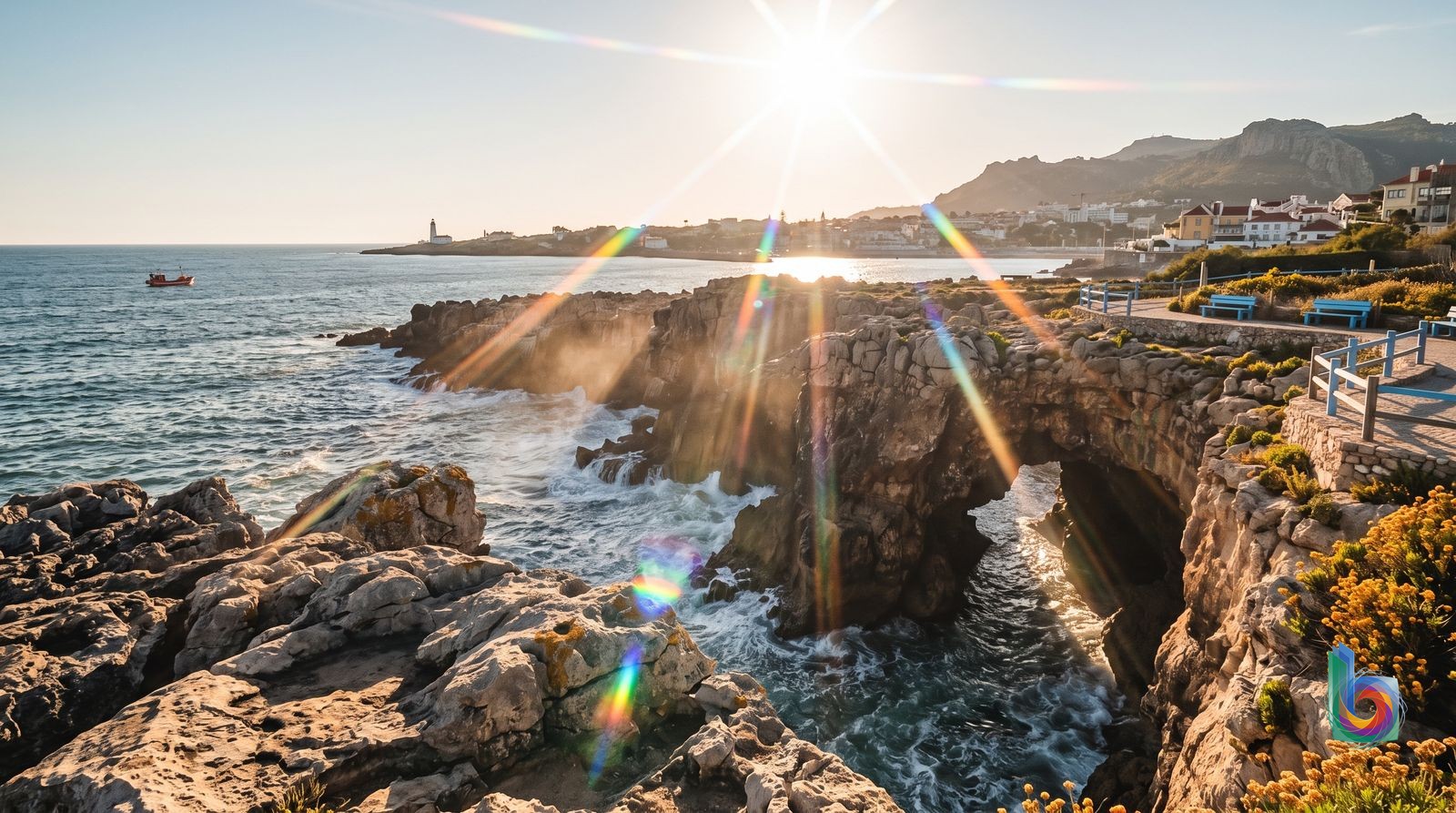
Season by season
January–March
Mild Atlantic winter rather than beach weather; suitable for coastal walks and a quieter town, with wetter spells and slippery cobbles when rain arrives.
Swimming is unlikely to appeal, and check opening days: Casa das Histórias Paula Rego and the Lighthouse Museum are listed as closed on Mondays.
April
A transition month: spring improves the walking weather, and late April begins the more attractive coast season, though wind and cool Atlantic water remain part of the deal.
It is not reliably swim-weather; bring layers and do not expect Mediterranean-style warmth.
May–June
One of the best periods for Cascais: warm enough for the coast, long days and generally less pressure on beaches and restaurants than high summer.
The Atlantic can still feel bracing, and wind can make a planned swim less appealing. Pena Palace in nearby Sintra begins to need advance timed booking, especially from June.
July–August
The busiest, most summery period, with the waterfront and central beaches at their liveliest.
Expect the largest crowds, pricier rooms and more competition for popular restaurants and activities. Book Pena Palace well ahead if adding Sintra, and reserve a specific sailing, surf or tour departure if it matters.
September–mid-October
The other sweet spot: generally warm enough for the coast and calmer than July–August. October can still reach about 22°C, though rain becomes more likely as the month progresses.
September can be windy, the sea remains Atlantic rather than reliably warm, and rain risk rises through October.
Late October–December
Quieter, mild coastal low season, best approached as a walking and café break rather than a beach holiday. Rain is increasingly likely.
Beach conditions are poor for most travelers, wind and rain can make exposed stretches such as Boca do Inferno unpleasant, and Monday museum closures still matter.
Getting around
Walking
Cascais Old Town & Baía, the Cidadela, marina, museum quarter and the walk out to Boca do Inferno. This is the best way to experience the compact core.
Base yourself near Cascais station or the bay and cover the old town, Cidadela and museums on foot; continue west along the coastal path for Boca do Inferno. Wear shoes with grip for Portuguese cobbles.
It stops being effortless beyond the marina: Farol da Guia/Boca do Inferno is a meaningful walk from the station, while Guincho is about 10 km away. Cobbled, gently uphill lanes around Old Town become slippery when wet, and exposed waterfront sections can be windy.
CP Cascais Line train
Fast, simple travel between Lisbon, Monte Estoril, Estoril, São João do Estoril, São Pedro do Estoril and Cascais—especially for Lisbon day trips without a car.
Use Cascais station for the old town and Cidadela; Monte Estoril and Estoril stations are useful for their respective seafront bases. Lisbon trains run via Cais do Sodré, not Oriente or Santa Apolónia.
The line is coastal, not a municipality-wide network. It does not serve Boca do Inferno, Farol da Guia, Guincho or inland Alcabideche, and uphill accommodation behind the tracks in Monte Estoril and São João/São Pedro is awkward with luggage.
Local bus — Route 27
Avoiding the longer walk between central Cascais and Boca do Inferno, particularly if staying around Farol da Guia or travelling with children.
Route 27 is the useful local loop for Boca do Inferno and nearby sights. The stored local guidance cites a €2 single fare, paid in cash on boarding; carry small notes or coins.
It is a local aid, not a substitute for rail or a comprehensive late-night service. For Guincho and Alcabideche, do not assume a quick, direct bus connection will make a car-free stay painless.
Bicycle
A scenic daytime ride from Cascais marina west along the shared coastal promenade/cycle path, for confident riders who want the Atlantic scenery.
Rent only if you are comfortable riding in wind and plan a coastal outing rather than using a bike as all-purpose transport. The route toward Guincho is the obvious ride.
Guincho is roughly 10 km from Cascais and summer northwesterlies can make the final outward stretch punishing. Cabo da Roca and Sintra are not casual rental-bike add-ons; hills, distance and exposure matter.
Taxi or rideshare
Late returns, luggage, families, and accommodation away from the rail corridor—especially Quinta da Marinha, Farol da Guia, Guincho and inland Alcabideche.
Taxis are plentiful in central Cascais; rideshare is often the clearer option for longer hops because the fare is shown in advance. Confirm the total before entering a taxi.
For short trips within Old Town, the bay, Cidadela and museum quarter, it is needless expense versus walking. Availability is strongest in central Cascais, and repeated rides from remote Guincho or inland bases quickly erase a cheaper hotel’s saving.
Car
Guincho, Alcabideche and inland Cascais stays, villa holidays, surfing gear, and flexible trips toward Sintra or the wider coast.
Use a car as a regional tool rather than for central sightseeing. It is genuinely helpful for Alcabideche and Guincho, where rail does not reach and evening options are scattered.
Driving and parking around Cascais Old Town & Baía are needless hassle in summer. Traffic and parking also shape plans in Alcabideche; visitors based by Cascais, Monte Estoril or Estoril stations are usually better off using rail and walking.
Safety: Cascais is generally very safe, but secure phones and wallets on crowded Lisbon–Cascais trains, keep clear of exposed rocks at Boca do Inferno in rough weather, and obey flags at windy, strong-surf Guincho.
Book before you land
- Treat Cascais as a real Atlantic coast, not a sheltered Mediterranean resort. Guincho is famous for wind and strong surf; obey beach flags and do not improvise a swim because the sand looks inviting.
- Keep some cash, especially for the €2 Bus 27 fare, but cards/contactless payments are normal in shops and restaurants. Confirm the total before entering a taxi; rideshare gives a clearer price for longer hops.
- The centre is very safe by big-city standards, but the usual rules apply: keep phones and wallets secure in packed trains between Lisbon and Cascais, and do not leave valuables visible in a parked car.
- Cobbles become slippery when wet and are punishing in thin-soled sandals. The pretty route to Boca do Inferno is a walk, not a formal hike, but wind and spray can make the exposed edge unpleasant—keep back from the rocks on rough days.
- Tipping is not compulsory. Round up or leave a modest amount for genuinely good table service; do not import US-style percentage expectations.
- Plan museums around Monday closures rather than trying to force every sight into one day. Cascais rewards a slower circuit—old town, Cidadela/marina, museum quarter and Boca do Inferno are already a full, unhurried day.
Worth leaving the city for
SintraFull day — allow roughly 45–60 minutes each way on Scotturb bus 403, plus steep walking, queues and timed-entry logistics. Book Pena in advance in peak season.
This is the one non-negotiable excursion: a genuinely strange, wooded palace town rather than another polished Atlantic resort. Do it for Pena Palace, Quinta da Regaleira and the terrain; Cascais cannot match that concentrated fairytale architecture. Do not try to add Cabo da Roca and a full Cascais day unless you are happy seeing everything superficially.
LisbonFull day — the CP Cascais Line from Cascais to Cais do Sodré takes about 40 minutes each way, then Lisbon's sights are spread out enough to require more walking or transit.
Cascais is better for sea air, beaches and an unhurried waterfront; Lisbon wins decisively for major museums, old neighbourhoods, food range and evening life. It is an excellent day trip if you are staying in Cascais, not a substitute for giving Lisbon several days if it is your first visit.
Cabo da RocaHalf day from Cascais — Scotturb bus 403 runs via Cabo da Roca toward Sintra; allow about 30–45 minutes each way plus time to walk the headland and wait for buses.
Go for the exposed cliffs and the feeling of continental Europe ending at the Atlantic, not the marker, souvenir stalls or a checklist photo. It beats another hour in Cascais when the weather is clear or dramatically windy; skip it in fog or driving rain. Combine it with a deliberately limited Sintra day, or make it a short coastal escape.