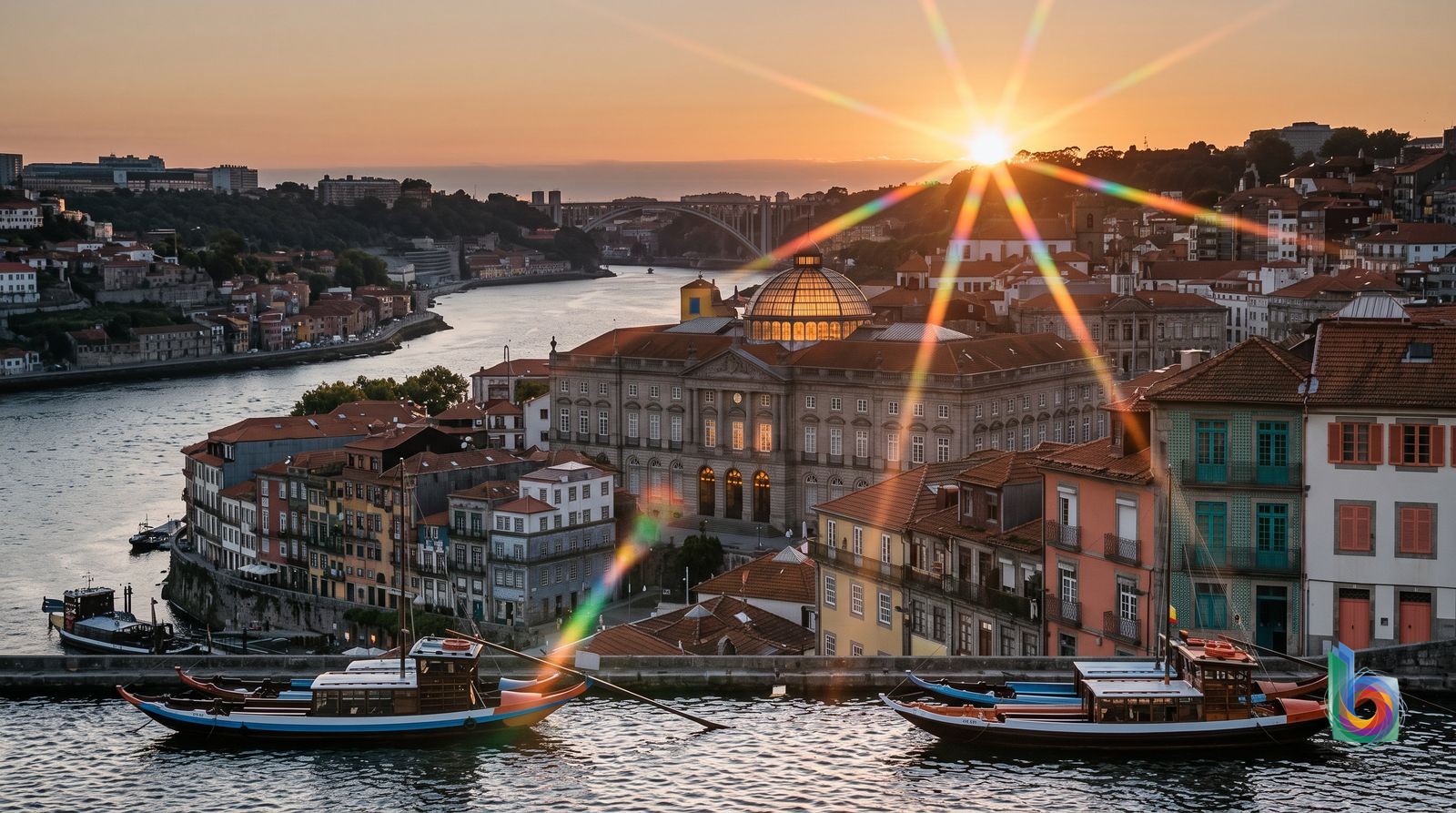
Season by season
January–February
Mild by northern-European standards but often wet, damp and grey, with short daylight. The upside is a noticeably quieter city.
Outdoor viewpoints, Ribeira wandering and Douro day trips are less dependable; bring waterproof layers rather than assuming a sunny Portugal break.
March–April
Spring begins, with improving daylight and intermittent fine weather, but Atlantic rain and cool spells remain possible.
It is not reliably warm or dry, so build in indoor options and do not plan a trip solely around beach weather.
May–June
One of Porto’s best windows: long days and generally decent Atlantic-weather odds, before the full high-summer crush.
Popular sights and weekends are already busy. The night of 23 June, São João, is exceptional but profoundly disrupts central accommodation, transport and sleep.
July–August
The busiest, most summery period. Porto is generally cooler than inland Portugal, though heat waves can still drive August temperatures toward 40°C.
Expect the largest queues at Ribeira, Livraria Lello and Gaia’s port cellars, higher accommodation pressure and more need to reserve transport-led Douro trips.
September–early October
The other top compromise period: good daylight and relatively favorable weather odds, with the peak-summer crowds easing.
Warm weather is still possible, but conditions become less predictable as October progresses; popular weekend slots can remain busy.
Mid-October–December
Autumn gives way to Porto’s mild but often rainy, damp winter. Daylight shortens substantially, while visitor numbers fall.
Rain can dominate plans, and the limited daylight makes a packed sightseeing itinerary less rewarding than in late spring or early autumn.
Events worth planning around
São João Festival · Night of 23 June, continuing into the early hours of 24 June
Porto’s major citywide street party, with fireworks and exceptionally dense central crowds. Book central accommodation well ahead, expect transport and street access to be distorted, and choose it deliberately: it is unforgettable for revelers but a poor night for quiet sleep or smooth logistics.
Getting around
Walking
Exploring compact old-town clusters: pair Baixa/Clérigos with São Bento, or Ribeira with the Gaia riverfront, rather than trying to cover every hill in one day.
Wear proper shoes for cobbles and stairs. Plan a downhill route toward Ribeira or the Douro, then use Metro, bus, funicular or a ride-hail car for the reset uphill.
Porto is close on the map, not flat on the ground. Sé and the Cathedral Hill, Ribeira’s exits, and the climb back to Cedofeita are punishing with luggage, strollers or limited mobility; some Sé lanes also feel isolated late at night.
Metro
Fast cross-city journeys: the airport, Trindade, Bolhão, São Bento, Campanhã, Casa da Música and the upper Gaia connection near Jardim do Morro.
Buy and load a reusable Andante card, choose the correct zones, and validate on the yellow reader before every ride. Contactless works at the airport and some major central stations, but Andante is the dependable citywide option.
The network does not serve every visitor area at street level. Ribeira has no equally convenient river-level metro stop, Foz is outside useful metro coverage, and Gaia’s riverfront still requires a steep descent from Jardim do Morro. Fare inspectors can issue penalties of at least €100 for an unvalidated ride.
Bus
Filling Metro gaps, especially for Foz do Douro, Serralves and addresses away from central stations; also useful from Boavista and the outer parts of Bonfim.
Use the Andante system and validate before boarding. Check the route in a live journey-planning app rather than assuming a line runs frequently at the time you need it.
Buses are slower and less foolproof in traffic than the Metro. They are the practical answer for Foz, but not the quickest way to shuttle repeatedly between the coast and the old town; service is also less reassuring late at night than a central Metro trip or ride-hail.
Taxi, Uber or Bolt
Short luggage-heavy hops, late returns, airport arrivals outside Metro hours, and avoiding the steep climb from Ribeira or Gaia’s waterfront to the upper city.
Uber and Bolt are normal and generally good value; use the app for an upfront estimate. Taxis are also reasonable for short trips—especially when several people are sharing—and are preferable to dragging cases over cobbles.
A car solves the hill, not the street geometry. Ribeira, Sé and Baixa have narrow, awkward access roads, so choose a clear pickup point on a main street; traffic can also make rides slow at busy times.
Funicular and heritage tram
The Guindais funicular is a useful terrain-saving link between the upper city near Batalha/Sé and Ribeira. The tram corridor is best treated as a scenic outing toward Foz, not core transport.
Use the funicular when the alternative is a steep descent or climb between Ribeira and the cathedral-side upper city. Take the heritage tram for the ride and river/coastal atmosphere when time is flexible.
Neither replaces the Metro network. The funicular is a single hillside link, while the tram is slower and less useful for time-sensitive sightseeing or a Foz-to-centre commute.
Rental car
Leaving Porto for a rural Douro Valley or Peneda-Gerês itinerary, ideally after you have finished city sightseeing.
Pick up the car only for the out-of-town portion of the trip and return it before settling back into central Porto.
Do not rent one for Porto itself. Ribeira and Baixa are narrow, cobbled, confusing and unpleasant to park in; it is particularly poor value for a stay based in Baixa, Ribeira, Sé or Cedofeita.
Safety: Porto is generally straightforward for first-timers: keep your phone and wallet secured on packed transit, in Ribeira and in queues, and after dark stick to lit main streets rather than the downhill lanes below the cathedral if they feel uncomfortable.
Book before you land
- Say “Porto,” not “Oporto”; locals commonly say “o Porto.” “Portuenses” are often direct rather than ceremonious. A literal “no” to a question is not necessarily rudeness—ask the next practical question.
- Do not default to Spanish. Many people will understand it, but Portuguese is the local language; English is generally easier in tourism-facing places, and “bom dia,” “boa tarde” and “obrigado/obrigada” go further than Spanish assumptions.
- Carry a payment card and some cash. The Andante system uses a reusable card; keep it, load it correctly for your zones, and validate before each Metro ride. Airport journeys require the higher airport zone, not a standard central fare.
- Pickpocketing is not pervasive, but treat packed buses, trains, Ribeira and major queues as you would any tourist city: phone and wallet out of back pockets, bag zipped in front. At night, use lit main streets; the lanes near the tourist-information area below the cathedral can attract intoxicated people, so skip the downhill shortcut if it feels uncomfortable.
- Port wine cellars are across the river in Vila Nova de Gaia, not in Porto proper. Cross the Dom Luís I Bridge on foot for the view, but remember that Gaia’s hills are as real as Porto’s; do not schedule a cellar tour immediately after an overambitious Ribeira climb.
- For emergencies call 112.
Worth leaving the city for
Douro Valley — PinhãoFull day — roughly 8–10 hours door to door; trains from Porto take around 2½ hours each way to Pinhão.
This is the one non-negotiable escape: terraced vineyards, the Douro itself, and a rail journey that becomes spectacular after Régua. Go independently by train to Pinhão rather than taking a rushed, expensive all-day cruise-tour; allow time for a riverside walk, a winery visit if wanted, and lunch. It beats a second or third day of Porto decisively.
GuimarãesFull day, or a long half day — about 7–9 hours door to door; allow roughly 1¼–1½ hours each way by train plus the walk/bus from the station.
A real medieval core rather than a reconstructed old-town experience: castle, Palace of the Dukes, and steep stone lanes around Largo da Oliveira. It is compact, atmospheric and easy without a car, making it Porto’s best history-forward day trip.
BragaFull day — about 7–9 hours door to door; around 1¼ hours each way by urban train, then local transport to Bom Jesus.
Go for Portugal’s religious and baroque counterweight to Porto: the cathedral city centre and Bom Jesus do Monte, whose monumental stairway is the point. Braga is more polished and less gritty than Porto; do not go expecting Porto’s river drama. Combine it with Guimarães only if you are content with a checklist day—each deserves its own visit.
MatosinhosHalf day — roughly 4–6 hours door to door; reachable by Metro Line A or bus from central Porto.
Not a grand sightseeing trip, but the best use of a hot, clear day: Atlantic beach followed by serious grilled fish and seafood. It beats staying in the centre if you want an unvarnished working-coast lunch rather than another cellar tour. Skip it in cold rain or if beach weather is not the point.
Peneda-Gerês National ParkLong full day — roughly 10–12 hours door to door, with substantial road time; best as a guided trip or with a car.
Choose this only when you want mountains, reservoirs, hiking and rural northern Portugal rather than another town. The scenery genuinely changes the scale of the trip, but public transport is limiting: a guided day or rental car is usually more realistic than trying to improvise it by bus.