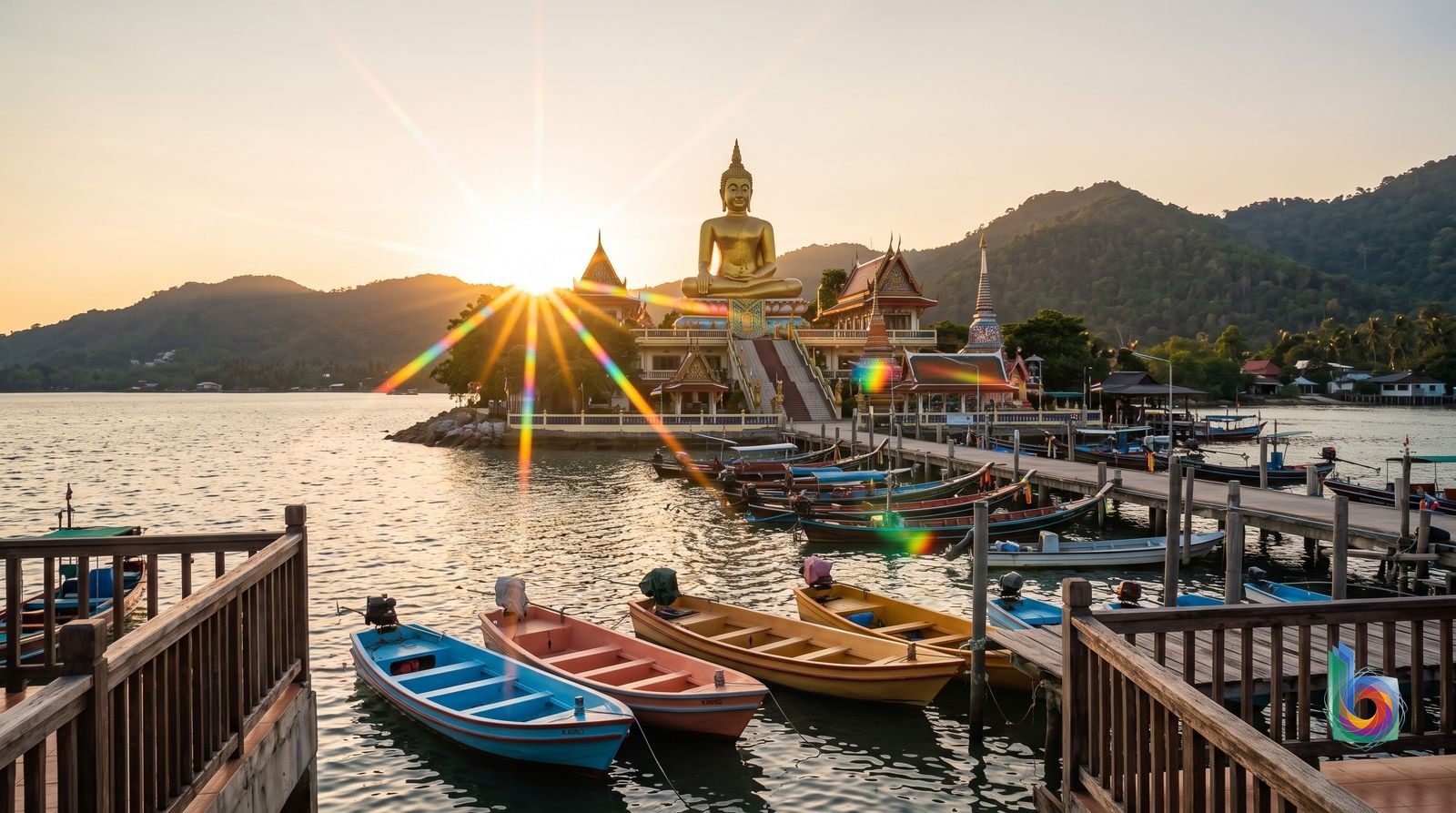
December–January
Generally good beach weather and lively resort conditions, but this is a busy, expensive period—especially from Christmas through New Year. Late January becomes more appealing once the holiday rush eases.
Christmas/New Year brings the island’s heaviest demand; flights into Samui, ferry connections and better rooms should be reserved well ahead.
February–March
One of the strongest all-round windows for Bo Phut: beach-friendly weather, less punishing heat than April–May, and generally calmer conditions for boat outings. It remains high season, though not usually as frantic as New Year.
Prices and occupancy can rise around Chinese New Year, whose date varies between late January and February.
April–June
Usually a safe beach-weather period, with plenty of sun; April and May are particularly hot. Plan active sightseeing, temple visits and beach walks for morning or late afternoon, then use the middle of the day for shade or a pool.
Heat is the principal drawback. Songkran on 13 April also brings water-fight disruption and busier transport in tourist areas.
July–September
A workable shoulder-season period for a beach break, with more variable skies and showers than the core February–June window but without Samui’s usual October–November peak wet spell.
Weather is less predictable, so leave room to move sea trips or outdoor plans rather than booking every day tightly.
October–November
Samui’s usual wettest and roughest period—an important local distinction from Thailand’s west-coast monsoon pattern. Rain, changing sea conditions and rough water can affect beach days and boat departures.
Sea excursions, including Ang Thong trips, can be cancelled or difficult to rebook. Heed beach flags: Gulf conditions can deteriorate quickly.
Christmas and New Year holiday peak · Mid-December to early January, with the greatest pressure around Christmas and New Year’s Eve
This is the most consequential annual demand period for Samui. Book USM flights, mainland ferry connections, airport transfers and preferred Bo Phut accommodation well in advance; rates and availability worsen sharply.
Chinese New Year · Usually late January or February; date varies each year
A short but meaningful high-demand period for Samui, pushing up room rates and reducing availability. Avoid these dates if value and a quieter stay matter more than the celebration.
Songkran · 13 April, with activity often extending around the holiday
Expect water fights and wet, slower-moving streets in tourist areas. It is fun if that is the point of the trip, but inconvenient for temple visits, luggage transfers and anyone who does not want to get soaked.
Full Moon Party, Ko Pha Ngan · Monthly, on or near the full moon; exact dates vary
Though held on nearby Ko Pha Ngan rather than in Bo Phut, it can put pressure on Samui flights, ferries and rooms. Reserve transport and accommodation early if your dates coincide, even if you plan to stay in Bo Phut’s calmer atmosphere.
Walking
Fisherman’s Village, the central Bo Phut beachfront and an evening of restaurants and bars.
Stay near the waterfront if you want to do most dinners on foot; this is the only genuinely easy pedestrian pocket in the area.
It stops working quickly beyond the village: greater Bo Phut is spread along roads and resort frontage, and sidewalks fade. Do not assume you can comfortably walk to Bangrak, Maenam or inland hotels after dark.
Songthaew
Cheap daytime hops along the ring-road corridor to Bangrak/Big Buddha, Chaweng and Maenam.
Flag one down on the main road, say your destination and agree the fare before boarding. Carry cash.
This is not a reliable bus grid or a late-night solution. Service is weakest away from the ring road—especially beach lanes, resort back roads, Bang Por and the remote Lipa Noi–Taling Ngam coast.
Taxi or Grab
Airport runs, evenings out, short trips when the heat or lack of pavements makes walking miserable, and travel to Chaweng, Choeng Mon or Bangrak.
Agree a taxi fare before setting off; taxis around resorts are plentiful but generally not metered. Check Grab as a price benchmark, but ask your hotel to call a car if pickup matters.
Do not plan around instant Grab availability, particularly late at night or from quieter areas. Fares can be poor value for longer island runs, including Nathon and the west coast.
Private driver or hired car
A full sightseeing day—Big Buddha, Wat Plai Laem, waterfalls and other stops—or trips to Nathon, Lipa Noi and Taling Ngam.
Arrange through a reputable hotel or established operator, and set the route, waiting time and total price in advance. A car is the sensible self-drive option for confident drivers.
It costs more than point-to-point transport, but the island has no practical alternative for a multi-stop day. In Chaweng Noi, resort roads and slopes also make a car or taxi more realistic than walking.
Rental scooter
Experienced, properly licensed riders who want independence for short daytime exploration beyond Bo Phut.
Use a helmet, carry the correct licence/IDP, photograph the bike before accepting it and avoid drinking entirely if riding.
Not a first-day or novice activity: fast ring-road traffic, rain, loose sand and poor pedestrian infrastructure make crashes the serious visitor risk. It is particularly unattractive on Chaweng Noi’s hills, and after dark anywhere on the island.
Bookable experiences per person, per day
Based on 615 currently available tours and tickets. Hotels, meals and transport are not included.
Safety: The main visitor risk in Bo Phut is road crashes: skip scooters unless you are an experienced, properly licensed rider, and use a taxi or driver after dark or when rain makes Samui’s ring road slick.
Book before you land
Ang Thong National Marine ParkFull day — realistically 9–11 hours door to door from Bo Phut, including hotel pickup/transfer, boat time and return.
This is the one excursion that genuinely beats another beach-and-temple day on Samui: a limestone island seascape with proper scale, viewpoints and kayaking/snorkelling possibilities. Choose an operator with a clear weather policy rather than the cheapest package; rough seas can turn it into a long, crowded boat ride, and conditions are poorest in the wetter October–November period.
Researched Nov 17, 2026