A morning boat ride among red water lilies is one of the province’s signature nature experiences, rather than just a scenic lake stop. It is seasonal: blooms begin around October and are at their best from December to February, so do not build an itinerary around it outside that window.
Hire a boat and driver at the lakeside on arrival; boats are typically rented by the hour.

This remote hill temple earns the drive for its serene forest setting, blue-roofed hall, and reclining white marble Buddha. Treat it as a dedicated road-trip destination, not an add-on to central Udon sightseeing.

The sandstone formations, ancient rock art, and archaeological landscape make this one of the province’s most consequential outings. It rewards visitors who walk slowly and use the site to appreciate the deep human history beyond Udon city.
Pay the site admission on arrival; arrange a car or taxi, as public transport is poor.

This UNESCO-listed prehistoric site is the province’s essential historical excursion, associated with burial grounds, pottery, tools, and early metallurgy from a culture that flourished more than 5,000 years ago. Pair the protected excavation areas with the museum, and plan transport in advance because the site is outside Udon.
Admission is handled on arrival; arrange a car, taxi, or regional transport before setting out.
Pairs with: Ban Chiang National Museum

The museum gives the necessary archaeological context for Ban Chiang’s red-painted pottery, bronze artifacts, and ancient burials. Visit it before or after the excavation pits; doing only one makes the UNESCO site much less legible.
Buy admission on arrival; no advance reservation is normally needed.
Pairs with: Ban Chiang Archaeological Site

This is the most useful stop for understanding Udon Thani’s substantial Thai-Chinese community rather than treating the city as only a transport base. Combine it with the adjacent shrine and make it a compact cultural stop before dinner.
Pay or enter on arrival; no advance booking is normally needed.
Pairs with: Chao Pu-Ya Shrine (Tourist attraction) · Udon Thani City Museum (Tourist attraction) · Night Market @ Train Station

The city pillar shrine is a short but meaningful look at the civic-spiritual heart of a Thai provincial capital. Treat it as a quick stop while walking around central Udon rather than a standalone excursion.
Pairs with: Thung Si Muang (Tourist attraction) · Kromluang Prachak Sinlapakhom Monument (Tourist attraction) · Udon Thani City Museum (Tourist attraction)

This important city temple is an accessible introduction to Udon’s active Buddhist life, with more lived-in character than a checklist monument. Visit respectfully and pair it with the nearby civic sights rather than making a special long trip.
Pairs with: City Pillar Shrine or San Lak Mueang (Tourist attraction) · Thung Si Muang (Tourist attraction) · Udon Thani City Museum (Tourist attraction)

This Chinese shrine supplies the religious counterpart to the Thai-Chinese Cultural Center and is most rewarding when visited together with it. It is a brief stop, but its incense, offerings, and worshippers convey a side of Udon’s identity that generic city sightseeing misses.
Pairs with: Thai-Chinese Cultural Center (Tourist attraction) · Udon Thani City Museum (Tourist attraction) · Nong Prajak Park (Tourist attraction)

A useful orientation stop for visitors who want the story of Udon before heading into the countryside. It works especially well alongside the city’s Thai-Chinese sites and civic landmarks, though Ban Chiang is the stronger choice for deep archaeology.
Tickets, if charged, are handled on arrival; advance booking is unnecessary.
Pairs with: Thai-Chinese Cultural Center (Tourist attraction) · Chao Pu-Ya Shrine (Tourist attraction) · Nong Prajak Park (Tourist attraction)

A forest monastery rather than a decorative urban temple, Wat Pa Ban Tad is for travelers interested in Thailand’s meditation tradition and a quieter devotional setting. Dress conservatively, keep your visit subdued, and use a car or taxi because it is outside the city center.

This Naga-associated shrine complex is a major regional pilgrimage destination and a vivid introduction to contemporary northeastern Thai belief. Go if living religious culture interests you; it is less essential for travelers seeking archaeology, temples, or landscape alone.

This is the practical evening stop for casual local food, inexpensive shopping, and watching Udon wind down after dark. It is more about eating and browsing than landmark sightseeing, and pairs naturally with UD Town.
Pairs with: UD Town Udon Thani · Central Udon

More an open-air dining, shopping, and nightlife precinct than a conventional sight, UD Town is worthwhile for an easy first evening in town. Use it for food and atmosphere, not as a destination that displaces Udon’s cultural or provincial day trips.
Pairs with: Night Market @ Train Station · Central Udon

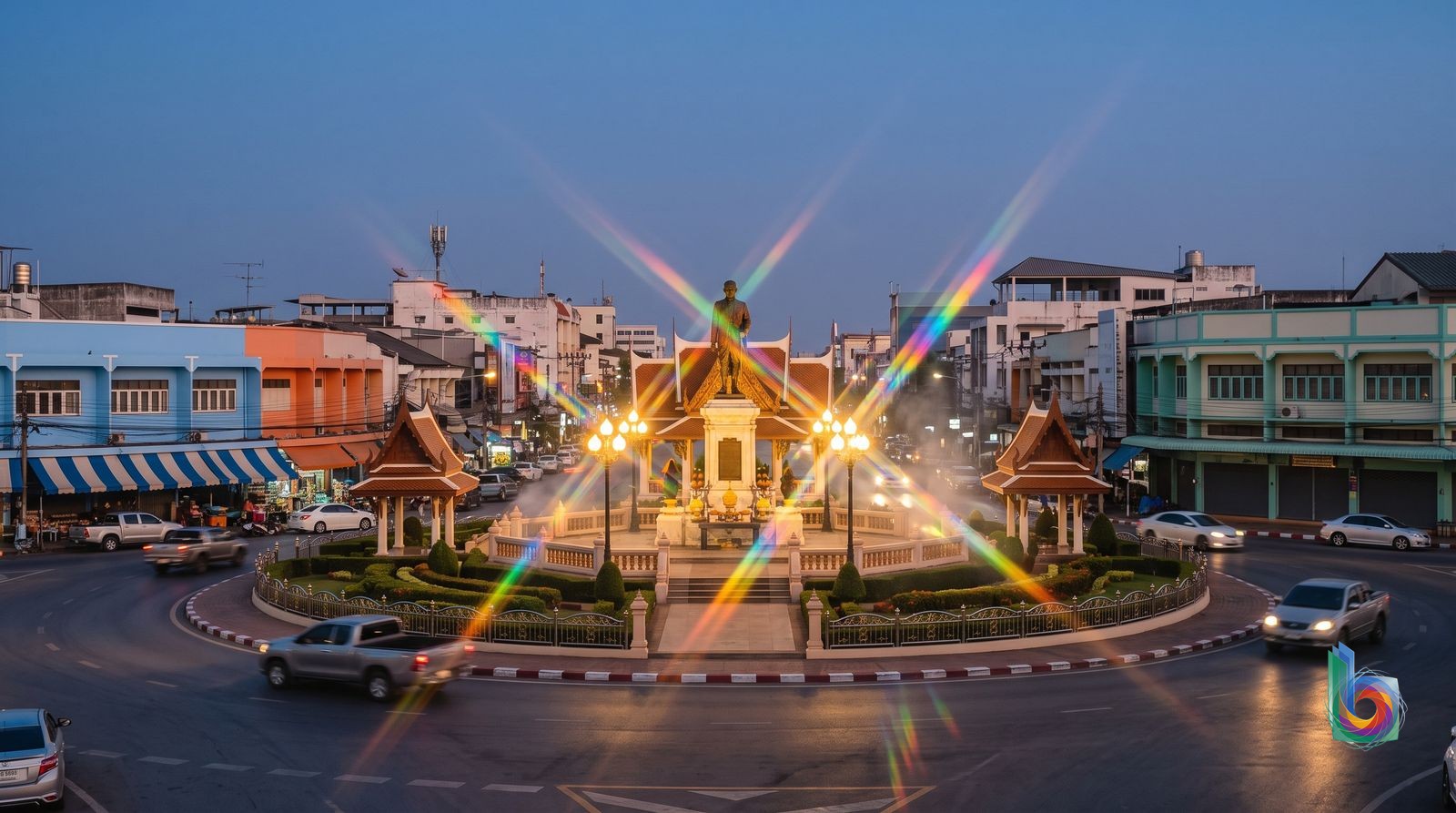
This monument honors the figure closely associated with Udon Thani’s founding and development, giving context to the city’s public spaces. It is a fast photo and orientation stop, best folded into a stroll around Thung Si Muang and the City Pillar Shrine.
Pairs with: Thung Si Muang (Tourist attraction) · City Pillar Shrine or San Lak Mueang (Tourist attraction) · Wat Pothisomphon Phra Aram Luang (Tourist attraction)

The central public square is more valuable as a slice of everyday civic Udon than as a major monument. Stop briefly when exploring the city center, particularly if an event or market is on, then continue to the shrine and museum.
Pairs with: City Pillar Shrine or San Lak Mueang (Tourist attraction) · Kromluang Prachak Sinlapakhom Monument (Tourist attraction) · Wat Pothisomphon Phra Aram Luang (Tourist attraction)

This is a pleasant local green-space stop, but it is not a reason to cut into time for Nong Prajak or the province’s major excursions. Use it only if you are nearby and want an easy walk or a pause from central-city traffic.
Pairs with: Nong Prajak Park (Tourist attraction) · Udon Thani City Museum (Tourist attraction)

Ban Nakha is the province’s well-known weaving village for silk and cotton garments, though the roadside trade can feel commercial. Walk beyond the main road for a better chance of seeing the village and finding textiles at more appealing prices.

This small specialist stop is for orchid lovers and curious shoppers, known for its plants, orchid-derived perfumes, and plants that respond to music. It is an optional detour rather than a core Udon sight, best used if you have a vehicle and spare time.
Visit and shop on arrival; advance booking is not normally required.