How many days should I plan for Key Biscayne?
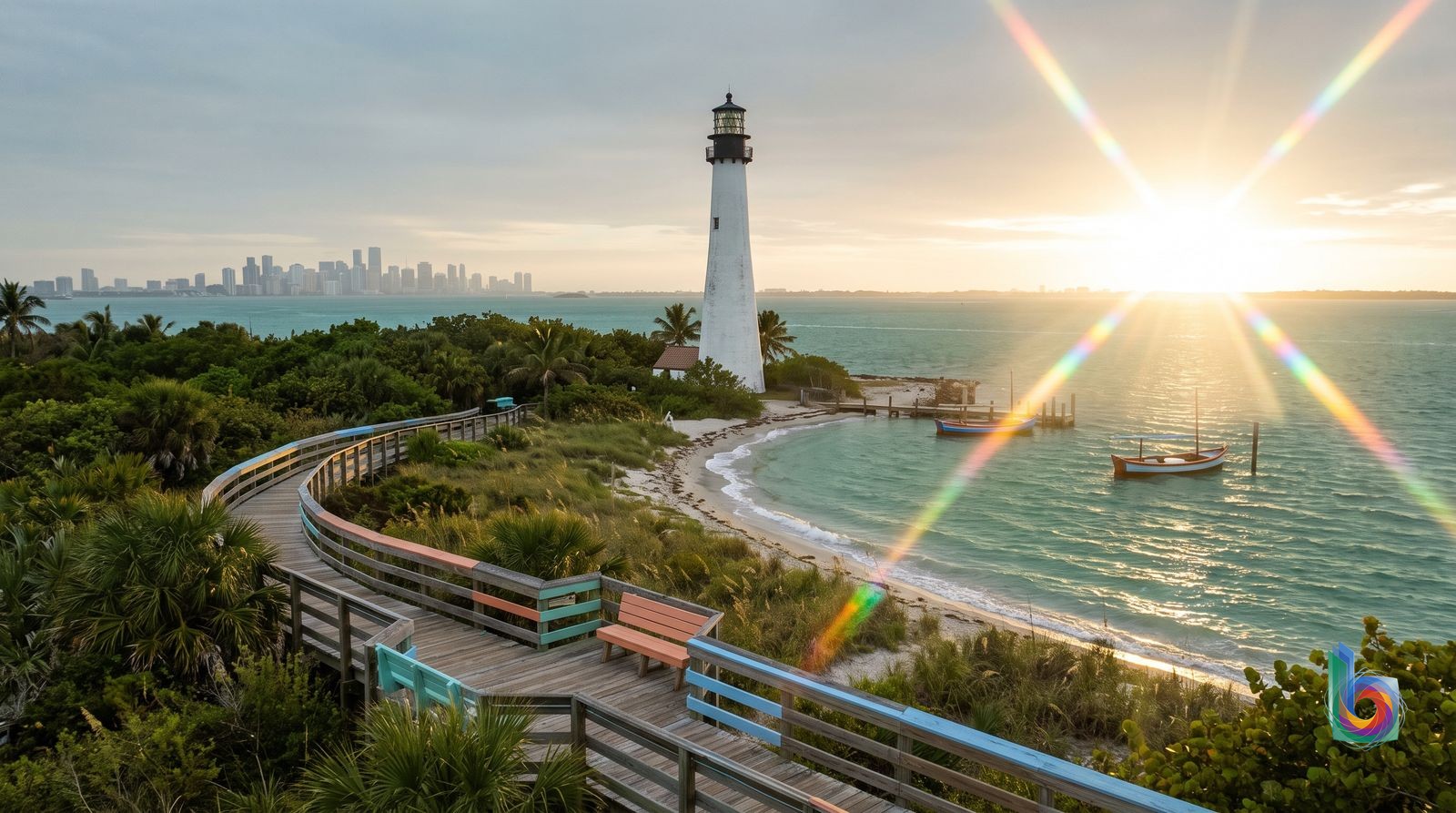
Give Key Biscayne one full, unhurried day: choose Crandon or Bill Baggs for serious beach time, then add a bike ride, park walk or the lighthouse area. Stay two or more nights only if you want a slower beach-resort break; trying to combine both major parks and mainland Miami in one day is mostly a lesson in causeway traffic.
Where should a first-time visitor stay?
Stay around the Village Center/Crandon Boulevard if you want groceries, cafés, Village Green and basic services within walking distance, or choose an oceanfront resort if the trip is mainly about the beach. Key Colony, Ocean Club/Grand Bay and west-side bay addresses suit longer, quieter stays but are less convenient without a car or rideshare; confirm that a "Miami" listing is actually on Key Biscayne before booking.
What should I book ahead?
Do not plan around advance attraction tickets: neither Crandon nor Bill Baggs is a dependable sellout. Arrive early on good-weather weekends for parking; Bill Baggs charges at the gate and is open from 8 AM to sundown, while a lighthouse tour should be checked directly with the park shortly before your visit because availability changes.
What is the best transfer from Miami International Airport to Key Biscayne?
With luggage, take a rideshare: it is the comfortable option and normally takes about 30–50 minutes before rush-hour delays, though tolls and surge can raise the cost. The budget route is Metrorail’s Orange Line to Brickell followed by Route 102 over the causeway; allow 60–90 minutes including waits and transfers, and do not rely on a generic "Miami Beach" airport shuttle to reach the island.
Should I fly into Fort Lauderdale instead of Miami?
Use Fort Lauderdale only if the airfare saving is substantial. A direct rideshare to Key Biscayne can take 50–90 minutes and public transport involves multiple transfers and commonly takes more than two hours, so MIA is materially easier.
When is the best time to visit Key Biscayne?
Late April–May is the best compromise of warm swimming water, lighter crowds and tolerable humidity; November is also strong. November–April has the easiest weather for beach time and cycling but brings higher stays, fuller parking and heavy causeway traffic, especially around holidays; June–October is hot, humid and storm-prone, with August–September carrying the greatest hurricane risk.
Do I need a car on Key Biscayne?
Not necessarily: cycling is the best way to link the Village, Crandon and the Cape Florida area on a dry, cooler day, while Route 102 is useful for a single low-cost trip from Brickell. A car helps families carrying beach gear and visitors staying in residential condo areas, but it does not defeat Rickenbacker Causeway bottlenecks and adds parking costs; walk locally rather than trying to walk the whole four-mile island.