Season by season
November–April
The comfortable, relatively dry beach season: warm days, lower humidity and the easiest conditions for cycling, lighthouse visits and long beach time. It is also Key Biscayne’s busiest period, especially on winter weekends and around holidays; the Rickenbacker Causeway can become the day’s biggest frustration.
Higher accommodation rates, heavier traffic, fuller parking lots and busier beaches. Christmas/New Year and holiday weekends are the worst combination of crowds and causeway delays.
Late April–May
A strong shoulder season, with warm water and generally manageable humidity before the full summer heat sets in. Afternoon showers become more plausible, but mornings are still good for active outdoor plans.
Heat and humidity begin rising, and rain can interrupt afternoons. Weekend parking and traffic can still be difficult in good weather.
June–October
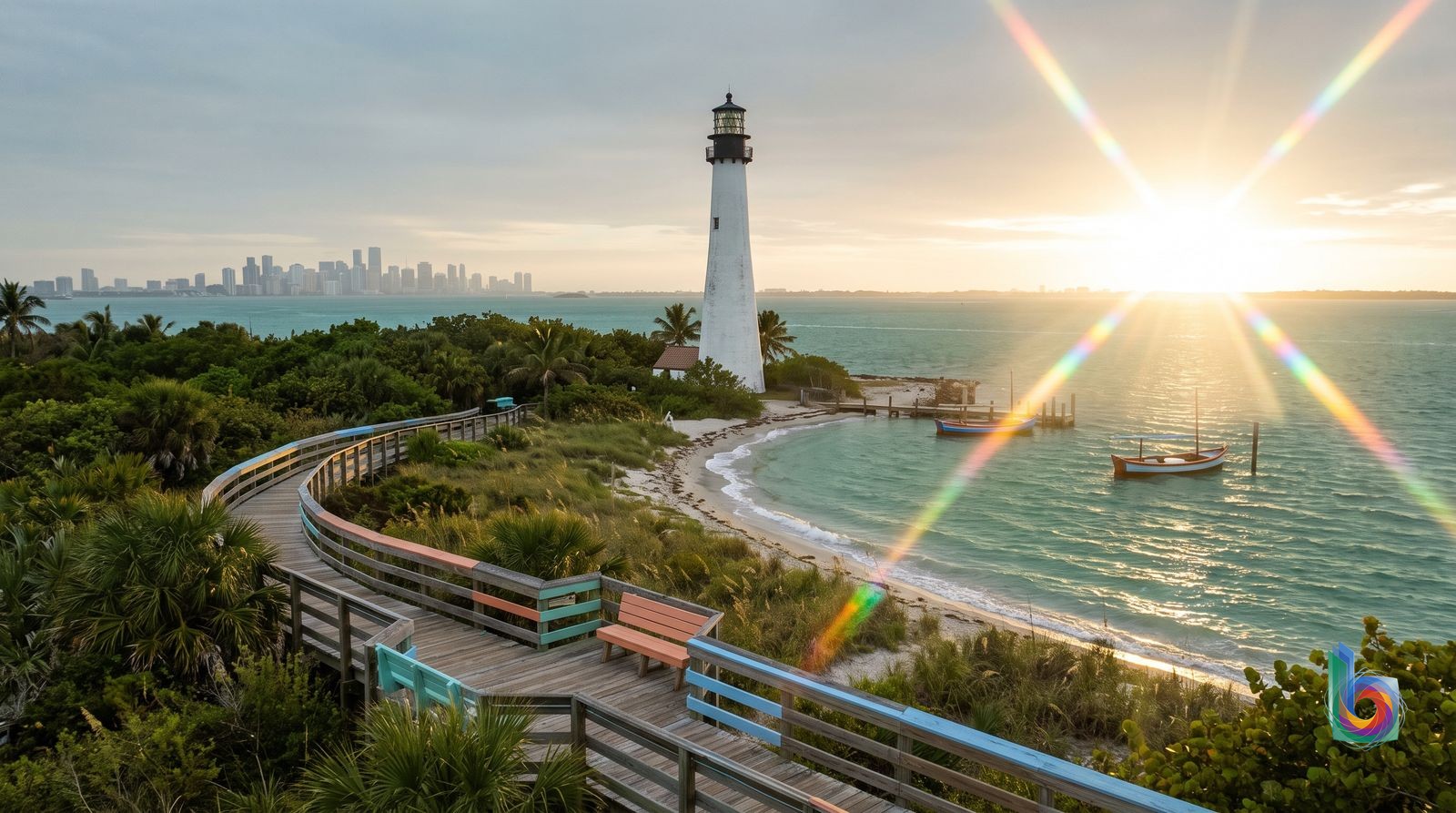
The hot, humid, storm-prone season. Plan beaches, the Cape Florida lighthouse area and bike rides early, then leave room for afternoon thunderstorms. August and September are especially oppressive and coincide with peak hurricane risk.
Dangerous weather can close or restrict beach and park access; heat makes midday walking or cycling unpleasant. Hurricane-season disruptions are a real possibility, particularly in August–September.
Events worth planning around
Winter holiday and long-weekend beach demand · Thanksgiving through New Year, plus U.S. holiday weekends during the November–April dry season
Not a single Key Biscayne festival, but the most consequential recurring calendar effect: expect more expensive stays, congested Rickenbacker Causeway traffic and earlier-arriving beach and park parking demand. Go early rather than expecting a quiet spontaneous beach day.
Miami-wide winter events · Generally December–March; exact dates vary by event
Major Miami events can spill onto Key Biscayne through accommodation demand and causeway traffic, without adding much to the island experience itself. Check Miami’s event calendar before committing to a winter weekend, but do not choose Key Biscayne specifically for a local festival.
Getting around
Walking
Staying around Crandon Boulevard Village Center, where cafés, groceries, pharmacies and Village Green are genuinely walkable; it also works for a contained beach day at Crandon Park or within Bill Baggs Cape Florida.
Treat Key Biscayne as three separate walking zones: Crandon Park in the north, the Village in the middle and Bill Baggs at the south end. Walk locally, then switch to bike, bus or ride-hail between zones. Start longer walks early, with water, sun protection and a rain layer.
It is a four-mile island, not a compact beach town. Crandon Park and Cape Florida are not comfortably walkable from each other, and midday heat makes even Village-to-beach walks feel longer than they look. West Enid and Harbor Drive are residential and do not connect conveniently on foot to public beaches or services.
Cycling
The best all-round way to link the Village, Crandon Park Beach and the southern Cape Florida area on a dry, not-too-hot day. Particularly good for travelers based in the Village Center who want a beach-and-park day without parking hassles.
Use a bike for the island’s north–south spine around Crandon Boulevard and plan an early-morning or late-afternoon ride. Combine it with walking inside Crandon Park or Bill Baggs rather than trying to cover every beach and trail on foot.
Summer heat, thunderstorms and tropical sun are real constraints, not minor inconveniences. Cycling is also less useful for families hauling substantial beach gear, and the west-side West Enid/Harbor Drive streets are quieter but less directly connected to the island’s main attractions.
Miami-Dade Transit Route 102
The low-cost link between Brickell and Key Biscayne, especially for travelers with a small bag who are staying near the Village or making a single beach-day trip from mainland Miami.
From Brickell, take Route 102 over the Rickenbacker Causeway and use it as the island’s only meaningful public-transport connection. Check the current timetable before committing to it and build wait time into any airport, Brightline or dinner plan.
There is no rail on Key Biscayne, and Route 102 is not frequent enough for spontaneous beach hopping. It becomes awkward for Cape Florida at the far south end, for bayfront addresses around West Enid and Harbor Drive, and for a Miami-heavy itinerary or late-night return after mainland dining.
Rideshare or taxi
Airport arrivals with luggage, resort stays around Ritz-Carlton Beach, and trips to Bill Baggs Cape Florida, Key Colony, Ocean Club and Grand Bay, or west-side residential addresses where the bus and walking are weak fits.
Use it point-to-point rather than as an all-day substitute for a plan: a ride to the park, Village dinner or mainland Miami can make sense. Allow extra time for the Rickenbacker Causeway, and request your return ride before you are ready to leave remote areas.
Causeway rush-hour traffic can make rides slower and pricier, and pickups at Bill Baggs Cape Florida may take time. It is a poor value for repeated short hops on a busy beach weekend, when traffic is the problem rather than finding a car.
Rental car or personal car
Families with beach equipment, longer condo stays in Key Colony or Ocean Club and Grand Bay, and visitors who want the easiest access to both Crandon Park and Bill Baggs Cape Florida.
Use the car to join the island’s spread-out zones and to carry supplies, but arrive early for prime-weather beach days. At Bill Baggs, remember that access is through the park gate and the park closes at sundown.
A car is convenient, not liberating: the Rickenbacker Causeway bottlenecks, Crandon parking costs money, and weekend or holiday beach traffic can consume the day. It is especially unrewarding if your plans mostly remain in the walkable Village Center or at a beachfront resort.
Safety: Swim near lifeguards and obey beach flags, protect yourself from heat and sudden thunderstorms, and keep valuables out of sight in cars and never unattended on the sand.
Book before you land
No Key Biscayne attraction is a reliable advance-ticket sellout. Crandon Park is a pay-to-park beach, while Bill Baggs Cape Florida State Park charges at the gate ($8 per vehicle with 2–8 occupants; $2 for pedestrians/cyclists, per the supplied park information) and operates 8 AM to sundown. Arrive early on a good-weather weekend rather than prebooking. If a particular lighthouse tour is important, check the park directly shortly before visiting: tour availability can change.
- Key Biscayne means both the island and the incorporated Village in its middle. Do not book an address labelled “Miami” and assume it is walkable to the beach or that it lies on the island; the Rickenbacker Causeway is the only road connection from the mainland.
- The island’s real headline act is outdoors, not a checklist of monuments. A realistic full day is one beach/park—Crandon or Bill Baggs—plus a bike ride or village meal; trying to do both parks, the lighthouse and mainland Miami in one day makes the causeway the main attraction.
- Bring water, reef-safe sun protection, shade and a rain layer. Tropical sun and afternoon thunderstorms are practical constraints, not minor inconveniences; do the lighthouse, cycling and longer walks early.
- For low-cost time outdoors, walk the Village Green, East Enid Linear Park to Ocean Park, or Crandon’s parkland and beach approach. Crandon charges for parking but the walk itself is free; Bill Baggs is not free, even if you only want the lighthouse grounds.
- Use a card for most transactions, but keep a little cash for small incidental needs. Standard U.S. tipping applies: roughly 18–20% at table-service restaurants, and tips are also expected for rideshare and service staff.
- Beach safety is not optional: swim near other people and heed flags, lifeguard instructions and changing surf conditions. Keep valuables out of sight in cars and do not leave phones or bags unattended on the sand.
Worth leaving the city for
Miami — Little Havana, Downtown and the bayfrontFull day; allow 30–60+ minutes each way across the Rickenbacker Causeway, longer in rush hour or on beach weekends.
Key Biscayne is deliberately quiet; Miami is the necessary antidote when you want Cuban food, street life, museums, architecture and an actual evening scene. Do not try to bolt it onto a beach morning: mainland traffic makes that a false economy. Pick one or two districts—Little Havana plus Downtown/Bayside, or Wynwood plus the Design District—instead of attempting ‘Miami’ as a checklist.
Everglades National Park — Shark ValleyFull day; roughly 1.5–2 hours each way by car from Key Biscayne once Miami traffic is counted, plus time in the park.
This is the one nature excursion that delivers a landscape Key Biscayne cannot: sawgrass prairie, alligators and vast, open wetland rather than shoreline. The tram is useful if heat or mobility rules out cycling, but it is not a wilderness escape from crowds in peak winter; arrive early and expect a long, exposed day.
Biscayne National Park — Convoy Point and a boat trip to the reefs or Boca Chita KeyFull day; allow about 1.5–2 hours each way by car to the Homestead/Convoy Point area, plus a timed boat trip.
Go if you want the real Biscayne Bay rather than another beach day: nearly all of this national park is water, with mangroves, islands, seagrass and reef access. The visitor center alone is not enough to justify the journey; the trip earns its place only with a boat excursion or your own boat. Weather can cancel the best part.
Coral GablesHalf day to a relaxed full day; typically 45–75 minutes each way by car or rideshare, traffic dependent.
A better mainland change of pace than generic Miami sightseeing if you want shaded, planned streets, Mediterranean Revival architecture and serious dining. It is compact enough to pair a walk around Miracle Mile with the Venetian Pool area, but it is not a substitute for Miami’s energy or an all-day beach outing.