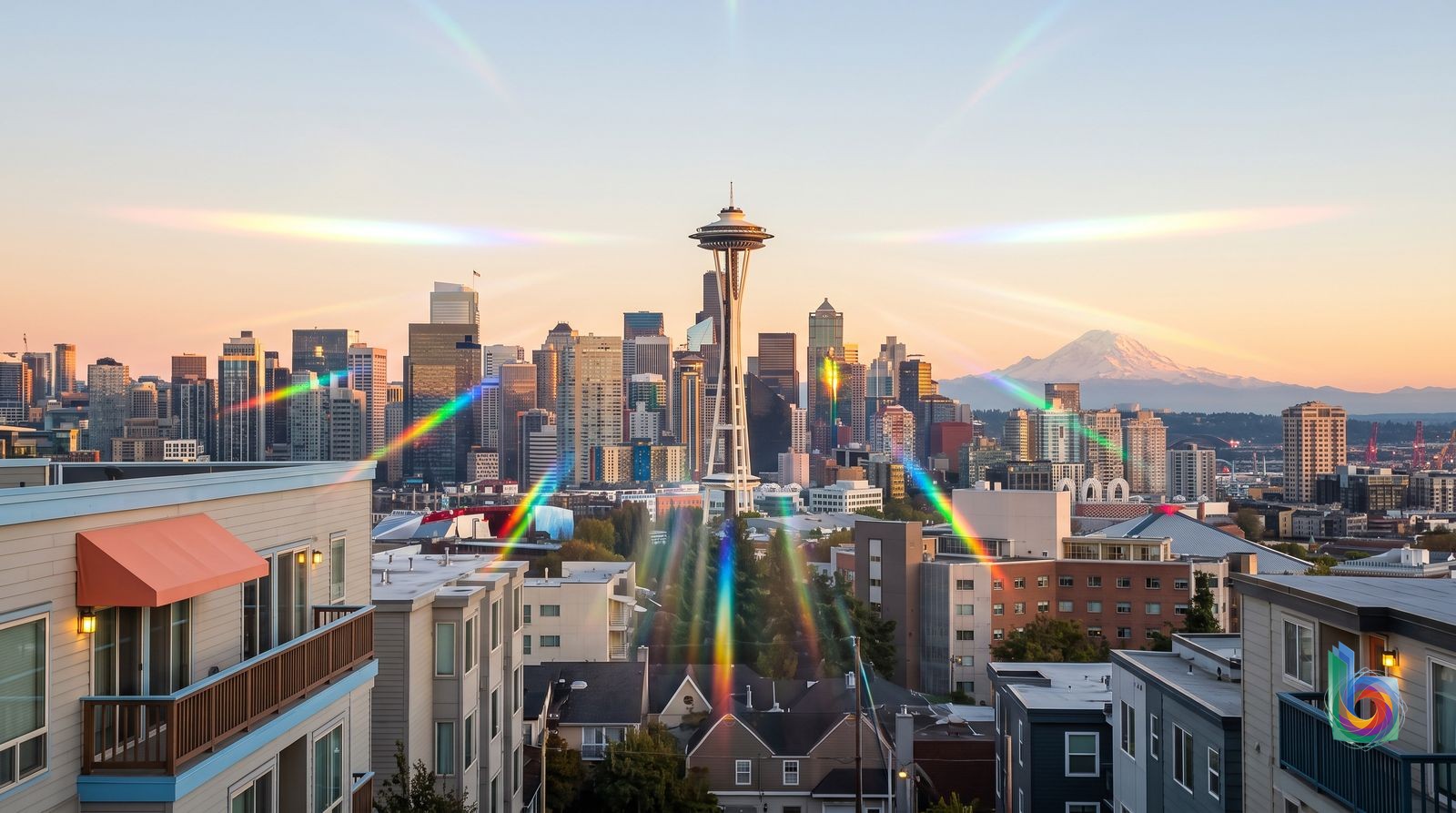
Space Needle
South Lake Union · 1.5 h
Seattle’s essential skyline symbol, with the clearest all-around introduction to the city, water, and mountains. Book a sunset visit if the weather cooperates, then use Seattle Center’s museums before or after.


Seattle is the Pacific Northwest’s big, waterbound tech city: an ambitious port and aerospace town remade by Amazon, Microsoft’s regional orbit, coffee, music and a spectacular setting between Puget Sound and Lake Washington. Its best version is not the Space Needle postcard but the collision of salt water, ferries, evergreen parks, serious food and distinct neighborhood life—Capitol Hill’s nightlife, Ballard’s old working waterfront, the International District’s restaurants, the University District, South Seattle. The trap is treating it as a compact downtown attraction cluster: Pike Place and Seattle Center are worthwhile, but they are also crowded and tourist-facing; Seattle makes sense only when you give its hills, water and neighborhoods time.
Think of Seattle as a narrow, hilly north–south city squeezed between Puget Sound to the west and Lake Washington to the east, rather than as a single walkable center. Downtown/Pike Place/Waterfront and Seattle Center form the visitor core; Capitol Hill rises immediately east, South Lake Union lies north, and the International District/Pioneer Square/SoDo run south. North Seattle includes Ballard, Fremont, Wallingford and the University District; West Seattle is separated by Elliott Bay, while Bellevue, Redmond and Microsoft country are across Lake Washington on the Eastside. Addresses use compass sectors outside downtown—enter the full N/NE/NW/S/W designation in maps or you can be sent to the wrong street.
Plan two major paid sights plus one neighborhood or outdoor stretch in a realistic day—say Pike Place, the waterfront and a timed Space Needle visit, or MoPOP plus Capitol Hill and Volunteer Park. The central sights are close together, but Seattle’s steep grades, spread-out neighborhoods, traffic and time spent waiting for or riding transit make the classic mistake of trying to add Ballard, the locks, the University District and a ferry on the same day. Clear-weather viewpoints and ferries also deserve slack in the schedule; the landscape is the point, not a checklist.
South Lake Union · 1.5 h
Seattle’s essential skyline symbol, with the clearest all-around introduction to the city, water, and mountains. Book a sunset visit if the weather cooperates, then use Seattle Center’s museums before or after.
Downtown & Pike Place Market · 2 h
This is the city’s most useful first stop: a working market, casual food destination, and direct route to the waterfront. Come hungry, wander the lower levels rather than only watching the fish toss, and continue to Post Alley and the piers.
South Lake Union · 1.5 h
The glass installations are among Seattle’s most visually distinctive indoor sights, and the garden-and-Space-Needle setting makes it more than a gallery visit. It works especially well as the polished, art-focused complement to the Needle.
South Lake Union · 25 min
This small hilltop park delivers the classic postcard view of downtown, Elliott Bay, and the Space Needle. Treat it as a short photo stop, ideally on a clear evening, not a destination requiring much of the day.
Ballard · 1.5 h
The locks turn Seattle’s working relationship with water into an accessible, genuinely local sight, with boats moving between saltwater and Lake Washington’s freshwater system. Watch the lock operation and walk the grounds; in the right season, the fish ladder adds another reason to linger.
Georgetown · 3.5 h
One of the region’s strongest specialty museums, with aircraft spanning early aviation through the jet age and presidential aviation. It is worth the trip south for aviation enthusiasts and many families, but give it a dedicated half-day rather than trying to tack it onto downtown.
morning
Downtown & Pike Place Market · 2h
afternoon
South Lake Union · 1h 15m
evening
South Lake Union · 1h 15m
Sightseeing center, convenience over neighborhood charm
Best forfirst-timers · families
Skip iftravelers seeking a residential feel · nightlife-first travelers
Central dining and nightlife, louder after dark
Best fornightlife · foodies
Skip iflight sleepers · families wanting calm evenings
Space Needle doorstep, event-driven and convenient
Best forfamilies · event-goers
Skip iftravelers seeking late-night neighborhood energy · people who want Pike Place outside the door
Where to eat
January–March
The heart of Seattle’s long grey season: frequent drizzle, overcast skies, cool temperatures and short daylight. It rarely means all-day downpours, but outdoor views and mountain scenery are hit-or-miss.
Watch for This is the weakest period for ferries, viewpoints and day trips built around clear scenery; bring a rain shell and waterproof shoes.
Costs nothing
Safety: Be alert, not frightened: keep phones and bags secure, leave nothing visible in a car, and after dark use a rideshare rather than walking alone through thin or chaotic stretches of Third Avenue, Pioneer Square, the International District or SoDo.
Eat
Seattle eats best when you leave the immediate Pike Place orbit: Capitol Hill for contemporary restaurants and late-night energy, Ballard for a destination-dining-and-brewery crawl, and the International District for the city’s most consequential Asian-American food scene. Build meals around Puget Sound seafood, excellent coffee and the city’s casual multicultural staples; Pike Place is essential for grazing, but many restaurants closest to it are tourist-facing.
Fresh Pacific Northwest seafood: oysters, salmon and Dungeness crab when in season · Pike Place Market grazing: seafood counters, seasonal produce and market snacks · Seattle-style teriyaki, a distinctly local fast-casual institution · Coffee as a daily ritual, from independent cafés to the original Starbucks at Pike Place · Asian-American eating in the International District/Chinatown—especially Chinese, Japanese, Vietnamese and regional specialties—alongside groceries at Uwajimaya · Craft beer and brewery food, particularly in Ballard and Georgetown · Inexpensive, international student-oriented meals in the University District · South Seattle’s diverse, locally rooted restaurant scene around Columbia City
Before you go
Allow three full days; four is better if you want a ferry ride, a serious neighborhood day, or time for weather-dependent views. Seattle’s core sights are close together, but hills, traffic and spread-out districts make it a mistake to pack Ballard, the locks, a ferry and the University District into one day.
Choose downtown, Belltown or Pike Place for the easiest access to the waterfront, market, Monorail and Link; expect tourist crowds and higher prices. Capitol Hill is the better choice for nightlife, restaurants and a more local feel, while Ballard is appealing but less convenient for a short first stay because it is not on Link.
Book a timed Space Needle entry in advance for sunset, summer, weekends and school holidays; reserve Chihuly only if it genuinely interests you as well. Summer/weekend Argosy cruises, major sports or concert tickets, and MoPOP on busy dates are also sensible advance purchases; lock in popular restaurants early on Pride, Seafair and Labor Day/Bumbershoot weekends.
Take Sound Transit Link 1 Line from SeaTac/Airport Station to downtown: it takes roughly 35–40 minutes, costs about $3–$3.25, and requires a 5–10 minute walk from the terminal. It is usually preferable to rideshare, since traffic can make the 14-mile drive slow and expensive.
No, not for a city-only visit: parking is expensive, free spaces are scarce and traffic is miserable. Use Link for the airport, downtown, Capitol Hill and the University District; combine it with buses, walking and occasional rideshares for Ballard, Fremont, Seattle Center and West Seattle, and rent a car only for Rainier, Olympic or Cascade trips.
September through early October is the best overall trade-off: it often retains much of summer’s mild weather while crowds and hotel rates ease. Late June through early September is driest and brightest but busiest and priciest, while November through March is best only if you are content to prioritize museums, food and coffee over reliable views.
Yes—walking onto a Washington State Ferry to Bainbridge Island or Bremerton is one of Seattle’s most worthwhile scenic experiences, not just transport. Check schedules and leave buffer time for popular warm-weather sailings; do not bring a car unless you have a specific reason.
Plan only two major sights plus one nearby neighborhood or outdoor stretch per day, and wear waterproof shoes and a rain shell rather than relying on an umbrella. Go to Pike Place early on a weekday, skip the original Starbucks line, use full directional addresses in maps, and avoid long late-night walks through thinly populated stretches of Third Avenue, Pioneer Square, the International District and SoDo.

Ready to go?
Plan a journey to Seattle
Start with this city already set as a chapter.
Destination profile
Worth knowing
Good to know