
Season by season
December–February
The most comfortable stretch: generally dry, less humid than the rest of the year and comparatively manageable for walking. It is also the city’s popular high season.
Higher lodging demand and prices, especially around Christmas, New Year and Tết. Tết can mean altered museum, restaurant and shop hours despite the favorable weather.
March–April
Usually drier, but this is the punishing hot season; temperatures can reach 40°C. Outdoor sightseeing is most tolerable early and late in the day.
The heat and humidity make long walks, markets and day trips tiring. Plan air-conditioned museums, cafés or a long lunch for the middle of the day.
May–October
Wet season: hot, humid and prone to hard, often short downpours rather than unbroken all-day rain. Rain can arrive suddenly.
Build time buffers into airport runs and day trips, and expect soaked pavements, difficult crossings and weather-disrupted outdoor plans. A compact rain layer is more useful than trying to schedule every shower away.
November
A transition month: rains may still occur, as some sources extend the wet season into November, but conditions begin moving toward the drier December–February period.
Do not assume dry-season weather; keep rain flexibility in the itinerary and allow extra time for transfers.
Events worth planning around
Tết (Vietnamese Lunar New Year) · Late January or February, depending on the lunar calendar.
The year’s most consequential travel period. Intercity transport sells out, lodging demand rises and many businesses operate on reduced or changed hours; the central city can feel unusually quiet. Book trains, buses, flights and accommodation early, and do not count on normal restaurant or museum routines.
Getting around
Walking
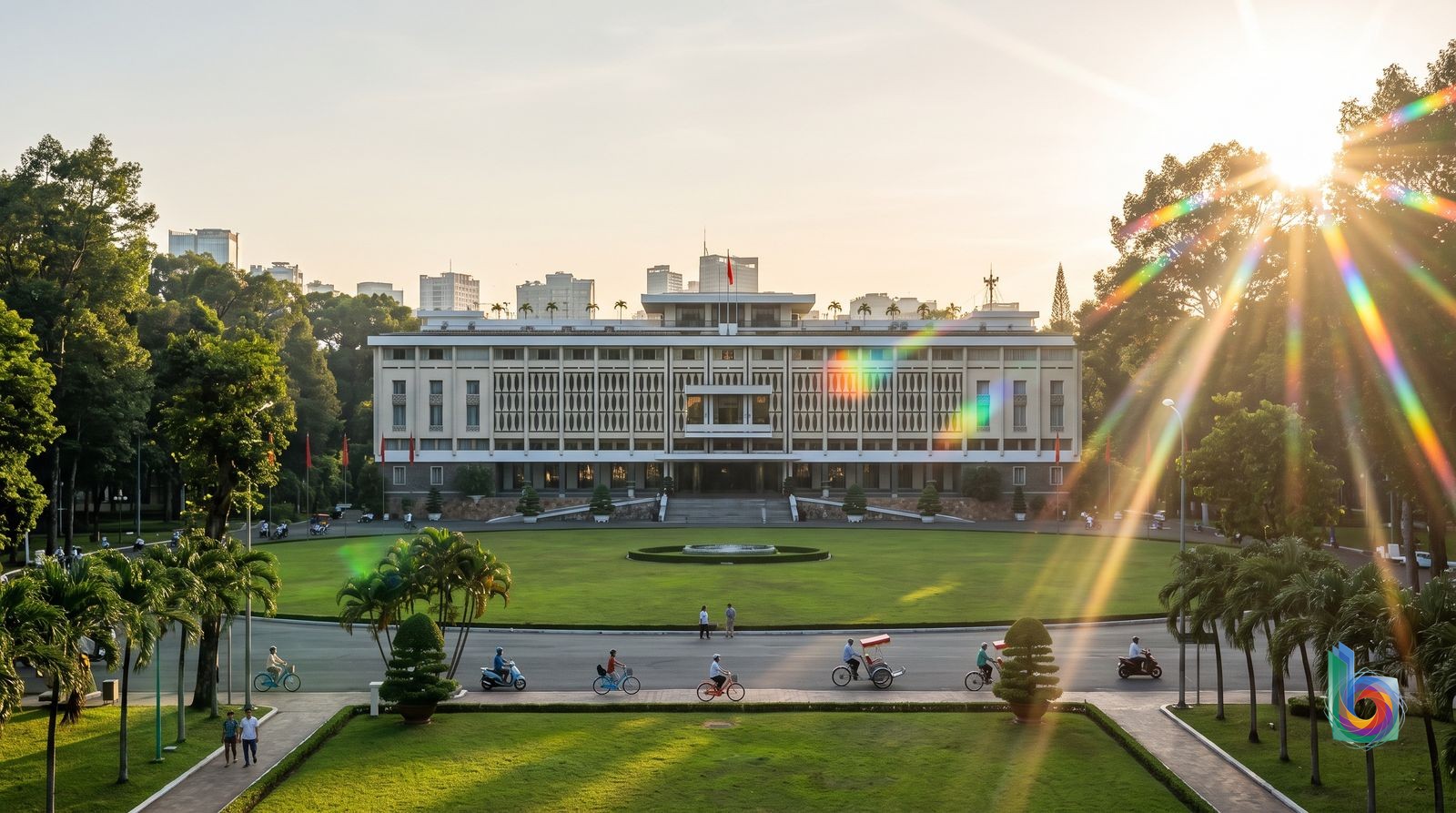
Compact District 1 sight clusters: the colonial core and riverside, Nguyễn Huệ, Opera House, Central Post Office/Notre-Dame area, Reunification Palace and War Remnants Museum. Cholon also rewards walking once you have arrived in the right market-and-temple pocket.
Plan only two or three nearby clusters in a day, start early, and use the building-side pavement for your phone and bag. At crossings, move steadily and predictably; do not sprint, weave or step backward into scooter traffic.
Walking stops being efficient across districts: Cholon (District 5), District 4 and District 3 are farther or less pleasant from the core than maps imply, while Thu Thiem’s wide roads, heat and lack of shade make it particularly unrewarding. Sudden rain, heat, uneven pavements and hostile crossings limit even central walks.
Metro Line 1
The one fast, dependable cross-city axis: Bến Thành for the central city; Ba Son/Opera House for the colonial core and riverside; Tan Cang for Binh Thanh; Thảo Điền and An Phú for the expat enclave; and Suối Tiên for the eastern bus terminal.
Use trains running roughly every 8–12 minutes from about 05:00 to 22:00. Fares are about 7,000–20,000 VND by distance. Choose a hotel genuinely close to a station in Thảo Điền, An Phú or Binh Thanh—the last mile in heat is not trivial.
It is a single corridor, not a citywide solution. It does not serve District 3, Cholon/District 5, District 4, Thu Thiem, Tan Binh/SGN airport or Miền Tây bus station. After about 22:00, use Grab or a taxi instead.
City bus
The cheapest option for airport-to-centre travel and for travelers comfortable using maps and data. Bus 152 and the 109 express connect Tan Son Nhat with the Ham Nghi/Bến Thành area; buses also reach Cholon and the outer bus terminals.
Keep data on your phone, identify the stop before boarding, and carry small đồng or use contactless payment where available. The reported late-2026 temporary free-fare policy may not last, so do not plan around it; normal local fares are generally low.
Coverage is broad but route-finding remains fiddly without Vietnamese, and traffic removes much of the value on longer journeys. It is a poor choice late at night, with luggage, or for awkward links to District 4, Thu Thiem and scattered parts of Binh Thanh or Thảo Điền.
Grab ride-hail
The default for anything off Line 1: District 3, Cholon, District 4, Thu Thiem, airport transfers with luggage, late-night returns, and cross-city trips when heat or rain makes walking miserable.
Book through the Grab app, confirm the vehicle and plate before getting in, and place your pickup on a clear main road rather than a confusing alley. It is also the sensible link from Saigon Railway Station and the older Miền Đông or Miền Tây terminals to District 1.
Traffic can turn short rides into long ones, especially around bridges into District 4, airport approaches in Tan Binh, and major routes through Binh Thanh. Do not accept an unsolicited driver's fixed-price ‘tour’ or cancel the app ride for a street deal.
Metered taxi
A practical fallback when you do not have data, your phone battery is low, or Grab supply is poor—especially from the airport, rail station and bus terminals.
Use visibly metered Vinasun or Mai Linh cars, and make sure the meter is running. At Tan Son Nhat, use the official rank or book a car; specify whether you need the international or domestic terminal.
Avoid drivers who approach inside airport or bus-station arrival areas, and do not agree to a fixed street price. Taxis face the same late-night and rush-hour congestion as Grab, particularly between the airport and central District 1.
Motorbike rental
Almost nobody on a short visit. It is only defensible for riders already highly competent in dense Vietnamese urban traffic and comfortable navigating independently beyond the metro corridor.
If you do ride, treat it as serious road travel rather than a casual sightseeing accessory: use proper safety gear, carry the required documents and avoid using a phone while moving.
Do not rent one merely because it looks quicker or cheaper. District 1’s crossings, District 4’s bridge approaches, Cholon’s dense traffic, and construction-heavy Binh Thanh are all hostile for inexperienced riders; apparent freedom is not worth the risk.
Bookable experiences per person, per day
- Value
- $39
- Typical
- $74
- High
- $135
Based on 2918 currently available tours and tickets. Hotels, meals and transport are not included.
Safety: Keep your phone and bag on the building side of the pavement—especially in District 1 and Phạm Ngũ Lão/Bùi Viện—use Grab or metered Vinasun/Mai Linh taxis, and cross traffic slowly and predictably rather than trying to dodge scooters.
Book before you land
No standard central sight is a must-book: War Remnants Museum, Independence Palace, Ben Thanh Market and the major museums are normally walk-up visits. Do not pay a reseller merely to ‘skip’ a line. · Cu Chi Tunnels — reserve an organized half-day trip 1–3 days ahead in busy periods if you want a specific hotel pickup or speedboat option; it is the transport, not the tunnel admission itself, that is likely to constrain you. · Museum of Vietnamese History water-puppet performances — there are several short shows daily, so buy on the day in normal periods; reserve ahead only for a fixed weekend/holiday time or a group.
- Use “Saigon” without worrying: it remains the normal everyday name, especially for the central city; “Ho Chi Minh City” is the formal name. Avoid treating the Vietnam War as casual debate—locally it is the “American War” and remains sensitive.
- Motorbike snatch theft is the practical risk. Keep your phone, camera and bag on the building side of the pavement, do not hold valuables out toward traffic, and do not leave them on a café table by the street—especially in District 1 and the Phạm Ngũ Lão/Bùi Viện area.
- Book airport cars through Grab or take a visibly metered Vinasun/Mai Linh taxi. Ignore drivers who approach you inside terminals or bus stations, and specify the correct airport terminal: the international and domestic terminals are separated by an approximately 600 m walk.
- Carry small-denomination đồng and use contactless card/phone where available; inspect cash and confirm the zeroes before handing it over. Airport SIMs before immigration are markedly overpriced—buy after immigration or in town.
- The friendly stranger with a relative abroad, an invitation home, a card game, or an urgent sick-grandmother story is a known scam pattern. Decline politely and keep moving; likewise, buy intercity tickets directly from the operator rather than a Phạm Ngũ Lão agency when possible.
- At markets, bargaining is normal, but do it lightly and only if you might buy. For coconuts and other simple street purchases, ask the price before the vendor starts preparing it.
Worth leaving the city for
Củ Chi TunnelsHalf day: realistically 5–7 hours door-to-door, including roughly 1.5 hours each way from central HCMC.
This is the one war-history excursion that earns its immense tourist traffic: an underground guerrilla network makes the conflict tangible in a way the city museums cannot. Go as a dedicated half-day rather than combining it with the Mekong Delta, which turns both into a rushed coach marathon. The tunnels are claustrophobic, heavily visited and partly widened for visitors—do not expect untouched wilderness—but still worthwhile.
Mekong Delta — Ben Tre or Mỹ Tho, ideally with a small-group or independent boat planFull day: about 9–12 hours door-to-door.
Leave HCMC for canals, orchards, river traffic and a genuinely different pace. It beats another day in the city if you want rural southern Vietnam rather than another colonial façade or war museum. The downside: standard mass tours can feel like a conveyor belt of coconut-candy stops, folk performances and souvenir pressure. Pick one delta area and give it a full day; do not bolt it onto Củ Chi.
Cần Giờ Mangrove Biosphere ReserveFull day: roughly 8–10 hours door-to-door.
A real change of scene without committing to the Mekong: mangrove forest, waterways and the sense of being outside a 14-million-person metropolis. It is the best nature-focused escape close to town. Go with modest expectations—this is not pristine, empty jungle, and the popular monkey area can be touristy—but it is far more restorative than spending another afternoon in District 1.
Tây Ninh and the Cao Đài Holy SeeFull day: roughly 9–11 hours door-to-door; longer if combined with Củ Chi.
Worth it for the extraordinary Cao Đài temple and a glimpse of a religion and landscape that HCMC does not offer. It pairs logically with Củ Chi only if you have one very long day and accept that transport time will dominate; otherwise make it its own excursion. Skip it if ornate religious architecture is not your thing.
Researched Nov 17, 2026
