
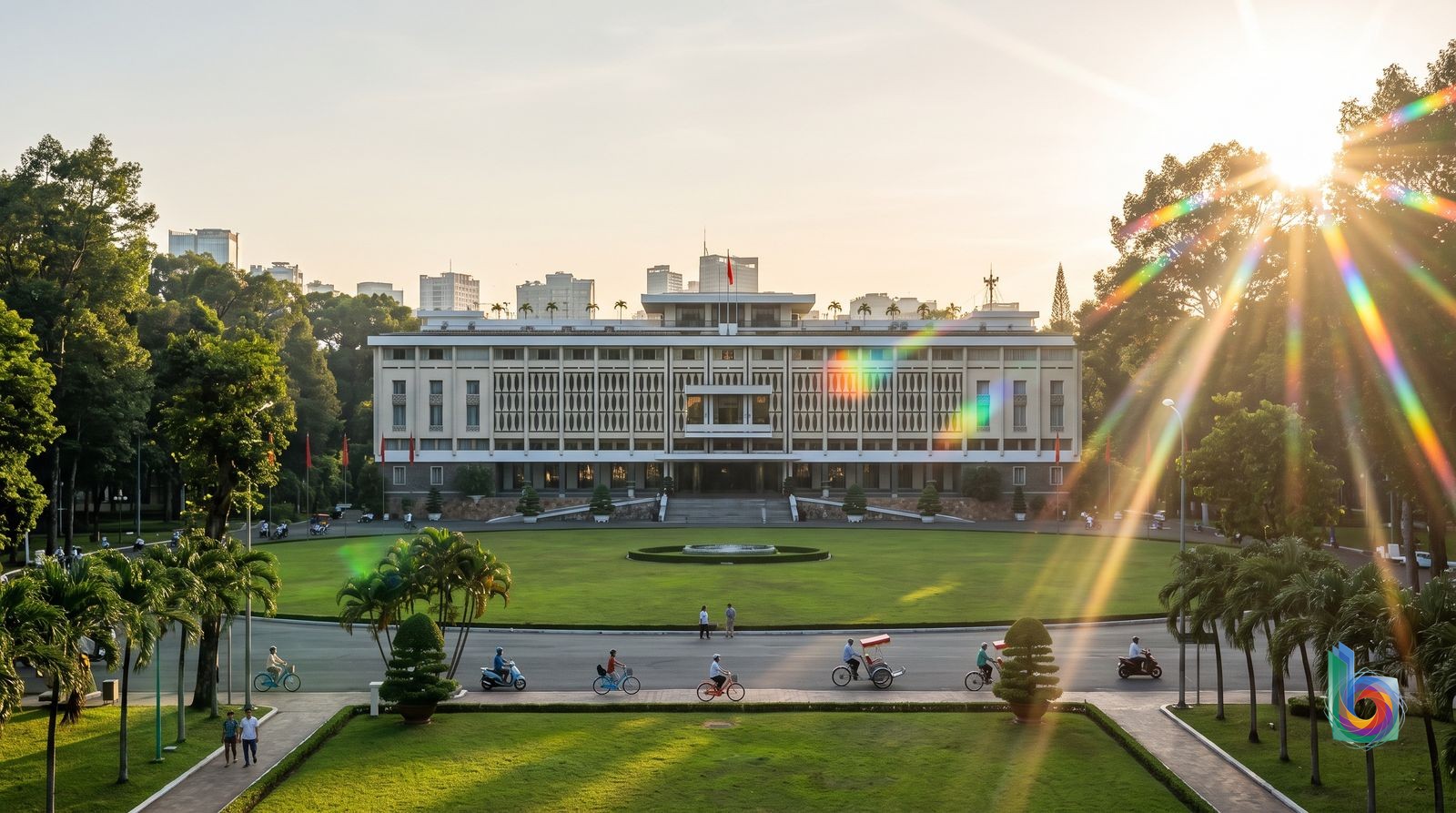
First visit? Stay in District 1 Colonial Core & Riverside.
For a first visit, this is the least complicated base: the Opera House, Nguyen Hue, the river, major museums and much of central District 1 are within reach on foot, while Ben Thanh, Opera House and Ba Son stations give access to Metro Line 1. It costs more and feels hotel-heavy, but on a short stay the saved time and easier evenings outweigh the lack of local texture.
luxury →
The city’s strongest concentration of established luxury hotels, rooftop bars, polished dining and river-adjacent addresses is here. It is also the only upscale base where a visitor can walk to a substantial share of headline sights rather than relying on cars.
value →
District 3 generally gives better value and more character than central District 1: local restaurants, cafés and older residential streets, with the War Remnants Museum and parts of the center reachable on foot. Choose a spot toward the District 1 edge if sightseeing is the priority.
family →
For a longer family stay, its larger apartments, calmer residential rhythm, international dining and Metro Line 1 access make daily logistics easier than the central core. The trade-off is that the historic center is an outing, not a walk downstairs.
nightlife →
This is the clear choice for hostels, cheap drinks, late bars and meeting other travelers without planning transport home. Book on a side alley rather than directly on Bui Vien if you want any chance of sleep, and keep phones and bags secured at street edges.
quiet →
It is the most convincing quiet base that still has useful Metro Line 1 access, good everyday food and services. It is calmer than District 1, but not secluded: the neighborhood is spread out and accommodation far from a station can make every trip ride-hail dependent.
rail-day-trips →
District 3 is the practical choice for travelers using Saigon railway station for intercity departures while still wanting an appealing, central neighborhood. It is much more pleasant as a base than the airport area, though the metro does not serve District 3 directly.
return-visitor →
A repeat visitor who has already done the colonial core should stay here for Chinese-Vietnamese food, markets, temples and working-city texture. It is not effortless—central District 1 requires a taxi, ride-hail or bus—but that is precisely why it feels less like a standard Saigon stopover.
Avoid sleeping near Bui Vien–Pham Ngu Lao, especially Bui Vien street frontage: Do not sleep here unless bars, hostels and late-night sociability are the purpose of the trip. Amplified music, crowds, touts and variable room soundproofing make it a poor fit for families and light sleepers; Wikivoyage also specifically cautions against conspicuously carrying valuables in the backpacker area.
Avoid sleeping near Tan Binh (Airport Area): It is sensible for a very early flight or late arrival, not for a leisure base. Aircraft and road noise, slow airport traffic and repeated rides into District 1 can consume a short trip; there is no Metro Line 1 airport station.
Avoid sleeping near Thu Thiem: Its new towers and skyline views can look compelling online, but the district remains road-heavy, sparse and weak for walk-out-the-door dining or sightseeing. Without a direct Line 1 station, most visitors end up taking ride-hail trips back to the old center.
The neighborhoods
Pick the areas you want to be around — the hotels and tables below narrow to them.
Stay here Fine base Visit, don't sleep
District 1 Colonial Core & RiversideFirst-timer default
The polished, walkable central Saigon
This is the compact postcard center around the Opera House, Dong Khoi, Nguyen Hue and the river: colonial-era landmarks, major museums nearby, rooftop bars, international hotels and the city’s most convenient concentration of sights. It is the sensible first stay, not the most intimate version of Saigon.
Vs. others: Pick District 1 Colonial Core & Riverside over District 3 if you want to walk to the headline sights and dine late; pick District 3 if you would trade that convenience for a more local, less hotel-heavy street life.
Ben Thanh, Opera House and Ba Son stations on Metro Line 1 put the district on the only current metro corridor. Nguyen Hue, the Opera House, the riverside and many central sights are walkable, but heat, traffic and wide crossings make even short walks tiring. The Waterbus stop near Hotel Majestic is nearby.
Best for: first-timers, luxury, families, short stays, foodies
Hotels and drinks carry a central premium. · Motorbike snatch theft and pickpocketing are a real concern, especially at street edges and outdoor tables. · Traffic, construction and tour groups can make the core feel relentlessly busy.
See hotels in District 1 Colonial Core & RiversideBen Thanh & the Market QuarterExcellent base
Central, useful, and aggressively tourist-facing
West of the colonial core, this is the dense practical center around Ben Thanh Market, major bus connections, small hotels and a constant stream of visitors. It is highly convenient for a first visit and airport buses, but the market-side experience can feel transactional rather than atmospheric.
Vs. others: Pick Ben Thanh & the Market Quarter over Bui Vien–Pham Ngu Lao if you want central access without sleeping inside the party zone; pick Bui Vien–Pham Ngu Lao if cheap beds and late-night socializing matter more than calm.
Ben Thanh is the Line 1 terminus and has direct access to Ham Nghi Bus Transfer Station; airport buses 109 and 152 stop nearby. It is walkable to much of District 1, including the colonial core, though sidewalks and crossings are uneven.
Best for: first-timers, value, families, short stays, foodies
Ben Thanh Market and its immediate surroundings are crowded and can be heavy on tourist-oriented selling and bargaining. · Street-side phone and bag theft is a concern in central District 1. · Some hotel blocks are noisy and characterless despite the excellent location.
See hotels in Ben Thanh & the Market QuarterBui Vien–Pham Ngu LaoAcceptable base
Backpacker Saigon after dark
The backpacker quarter is a tight web of guesthouses, hostels, bars, tour sellers and inexpensive eating around Bui Vien and Pham Ngu Lao. It still works for travelers who want cheap rooms and instant company, but it is not a secret local neighborhood and Bui Vien in particular is built around noise.
Vs. others: Pick Bui Vien–Pham Ngu Lao over Ben Thanh & the Market Quarter if nightlife, hostels and low-cost lodging are the point; pick Ben Thanh if you want the same central reach with a better chance of sleeping.
A 10–15 minute walk from Ben Thanh Market and Metro Line 1, depending on the lane. Saigon Bus Station is close to September 23rd Park; the neighborhood itself is best navigated on foot, then by taxi or ride-hail.
Best for: budget, nightlife, solo travelers, backpackers
Bui Vien is loud late into the night, with bars, amplified music, touts and crowds. · Wikivoyage specifically flags the area as less safe for conspicuously carrying valuables; snatch theft is the practical risk. · Cheap rooms vary sharply in light, cleanliness and soundproofing; alley rooms are often quieter than street-facing ones.
See hotels in Bui Vien–Pham Ngu LaoDistrict 3 (Turtle Lake, War Remnants, Tan Dinh)Excellent base
Leafier, lived-in central Saigon
District 3 begins just beyond the core but feels less staged: old villas, coffee shops, local restaurants, the War Remnants Museum area and Tan Dinh’s pink church and market. It is one of the best compromises between central convenience and actually seeing daily city life.
Vs. others: Pick District 3 over District 1 Colonial Core & Riverside if you want a more residential, food-led base; pick the colonial core if walking to Nguyen Hue, the river and the Opera House is non-negotiable.
No Metro Line 1 station lies in the district. The War Remnants Museum and parts of the center are walkable from its northern edge, but in the heat most trips to the riverfront, Cholon or farther-afield sights need a taxi, ride-hail or bus.
Best for: foodies, return-visitors, value, quiet, couples
It is not as effortless for first-time sightseeing as central District 1. · Main roads are traffic-heavy and noisy. · Its low-key evening scene disappoints travelers expecting Bui Vien-style nightlife.
See hotels in District 3 (Turtle Lake, War Remnants, Tan Dinh)Cholon (District 5 Chinatown)Acceptable base
Old trading streets, temples, serious eating
Cholon is the historic Chinese-Vietnamese commercial city centered on District 5, with markets, clan temples, medicine shops and some of the city’s strongest food culture. Go for texture and eating rather than polished sightseeing; it is a working urban district, not a recreated Chinatown.
Vs. others: Pick Cholon over District 3 if temples, markets and Chinese-Vietnamese food are your priority; pick District 3 if you want a greener, more convenient base for central sights.
Cholon is well served by road transport but not by Metro Line 1. It is too far from the District 1 core for most visitors to walk comfortably; use a taxi, ride-hail or bus, then explore individual market-and-temple clusters on foot.
Best for: foodies, return-visitors, culture seekers, value
Distances between sights are larger and traffic is more intense than a map suggests. · English is less universal than in District 1’s tourist belt. · It is a weaker base for a first visit because trips to the central museums and riverfront take time.
See hotels in Cholon (District 5 Chinatown)District 4 (Canal-side & Vinh Khanh)Acceptable base
Street-food energy across the canal
Immediately south of central District 1, District 4 has changed from an overlooked working-class district into a popular local-food and apartment area, especially around Vinh Khanh Street. Its appeal is eating and seeing a less manicured side of the center, not landmark collecting.
Vs. others: Pick District 4 over Bui Vien–Pham Ngu Lao if you want food-focused evenings rather than backpacker bars; pick Bui Vien–Pham Ngu Lao if hostels, drinking and meeting other travelers are the priority.
There is no metro station in District 4. Across the canal, parts of District 1 are a short ride away, but bridges funnel traffic and walking to the colonial core is less pleasant than the distance implies.
Best for: foodies, value, nightlife, return-visitors
Street-food areas can be smoky, crowded and noisy at night. · The district is fragmented by waterways and busy bridge approaches. · It lacks the all-day, walk-out-the-door sightseeing convenience of District 1.
See hotels in District 4 (Canal-side & Vinh Khanh)Thao Dien & An PhuExcellent base
Expat comfort beside the metro
In Thu Duc City east of the river, Thao Dien and neighboring An Phu are the international-resident enclave: cafés, brunches, international schools, apartments and a comparatively relaxed residential rhythm. It is comfortable and easy to eat well, but can feel insulated from the city visitors came to experience.
Vs. others: Pick Thao Dien & An Phu over District 1 Colonial Core & Riverside if space, a calmer residential setting and family-friendly routines outweigh sightseeing at your doorstep; pick District 1 if this is your first short visit.
Thao Dien and An Phu stations are on Metro Line 1, connecting to Ben Thanh in the center; stations are elevated and the train is useful, though last-mile walking in the heat is not always pleasant. Ride-hail remains practical for scattered restaurants and riverfront residences.
Best for: families, quiet, long stays, international dining, return-visitors
It is farther from the major historic sights than its glossy accommodation listings suggest. · International cafés and restaurants make it pricier and less distinctly Vietnamese than District 3 or Cholon. · The area is spread out, so a hotel near a station matters more than simply booking ‘Thao Dien.’
See hotels in Thao Dien & An PhuBinh Thanh (Tan Cang & Landmark 81)Acceptable base
High-rises, river views, commuter reality
Binh Thanh is the fast-growing bridge between central Saigon and Thu Duc, combining ordinary dense streets with newer towers around Landmark 81 and Tan Cang. It suits travelers who value modern apartments, skyline views and Line 1 access more than a traditional neighborhood atmosphere.
Vs. others: Pick Binh Thanh over Thao Dien & An Phu if you want newer high-rise living closer to central District 1; pick Thao Dien if café culture, family routines and a more settled expat neighborhood appeal more.
Tan Cang station on Metro Line 1 is the key advantage, with a quick rail link toward Ben Thanh and eastward Thu Duc. Outside the station corridor, Binh Thanh is broad and road-oriented; the city center is generally a ride rather than a walk.
Best for: luxury, families, long stays, return-visitors
Much of the district is ordinary high-density city fabric rather than a visitor neighborhood. · Tower developments can feel isolated from street life. · Traffic around major approaches and construction zones can be punishing.
See hotels in Binh Thanh (Tan Cang & Landmark 81)Thu ThiemAcceptable base
New skyline, big roads, little texture
Across the Saigon River from District 1, Thu Thiem is the planned high-rise redevelopment zone: striking views, new apartments and wide boulevards, but still far less layered and walkable than the old center. Choose it deliberately for contemporary space and skyline rather than for classic Saigon.
Vs. others: Pick Thu Thiem over Binh Thanh if riverfront skyline views and a newer, quieter setting matter most; pick Binh Thanh if Metro Line 1 access and more established everyday streets matter more.
Thu Thiem is across the river from District 1 but is not directly served by a Metro Line 1 station. Distances are deceptive: it usually requires a taxi, ride-hail or bus connection to reach the old center and its attractions.
Best for: luxury, quiet, long stays, return-visitors
The planned district can feel empty after work hours and between developments. · Few historic sights or organically walkable food streets are on the doorstep. · Wide roads, heat and sparse shade make pedestrian exploration unrewarding.
See hotels in Thu ThiemTan Binh (Airport Area)Visit, don't sleep
Airport convenience, not a city break
Tan Binh surrounds Tan Son Nhat airport and is useful for an early flight, a late arrival or business nearby. It has local eating and busy commercial streets, but few visitors should make it their sightseeing base when the center is so much more rewarding.
Vs. others: Pick Tan Binh over Ben Thanh & the Market Quarter only if an airport schedule is the overriding concern; pick Ben Thanh for virtually any leisure stay where you want to see the city.
Airport buses 109 and 152 connect toward the center, but airport-area traffic can be slow. There is no Metro Line 1 station at the airport, and central District 1 is not walkable from here.
Best for: early flights, late arrivals, business travelers, budget
Traffic and aircraft noise can be substantial. · It is inconvenient for the principal museums, riverfront and evening life. · Generic airport hotels can leave a leisure traveler spending too much of a short trip in transit.
See hotels in Tan Binh (Airport Area)Where to stay
Hotels in Ho Chi Minh City
PYNT Hotel 9Hotel5.0 · 108 reviews
Cherry Airport Hotel and Apartment 2Hotel4.9 · 49 reviews
Express by M Village Nguyễn Thế LộcHotel4.7 · 117 reviews
Holiday Inn & Suites Saigon Airport by IHGHotel4.6 · 2,025 reviews
Khách sạn Phú HưngMotel4.5 · 104 reviews
Wink Saigon Centre, part of Unscripted by HyattHotel4.3 · 1,171 reviews
