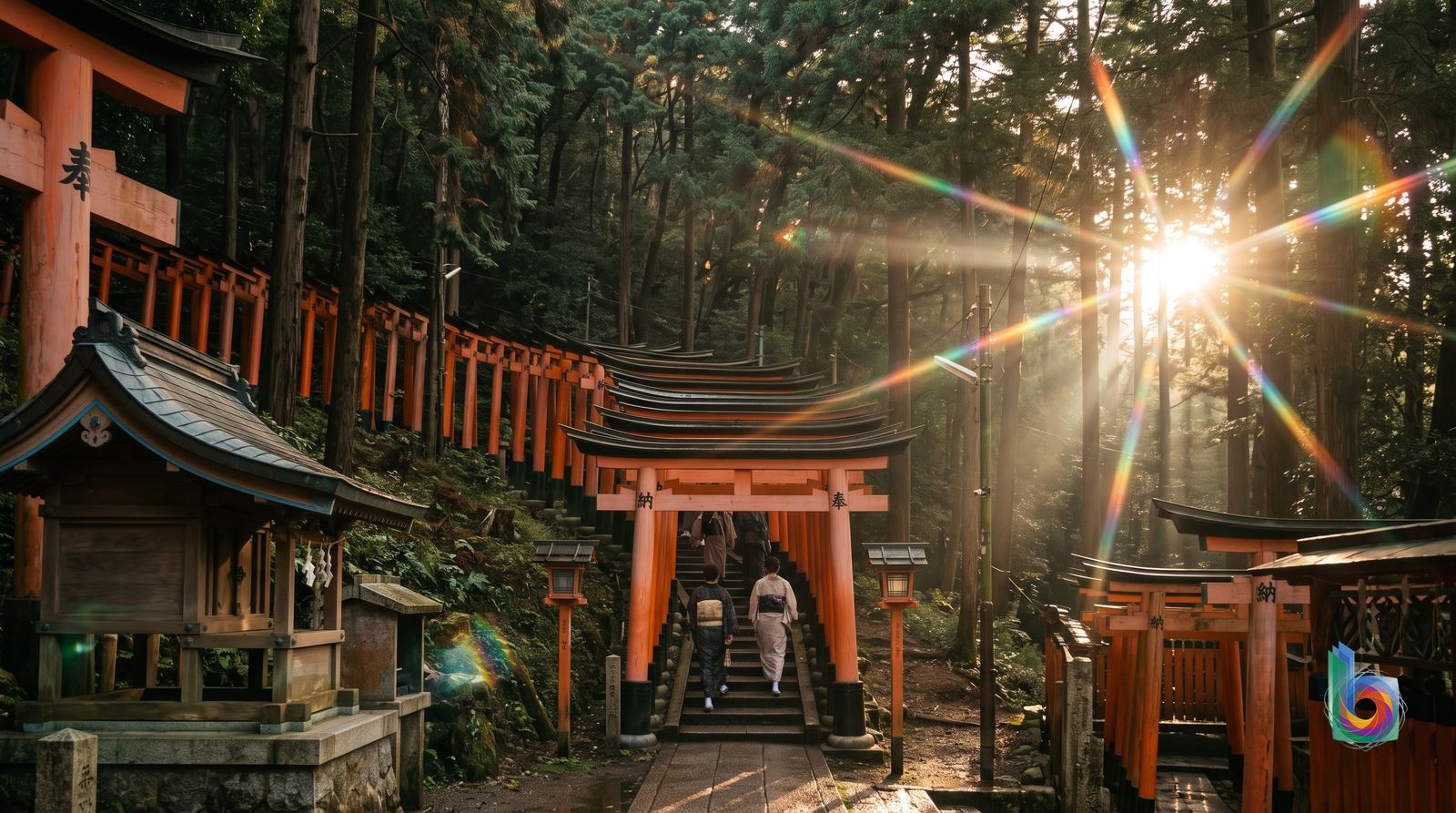

Kyoto’s most recognizable shrine experience is best understood as a hike rather than a quick photo stop: the torii tunnel thins out dramatically above the lower slopes. Go early, continue at least to the Yotsutsuji viewpoint, and turn around when the atmosphere matters more than completing the full circuit.
2h FreeArrive before 7am or walk beyond the main torii tunnels; midday crowds concentrate near the entrance.
Pairs with: Tōfuku-ji Temple

This is the clearest introduction to Kyoto’s shogunal, rather than imperial, history. The Ninomaru Palace interiors and their deliberately squeaking nightingale floors are the reason to come; allow time for the broad grounds afterward.
1.7h Walk upVisit at opening on a weekday, especially during cherry-blossom and autumn-color periods.
Pairs with: Kyoto Imperial Palace · Nishiki Market

The Gold Pavilion is Kyoto’s most iconic single image, and its lakeside setting is genuinely effective even if the visit is brief and managed along a one-way route. Treat it as a focused stop, then pair it with a more contemplative temple nearby.
45m Walk upOpening time is far calmer than late morning, when bus groups arrive.
Pairs with: Ryōan-ji · Ginkaku-ji

Arashiyama is a full western-Kyoto district rather than just its bamboo grove: use it for the river, temples, hillside lanes, and a slower half-day outside the central grid. Its best moments are early morning around Togetsukyō Bridge or late afternoon after day-trippers leave.
4h FreeStart before 8am; the bridge and bamboo paths become heavily congested from mid-morning.
Pairs with: Arashiyama Bamboo Forest · Otagi Nenbutsuji

The Silver Pavilion is less about a glittering building than its refined moss, sand, and hillside garden sequence. It works best as the northern anchor of an eastern-Kyoto walking day rather than as a standalone dash across town.
1h Walk upCome at opening, when the garden is quietest and light is soft.
Pairs with: Philosopher's Path · Heian-jingū Shrine

The great wooden veranda and city-facing hillside setting make this Kyoto’s essential temple visit, especially for a first timer. Build in time for the approach through Sannenzaka and Ninenzaka, but avoid treating those lanes as an all-day shopping crawl.
1.5h Walk upArrive at opening or come near closing; the approach streets are most crowded from late morning through mid-afternoon.
Pairs with: Hanamikoji Street Gion walk · Kenninji Temple · Kōdai-ji Temple Bamboo Forest

This short bamboo lane is photogenic and worth seeing, but it is not substantial enough to anchor an entire trip west. Walk it as part of an early Arashiyama circuit, then move on to quieter temple grounds or the riverside.
25m FreeGo at dawn; by 9am it is usually a slow-moving photo queue.
Pairs with: Arashiyama · Otagi Nenbutsuji

Its vast vermilion precinct is a striking, late-19th-century reimagining of Kyoto’s imperial past, not an ancient temple complex. The paid strolling garden is the stronger reason to linger, particularly in spring and autumn.
50m Walk upThe shrine grounds are spacious, but visit the garden near opening in blossom or foliage season.
Pairs with: Ginkaku-ji · Philosopher's Path

This is the most useful short walk through Gion’s preserved machiya streets and tea-house district. Come for architecture and atmosphere, not geisha-spotting; keep moving quietly and respect the private lanes and businesses.
40m FreeEarly morning is best for photographs; early evening has more atmosphere but much heavier foot traffic.
Pairs with: Kenninji Temple · Kiyomizu-dera · Kōdai-ji Temple Bamboo Forest

Kyoto’s oldest Zen temple is an excellent counterweight to busy Gion, with strong interiors, dry gardens, and the famous twin-dragon ceiling. It is a worthwhile quiet stop between the entertainment district and Kiyomizu’s crowded lanes.
1h Walk upMid-morning on weekdays is usually quieter than the surrounding Gion streets.
Pairs with: Hanamikoji Street Gion walk · Kōdai-ji Temple Bamboo Forest · Kiyomizu-dera

This small hillside temple’s 1,200-plus playful, individually carved rakan statues deliver one of Kyoto’s most human and least formal temple experiences. It is out of the main Arashiyama flow, so make it a deliberate taxi, bus, or uphill walk beyond the bamboo grove.
50m Walk upWeekday mornings are peaceful; it remains far less crowded than central Arashiyama.
Pairs with: Arashiyama · Arashiyama Bamboo Forest

This covered food market is Kyoto’s best place to sample regional pantry staples, sweets, pickles, and small bites in a compact walk. It is more useful as a lunch-and-snacking stop than as a major sight, and the parallel shopping arcades make it easy to overstay.
1h FreeGo before noon for the best selection and slightly easier movement; many stalls close by late afternoon.
Pairs with: Nijō Castle · Kyoto Imperial Palace

This canal-side walk connects Ginkaku-ji with the southern Higashiyama temples and is most valuable as a scenic route between sights. It is lovely in cherry season but worthwhile year-round if you use the quieter side lanes and pause at a temple rather than rushing its full length.
1h FreeWalk it early in the morning; cherry-blossom season brings crowds throughout the day.
Pairs with: Ginkaku-ji · Heian-jingū Shrine

Ryōan-ji’s spare rock garden is a foundational Zen image, but its value is in taking time to sit with it rather than merely checking off a famous view. The temple’s pond garden and walk from Kinkaku-ji make this a rewarding northwestern half-day.
1h Walk upArrive near opening, before large tour groups claim the veranda.
Pairs with: Kinkaku-ji

Tōfuku-ji is a major Zen complex with a dramatic covered bridge over a maple-filled ravine, making it one of Kyoto’s strongest foliage-season stops. Outside autumn it is still a handsome, spacious pairing with Fushimi Inari, without that shrine’s constant crowds.
1.3h Walk upVisit at opening in autumn; peak foliage weekends can be extremely busy.
Pairs with: Fushimi Inari Taisha

The bamboo here is a small, atmospheric section of Kōdai-ji’s polished temple garden rather than a rival to Arashiyama’s grove. Choose it for a compact, calmer temple stop close to Gion and Kiyomizu, especially when seasonal illuminations are running.
45m Walk upLate afternoon is pleasant, though special evening illuminations can draw lines.
Pairs with: Kiyomizu-dera · Kenninji Temple · Hanamikoji Street Gion walk

The former imperial residence gives needed context for Kyoto as Japan’s long-serving capital, with expansive grounds that feel notably calmer than its headline temples. It is best for travelers interested in court history or needing a green, uncrowded break between central sights.
1.3h FreeWeekday mornings are especially quiet; the surrounding Imperial Palace Park is pleasant at any time.
Pairs with: Nijō Castle · Nishiki Market