Visas & entry
Japan allows visa-free short stays for tourism to holders of many passports, including US, Canadian, UK, EU, Australian and New Zealand passports, generally for up to 90 days; other nationalities may need a visa. Confirm requirements, passport validity rules and Japan’s current entry procedures with an official Japanese embassy before booking.
Getting in
- Kansai International Airport (KIX), Izumisano: The main international gateway and the sensible airport for most Osaka stays. Nankai trains reach Namba in roughly 34–45 minutes; JR serves Tennoji and Osaka/Umeda. Use an airport-area hotel only for a very early departure or deliberately low-key final night.
- Osaka Itami Airport: The useful domestic airport, despite its name being outside central Osaka. Airport buses are usually the least fiddly option to Umeda or Namba; it suits arrivals from elsewhere in Japan, not most international itineraries.
- Shin-Osaka Station: The Shinkansen gateway from Tokyo, Hiroshima, Fukuoka and beyond. It is excellent for onward travel but not a compelling hotel base: transfer to Umeda or Namba unless you have an early train.
- Osaka/Umeda Station: The main conventional-rail hub for arrivals from Kyoto, Kobe, Nara and the wider Kansai region. Stay around Umeda for the easiest northbound and intercity rail connections; use Namba instead if evenings and KIX access matter more.
Getting around
Base yourself in Namba or Umeda and use Osaka’s dense rail and subway network; a car is a liability in the city and unnecessary for Sakai, Kishiwada, Minoh and Expo ’70 Park. Treat each outer-prefecture direction as a separate day: stations are huge, operators change, and walks from stations are often longer than maps imply. A rental car starts to make sense only for a deliberately slow southeast Osaka trip around Tondabayashi and Kawachinagano, where buses and dispersed temple sites add friction.
Money
Japan uses the yen (JPY). Contactless cards and major credit cards work widely in central Osaka, hotels, department stores and many restaurants, but carry cash for small bars, market stalls, temple admissions, older shops and some ticket machines; IC transit cards are useful for local travel. Tipping is not customary and can create awkwardness—pay the stated price.
Daily budget · JPY (Japanese yen), per person per day, excluding international transport.
- Value
- ¥12,000–¥20,000
- Mid-range
- ¥25,000–¥45,000
- High-end
- ¥70,000–¥140,000+
- Value: hostel/capsule or basic shared business-hotel room, cheap udon/ramen/curry/set meals, local rail and one modest paid sight.
- Mid-range: a clean, well-located private hotel, proper lunches and izakaya dinners, several admissions and occasional taxis. A typical day is roughly ¥16,000–¥25,000 for a shared hotel room, ¥7,000–¥12,000 for food and drinks, ¥1,000–¥2,500 for transport, and ¥1,000–¥4,000 for attractions.
- High-end: top city hotels, serious sushi, kappō or yakiniku, taxis, tasting menus and premium or concierge-booked experiences.
- Hotels are the main variable. Peak blossom weekends, Golden Week, festival dates and major conventions can push room rates well beyond normal bands.
- Universal Studios Japan can blow up an otherwise modest budget: date-priced Studio Passes and especially Express Passes add up quickly and Express Passes can sell out.
- Drinking, late-night taxis and headline restaurant reservations are the other reliable budget escalators. Stay in Namba or Umeda and use rail for Sakai, Minoh, Kishiwada and other prefectural day trips rather than changing hotels.
Eating well
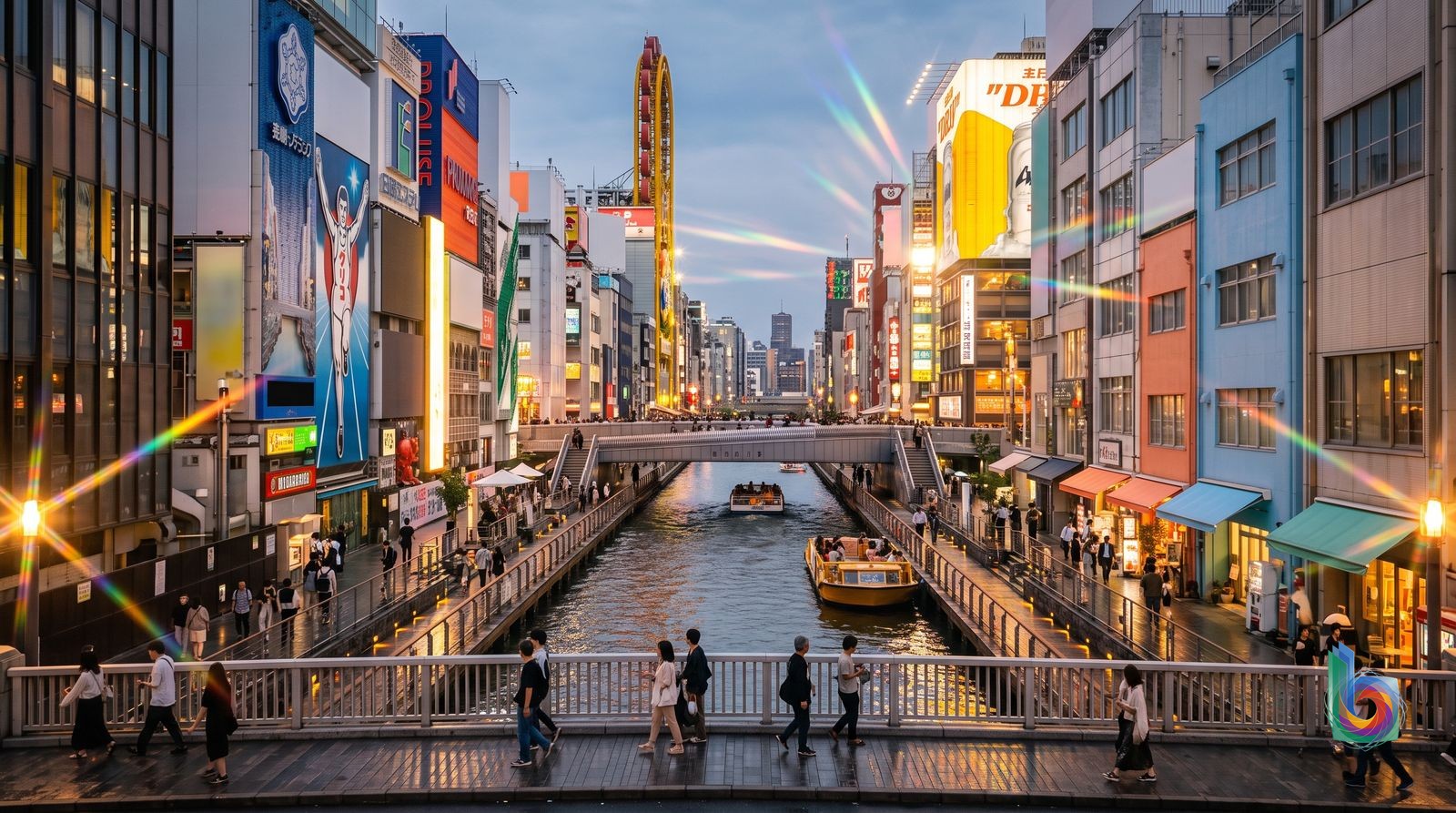
- Treat takoyaki as a snack, not dinner. Dotonbori is worth one portion for the scene, but do not spend an hour queuing for a celebrity stall when a neighborhood shop will do.
- For lunch, use specialist counters and set meals: udon, curry, tonkatsu, ramen and sushi lunches are usually the value play.
- For dinner, pick one neighborhood and eat two or three things rather than criss-crossing the city chasing famous dishes.
- Book headline sushi, kappo, yakiniku and tasting-menu restaurants ahead, especially on weekends, in blossom season and around Golden Week; ordinary casual restaurants generally do not need reservations.
- Do not default to convenience stores for every breakfast: try a kissaten toast set, bakery, hotel breakfast or department-store food hall when open.
- In kushikatsu shops with shared sauce, double-dipping is not allowed.
Book before you land
- Choose one city base—Namba for food, nightlife and the direct KIX train; Umeda for calmer hotels and better links north. Moving hotels within Osaka is usually wasted effort.
- Do not plan north Osaka and southern Senshu/Kishiwada on the same day just because the prefecture looks small. Rail changes, giant stations, walking and summer heat make that bad itinerary design.
- Use an IC card such as ICOCA for subways, private railways and buses, but keep a little cash: not every local machine, stall or small restaurant takes cards.
- On escalators, Osaka convention is generally to stand on the right and pass on the left. Follow local signs where present rather than treating it as a rule worth arguing about.
- In Shinsekai, kushikatsu sauce is shared: never double-dip. For takoyaki, assume the filling is dangerously hot and let it cool before biting.
- During Tenjin Matsuri (July 24–25), Kishiwada Danjiri Matsuri (main September dates, with other districts in October), cherry-blossom weekends and Golden Week, reserve hotels early and expect packed trains.
Entry rules change — verify visa requirements for your passport before booking this region.
Season by season
March to May
Spring warms from a mean 9.9°C in March to 20.1°C in May; mid-April through late May is especially comfortable, while blossom weekends and late-April/early-May Golden Week bring high hotel prices and heavy crowds.
Cherry-blossom dates shift yearly, and Golden Week can make rooms, trains and major attractions far busier than the weather warrants.
June to August
June is humid and rainy, then July and August become punishingly hot and sticky, with mean temperatures around 27.7°C and 29.0°C; plan around evenings and air-conditioned attractions rather than all-day pavement walking.
Heat, humidity and rain slow every itinerary, while Tenjin Matsuri and mid-August Obon sharply increase crowds and accommodation pressure.
September to November
September remains warm and sits within typhoon season, but October and November are the most reliable months for comfortable region-wide exploring, with November averaging about 13.8°C.
Kishiwada’s September Danjiri festival—and related October district events—brings packed transport, blocked routes and limited rooms; go only if you want the intensity.
December to February
Osaka City is cool rather than reliably snowy, with mean temperatures around 6–9°C and roughly 10 hours of daylight in December; clear days suit urban wandering and serious eating.
Christmas/New Year reverses the low-season advantage: domestic travel rises, major shrines fill, and some independent restaurants, museums and family businesses close for several days.
Events worth planning around
Golden Week · Late April to early May, usually spanning several national holidays · Across Osaka Prefecture
One of Japan’s busiest domestic-travel periods: book hotels and any priority attractions well ahead, and expect crowded trains and parks.
Tenjin Matsuri · Every year on July 24–25 · Osaka City, around Osaka Tenmangū and the Ōkawa River
The July 25 boat procession and fireworks draw enormous crowds; nearby hotels, trains and riverside viewing areas become difficult, so reserve early or avoid the area.
Kishiwada Danjiri Matsuri · Main Kishiwada and Haruki events usually in September; additional district events occur in October · Kishiwada and parts of Senshū
Fast-moving wooden-float processions make this a major local spectacle but disrupt routes and fill trains and accommodation; it is not a calm sightseeing weekend.
New Year shrine visits (Hatsumōde) · Late December to the first days of January · Major shrines and temples across Osaka, especially Osaka City
Domestic travel and shrine crowds surge, while some smaller restaurants and museums close; reserve accommodation if visiting over the holiday.
What to eat
Osaka eats like a merchant city: dashi-led, flour-powered comfort food, fast counter meals, standing bars and generous value rather than hushed ceremony. Use Dotonbori for the spectacle and one classic snack, then eat your serious meals in neighborhood counters, izakaya and specialist shops; a first visit should include takoyaki, okonomiyaki, kushikatsu and dashi-rich udon.
Namba–Dotonbori / Minami: Takoyaki and other snack food for atmosphere · Late-night eating, izakaya and casual counter meals · Kuromon-area market eating
Tennoji–Shinsekai: Kushikatsu/kushiage · Informal, budget-friendly drinking-and-snacking culture
Sakai: Tea and wagashi pauses · Knife culture and culinary tools · Incense-linked craft culture rather than another takoyaki crawl
Kawachi / southeast Osaka: Kasu udon
Senshū coast: Seafood and local-market eating