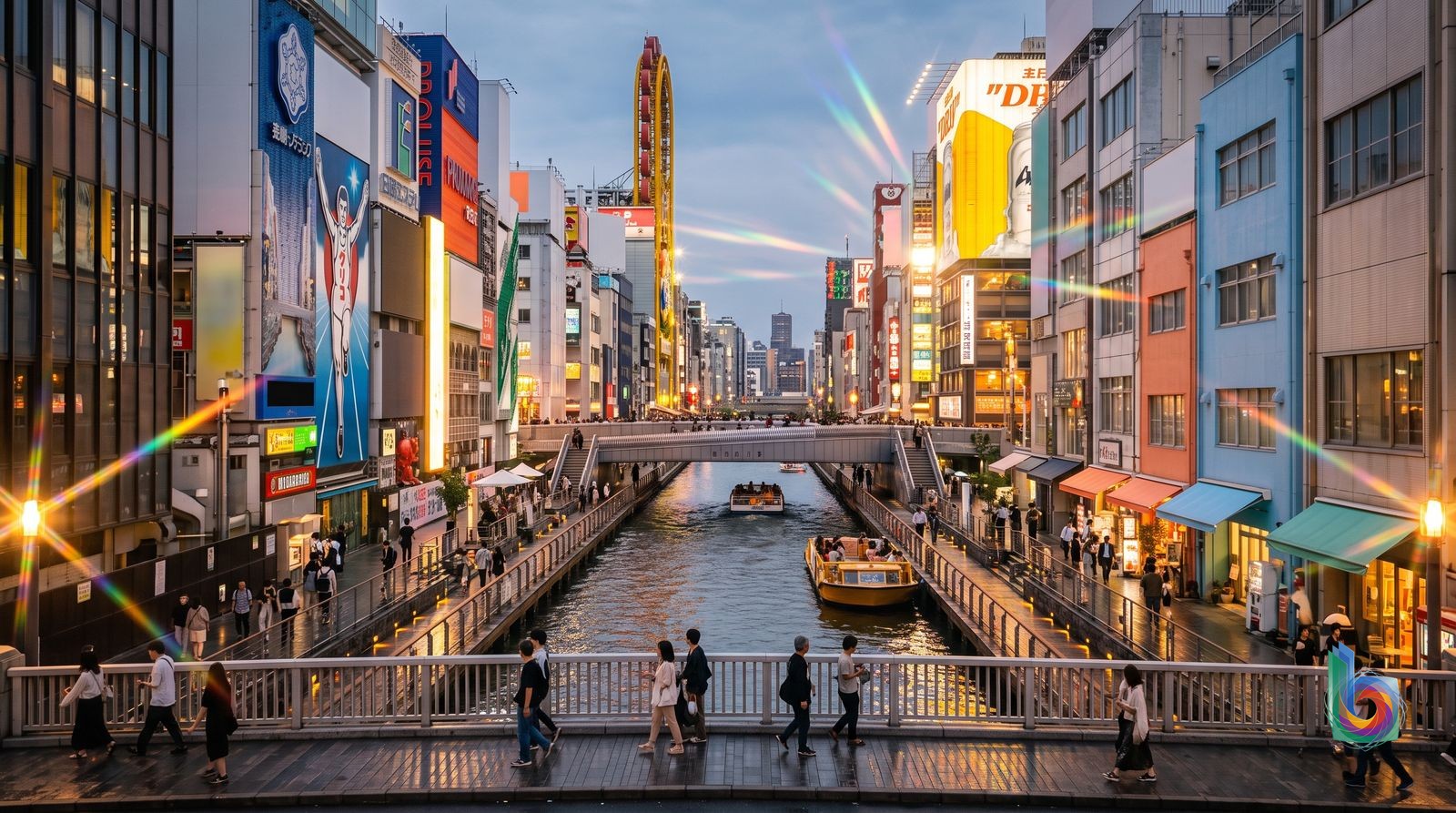

This is Osaka at its most theatrical: canal-side signs, snack stalls, crowds and late-night energy. Come after dark for the atmosphere, then use it as the anchor for an eating-and-walking circuit through central Osaka.
Pairs with: Hozen-ji · Tsutenkaku

Its rooftop observatory gives the clearest big-picture view of Osaka's immense urban spread, rather than a view framed by nearby towers. It works especially well near sunset, with time afterward for Umeda's dining streets and underground arcades.
Walk-up admission is usually fine, but reserve online for sunset or holiday periods if you want to avoid a queue.
Pairs with: The National Museum of Art, Osaka · Osaka Museum of History

The reconstructed keep is more useful as an introduction to Osaka's political history and as a city icon than as an intact original castle experience. Combine its museum interior with a walk in the surrounding grounds rather than treating it as a quick photo stop.
Buy an advance entry ticket on busy weekends, holidays and blossom season; quieter weekday walk-ups are generally manageable.
Pairs with: Osaka Castle Park · Osaka Museum of History · Fujita Museum

This is one of Japan's strongest large aquariums, designed around a gradual descent past habitats rather than disconnected tanks. It is a particularly good rainy-day or family choice, and makes sense with the waterfront attractions nearby.
Book a timed online entry in advance for weekends, holidays and school-break periods.
Pairs with: Tempozan Ferris Wheel

The tower is the visual emblem of Shinsekai, Osaka's retro, rough-edged entertainment quarter. The view is secondary to pairing it with a street-food wander through the surrounding neighborhood.
Standard admission is usually available on the day; online options can help at peak times.
Pairs with: Dotonbori · Shitennoji · Hozen-ji

The broad moats, stone walls and open lawns provide the setting that makes Osaka Castle feel like more than a museum tower. It is worth visiting even if you skip the keep, especially in seasonal flower periods.
Pairs with: Osaka Castle · Osaka Museum of History · Fujita Museum

This tiny, lantern-lit temple offers a quiet counterpoint to the sensory overload of Dotonbori. Stop briefly to see the moss-covered Fudo statue, then explore the narrow stone-paved lane around it.
Pairs with: Dotonbori · Tsutenkaku

This museum makes Osaka's layered development intelligible, from ancient settlement through its mercantile and modern city life. Its elevated galleries also give unusually good views toward Osaka Castle, making it a smart companion rather than an all-day destination.
General admission is normally easy to buy on arrival; check ahead for temporary exhibition closures.
Pairs with: Osaka Castle · Osaka Castle Park · Fujita Museum

Its underground galleries host a serious rotating program of modern and contemporary art, and the dramatic exterior is a sight itself. Visit for the current exhibition rather than expecting a fixed blockbuster collection, then continue through the nearby Nakanoshima cultural district.
Buy on arrival for regular exhibitions; check the current show for separate advance-ticket arrangements.
Pairs with: Umeda Sky Building · Fujita Museum

This wooded waterfall walk is one of the easiest ways to exchange Osaka's urban intensity for a genuine forest outing. Treat it as a half-day excursion, with time for the temple approach and seasonal snacks rather than rushing to the falls and back.
Pairs with: Cup Noodles Museum Osaka Ikeda

One of Osaka's most important shrines, it stands apart from the city's usual temple-and-neon experience with a distinctive, ancient-looking shrine layout and memorable arched bridge. It is a calm, culturally substantial stop that rewards travelers willing to venture beyond the central core.
Pairs with: Shitennoji · Tsutenkaku

This major Buddhist temple complex is a useful counterweight to Osaka's modern image and gives context to the city's deep religious history. The grounds can be visited fairly quickly, but allow longer if the inner precinct or market is of interest.
The outer grounds are free; the inner precinct has a modest on-site admission charge.
Pairs with: Tsutenkaku · Sumiyoshi Taisha

This expansive park preserves the legacy of Osaka's world exposition while functioning as one of the prefecture's best places for gardens, museums and long walks. It is best for travelers with an extra half-day, particularly during seasonal blooms or alongside a visit to the Tower of the Sun.
Park admission is easy on arrival, but reserve separately in advance if you want to enter the Tower of the Sun.
Pairs with: Cup Noodles Museum Osaka Ikeda

This spacious former exposition park is a local-scale escape with gardens, broad paths and seasonal planting. It is worthwhile for travelers seeking an unhurried green break, but not a core stop on a compressed first visit.
Pairs with: Osaka Castle Park

This is an easy, low-effort harbor view rather than a destination in its own right. Add it after the aquarium if the weather is clear and you want to linger around the waterfront.
Tickets are normally bought on site, though weather can affect operation.
Pairs with: Osaka Aquarium Kaiyukan

A compact museum with an exceptional collection centered on Japanese and East Asian art, especially objects associated with tea culture. It rewards visitors who want a quieter, more focused alternative to Osaka's large museums.
Admission is generally straightforward, but verify opening days because the museum has a limited schedule.
Pairs with: Osaka Castle · Osaka Castle Park · The National Museum of Art, Osaka

This lighthearted museum tells the story of instant noodles in the place where the product began, with hands-on activities that make it especially good for families. It is not essential for every traveler, but it is an enjoyable add-on to northern Osaka or a rainy-day plan.
Museum entry is straightforward, but book ahead for popular hands-on workshops when they are offered.
Pairs with: Minoh Falls · Expo '70 Commemorative Park

This immense ancient burial mound is among the prefecture's most consequential historic landscapes, even though visitors view it from the perimeter rather than entering the mound itself. Pair it with the surrounding Mozu tombs and Sakai's local history rather than expecting a conventional interior attraction.
Pairs with: Sumiyoshi Taisha

This immersive digital-art stop is built for sensory impact and photographs rather than deep art-historical context. Choose it if that format genuinely appeals, but it should not displace Osaka's historic districts or major museums on a first itinerary.
Reserve a timed slot online on weekends and holidays; availability and programming can change.
Pairs with: Dotonbori · Hozen-ji